Oka-dera Temple: A Buddhist Temple of Misfortune-Averting Worship in Japan


Site at a Glance
- Rating
- 4.4
- Popularity
- Medium
- Country
- Japan
- Primary era
- Early Modern
- External website
- Open
- Eras represented
- Medieval, Early Modern, Modern
- Civilizations
- Ashikaga shogunate, Japanese, Tokugawa
- Site type
- Religious
- Remains
- Temple
On this page23 sections
History
Oka-dera Temple is a Buddhist temple in Japan, located in Asuka, Nara Prefecture, whose origins are generally placed in the late seventh century. Its formal name is Tōkō-zan Shinjū-in Ryūgai-ji, while Oka-dera is the name used in ordinary practice and by the religious corporation. The temple is associated with the Hossō and Shingon Buddhist traditions and remains known as a place for prayers to avert misfortune.
Foundation and Early History
The exact date of Oka-dera’s foundation is uncertain. Tradition and historical biographies connect it with the monk Gien, who established temple buildings on the site of Okamiya Palace, traditionally associated with Prince Kusakabe, the son of Emperor Tenmu. Prince Kusakabe died in 689. The temple first appears in surviving documentary evidence in an entry in the Shōsōin Documents dated July 740.
Gien is identified with the beginnings of Japanese Hossō Buddhism, a school concerned with consciousness and perception. Among his disciples were Rōben and Gyōki, figures involved in the establishment of Tōdai-ji. Oka-dera was initially affiliated with the Hossō tradition and later became a branch temple of Kōfuku-ji, a major historic Buddhist temple in Nara associated with that school.
The Dragon-Lid Tradition
The temple’s formal name includes Ryūgai-ji, meaning “Dragon Lid Temple,” a name derived from its foundation legend. In this tradition, an evil dragon tormented the people of the area until Gien subdued it and sealed it in a pond beneath a large stone cover. The dragon then repented and became a protector of the surrounding area.
This story gave the temple its name and connected it with the protection of local inhabitants from misfortune. Oka-dera is described as Japan’s first place of worship dedicated to averting misfortune, and the related belief was already widespread by the Kamakura period. The temple is also the seventh station on the Saigoku Kannon Pilgrimage, a traditional circuit of 33 temples in western Japan devoted to Kannon, the bodhisattva of compassion. It is additionally counted among the four great temples of Yamato.
Decline and Religious Reorganization
After a long period as a branch temple of Kōfuku-ji, Oka-dera declined. Its revival took place during the Edo period under Hōjū, the head priest of Hase-dera. Hōjū became the first leader of the restoration, and Oka-dera subsequently became a branch temple of Hase-dera and joined the Shingon-shu Buzan-ha tradition, a branch of Japanese esoteric Buddhism associated institutionally with Hase-dera.
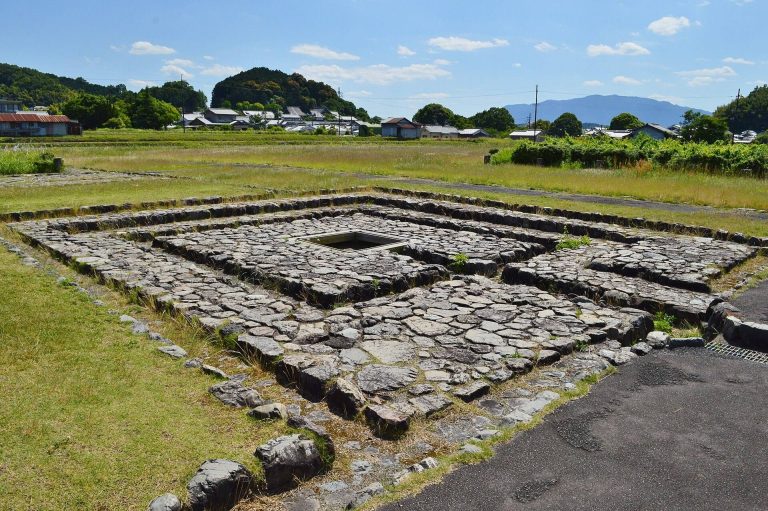
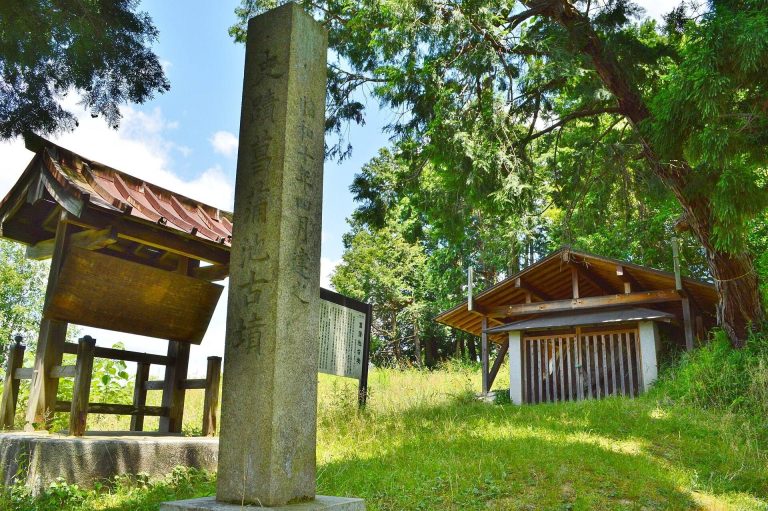
The temple’s present name comes from its location in the Oka area of Asuka. The original complex is believed to have stood at the site of the present Haruta Shrine immediately west of the current temple. Early Nara-period roof tiles found there support the association with an earlier temple site. That former site was designated a National Historic Site in 2005.
Buildings and Heritage in the Modern Period
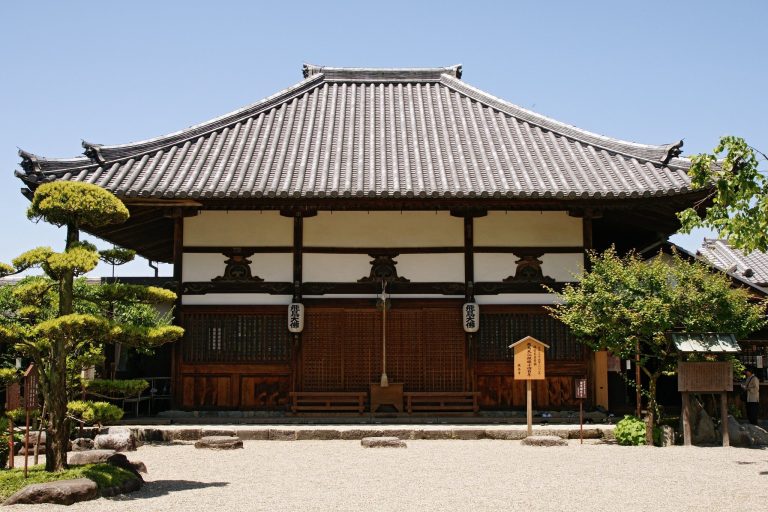
The present Main Hall was rebuilt in 1805. The Founder’s Chapel was moved to Oka-dera in 1871 as part of the Meiji government’s policies separating Buddhism and Shinto. These policies required the chapel, originally built at Myōraku-ji, the institution now known as Tanzan Shrine, to be transferred to the temple.
Repair and conservation work has included the Niomon in 1967 and 1968, the Old Shoin from 1987 to 1989, and the Founder’s Chapel from 2004 to 2006. Oka-dera’s heritage designations include National Important Cultural Property status for the Niomon and Old Shoin, while the Main Hall and Romon are designated tangible cultural properties by Nara Prefecture. The former temple site is a National Historic Site, and Oka-dera is included in the Japan Heritage program.
Remains
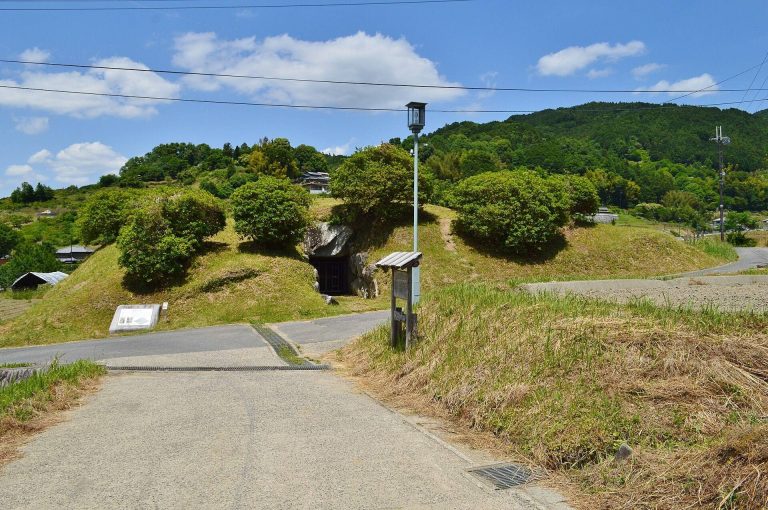
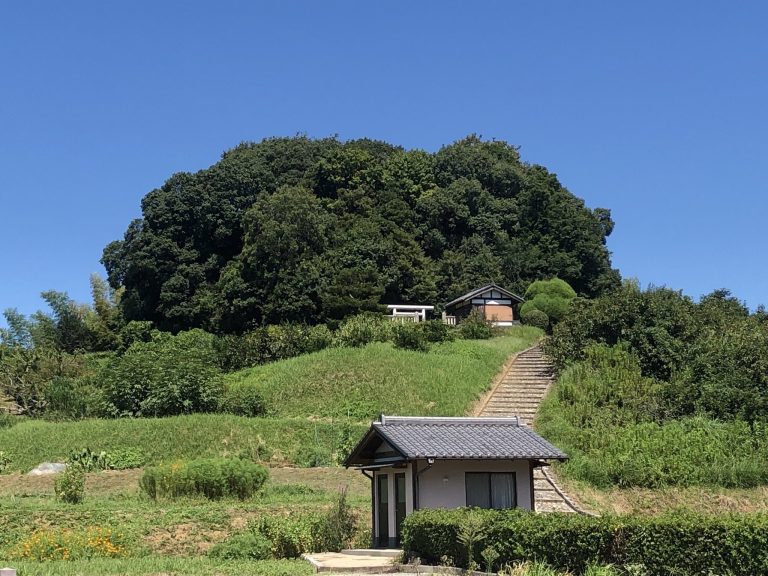
The current temple occupies a hillside on Mount Oka east of Asuka, while the earlier temple site lies to the west in the grounds of Haruta Shrine. The present complex contains halls, gates, ritual buildings, a pond, a well, shrines, a cave hall, pagodas, and priestly residences. Excavation at the former site has also provided evidence for the position and approximate scale of an early main hall.
Former Temple Site
Early Main Hall
In 1982, the Kashihara Archaeological Institute exposed a 4.5-meter line of cut tuff stones at the former temple site. The stones are interpreted as the northern edge of a south-facing main hall. The hall probably measured seven bays, approximately 12.74 meters, by four bays, approximately 7.28 meters. The arrangement of the other buildings and the full plan of the early complex remain unknown.
Main Halls and Residences
Main Hall
Rebuilt in 1805 after a construction process lasting more than 30 years, the Main Hall houses Oka-dera’s principal image, a seated clay Nyōirin Kannon. Nyōirin Kannon is a form of Kannon associated with the fulfillment of wishes and commonly shown with several arms. The hall also enshrines 33 images modeled on the principal images of the temples on the Saigoku Kannon Pilgrimage.
Founder’s Chapel
The Founder’s Chapel was built in 1797 at Myōraku-ji as a goma hall, a Buddhist ritual hall used for fire ceremonies. It was transferred to Oka-dera in 1871 and thereafter served at the temple for memorial and funerary services. During the move, its cypress-bark roof was changed to tile. Dismantling repairs carried out from 2004 to 2006 restored the cypress-bark roofing.
Old Shoin and Associated Buildings
The Old Shoin was built in 1644 and underwent dismantling repairs between 1987 and 1989. The complex also includes the Omote Shoin, Shiro Shoin, and the priest’s quarters, forming part of the temple’s group of residential and reception buildings.
Gates, Bell Tower, and Pagodas
Romon
The Romon was built during the Keichō era, between 1596 and 1615. Materials from the unfinished rebuilding of a three-story pagoda begun in 1473 were incorporated into the gate. It originally served as a bell-tower gate. Later, an image of Bishamonten in the Tobatsu form was enshrined on its upper floor. Bishamonten is a Buddhist guardian deity associated with protection, while Tobatsu identifies a particular form of his representation.
Niomon
The Niomon was rebuilt in 1612. Dismantling repairs in 1967 and 1968 revealed that most of its components had either been reused from older material or newly remade. Some of the material came from the unfinished three-story pagoda reconstruction begun in 1473.
Bell Tower
The bell tower was rebuilt around 1805, close to the rebuilding of the Main Hall, and its temple bell dates from 1808. During the Pacific War, seven holes were drilled near the bell’s center to examine its metal when it was threatened with requisition under the metal-collection order. The bell was ultimately not surrendered and escaped damage.
Three-Story Pagoda
The original three-story pagoda was toppled by a major windstorm on July 21, 1472. Reconstruction began in 1473 but was never completed, and the unfinished structure was later dismantled for material used in the Niomon and Romon. A three-story pagoda was reconstructed in 1986. Koto instruments hung as decorative elements beneath its eaves form an especially rare feature of that restoration.
Pond, Shrines, and Other Grounds
Ryūgai Pond
Ryūgai Pond, also called Dragon-Lid Pond, is associated with the tradition of the dragon sealed beneath a large stone cover. The pond preserves the physical setting of the legend that gave the temple its formal name and its association with protection from misfortune.
Religious and Memorial Features
Other features include the Ruri Well, the Inari Myōjin Shrine, and the Okunoin Cave Hall, which is identified with the Miroku Cave. A 13-story stone pagoda was erected in 1926, and the tomb pagoda of Gien was built in 1360. The complex also contains a Daishi Hall from the early Shōwa period, together with statues showing Kūkai during ascetic training and as a child.
Sculpture and Archaeological Objects
Nyōirin Kannon
The seated clay Nyōirin Kannon in the Main Hall is 4.85 meters high and is regarded as the largest clay statue in Japan. Unlike the six-armed form in which Nyōirin Kannon is usually represented, this image has two arms. The head retains its original sculptural material, while the body has undergone extensive repairs. Its legs were first arranged in a half-seated posture and were later changed to the seated form seen today.
Images Associated with Gien
A wooden dry-lacquer seated portrait of Gien dates from the Nara period. Dry lacquer is made by applying lacquer and reinforcing materials over a carved or modeled core. The portrait presents a highly realistic figure, with drooping eye corners, numerous wrinkles, and a prominently outlined rib cage. It is a National Treasure deposited with the Nara National Museum.
The temple’s associated cultural-property inventory also includes a Nara-period bronze half-seated bodhisattva image, a Kamakura-period wooden image of the Buddha’s parinirvana, and a Nara-period brick plaque depicting a celestial figure. The parinirvana image represents the Buddha’s death and final release from the cycle of rebirth. These objects are deposited with the Kyoto National Museum or Tokyo National Museum as specified for each item.