Miyakozuka Kofun: A Late Kofun-Period Burial Mound in Japan
Site at a Glance
- Rating
- 3.9
- Popularity
- Low
- Country
- Japan
- Primary era
- Medieval
- Eras represented
- Medieval
- Civilizations
- Yamato
- Site type
- Burial
- Remains
- Burial Mound
On this page15 sections
History
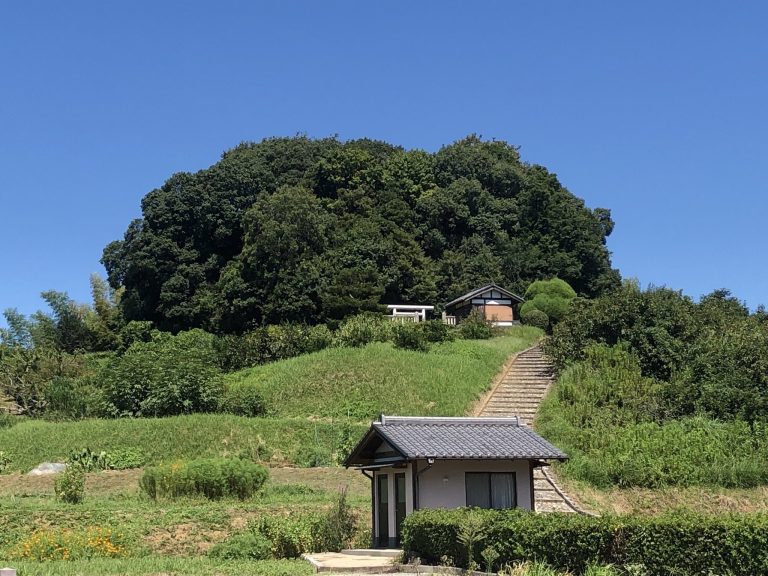
Miyakozuka Kofun is a large square burial mound from the latter half of the sixth century in Asuka, Japan. Built during the Late Kofun period, an era known for elite burial mounds, it belongs to a transition toward large standardized square tombs. The mound is also called Kinchozuka Kofun.
The Late Kofun period
The construction of Miyakozuka Kofun has been estimated to require the labor of approximately 30,000 people. Its stepped form may represent experimentation with a new type of elite tomb as burial traditions moved from keyhole-shaped mounds toward large square examples. The design has also been interpreted as drawing on stepped stone burial mounds associated with Goguryeo and Baekje, ancient Korean kingdoms with distinctive architectural and funerary traditions.
The Soga connection
One interpretation identifies the tomb as that of Soga no Iname, a powerful sixth-century leader of the Soga clan, who may have died around 570. This identification rests partly on the mound’s location in an area connected with Soga power during the Asuka period, a time of major political and cultural change in Japan, and on its slightly earlier date than Ishibutai Kofun.
Ishibutai Kofun, about 400 meters to the south-southeast, is generally presumed to be the tomb of Soga no Umako, the son of Soga no Iname and a later major Soga political figure. The two mounds may therefore have formed a paired burial complex. The nearby Shimasho site is considered to have been the location of Umako’s residence.
Excavation and protection
Kansai University’s archaeological research group excavated the mound in 1967. A separate survey followed in fiscal year 2008, and further investigations were carried out in 2013 and 2014 by the Asuka Village Board of Education and Kansai University. The tumulus area became a National Historic Site of Japan on October 13, 2017.
Ground fissures around the mound and cracks in the stone chamber may have resulted from a later earthquake. Possible causes include the Hoei Earthquake or the Ansei Tokai and Ansei Nankai earthquakes.
Remains
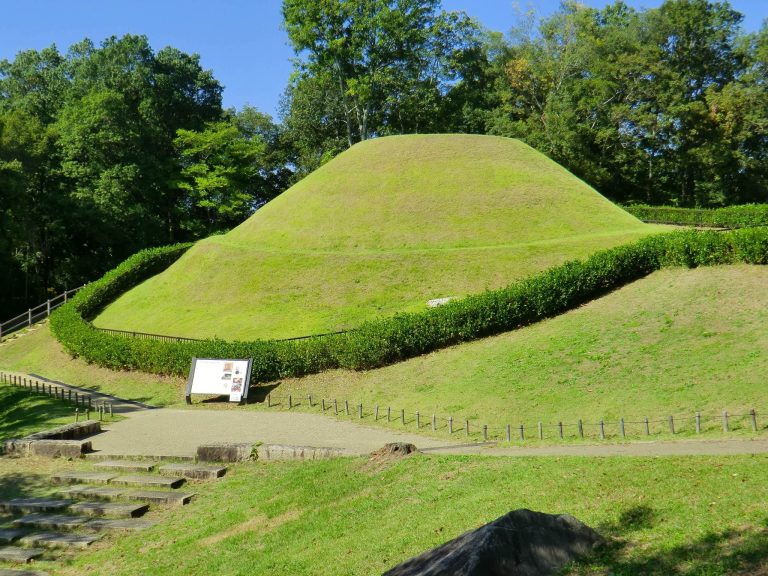
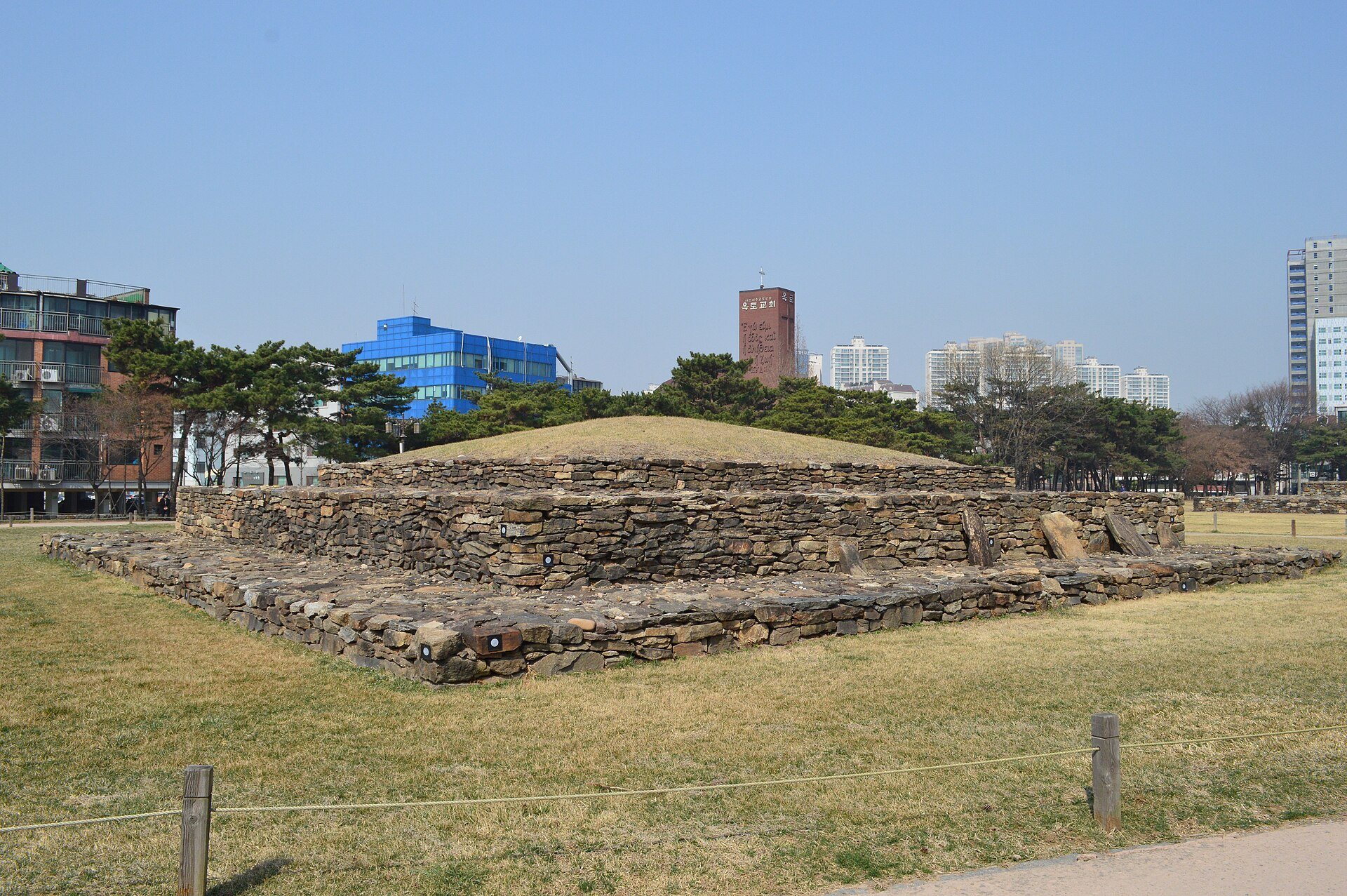
Miyakozuka Kofun occupies a ridge in the Sakata area of Asuka, on the southeastern edge of the Nara Basin. The reconstructed mound is approximately 41 meters from east to west and 42 meters from north to south, rising more than 4.5 meters. Its surface was arranged in stone steps, with at least four courses estimated at roughly 0.3 to 0.6 meters high. A moat around the mound measures about 1.0 to 1.5 meters wide and 0.4 meters deep.
The mound and surrounding moat
Stepped stone mound
The square tumulus was built as a series of rising stone terraces, producing a form often described as a step pyramid. The surviving and reconstructed dimensions preserve the scale of the monument, while the stepped arrangement expresses the construction method that distinguishes it from earlier keyhole-shaped burial mounds.
Moat
A narrow moat surrounds the mound. Its measured width is approximately 1.0 to 1.5 meters, and it is about 0.4 meters deep.
The burial facility
Horizontal-entry stone chamber
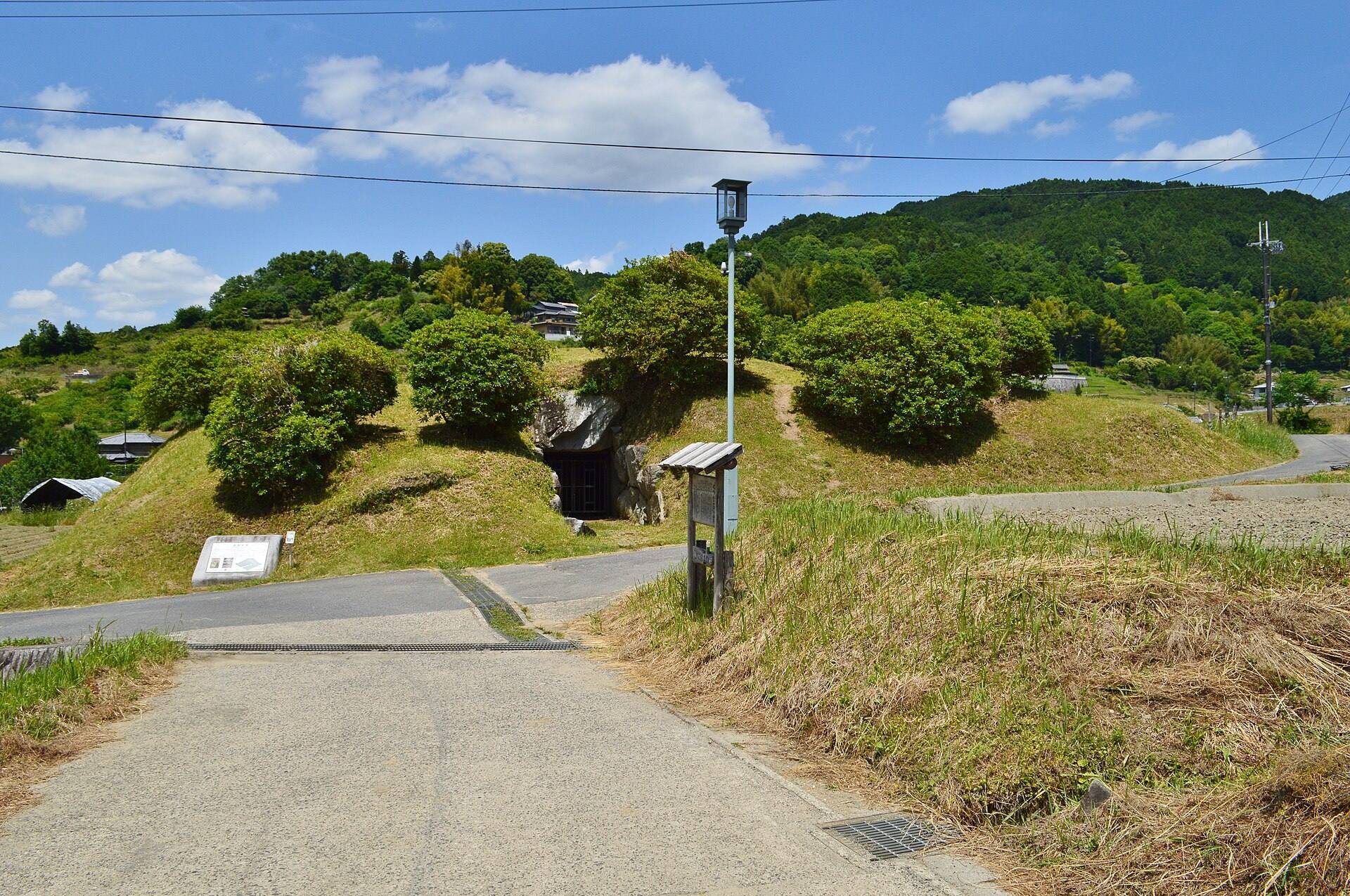
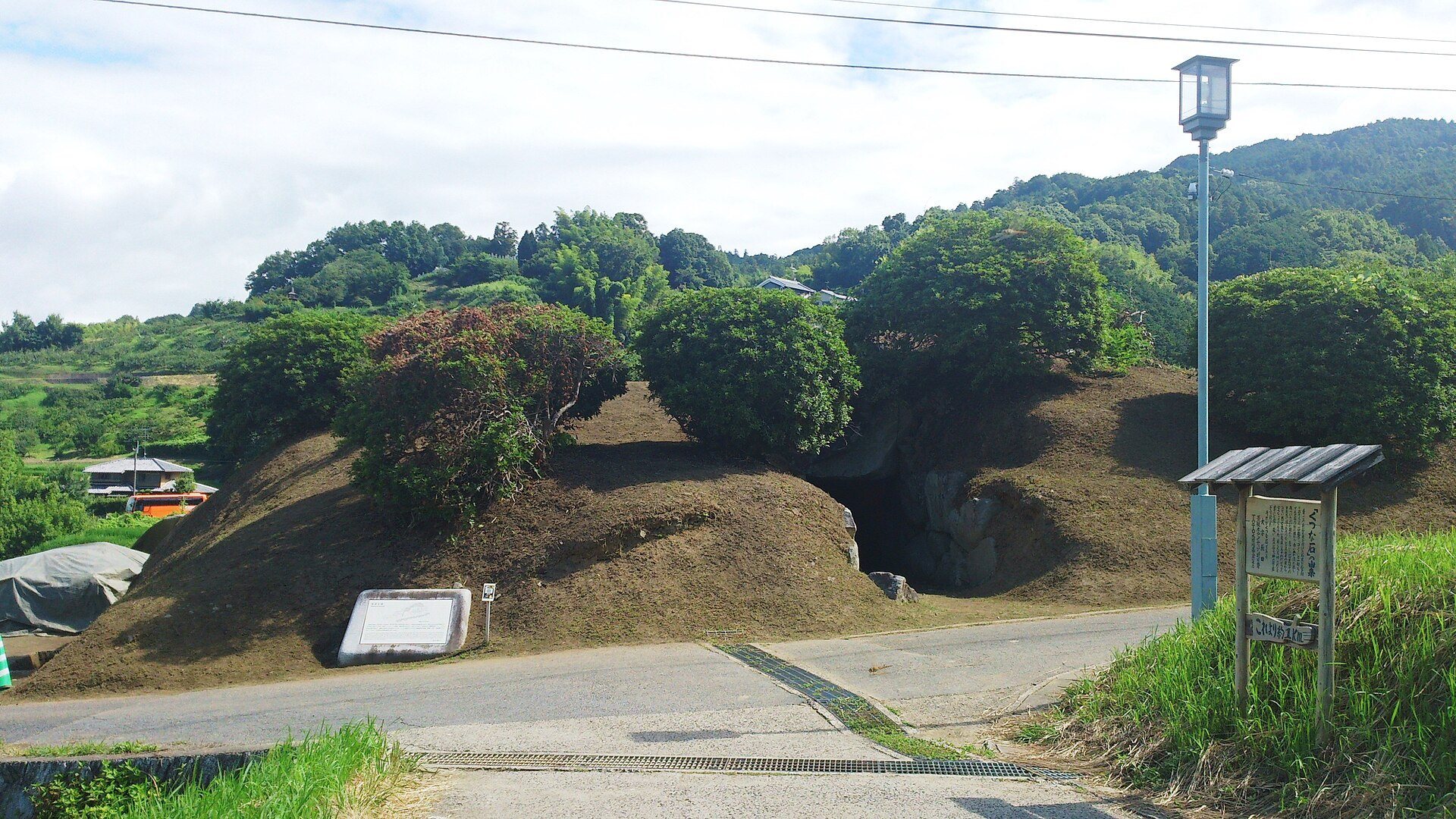
The burial facility is a horizontal-entry stone chamber, meaning that the tomb is reached through a passage cut into the side of the mound. Its double-sleeved design has projecting side sections where the main chamber meets the passage. Built from Asuka stone, a coarse-grained igneous rock known as quartz diorite, the chamber opens toward the southwest, matching the direction of the entrance at Ishibutai Kofun.
The chamber is approximately 12.2 meters long. The burial room measures 5.3 meters in length, 2.8 meters in width, and 3.55 meters in height. Its passage is about 6.9 meters long, 1.9 to 2.0 meters wide, and approximately 2 meters high.
Stone sarcophagus
At the center of the burial chamber stands a hollowed, house-shaped sarcophagus made from tuff, a relatively soft volcanic rock, from Mount Nijo. It has six projections for hanging ropes. The stone container measures 2.23 meters in body length, 1.46 meters in body width, and 1.08 meters in body height, with a total height of 1.72 meters.
Secondary wooden coffin
A coffin stand and related traces indicate that a wooden coffin was later placed for a secondary burial, probably on the floor in front of the stone sarcophagus. The coffin itself has not survived, but associated nails and stones have been identified.
Excavated remains
Pottery and iron objects
The chamber was robbed, dispersing most of its grave goods. Excavations nevertheless recovered fragments of Haji ware and Sue ware, two types of ancient Japanese pottery. They also found iron objects, including knives, arrowheads, and nails.
Entrance
The entrance to the chamber has been open since at least the middle of the Edo period.