Ohr Somayach Synagogue: Odessa’s Main Choral Synagogue
Site at a Glance
- Popularity
- Medium
- Country
- Ukraine
- Primary era
- Modern
- Eras represented
- Modern
- Civilizations
- Russian
- Site type
- Religious
- Remains
- Synagogue
On this page8 sections
History
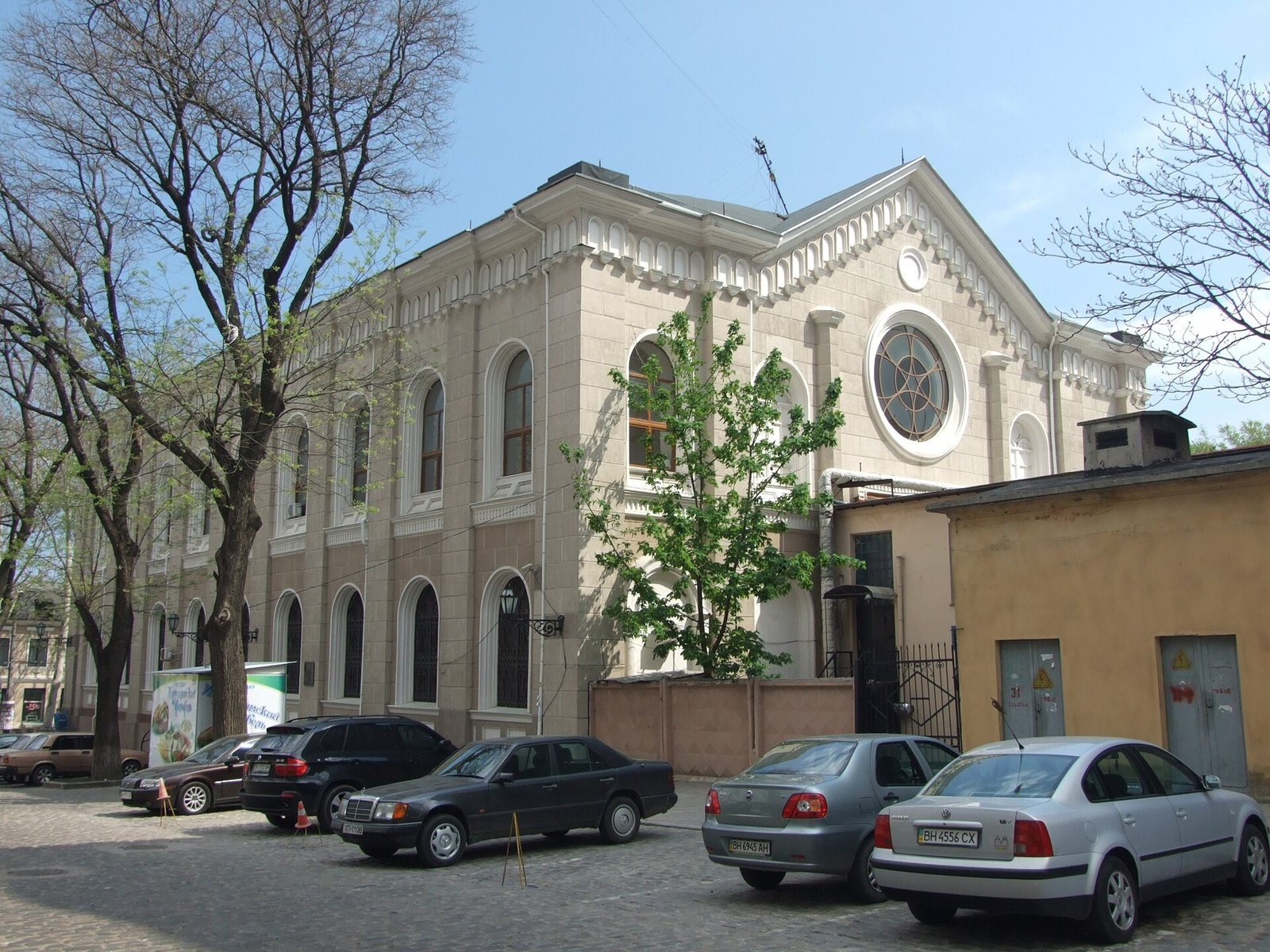
Ohr Somayach Synagogue is a Jewish house of worship in Odessa, Ukraine. Italian architect Franz Morandi designed it in 1847, and construction began in 1850 and was completed in 1855. Its architecture combines Florentine and Romanesque influences, the latter associated with rounded arches and massive forms. Inaugurated in 1860, it became Odessa’s main synagogue and its first choral synagogue, where worship incorporated a choir.
Odessa’s Jewish community and the synagogue
Jewish residents lived in Odessa from the city’s founding in 1794. In 1798, they formally organized a congregation and built a wooden synagogue on Yevreiska Street, which preceded the present building. When the new synagogue was completed, Odessa had four synagogues and 34 prayer houses. The congregation followed the Lithuanian Jewish tradition. In the early twentieth century, the synagogue’s annual budget was about 20,000 rubles.
Confiscation and secular use
In 1919, the Bolsheviks, the communist faction that had taken power in Russia in 1917, issued a decree transferring Jewish communal property and records to the state. The synagogue was confiscated and closed, then secularized in 1923 and used first as a natural-history museum. After the Second World War, the building housed a children’s music theater in 1947 and the Soviet All-Union voluntary society for promoting aviation in 1948. From 1950, it served as a sports hall and as the physical-education faculty of the Odessa Pedagogical Institute.
Return to religious and communal life
The building was returned to Odessa’s Jewish community in 1996. At Rosh Hashanah, the Jewish New Year, that September, worship resumed there after many years. Reconstruction took place from 1996 to 2008. A yeshiva, a school for Jewish religious study, opened at the synagogue in 1998, followed by Odessa Jewish University in 2003.
The synagogue now supports a kollel, an advanced Jewish study institution traditionally for married men, as well as educational programs that include schools, a traditional Jewish school called a heder, and study in pairs. Its premises also include offices for the chief rabbi of Odessa and the region and for the city’s Jewish religious community, along with a library and reading rooms. Daily and holiday prayers bring several hundred congregants, and worshippers travel from other Ukrainian cities for major holidays.
On 9 March 2008, British Jewish donor Ari Shimmel gave the synagogue a new handwritten Torah scroll, the Torah being Judaism’s foundational text. The gift marked his eightieth birthday and his grandson Nathaniel’s bar mitzvah, the transition of a Jewish boy to religious adulthood.
Remains
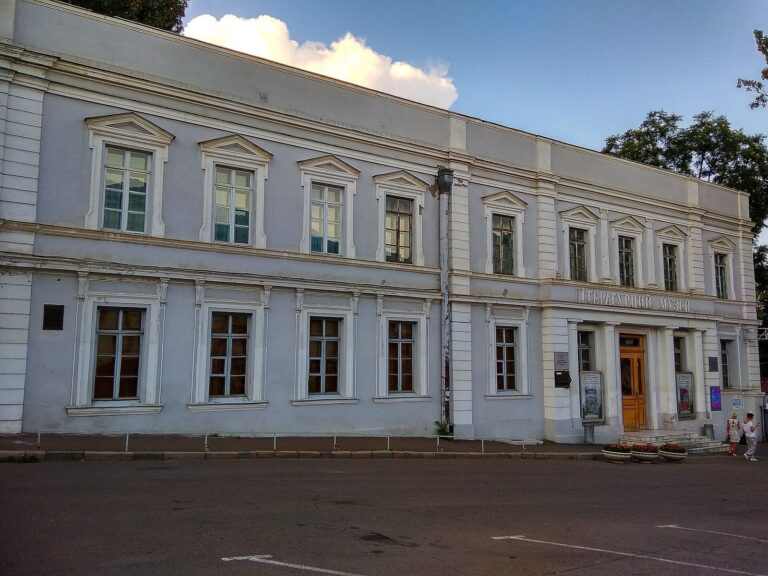
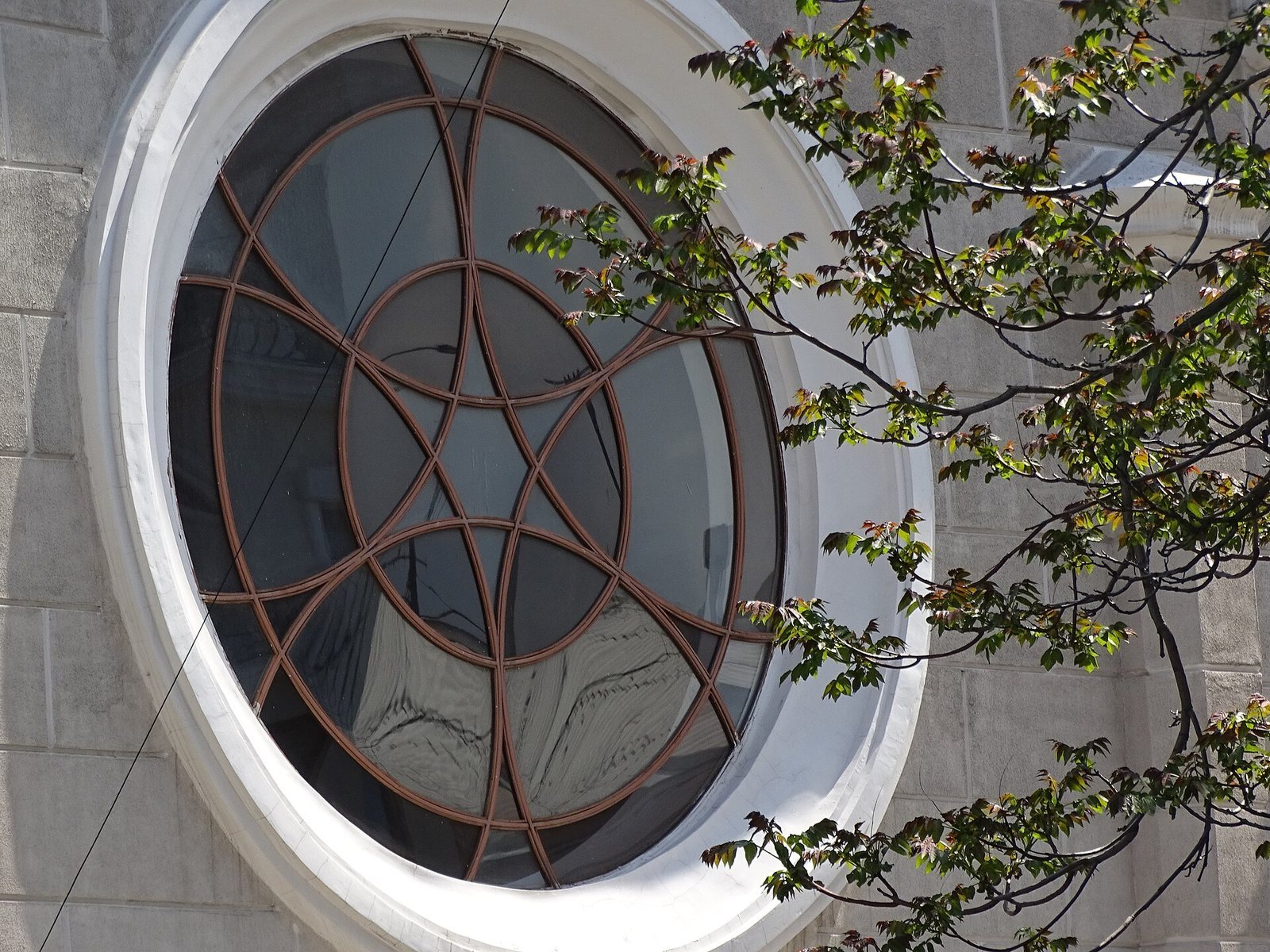
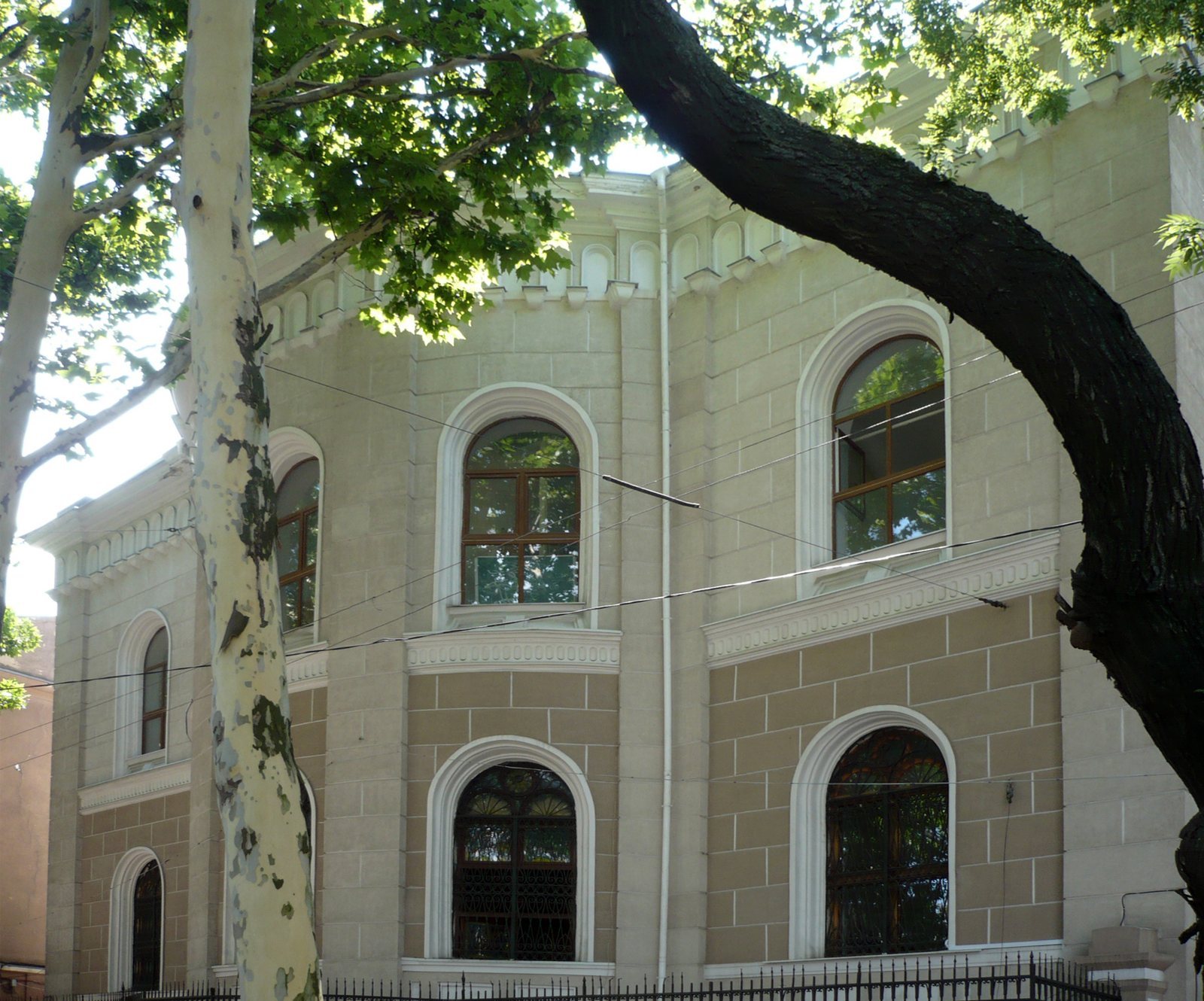
The two-storey synagogue stands at 25 Yevreiska Street, where the street meets Richelieu Street. Its facade and interior combine Florentine and Romanesque influences in a rounded-arch design.
Facade and prayer hall
Facade
The facade was restored in June 2008 as part of the building’s reconstruction. It forms the exterior of the two-storey synagogue and shares the building’s blend of Florentine and Romanesque design.
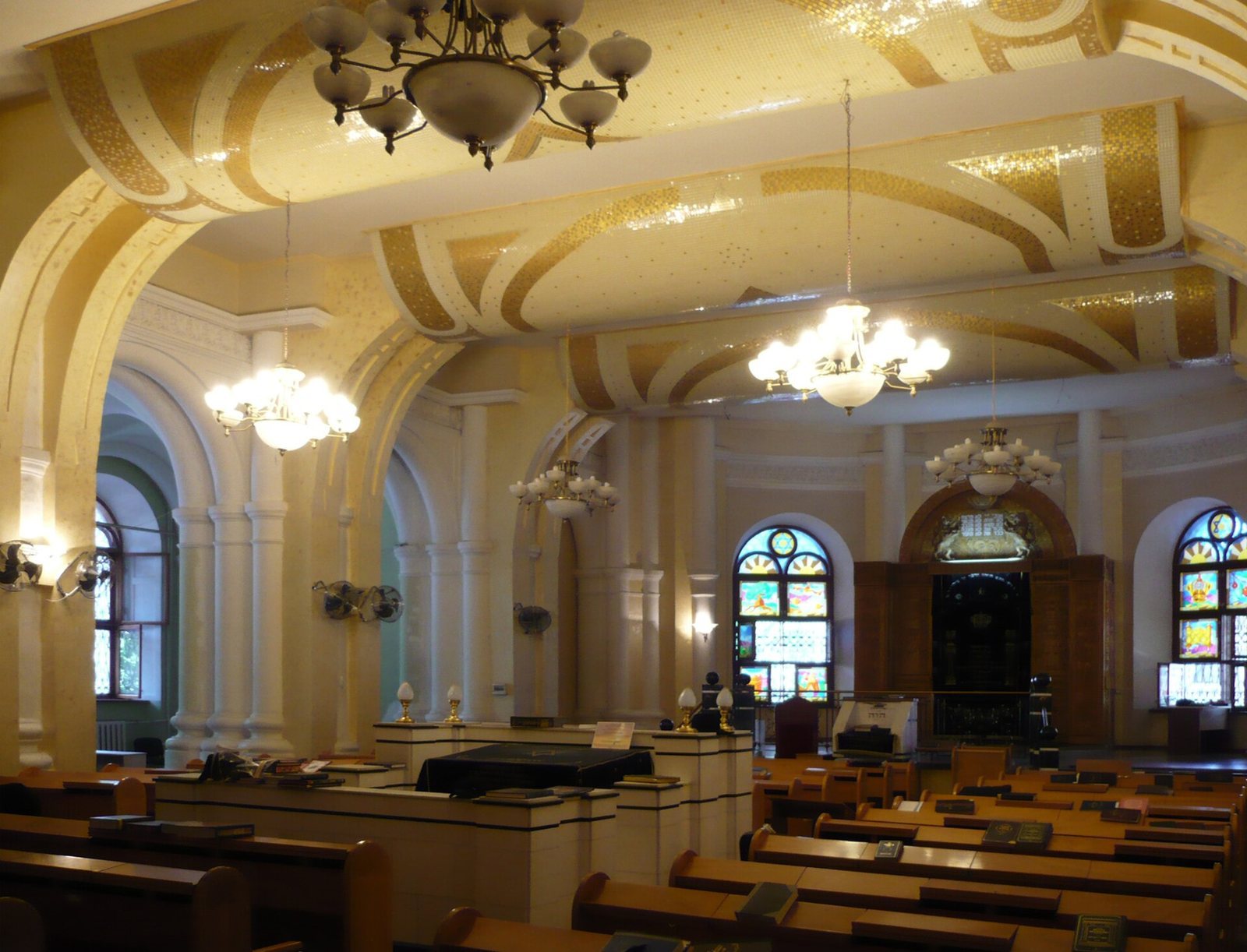
Main prayer hall
The main prayer hall was 25 metres high. When the building was converted for sports use, an inserted floor divided the hall into two levels. The lower level became a basketball court, while the space above, including the former women’s and choir galleries, was used for gymnastics. Side openings were closed, and the galleries were converted into lecture rooms. Reconstruction restored the raised platform used for reading the Torah and added a bath for Jewish ritual immersion.