Santi Niccolò e Cataldo Church: A Romanesque Church in Lecce
Site at a Glance
- Popularity
- Medium
- Country
- Italy
- Primary era
- Medieval
- Eras represented
- Medieval, Early Modern
- Civilizations
- Habsburg, Kingdom of Naples, Kingdom of Sicily, Norman, Spanish
- Site type
- Religious
- Remains
- Church
On this page15 sections
History
Foundation and regional influence
The Santi Niccolò e Cataldo Church is a Roman Catholic church in Lecce, Italy, founded with its adjoining monastery in 1180 by Tancred of Hauteville, a Norman count who later became king of Sicily. The complex stood beyond the city walls and was given to Benedictine monks, members of a monastic order that follows the Rule of Saint Benedict. Dedicated to Saints Nicholas and Cataldus, the church belongs to the Archdiocese of Lecce and is recognized as an Italian national monument.
The church’s design shaped the New Hydruntine Romanesque School, a regional architectural tradition named for Otranto, known in antiquity as Hydruntum. The school renewed early Romanesque architecture in Terra d’Otranto by blending Latin, Byzantine, Epirote, and transalpine influences. The church’s stylistic influence continued for about two centuries, informing the mid-fourteenth-century Church of Santa Caterina in Galatina and Matera Cathedral.
Olivetan rule and later uses
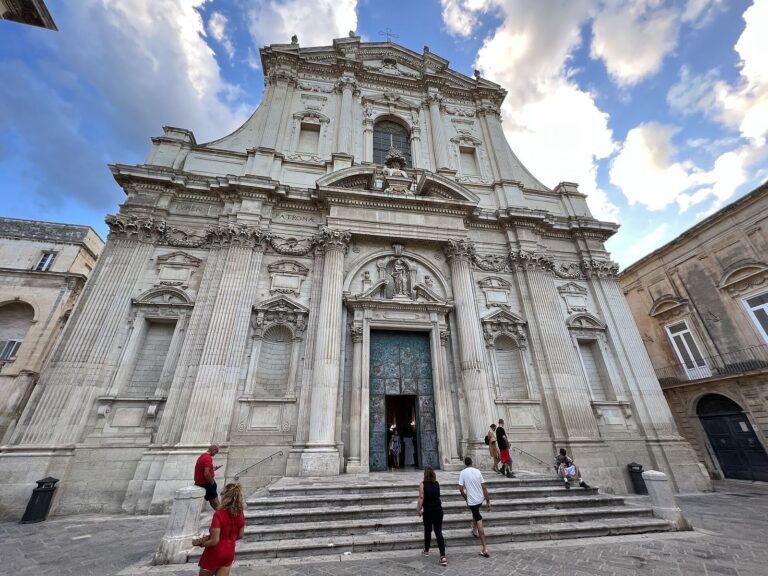
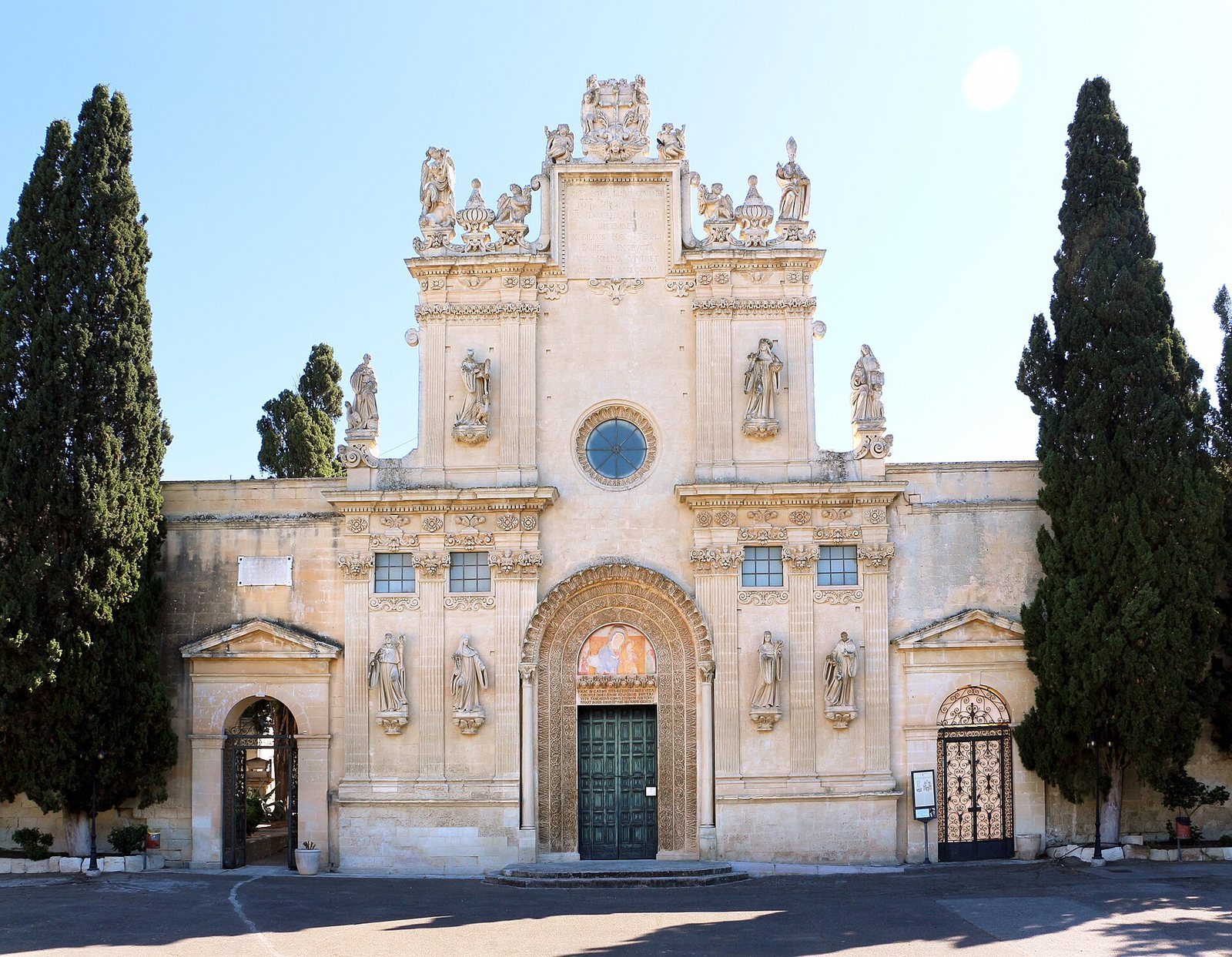
In 1494, at the direction of Alfonso II, king of Naples, Olivetan monks replaced the Benedictines. The Olivetans, a Benedictine congregation, remained at the complex until 1807. They began a major renovation in 1716, and architect Giuseppe Cino redesigned the facade in the Lecce Baroque style.
In 1807, Napoleon, the French emperor, established lyceums, or secondary schools, and the complex became the Palmieri Lyceum, then called the National Lyceum. It became an almshouse in 1870. Since the 1980s, the complex has housed the Faculty of Cultural Heritage, an academic division of a higher-education institution.
Remains
Exterior and grounds
Facade
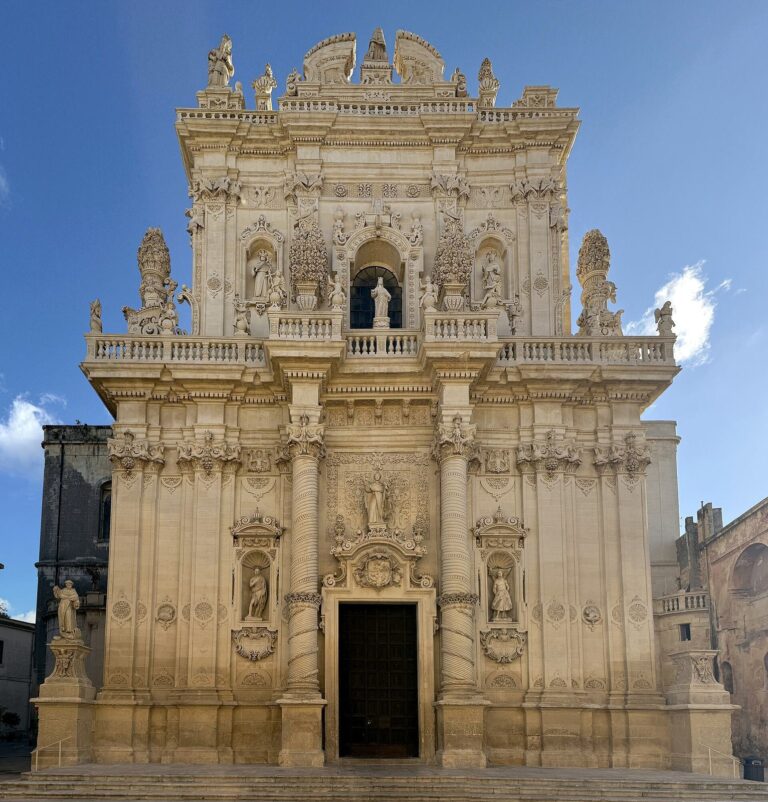
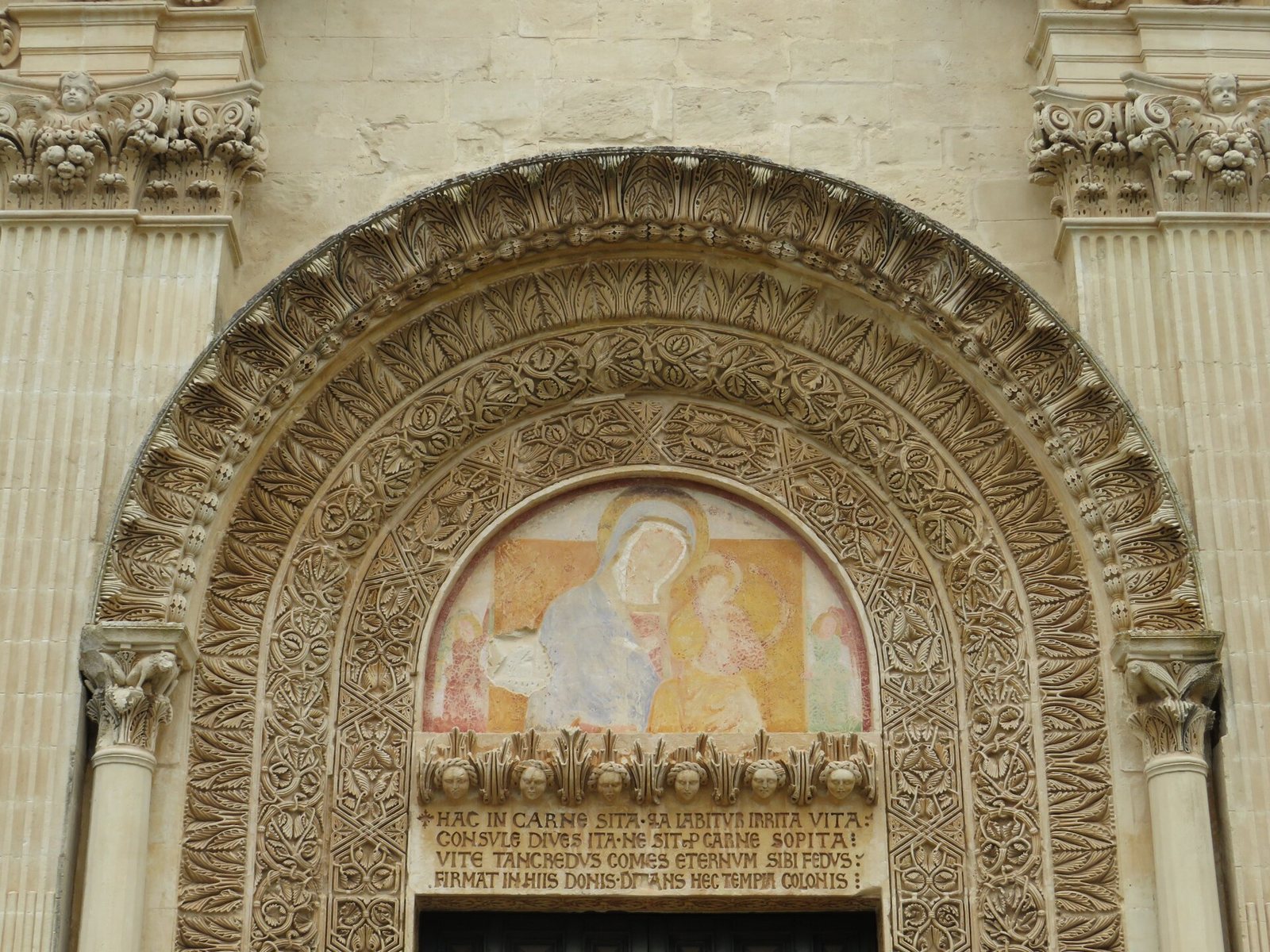
The facade combines its Romanesque origins with Baroque alterations. The original portal and rose window survive within the redesigned front, which is decorated with ten stone statues of saints venerated by the Benedictines and Olivetans. A monumental feature crowns the facade and bears the Olivetan emblem, a cross with olive branches.
Walls and roofline
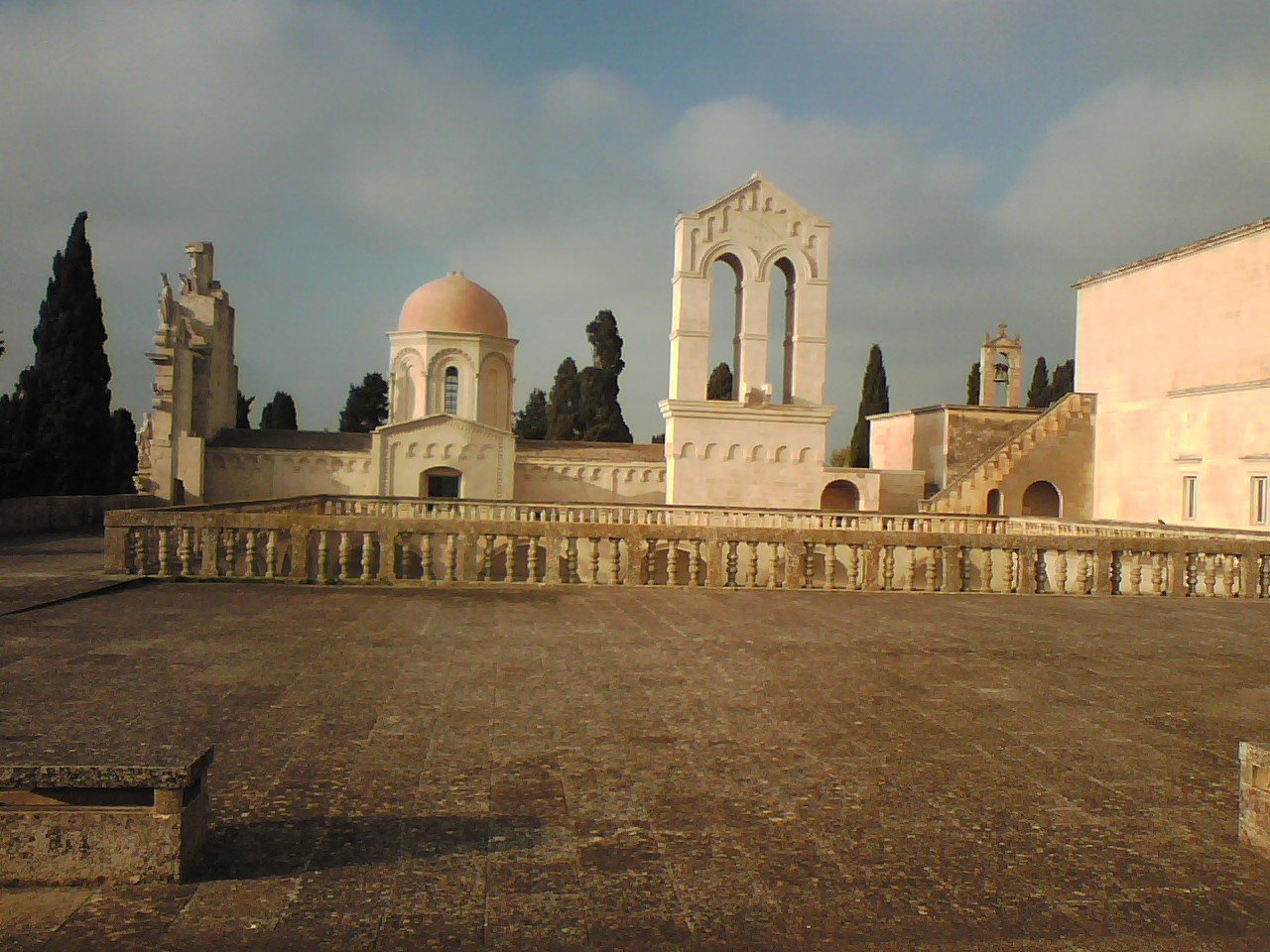
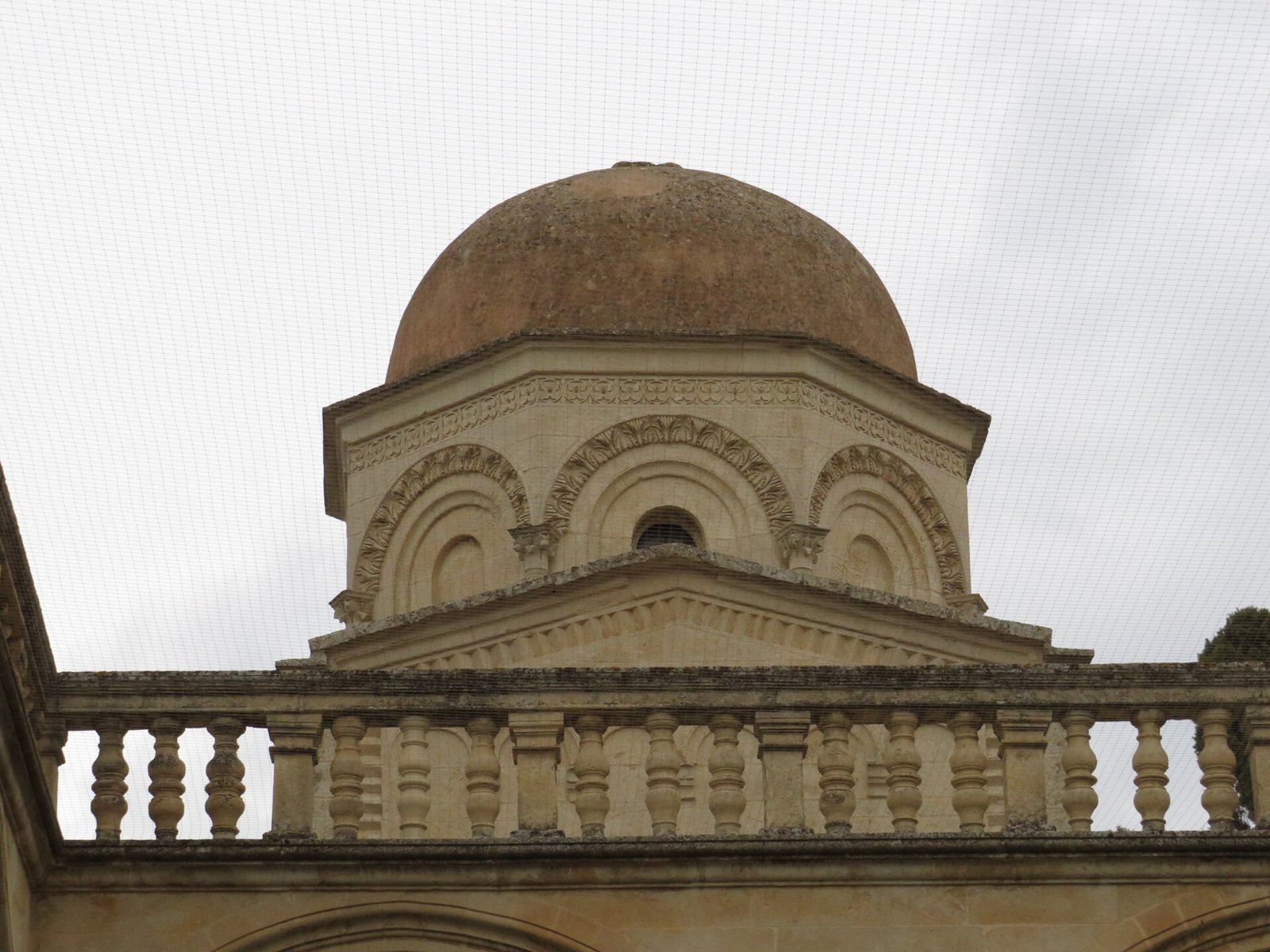
A row of corbelled arches runs along the church walls. The exterior also includes a bell gable with a sundial and a dome.
Cloister
A sixteenth-century cloister stands to the right of the church. Its well has a seventeenth-century canopy supported by four twisted columns.
Cemetery
A cemetery area lies to the left of the church. A cemetery developed around the complex and remains in use.
Interior layout
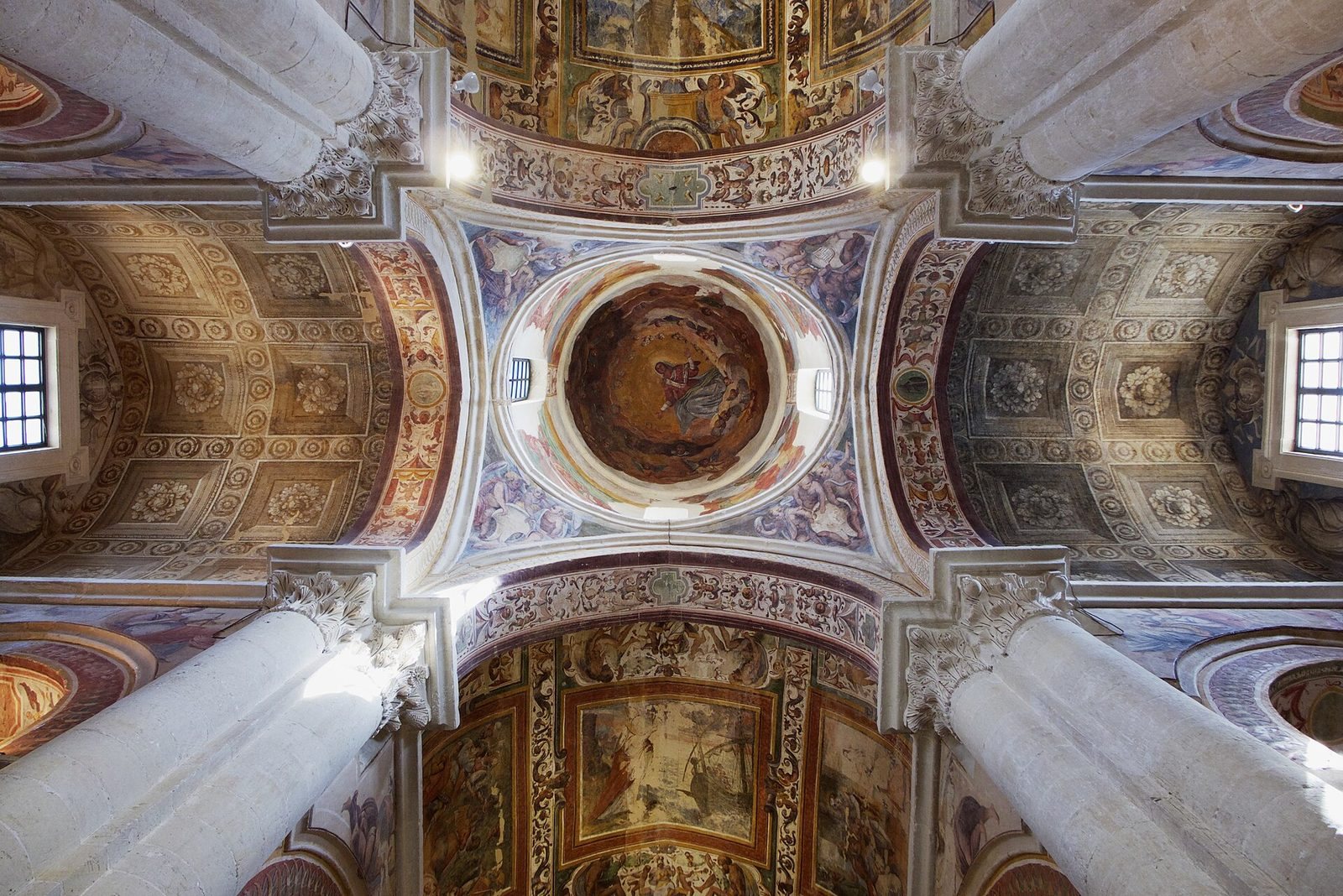
Four-lobed pillars with attached half-columns divide the interior into three aisles. The central nave has a barrel vault, a continuous arched ceiling, while pointed cross vaults, formed by intersecting vaults with pointed arches, cover the side aisles. At the crossing, an elliptical dome rises from an octagonal drum, an eight-sided structure supporting the dome.
Decoration and furnishings
Frescoes
The interior was originally covered with frescoes. In the seventeenth century, paintings on the columns and walls were whitewashed or concealed by altars, while those on the vault were plastered over or repainted with decoration inspired by ancient Roman art. The dome depicts the Coronation and Passing of the Virgin. Frescoes in the choir date to 1619.
Altars
The side aisles contain altars dating broadly to the sixteenth and seventeenth centuries. Some are attributed to Mauro Manieri. Among them are altars dedicated to Saints Benedict, Bernard Tolomei, and Frances of Rome, and to Saints Nicholas and Cataldus. The two altars named for the church’s patron saints display eighteenth-century canvases by Neapolitan painter Giovan Battista Lama.
Statue and holy-water stoups
A sixteenth-century statue of Saint Nicholas blessing stands in the left aisle. Two holy-water stoups from the same century are also attributed to Gabriele Riccardi.
Funerary monument
The church contains a seventeenth-century funerary monument to Ascanio Grandi, an epic poet from Lecce.