Gagarin Palace in Odesa: A Classical Palace and Literary Museum
Site at a Glance
- Popularity
- Very Low
- Country
- Ukraine
- Primary era
- Modern
- Eras represented
- Modern
- Civilizations
- Russian
- Site type
- Domestic
On this page7 sections
History
Construction and dating
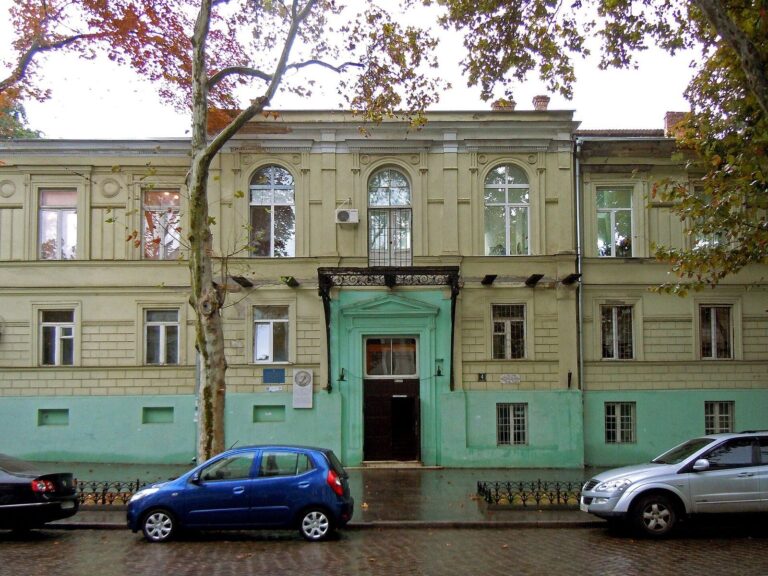
Gagarin Palace in Odesa is a nineteenth-century Classical-style palace in Ukraine, designed by architect Ludwig Otton. Its protection plaque gives the dates 1842–1850, and 1850 is also cited as the year of construction. Local historian Tetiana Dontsova instead places the building work around 1859–1860.
Literary and museum use
The palace housed a literary-artistic society. From 1909 to 1911, it hosted exhibitions featuring paintings by Kyriak Kostandi, Franz Roubaud, and Ivan Aivazovsky. The Odesa Literary Museum is now based in the building. The palace is designated a monument of architecture of national importance and a monument of local historical importance. A separate building lower down the slope was formerly included with the palace in the local architectural-monument register, but was later removed.
Remains
Palace exterior
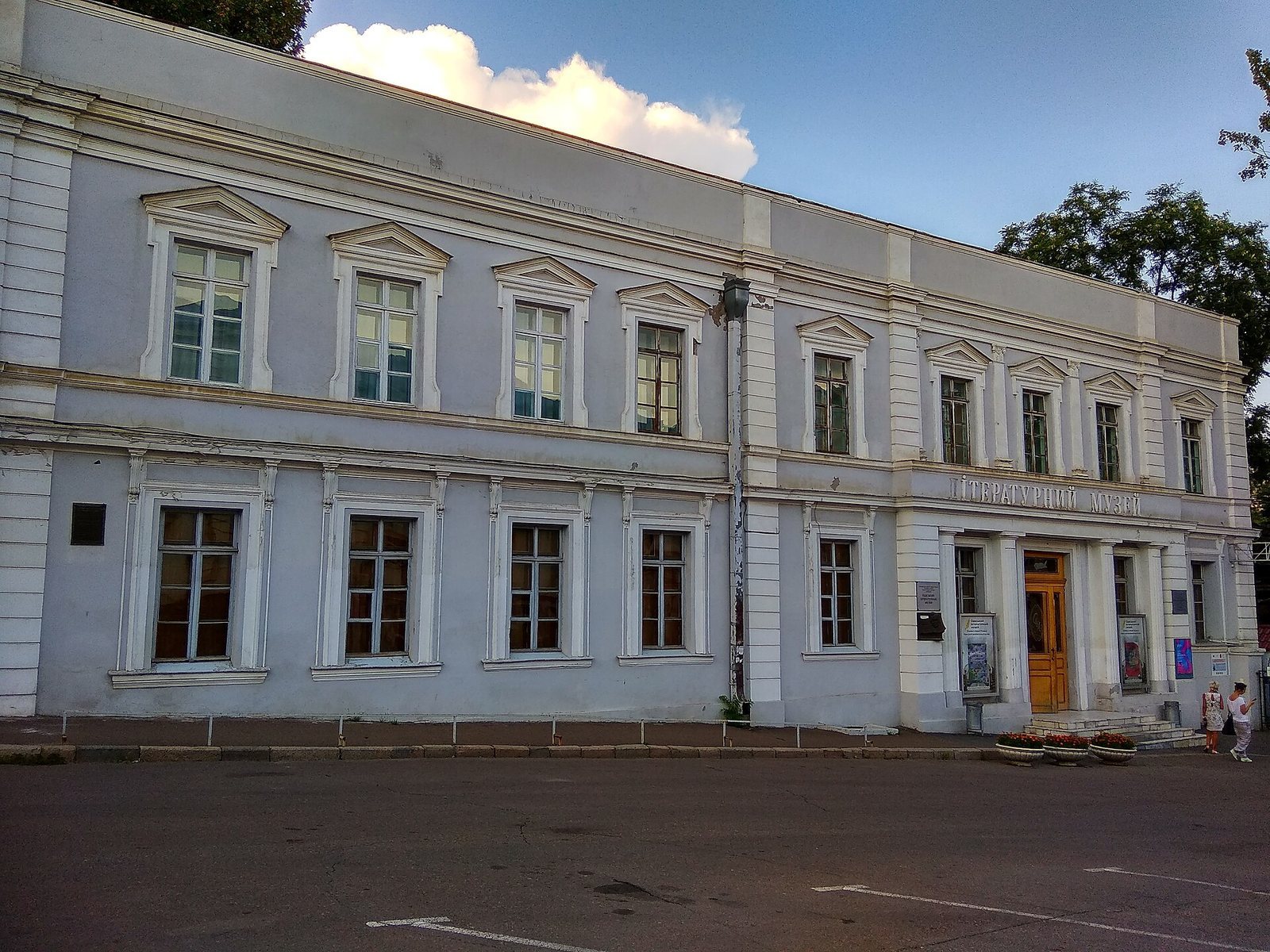
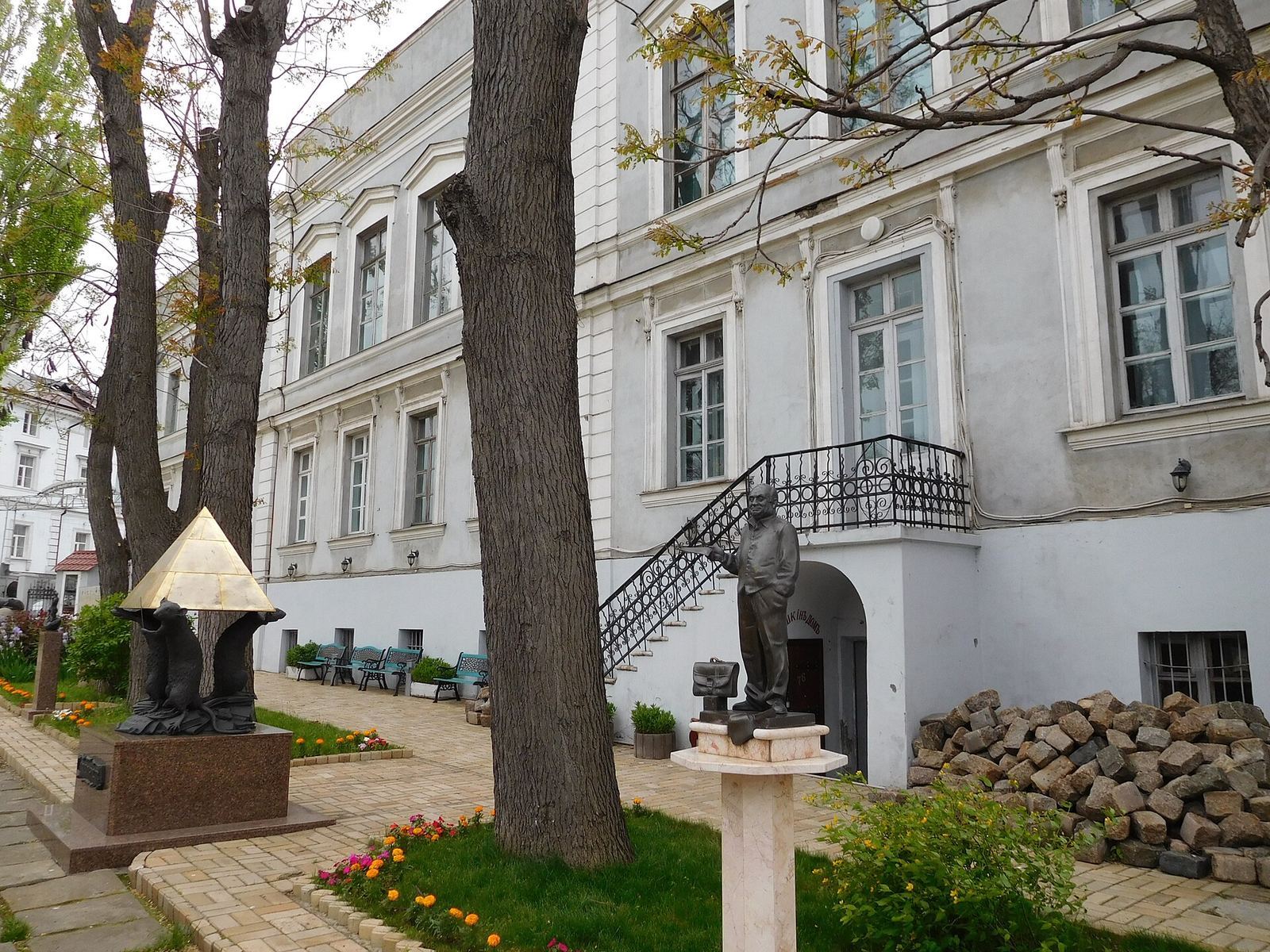
The two-story palace, which has a basement, follows a trapezoid-shaped plan. Three semicircular projections extend from its sea-facing side. Limestone forms the building, whose exterior is plastered and divided by horizontal bands. An elaborate cornice, a projecting molding at the top of a wall, and a high, plain attic, the raised wall above it, finish the facades. On the sea-facing facade, Corinthian pilasters, shallow rectangular wall features shaped like columns, frame the exterior. Paired Tuscan columns, another classical column order, flank the main entrance. Windows have surrounds; those in the formal rooms are rectangular, while the sea-facing windows are large and semicircular. The palace is in good condition.
Interior decoration
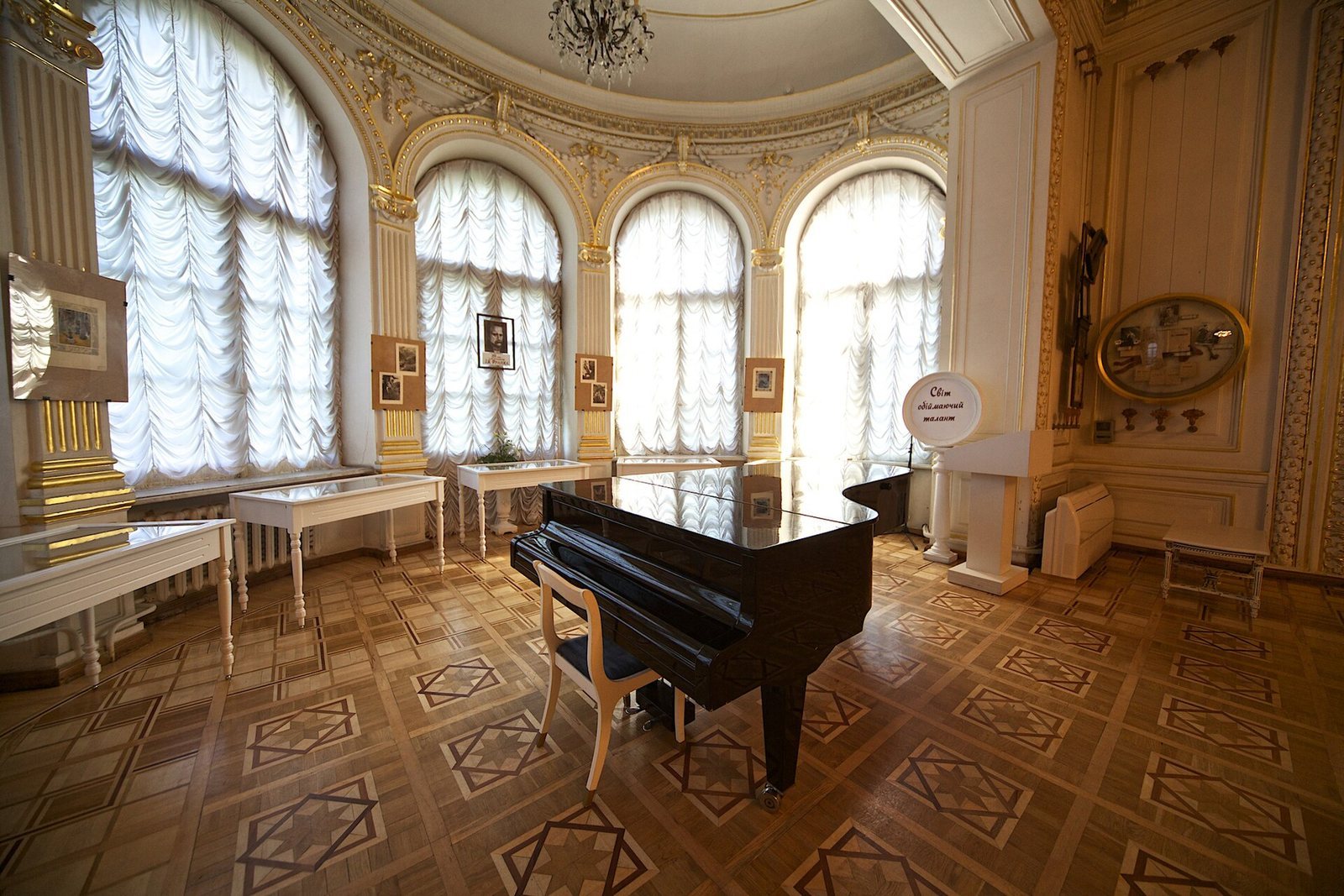
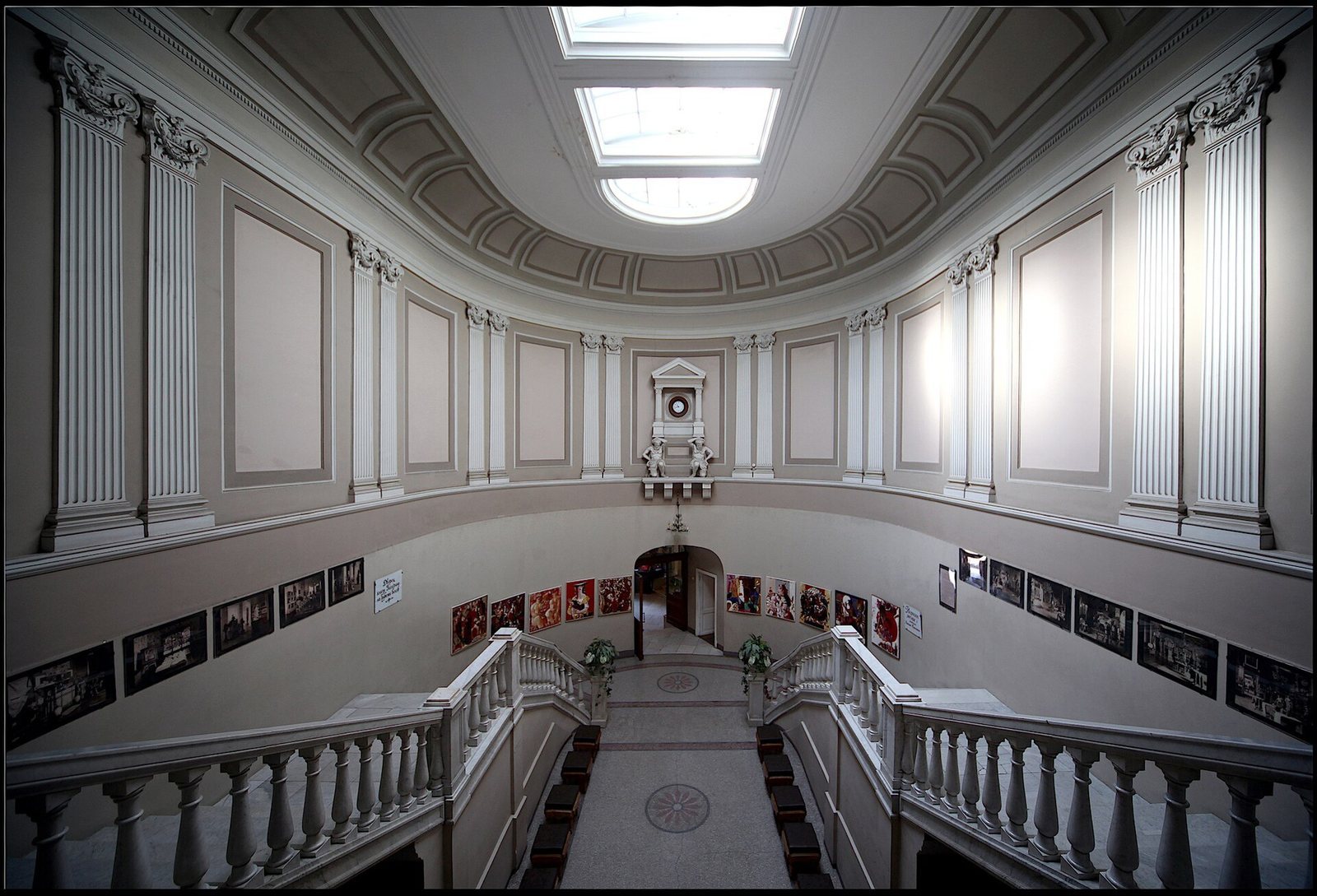
Rich decoration survives in the anteroom, the entrance hall with its double-sided marble staircase, the second-floor ceremonial hall, and two adjoining rooms. Stucco, plaster used for decorative surface work, covers parts of the walls and ceilings, with gilding on the upper floor. A memorial plaque on the building honors N. A. Bryhin, the writer and journalist who founded the Odesa Literary Museum.
Building below the slope
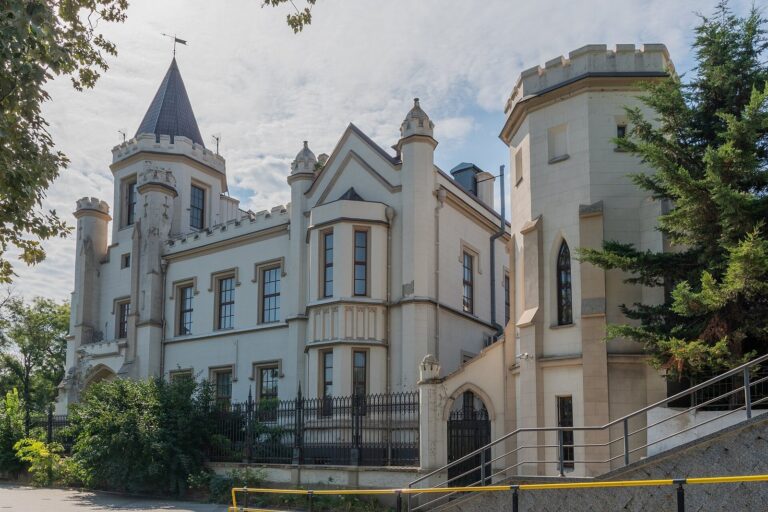
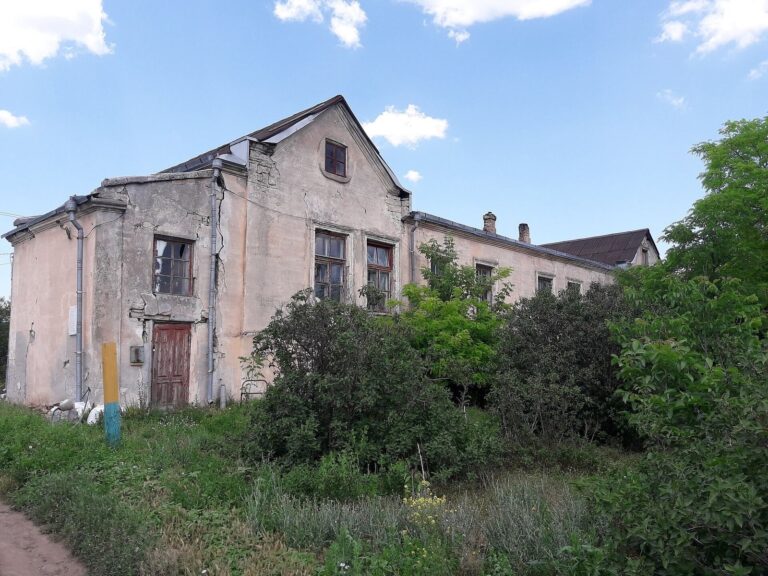
A separate three-story building stands lower down the slope. It formerly belonged to the Gagarin princes, a Russian princely family, and apparently now serves as a warehouse.