Obi Castle: A Hill-and-Plain Castle in Japan
Site at a Glance
- Country
- Japan
- Primary era
- Medieval
- Eras represented
- Medieval, Early Modern
- Civilizations
- Ashikaga shogunate, Shimazu, Tokugawa
- Site type
- Military
- Remains
- Castle
On this page11 sections
History
Obi Castle is a hill-and-plain castle in Japan whose main structures are broadly dated to the fifteenth century. Its foundation date is uncertain: tradition connects its beginnings to the Tsuchimochi clan during the Nanboku-chō period, when rival Northern and Southern imperial courts competed in fourteenth-century Japan, and an origin early in that century has also been proposed. Construction around 1475 is attributed to Shimazu Tadakane. The castle stood near the mouth of the Sakatani River, with river transport linking the area to Aburatsu. In the Edo period, timber, including Obi cedar, was shipped from the region.
Contests between the Shimazu and Itō
In 1458, the Shimazu placed a relative who held Shibushi Castle at Obi to oppose the Itō clan’s southward expansion. An Itō invasion in 1484 killed a clan leader. The Shimazu forestalled further immediate conflict by giving up territory and changing the castle’s lord; control passed to the Shimazu Toyoshu branch.
Itō Yoshisuke began attacking Obi in 1544. In 1560, Ashikaga Yoshiteru, the military ruler known as shogun, mediated a truce. The Itō captured the castle in 1562, and Yoshisuke granted it to his son, Itō Suketake. The Itō were weakened by their defeat at the Battle of Kizakibaru in 1572. As the Shimazu extended their reach across Hyuga, they retook Obi in 1576.
After losing the castle, Suketake served Toyotomi Hideyoshi and guided him during his 1587 campaign to conquer Kyushu. Following the Shimazu surrender, Suketake returned as lord of Obi in 1588. The Itō then held the castle until the domain system ended in 1871.
Obi Domain and later preservation
During the Edo period, when territorial lords governed domains under the Tokugawa shogunate, Obi Castle was the administrative center of the Itō-led Obi Domain. The Itō were Tozama daimyo, lords whose families had not been long-standing Tokugawa allies, and their domain had an income of 36,000 koku, a measure of rice yield. They sided with the Eastern Army at the Battle of Sekigahara in 1600, a decisive conflict in the struggle for control of Japan, and were among the few Kyushu clans to do so.
Three major earthquakes in the early Edo period led to extensive repairs. The 1684 earthquake badly damaged the castle. Work on its moats and stonework was completed in 1691, and the residence was finished in 1693. A school for the domain was established on Hachiman-maru in 1801 and enlarged and renamed Shintokudo in 1831.
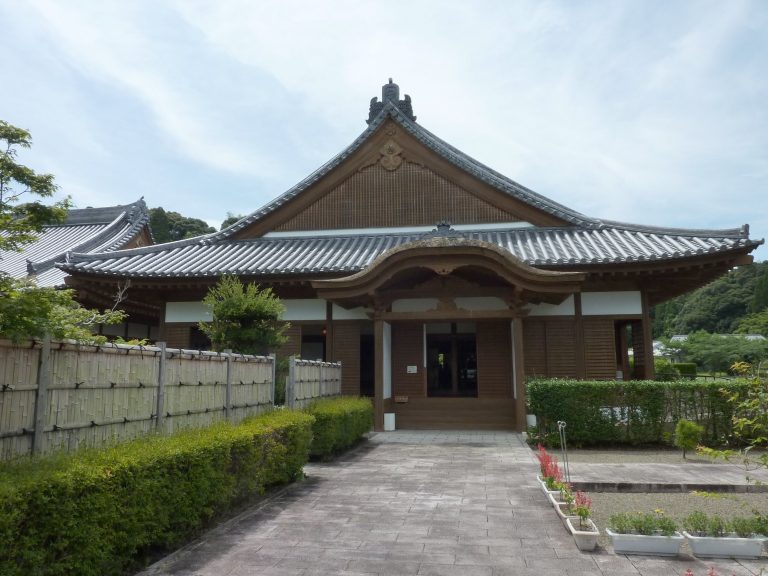
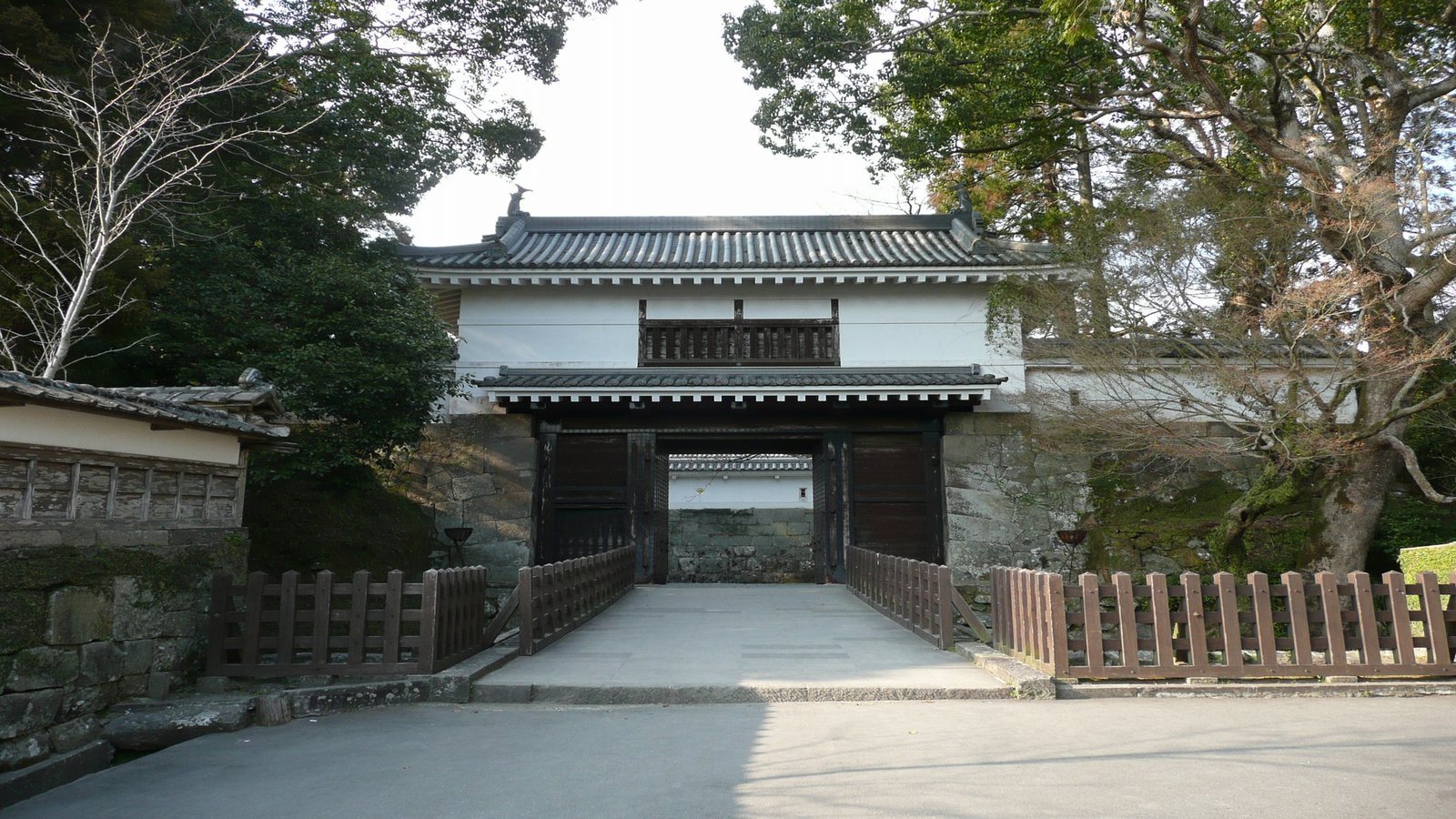
In 1977, the Obi castle town became a nationally protected Important Preservation District for Groups of Traditional Buildings, the first such district in Kyushu and Okinawa. Restoration and improvements in 1978 included rebuilding the main gate and constructing a wooden history museum modeled on the castle residence. The museum’s exterior followed a historical reconstruction rather than surviving records of the original design. In 2006, Obi Castle was selected as one of Japan’s 100 Famous Castles.
Remains
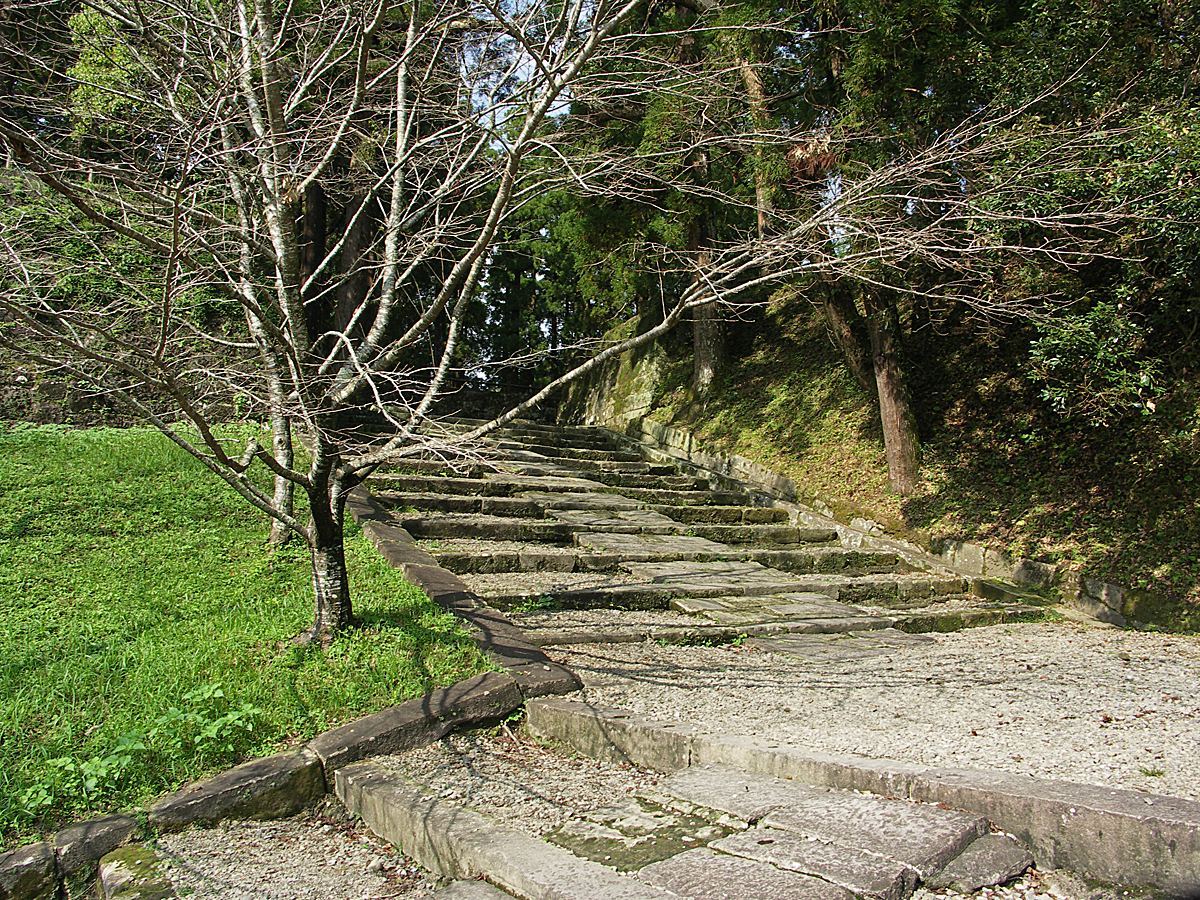
The castle occupies a plateau between the Sakatani River to the south and the Yamakawa River to the northeast. Its enclosures used the rise above the surrounding lowland, while the plateau’s Shirasu, a loose volcanic deposit common in southern Kyushu, was shaped into steep defensive slopes.
Enclosures and defenses
Castle layout
A bailey is a separately enclosed area within a castle. Obi’s central enclosure was the Hommaru, surrounded directly by Matsuo-maru, Moto-hommaru and Imashiro-maru. Farther out lay Nishi-no-maru, Naka-no-maru, Kita-no-maru, Ideya-no-maru, Moto-maru and Hachiman-maru. The present Obi Elementary School occupies the former Hommaru, with Imashiro-maru incorporated into its grounds. Obi Middle School occupies parts of the northeastern outer enclosures.
Walls, earthworks and entrances
Walls protected the central enclosure, while earthworks defended the outer areas. Cut slopes, moats and stone walls strengthened the defenses. During Edo-period rebuilding, stonework was added at the main gate area and at Naka-no-maru. The southern section is the surviving part of the Hommaru walls. The main gate is a yagura-mon, a gate with a tower structure above it.
In the 1690s rebuilding, the central enclosure was moved to its present position. A stone entrance feature in front of it formed a masugata, a defensive entrance enclosure. The castle residence, previously in Naka-no-maru, was rebuilt in Matsuo-maru.
Buildings and castle town
School and residences
The former domain school is associated with the Omoya main building and the Nagayamon gate. Yoshokan, the residence of the last lord of Obi Domain, stands in the former castle garden. A small history museum occupies the southeast corner of the elementary school grounds.
Komura Jutaro memorial museum
A memorial museum to Komura Jutaro stands in front of the main gate. Komura was a politician and diplomat associated with negotiations that ended the Russo-Japanese War.
Historic streets and plots
The castle town retains historic roads and property boundaries. Surviving samurai-house sites are enclosed by combinations of stone walls, earthen walls and hedges, and remains of the samurai quarter extend in front of the castle.