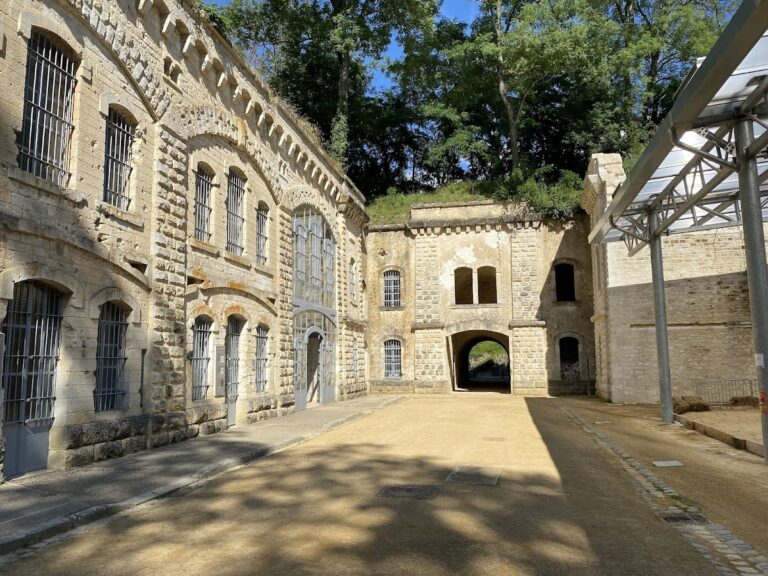
Notre-Dame de Soissons: A Merovingian Benedictine Nunnery and Royal Abbey


Site at a Glance
- Rating
- 4.4
- Popularity
- Very Low
- Country
- France
- Primary era
- Medieval
- Eras represented
- Medieval
- Civilizations
- French
- Site type
- Religious
- Remains
- Monastery
On this page14 sections
History
Notre-Dame de Soissons was a nunnery for Benedictine women in Soissons, France, dedicated to the Virgin Mary and founded during the Merovingian period between 658 and 666. Ebroin, a powerful Merovingian palace official, established the community and appointed Aetheria, a nun from Jouarre, as its first abbess. The early monastery followed the Columbanian tradition, which emphasized rigorous discipline derived from the Irish missionary Columban.
Merovingian foundations
In the 660s, Drauscius, bishop of Soissons, gave Notre-Dame a mixed monastic rule combining elements of the Benedictine and Columbanian rules. The text of this rule has not survived. The nuns also practiced perennial praise, a form of continuous prayer and Psalm singing in which alternating groups took turns day and night. This custom had originated at the monastery of Saint-Maurice d’Agaune.
The nunnery became a royal abbey during the Carolingian period, when the dynasty that succeeded the Merovingians ruled the Frankish kingdom and later imperial territories. Charlemagne’s daughter Rotrude entered the community, and his sister Gisela became its abbess. At the synods of Aix-la-Chapelle in 816–817, the abbey adopted the reforms of Benedict of Aniane, whose program sought to standardize monastic observance under the Benedictine Rule.
Carolingian connections and learning
Under Louis the Pious, Notre-Dame de Soissons became the mother monastery of the imperial abbey of Herford. In 858, an inventory of the monastery’s possessions was prepared before the king’s leading men and signed by fifteen bishops and abbots. This document survives, as does the record of the abbey’s receipt of the estate of Guny from Charles II in the same year.
The writer and theologian Paschasius Radbertus was raised at the nunnery before 803–804, when the education of boys at nunneries was prohibited. He dedicated theological treatises to Abbess Theodrada and later wrote an exposition of Psalm 44 for the nuns of Soissons. Theodrada, a cousin of Charlemagne, was followed as abbess by her daughter Irma.
Medieval development
The counts of Vermandois reduced the abbey’s property in the mid-tenth century. Hugh Capet restored it through a charter issued in 993. Thomas Becket, archbishop of Canterbury, stayed at the abbey for several nights in 1165. In 1184, the community obtained running water through covered canals that crossed Soissons, under an agreement with Raoul the Pious, count of Soissons.
The abbey maintained several hospitals over the course of its history. One, mentioned under Charles II, stood beside the monastery gate. Another was beside Saint-Pierre, while the last and most important began near the river in 1230. Sisters and lay brothers served it under the abbess’s authority. In 1224, Bishop Jacques de Bazoches regulated its staff at twenty servants, and Pope Sixtus V later ordered a priest to celebrate its Masses so that the nuns would not leave the enclosure.
Renovations and dissolution
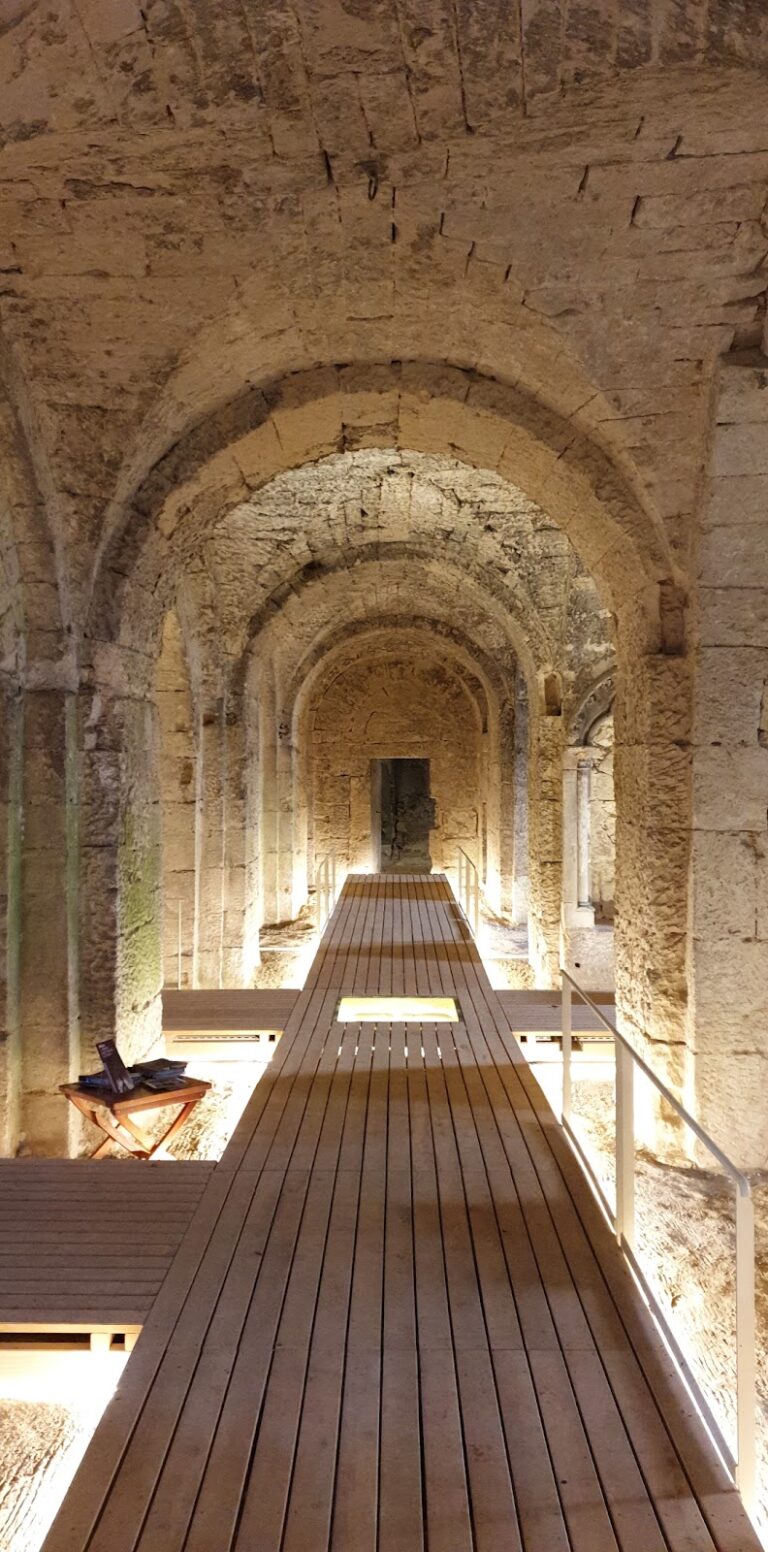
Renovations took place between the twelfth and fourteenth centuries, followed by further work from the sixteenth century to the French Revolution. Abbess Elisabeth de Châtillon received authorization from the Crown to enclose the abbey with walls and add towers. She also built a side aisle and a chapel dedicated to Saint George. Abbess Catherine de Bourbon commissioned the refectory, an infirmary with a vaulted room beneath it, and much of the cloisters. Under Abbess Henriette of Elbeuf, the urban enclosure covered four arpents.
Catherine de Bourbon was also an abbess commendataire, meaning that she held the office and its revenues while others could manage the community’s daily religious administration. She opposed the Calvinists who occupied Soissons in 1567. The abbey was dissolved during the French Revolution, between 1789 and 1799, and parts of its buildings were demolished. The surviving remains then progressively fell into ruin. The church has been protected as a French historical monument since 1913, and the commune of Soissons owns the remains.
Remains
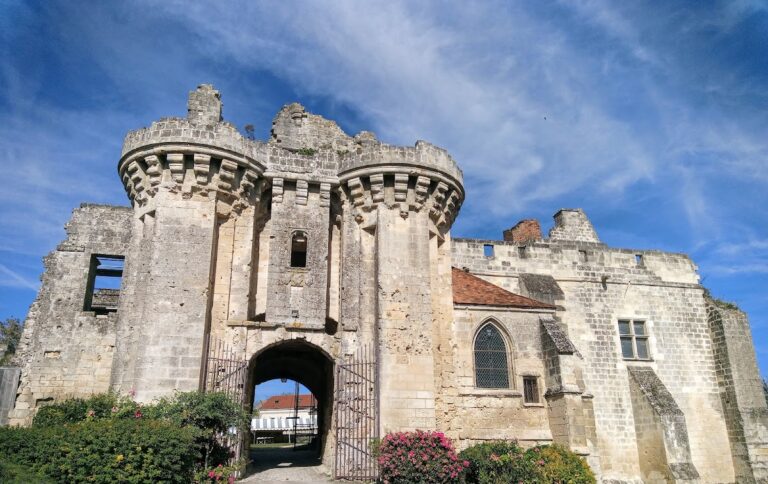
The former abbey complex occupied an extensive area of Soissons, extending from the cathedral square, post office, and courthouse to the bank of the Aisne. Its buildings included several churches, monastic living and working spaces, enclosing walls, towers, water channels, and numerous burial monuments. The surviving fabric represents only part of a complex that once served nuns, monks, the sick, pilgrims, and funerary offices.
Churches and monastic buildings
Notre-Dame and Saint-Pierre
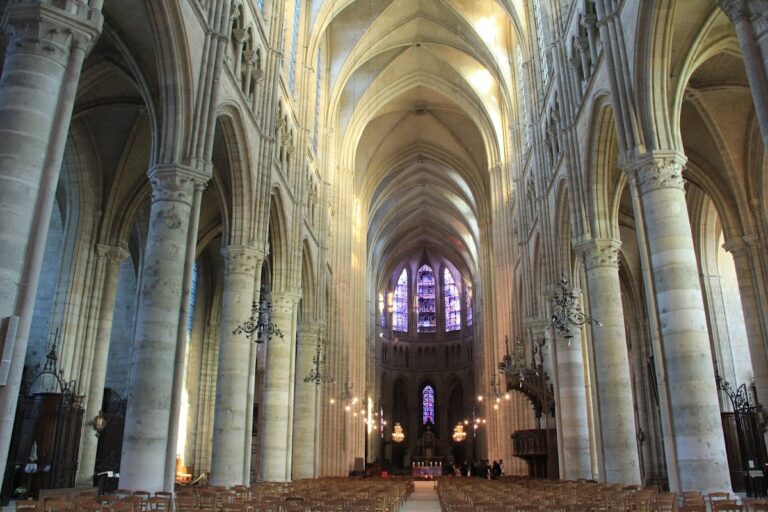
The abbey church of Notre-Dame served the nuns. Part of its northern transept survives, including two ornamented Romanesque windows. Two western bays of the nave of Saint-Pierre, the church associated with the monks, also remain and now serve as a memorial.
Other churches and waterworks
Saint Genevieve served the sick and pilgrims, while Holy Cross was used for funerary offices, bringing the complex to as many as four churches. Covered canals carried running water across Soissons into the abbey in 1184. The complex also contained the refectory, an infirmary with a vaulted room beneath it, cloisters, enclosing walls, towers, a side aisle, and the chapel of Saint George.
Burials and memorials
Tombs of early religious figures
The tomb of Drauscius was first placed in the earliest church, then moved to the apse of the new church, and later transferred to a chapel dedicated to him. Two black-marble pillars supported it. The chapel also contained the sarcophagus of Saint Voalde and the tomb of Saint Leudard. The tomb of Drauscius is now in the Cluny Museum in Paris.
Abbesses and other burials
Several abbesses were buried within the church. Beatrix de Martinmont lay beneath the choir eagle, Marguerite de Cambronne in the choir, and Elisabeth de Châtillon in the right side aisle near the chapel of Saint George. Marguerite de Coucy was buried in the nave with Elisabeth de Châtillon. Some tombs disappeared during the remodeling of 1151, while abbesses’ effigies were reused as building stones in the church and other structures.
Aristocratic monuments
A white-and-black marble tomb with life-size figures commemorated Catherine de Bourbon and her sister Marie in an exterior niche beside the choir. Nearby was a mausoleum for Louise of Lorraine-Aumale, made in the same manner. A small arcade held the hearts of the count and countess of Harcourt. Other monuments included the tomb of a daughter of Jacques, an illegitimate son of the Bourbon family, bearing her father’s coat of arms and that of Jumelles; the heart of Marguerite-Philippe du Cambout; and the tomb of Renald de Barbançon, whose sister had entered the convent.
Relics and manuscripts
Notre-Dame de Soissons was known for its collection of relics, including one identified as the Virgin Mary’s shoe. The Montpellier Psalter was partly written at the abbey. Together with the surviving church fragments and the recorded tombs, these objects and manuscripts preserve evidence of the community’s religious and intellectual life.
Nearby sites