Fort de Condé-sur-Aisne: A Séré de Rivières Fortification in France


Site at a Glance
- Rating
- 4.5
- Popularity
- Low
- Country
- France
- Primary era
- Modern
- External website
- Open
- Eras represented
- Modern
- Civilizations
- French
- Site type
- Military
- Remains
- Fort
On this page7 sections
History
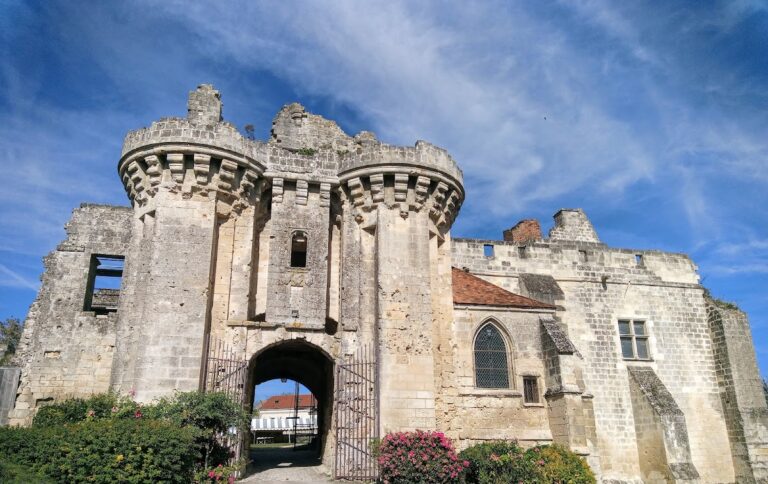
Fort de Condé-sur-Aisne, also known as Fort Pille, is a French masonry fortification at Chivres-Val, built between 1877 and 1883 as part of the Séré de Rivières system. This network of forts was developed after the Franco-Prussian War of 1870–1871 to protect strategic routes and urban centers through mutually supporting artillery positions. The fort controlled the area between Reims, Soissons, and Laon, helping to deny an invading force access to Paris while commanding the Aisne and Vesle valleys from high ground along the Chemin des Dames.
Construction and garrison
Its position also allowed the fort to support nearby Fort de la Malmaison. In 1885, two companies of the 67th French Infantry Regiment, numbering about 500 men, formed its garrison. The fort was named after General Louis Antoine Pille, a French Army general, in 1887.
Late nineteenth-century advances in artillery and the use of high-explosive shells soon made the fort insufficiently resistant. It was already functionally obsolete before construction ended and was decommissioned as a fortification in 1912. It continued mainly as military barracks after that date.
First World War
The fort’s position near the Chemin des Dames, a strategic ridge route linking the areas of Reims, Laon, and Soissons, made it a contested objective during the First World War. German forces captured it without resistance on 1 September 1914. French and British forces retook it on 15 September after several attacks, but a German counterattack soon restored German control. The fort then served as a German hospital.
During the Nivelle Offensive, a major French offensive on the Western Front in April and May 1917, the French advance returned the fort to French control without opposition on 16 April. In October 1917, General John J. Pershing, commander of the American Expeditionary Forces in Europe, and General Franchet d’Espérey, a senior French commander, observed fighting along the ridge from the fort’s post.
German forces recaptured the fort on 28 May 1918 during the May Offensive, and French forces retook it on 7 August 1918. The fort was finally decommissioned in 1927. After the war, it was used to dispose of explosive shells, a role that led to a fatal accident on 18 December 1953. Gustave Rouxhet, Joseph Gronowski, and Marceau Dagry were killed inside the fort, and a commemorative plaque records the event.
Preservation and present use
The commune of Chivres-Val purchased the fort in 1959 and used it as a stone quarry. An association founded in 1979 began restoration with assistance from local authorities, and custody passed in 2000 to the Communauté de Communes du Val de l’Aisne. Since 2001, the fort has been entered in France’s supplementary inventory of Historic Monuments, a national designation for sites of historic or architectural interest. Restoration has continued, and the fort is used for exhibitions, theatre, and sound-and-light performances.
Remains
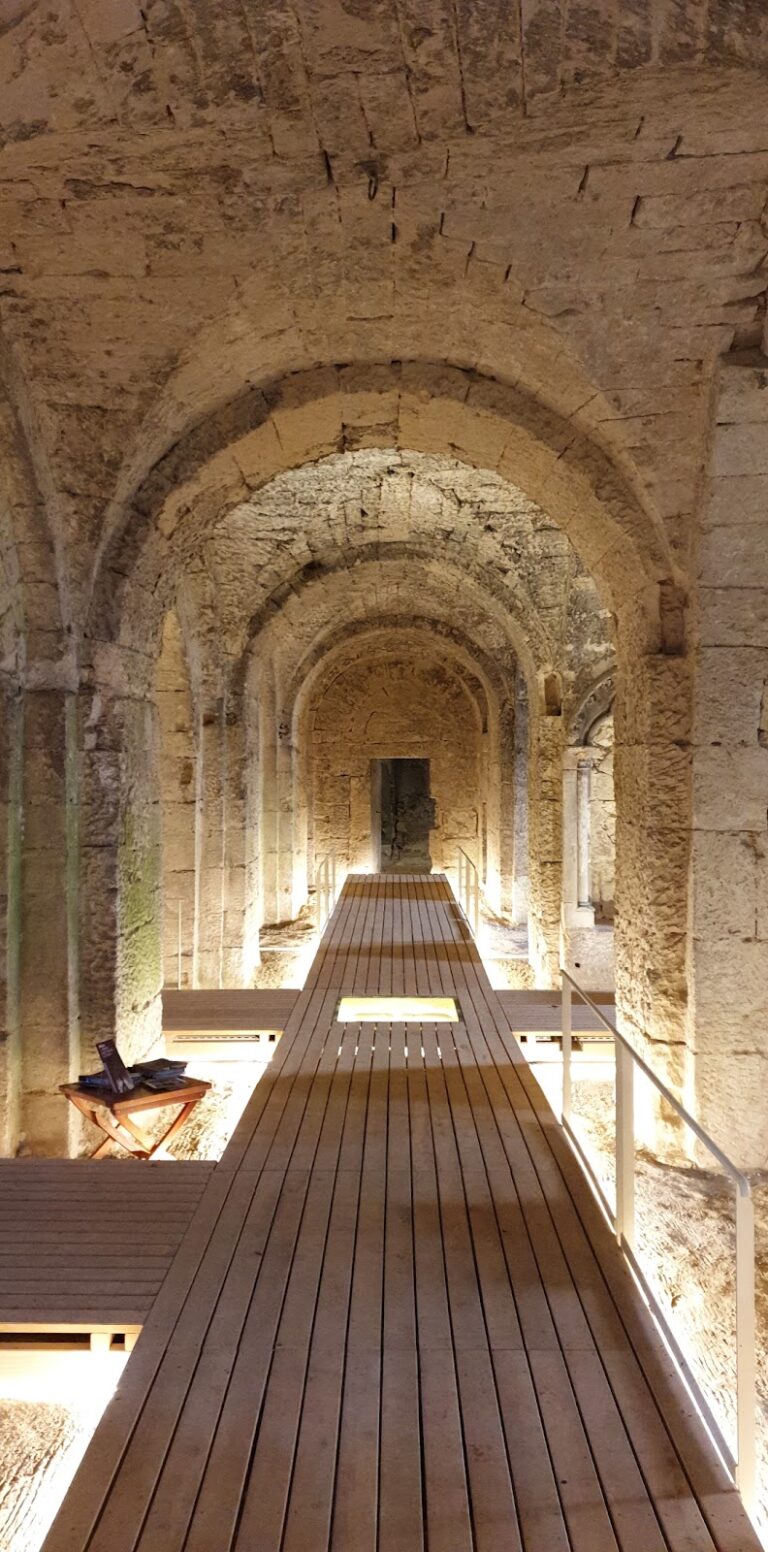
The fort is a roughly pentagonal masonry work built of brick and stone, covering approximately 17 hectares. It stands on elevated ground at the confluence of the Aisne and Vesle valleys, in territory associated with the communes of Condé-sur-Aisne and Chivres-Val. Its surviving military layout reflects its role as a self-contained artillery position and barracks.
Accommodation and service facilities
The fort could house up to 658 men, including 28 non-commissioned officers and 20 officers. Its facilities included an infirmary with space for 80 patients, stabling for 12 horses, powder and ammunition magazines, a forge, a woodworking workshop, and two wells. These installations supported the garrison’s accommodation, medical care, maintenance work, and storage needs within the fortified enclosure.
Artillery and defensive works
Its armament included two Mougin casemates for 155 mm guns. A Mougin casemate was an armored artillery position in which a gun operated behind protective armor and masonry. The initial rampart complement consisted of 18 guns, while a separate battery held eight more. Two additional casemates in the main fort were planned for indirect fire.
The defensive arrangement included two double caponiers and one single caponier. A caponier is a fortified structure projecting into a ditch, allowing defenders to fire along the ditch and protect the approaches. One of the double caponiers provided covering fire for the entrance. The fort has undergone restoration since preservation began in 1979, and the commemorative plaque for the three people killed in the 1953 shell-disposal accident remains inside the site.
Nearby sites