Nostra Signora dell’Acquasanta Sanctuary: A Baroque Pilgrimage Sanctuary in Genoa
Site at a Glance
- Popularity
- Medium
- Country
- Italy
- Primary era
- Early Modern
- Eras represented
- Early Modern, Modern
- Civilizations
- Genoese, Italian
- Site type
- Religious
- Remains
- Sanctuary
On this page12 sections
History
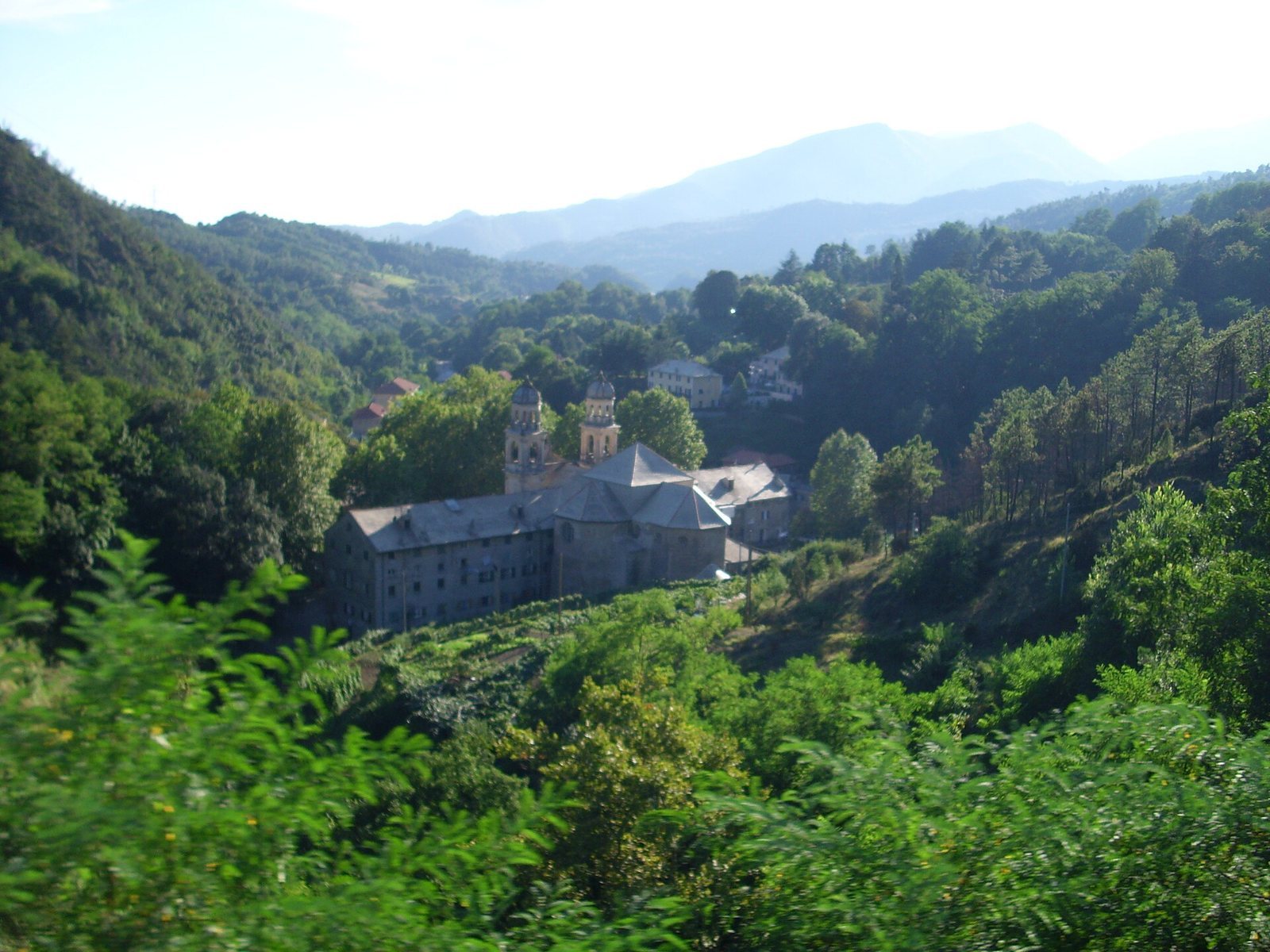
Nostra Signora dell’Acquasanta Sanctuary is a Roman Catholic church dedicated to Mary in Acquasanta, Genoa, Italy. Built between 1683 and 1718, it is Baroque, a European artistic and architectural style prominent from the late sixteenth through the eighteenth centuries. The sanctuary became a destination for pilgrims from nearby communities.
Origins and construction
A settlement developed around the Acquasanta spring alongside devotion to Mary. Local tradition says that Mary appeared there around the middle of the fifteenth century, accompanied by miraculous events, and that a sanctuary was built afterward.
The church’s initial design is attributed, with some uncertainty, to Lombard architect Carlo Muttone. It belongs to the Archdiocese of Genoa, a territorial jurisdiction of the Catholic Church headed by an archbishop. Historically, it fell within the Pieve of Palmaro, a church district organized around a parish church.
Pilgrimage and later changes
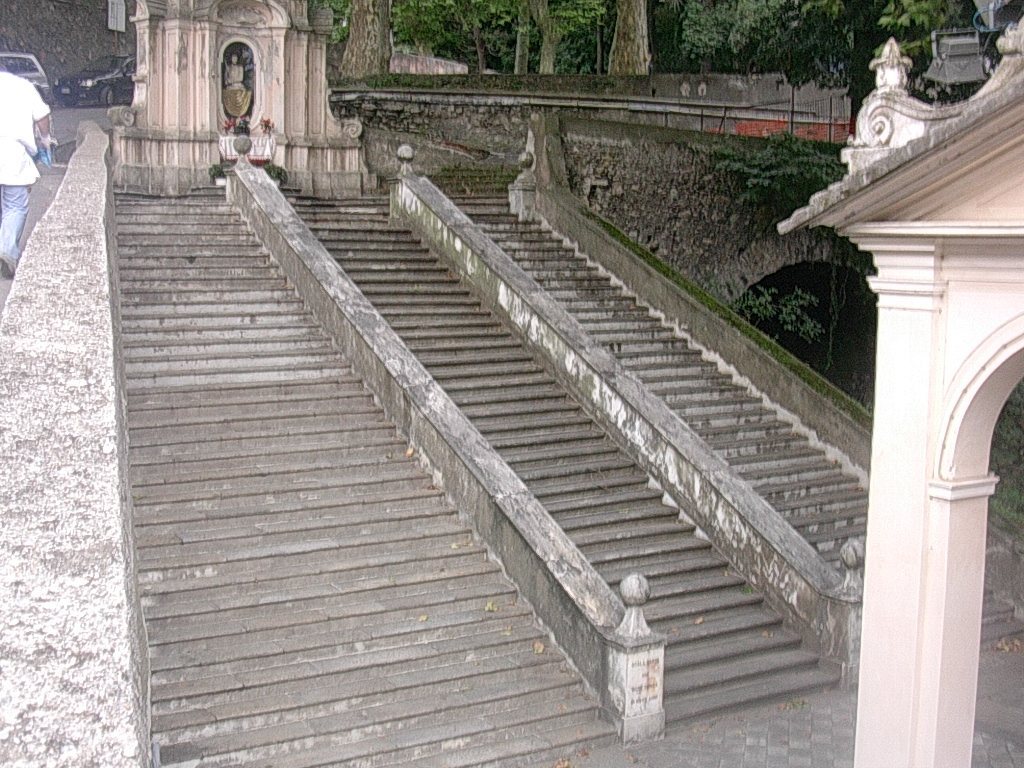
Confraternities, lay religious associations, from Mele, Arenzano, Crevari, Voltri, and Pra’ have long made pilgrimages to the sanctuary. These communities belonged to the historic Pieve of Palmaro. On Sundays in August and September, the groups still take turns climbing the Scala Santa with crucifixes and sculptural figures carried in procession. At the top, bearers raise and lower the figures in a rhythmic greeting to Mary.
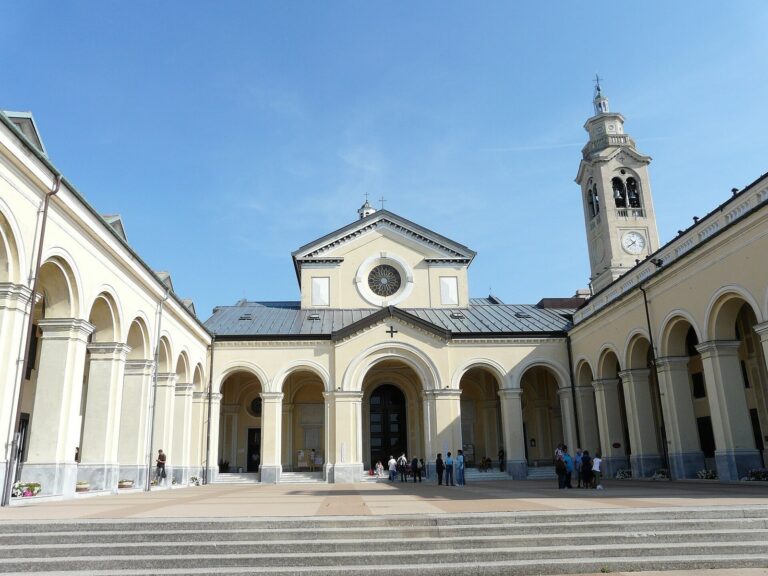
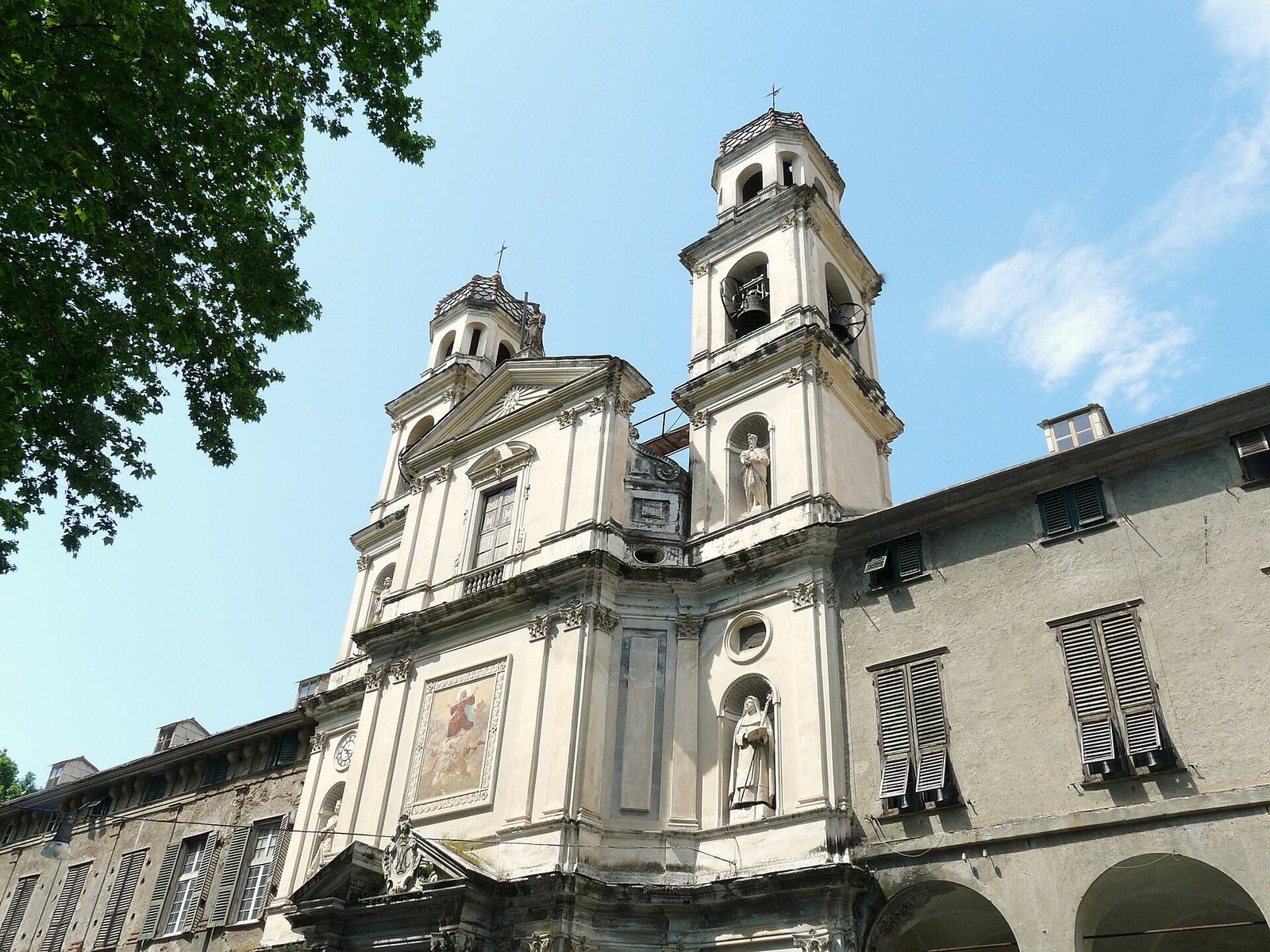
In the late nineteenth and early twentieth centuries, the sanctuary drew both pilgrims and other visitors from nearby towns and the inland area as far as Rossiglione. The well-known thermal spa contributed to its appeal. The façade, designed by Maurizio Reggio, and the two bell towers were completed between 1900 and 1911.
The thermal-bath area underwent a full restoration between 2001 and 2011. A further conservation campaign began in 2011, covering the Baroque façade, porticoes, forecourt, and adjoining rooms.
Remains
Plan and exterior
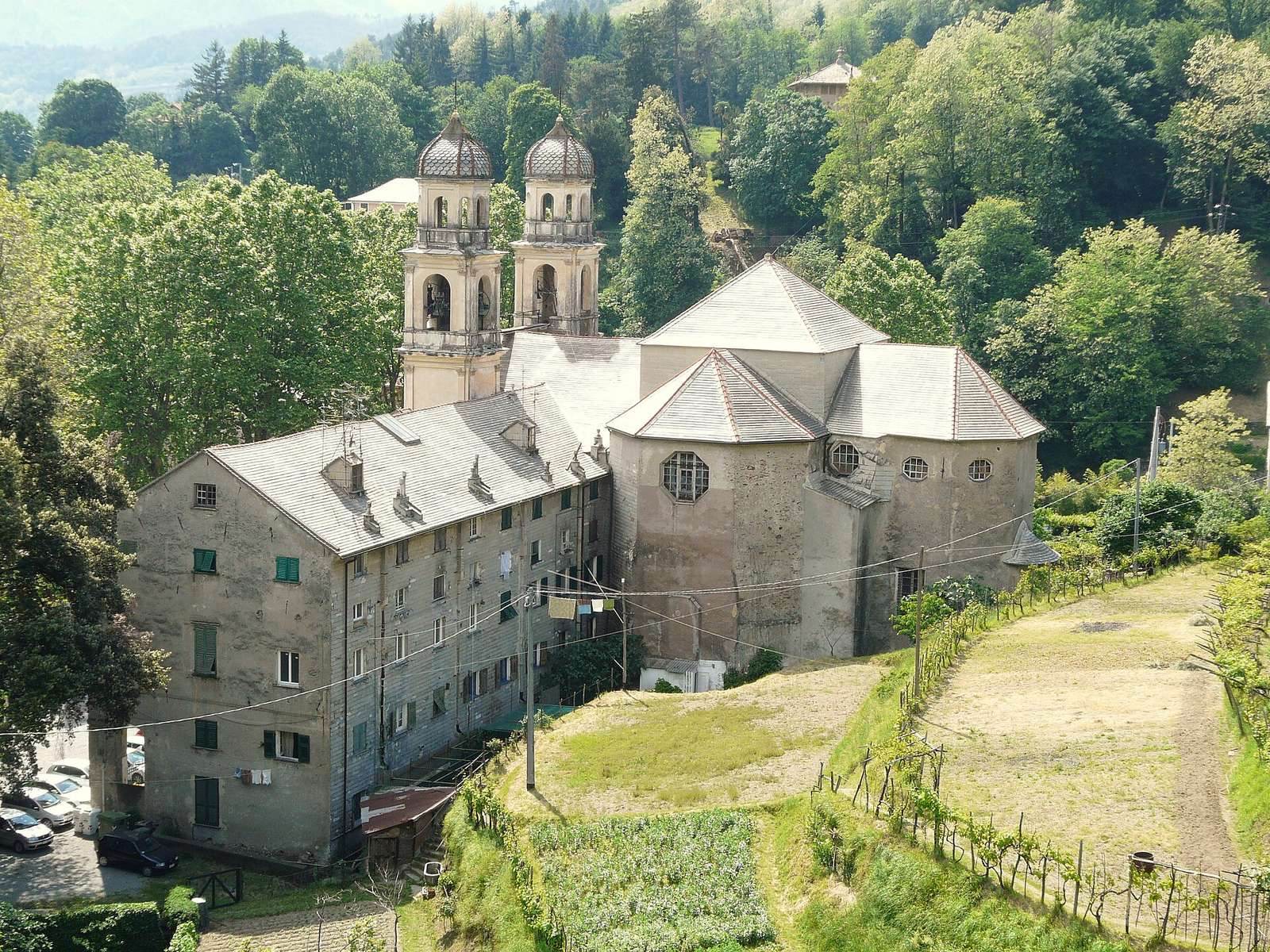
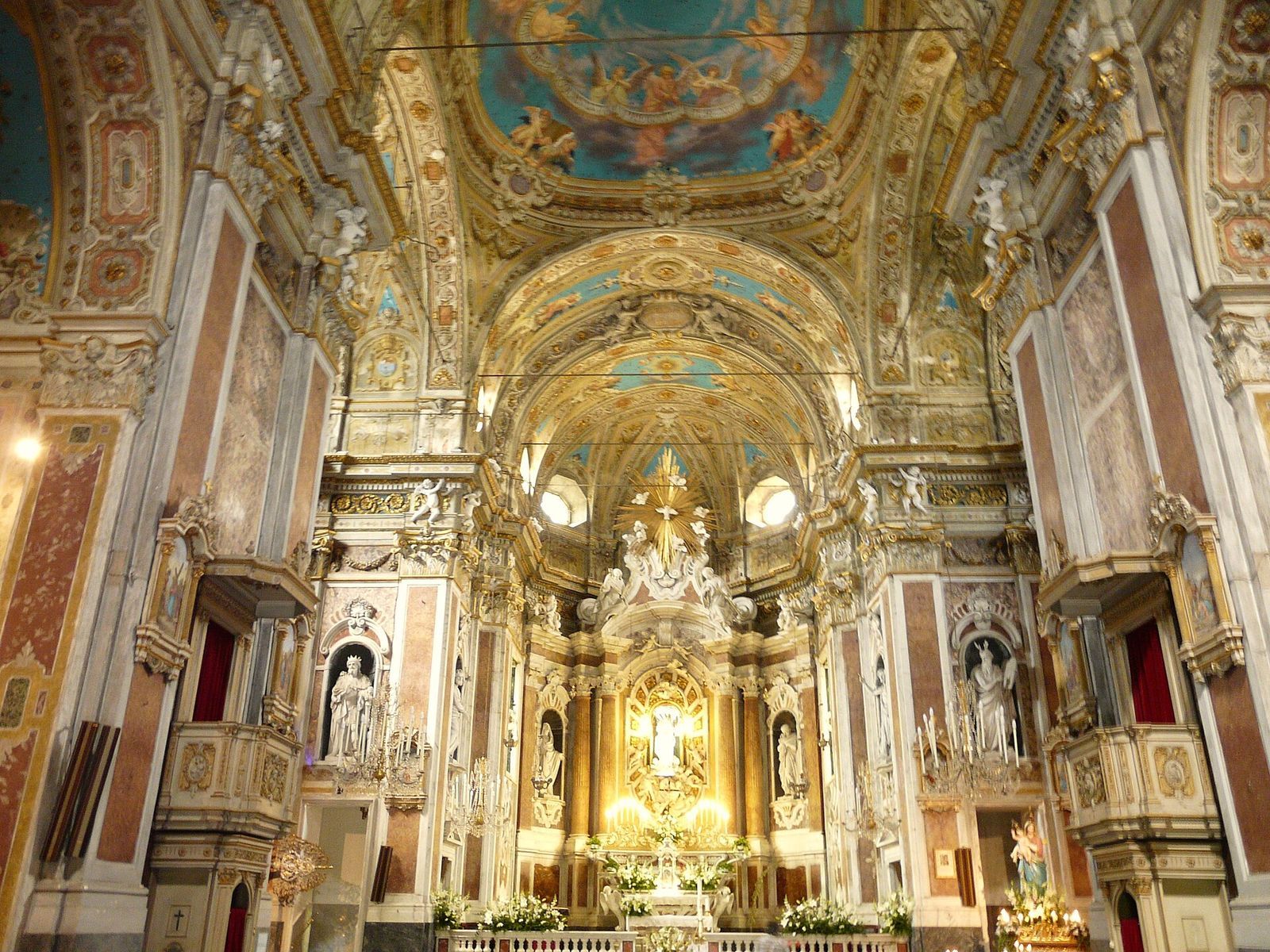
The sanctuary has a single nave crossed by a transept, forming a Latin-cross plan. Its exterior includes a Baroque façade and two bell towers, with porticoes, a forecourt, and adjoining rooms as parts of the wider complex.
Interior features and artworks
Main altar and frescoes
Work on the main altar began in 1730 under sculptor Francesco Maria Schiaffino and was finished by his pupil Carlo Cacciatori. Giuseppe Canepa painted the interior frescoes in the eighteenth century; Rodolfo Gambini retouched them in 1911.
Side chapels
The first chapel along the right-hand wall is dedicated to the Assumption, the Christian belief that Mary was taken into heaven. It contains Lazzaro Tavarone’s painting of that subject, dated 1616. On the left, the second chapel contains Canepa’s 1785 painting Saints Anne and Joachim and the Young Virgin.
Transept
A crucifix in the transept is attributed to Genoese sculptor Anton Maria Maragliano. Four marble statues stand beneath it; Antonio Brilla made them.
Sacristy
The sacristy, a room for vestments and liturgical objects, holds the sanctuary treasury and Domenico Fiasella’s painting of the Holy Family.
Commemorative plaques
Two plaques inside the sanctuary mark the marriage of Ferdinand II of Bourbon, king of the Kingdom of the Two Sicilies, and Maria Cristina of Savoy, who became his queen consort. They give the date as 21 November 1832.
Scala Santa
A devotional staircase of 33 steps leads from a small chapel toward the sanctuary. Known as the Scala Santa, it is a copy of the staircase Jesus is said to have climbed on his way to Pilate, the Roman governor associated with his trial and execution in Christian tradition.