Nizwa Fort: A 17th-Century Defensive and Administrative Stronghold in Oman
Visitor Information
Google Rating: 4.5
Popularity: High
Official Website: nizwafort.om
Country: Oman
Civilization: Early Modern, Medieval Islamic
Site type: Military
Remains: Fort
History
Nizwa Fort is situated in the city of Nizwa, Oman, a historically significant oasis settlement in the central region of the country. The fort was constructed by Omani builders during the 17th century, specifically under the rule of the Yaruba dynasty.
The origins of Nizwa as a political and cultural center trace back to an earlier period when it intermittently served as the capital of Oman between the 8th and 12th centuries. During these centuries, Nizwa remained an important hub for governance and knowledge despite political power shifting to other locations. The fortress that stood on the site before the current structure likely dates from this early medieval period, spanning roughly the 9th to 12th centuries.
In the mid-17th century, Imam Sultan bin Saif I of the Yaruba dynasty initiated the construction of the present fort around 1656, with the process taking approximately twelve years to complete. This effort replaced or was built upon the remains of the older fortress. Imam Sultan bin Saif I is a notable figure recognized for leading the campaign that expelled Portuguese colonial forces from Oman, restoring local autonomy.
Nizwa Fort served as the administrative seat for the imams, who combined religious and political leadership, as well as for the regional governors known as Wālī. The fort’s strategic location and design reflected the tense political climate of the time, with frequent regional conflicts necessitating strong defensive measures. Beyond military defense, the fort also functioned as a place for governance, including courts and prison cells for those accused of crimes.
The fort’s construction incorporated innovative defensive planning such as building above an underground river to ensure access to fresh water during sieges, demonstrating foresight in long-term military resilience. Over the centuries, Nizwa Fort stood as a symbol of the city’s continued importance in Oman’s political and social history.
Remains
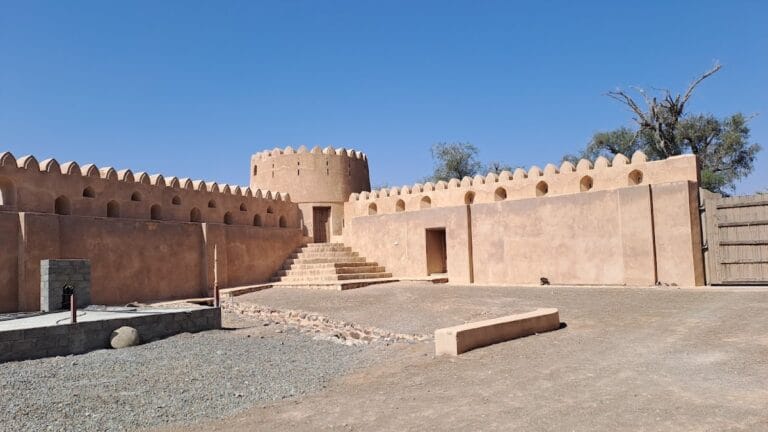
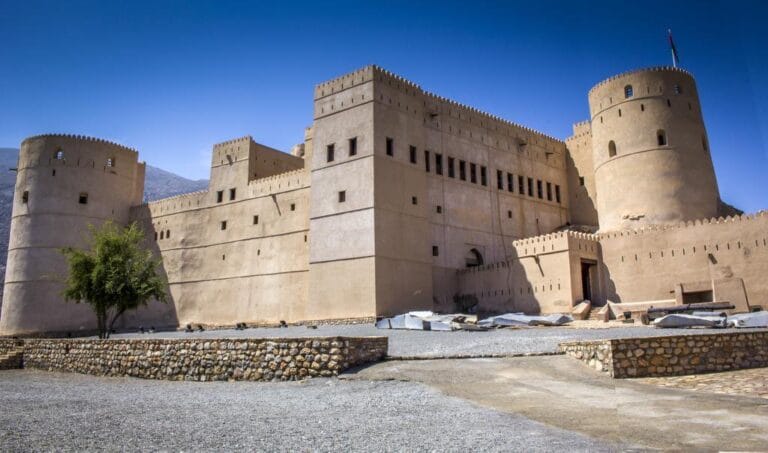
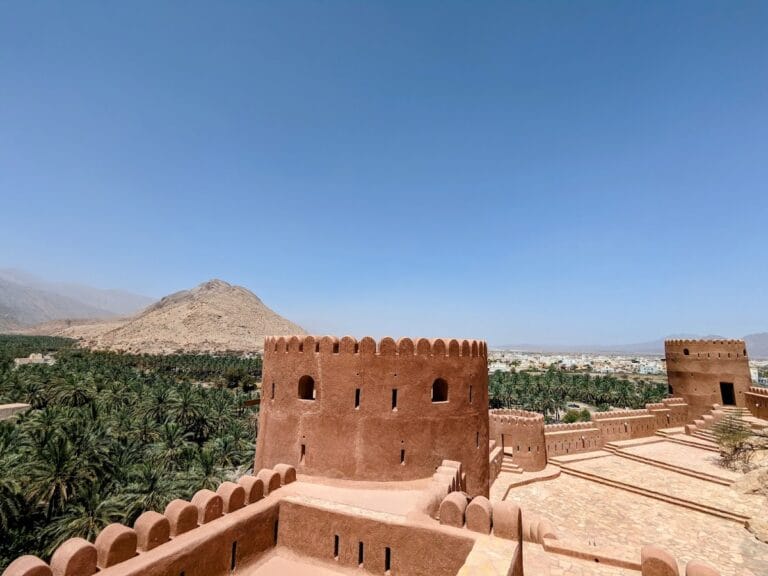
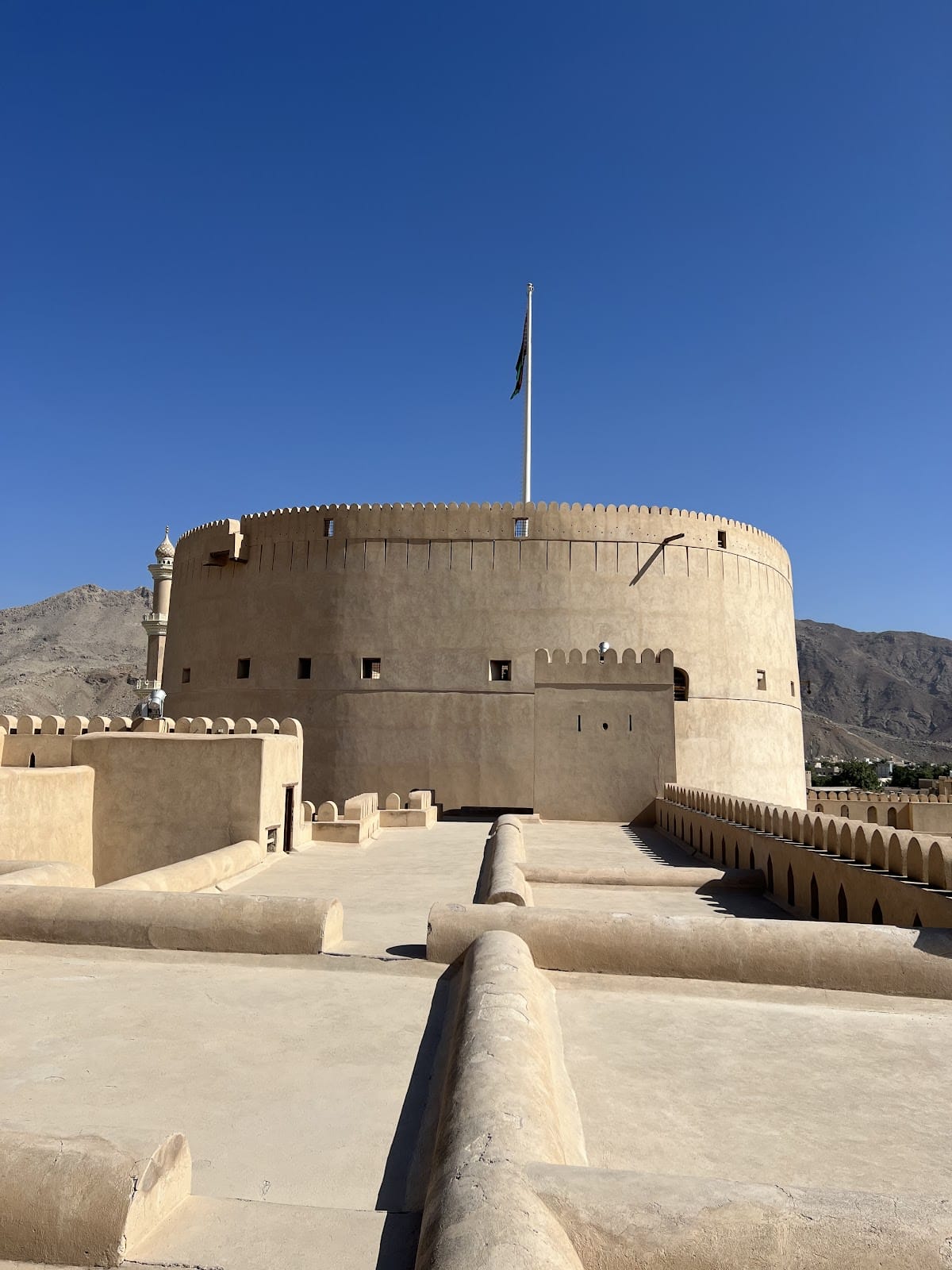
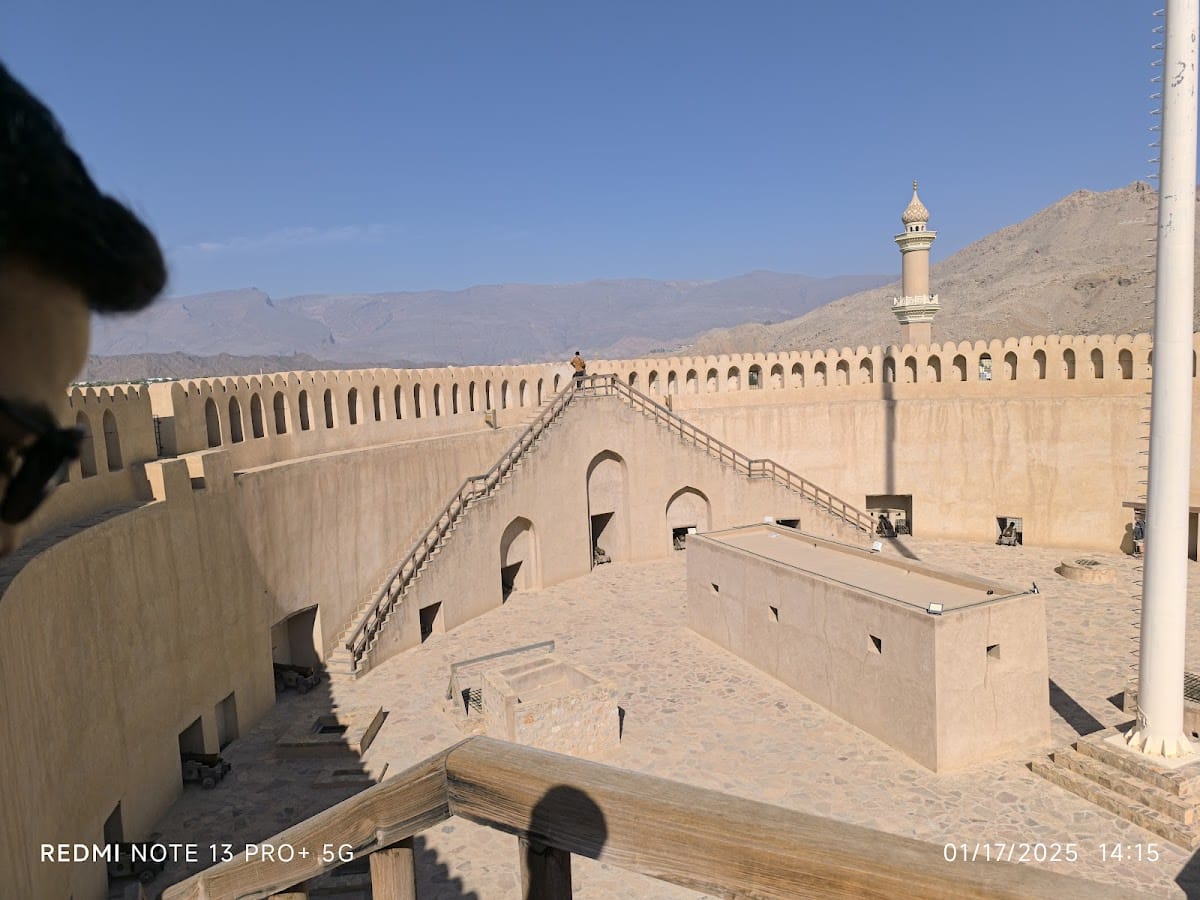
Nizwa Fort presents as a large circular fortress constructed primarily from stone, rubble, and mortar, demonstrating the robust building techniques of the 17th century. Its main tower rises to about 24 meters and has an external diameter of roughly 45 meters. The foundations of this tower reach deep into the ground, extending approximately 30 meters below the surface, providing substantial structural stability.
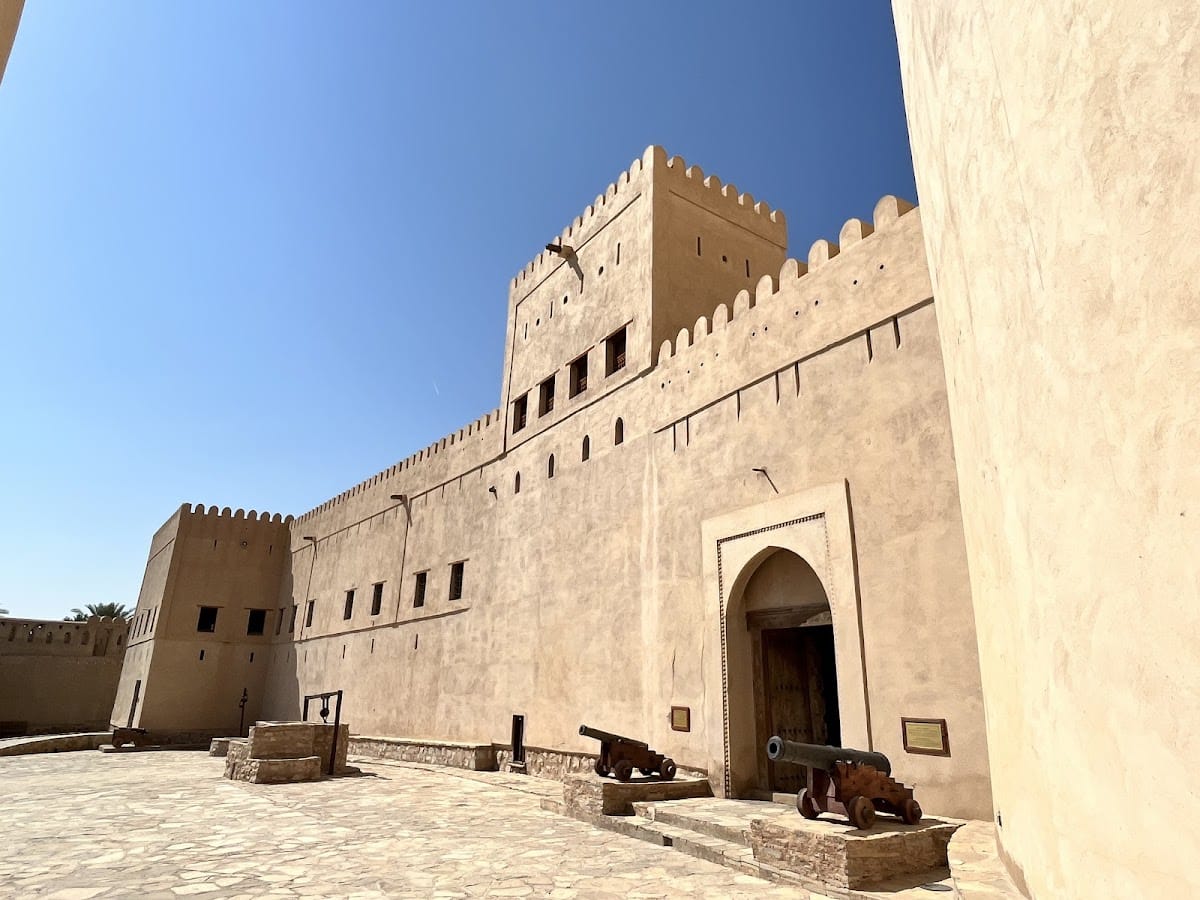
The tower’s interior is partially filled with rock and rubble up to a height of 14 meters. Above this fill sits a cannon platform, which is shielded by walls over 10 meters high and topped with a wooden palisade. Originally, the fort was outfitted with 24 cannon openings arranged to cover all directions for defense. Today, four cannons remain, including one honoring Sultan bin Saif and another gifted from the American city of Boston in 1840.
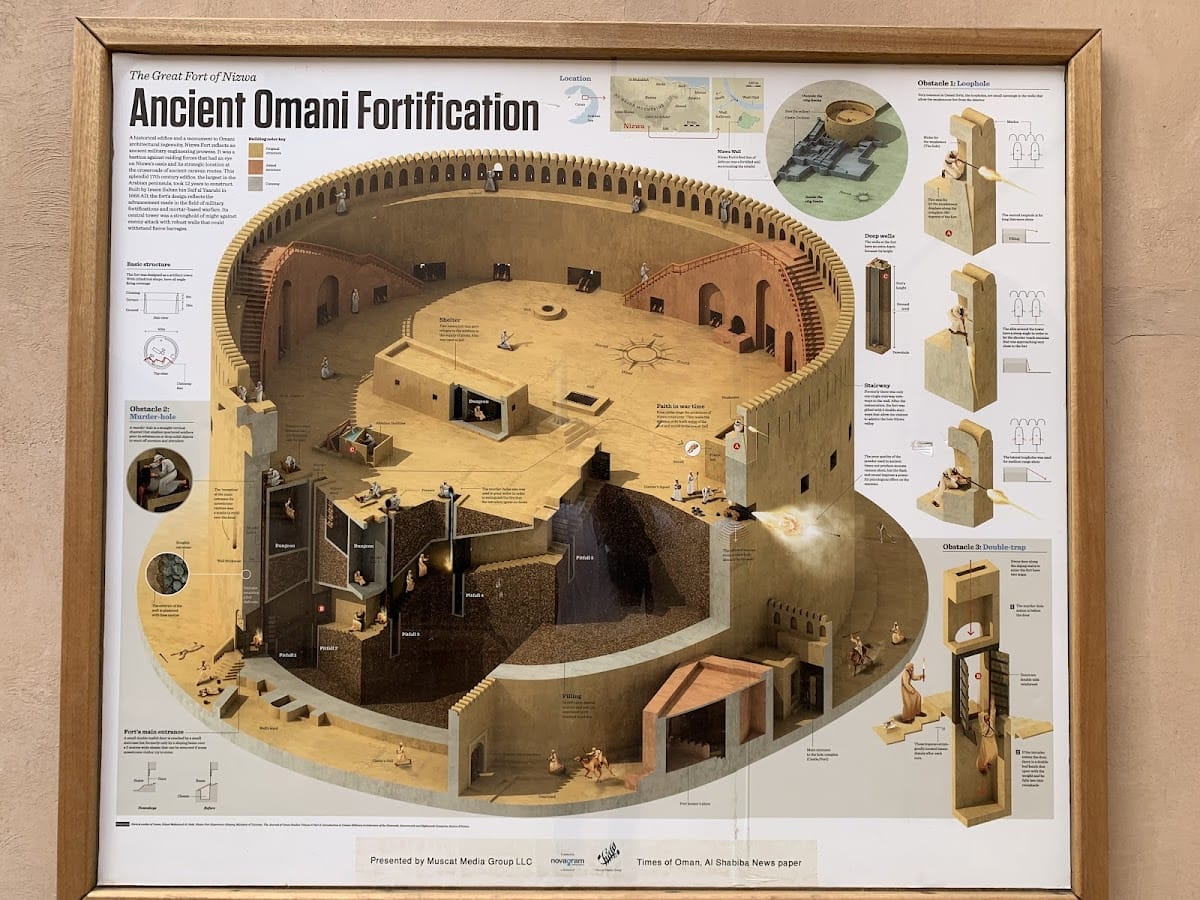
Walls and doors of the fort are notably thick and rounded to resist attacks involving explosive mortar rounds. The heavy wooden doors, more than 10 centimeters thick, feature iron spikes to deter forced entry. Defensive architectural details include the use of murder holes—openings through which defenders could pour boiling oil or water on attackers attempting to breach the gates.
Access within the tower is controlled through a narrow, dark, zigzagging staircase designed to slow invaders. This staircase contains multiple heavy doors and six trap pits, some of which involve removable wooden planks over deep shafts to impede progress through the fort. Beyond the tower, the fort’s interior is a complex maze of corridors, gates, courtyards, terraces, halls, and narrow stairways crafted to confuse and delay any attackers.
The fort’s water supply system is sustained by cisterns fed from an underground river flowing beneath the structure, ensuring water access in times of siege. Defensive embrasures number around 480, while decorative arches reach approximately 240 in count. The battlements include 120 guard posts, allowing simultaneous deployment of 120 guards atop the main tower.
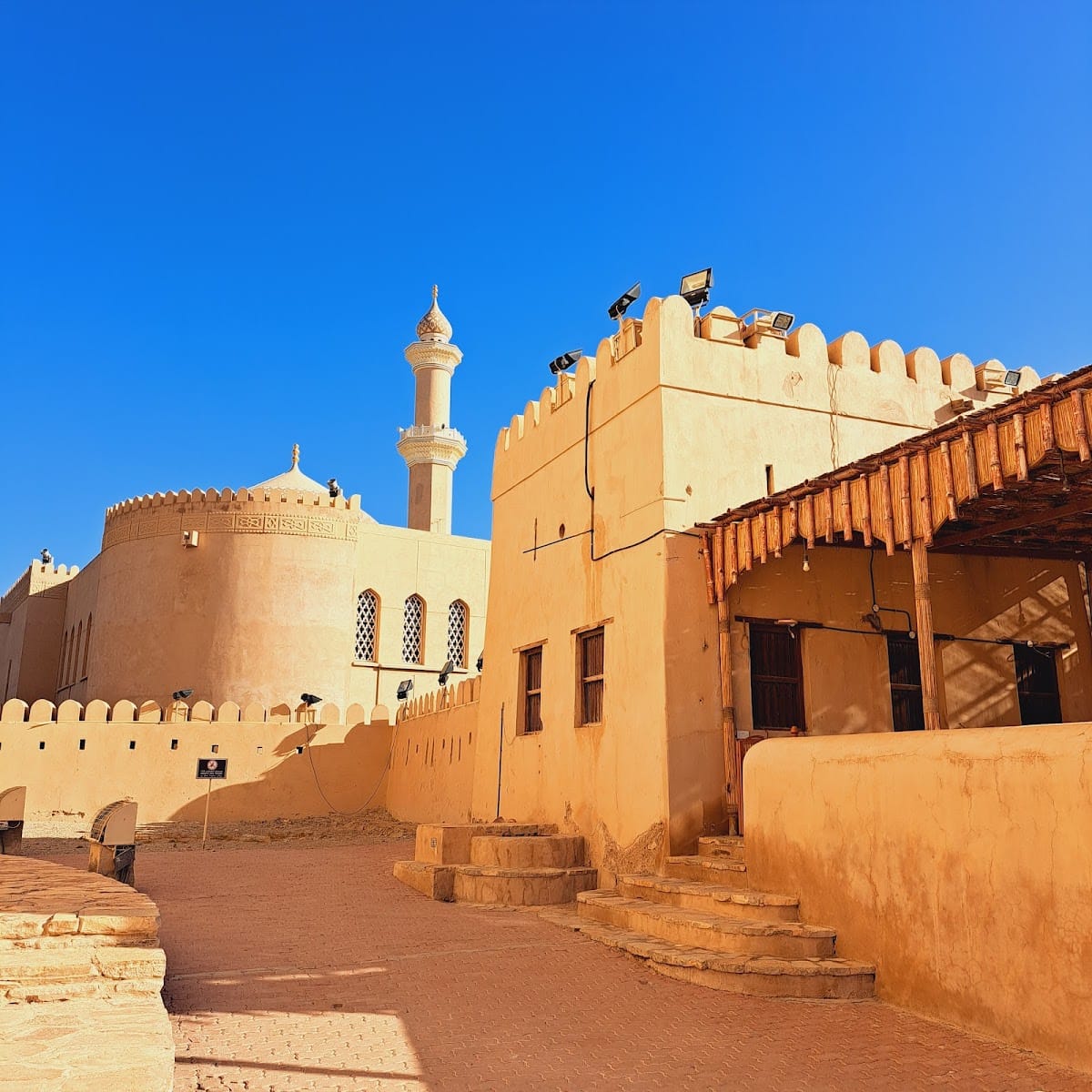
Attached to the fort’s eastern side lies Nizwa’s traditional souk, situated within the northern part of the fortified residential area of the oasis. Inside the fortress, various prison cells were used historically to detain those accused or convicted of offenses.
The architecture also incorporates secret passages, fall doors that could be dropped to block access, and underground storage rooms for food and weapons, reflecting prepared measures for enduring extended military sieges. Together, these features emphasize a sophisticated design tailored to the challenges of the 17th-century military and political environment.