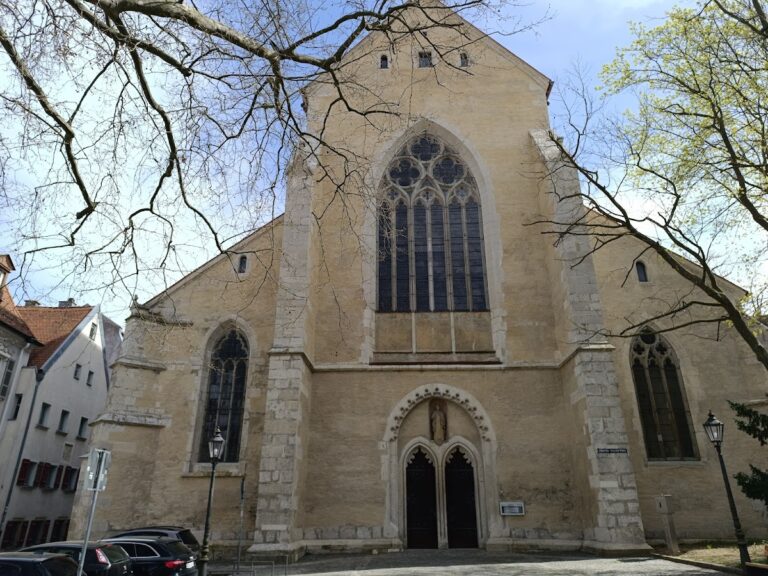
Niedermünster: A Former Imperial Abbey in Regensburg
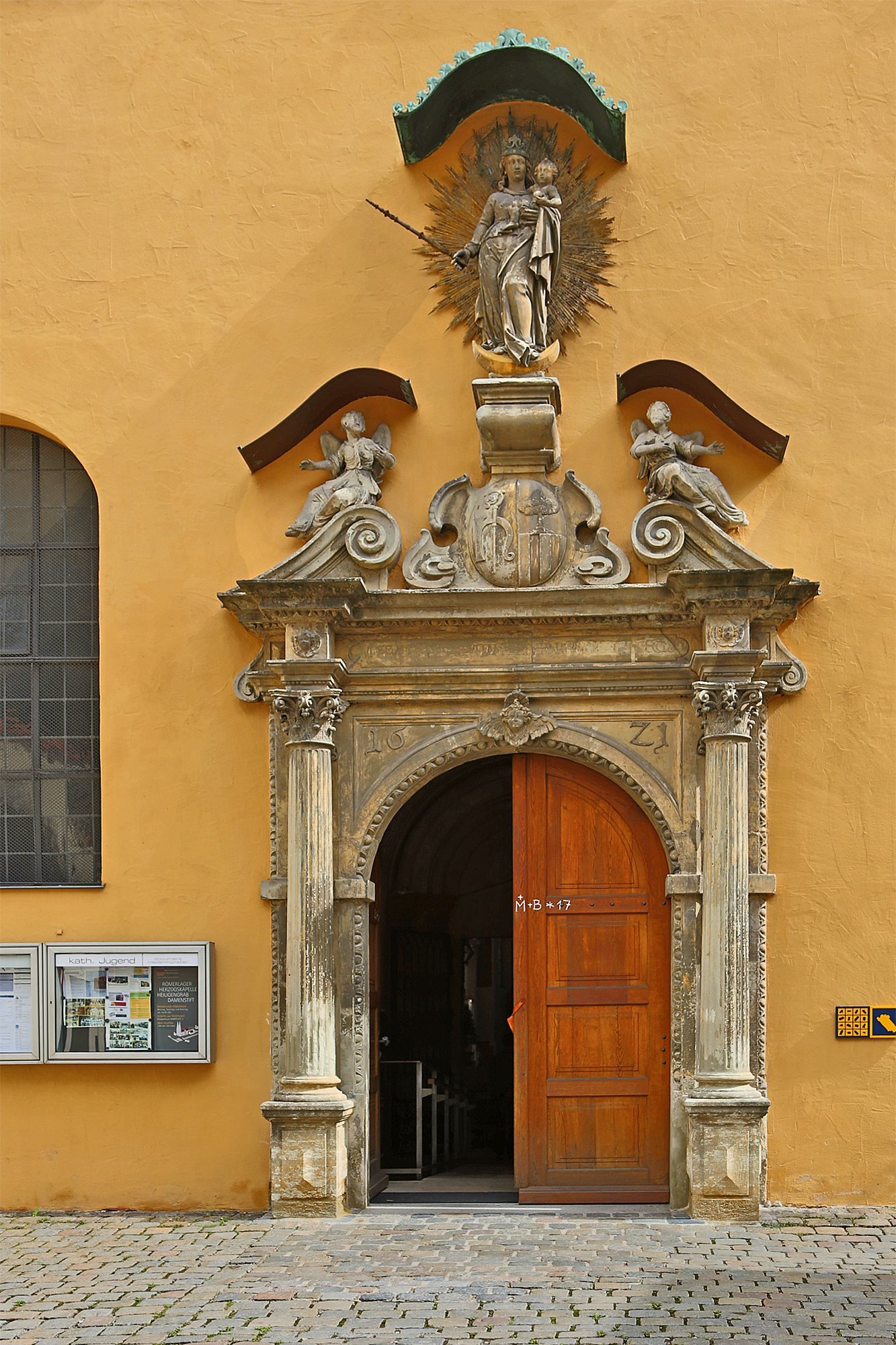
Site at a Glance
- Rating
- 4.8
- Popularity
- Very Low
- Country
- Germany
- Primary era
- Medieval
- External website
- Open
- Eras represented
- Classical, Medieval
- Civilizations
- Carolingian, Duchy of Bavaria, Holy Roman Empire, Roman
- Site type
- Religious
- Remains
- Monastery
On this page15 sections
History
Niedermünster is a former Roman Catholic house of canonesses in Regensburg, Germany, whose history began with a church dating to around 700 and whose present church was rebuilt in the Romanesque style in 1152. A house of canonesses was a female religious community whose members followed a shared religious rule without necessarily living as enclosed nuns. Dedicated initially to Saint Erhard, an early medieval bishop associated with Regensburg, the institution later also honoured the Assumption of the Virgin Mary.
Duccal foundations and early churches
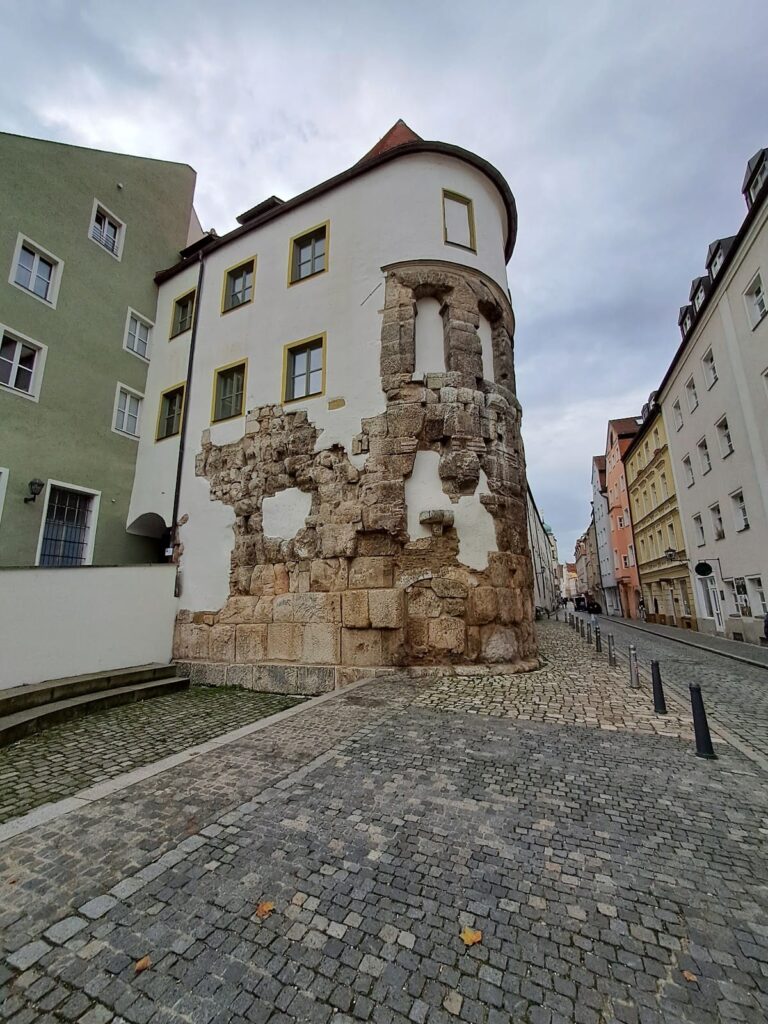
The site developed in the northeastern part of the former Roman legionary camp of Castra Regina, immediately north of the residence of the Agilolfing dukes. The Agilolfingers were the early medieval ruling dynasty of Bavaria, and they made the former Roman fortress their capital in the late sixth century. Niedermünster was therefore closely connected with the Bavarian ducal court and with the burial traditions of the ruling family.
The first religious foundation is traditionally associated with Saint Erhard and a church built around 700. Duke Tassilo III of Bavaria founded a religious community at the site in 788, although its original status as a male or female community remains uncertain. The institution was first recorded in 889. Around 800, during the reign of Charlemagne, a substantially larger church was built for the women’s community.
A further major church was constructed between 922 and 955 under Duke Henry I of Bavaria and his wife Judith. Henry was buried there, and Judith completed the building after his death. She entered the community in 973, became its abbess, endowed it generously, and led it until her death late in the tenth century. Buried before the high altar, as Henry had been, Judith came to be regarded as Niedermünster’s principal founder.
An influential imperial abbey
Niedermünster’s close connections with the Bavarian ducal and Ottonian ruling houses brought it wealth and influence. The Ottonians were the German royal and imperial dynasty of the tenth and early eleventh centuries. The community’s burial traditions included Saint Erhard, Blessed Albert of Cashel, Henry I of Bavaria, Judith, and Gisela of Burgundy, the wife of Duke Henry II of Bavaria.
In 1002, Emperor Henry II granted Niedermünster imperial immediacy and made it an imperial abbey. This placed the institution directly under the Holy Roman Emperor rather than under a territorial prince, giving it judicial and territorial independence within the empire. Its abbess held a seat and vote on the Prälatenbank, the collective bench of powerful imperial abbots and abbesses in the Imperial Diet, the representative assembly of the Holy Roman Empire.
The community experienced a cultural and artistic flourishing during the eleventh century. As an imperial abbey, it owed the emperor a servitium regis, or royal service obligation. The duty initially required Niedermünster to provide 60 pigs when the emperor was present in Regensburg. After Abbess Gertrud intervened, Emperor Henry IV reduced the number to 40. The obligation was later changed to a payment of 10 pounds of Regensburg pfennigs, and King Frederick II remitted it entirely in 1218.
Henry II later gave particular support to his foundation at Bamberg Cathedral, and Niedermünster consequently lost some of its earlier prominence. It nevertheless remained an imperial institution until the secularisation of the early nineteenth century.
Dissolution and continuing religious use
In 1802 Niedermünster was placed under the administration of the Principality of Regensburg, ruled by Karl Theodor von Dalberg. The abbey was dissolved in 1803. After the principality became part of the Kingdom of Bavaria in 1810, the institution was secularised.
Parts of the former abbey premises were rented from 1820. In 1821 the bishop of Regensburg received rooms as a residence, and episcopal offices were moved into the complex. The former abbey church became the parish church of Regensburg Cathedral, a function it continues to serve.
Excavations, including work carried out in 1963, revealed foundations of the Roman legionary camp, earlier churches, and graves associated with the Bavarian ducal house. The excavated remains and the successive history of the site are presented in the underground document niedermünster installation beneath the church.
Remains
Church sequence and surviving fabric
Early ducal and Carolingian churches
The earliest building phase converted two Roman secular structures into a stone ducal church. It had a single nave, a rectangular choir, and a burial place for Saint Erhard along its north wall. The church built around 800 retained the single-nave arrangement and rectangular choir but added a projecting forechurch at the west end.
Ottonian basilica
The church constructed under Henry I and Judith between 922 and 955 had the dimensions of the present church. It was a three-aisled pillar basilica with an eastern transept and three apses. Four successive church buildings, including the present structure, retained the alignment of the north wall. This continuity was determined by Saint Erhard’s tomb, which was embedded in the wall and covered by the lid of a Roman sarcophagus, a stone coffin used as a funerary monument.
Romanesque church
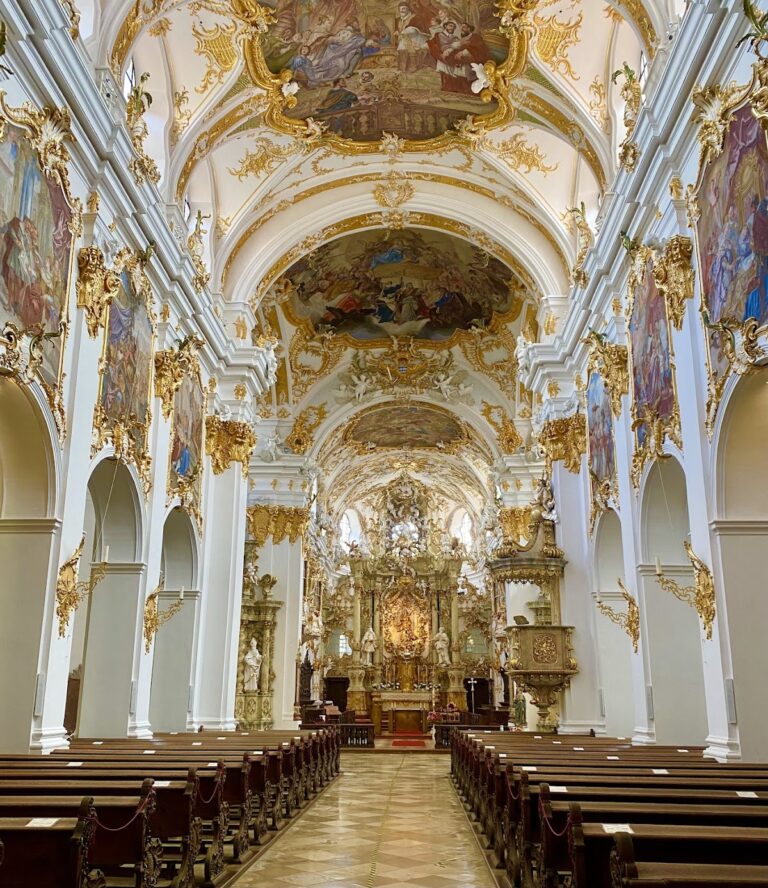
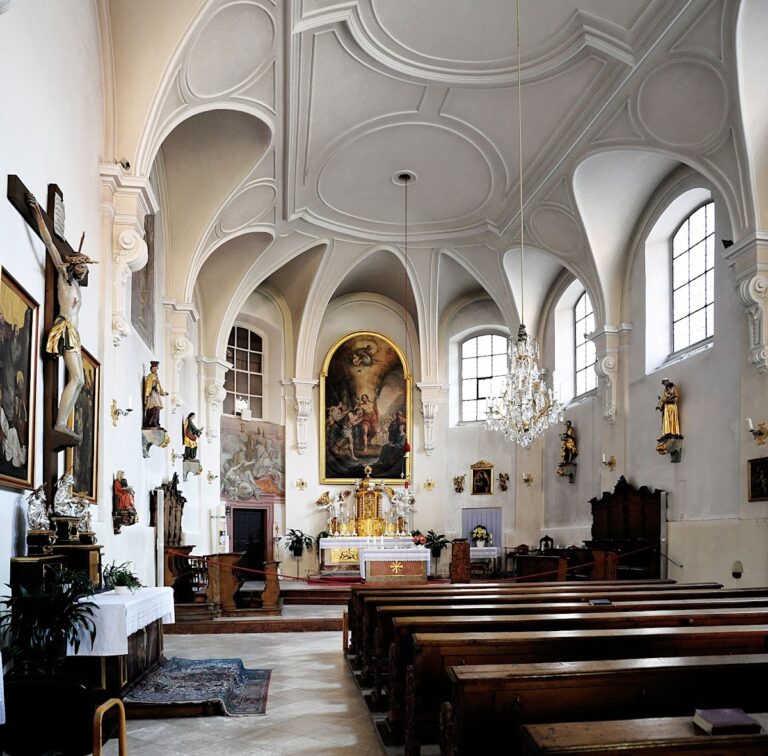
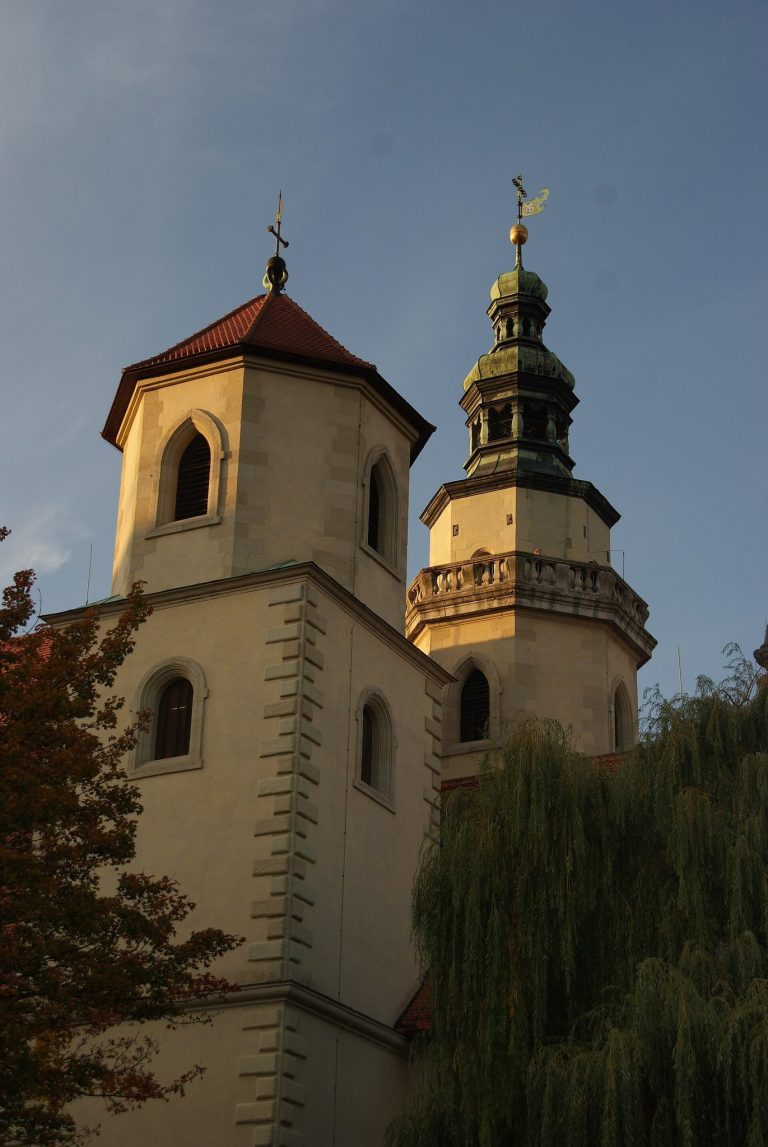
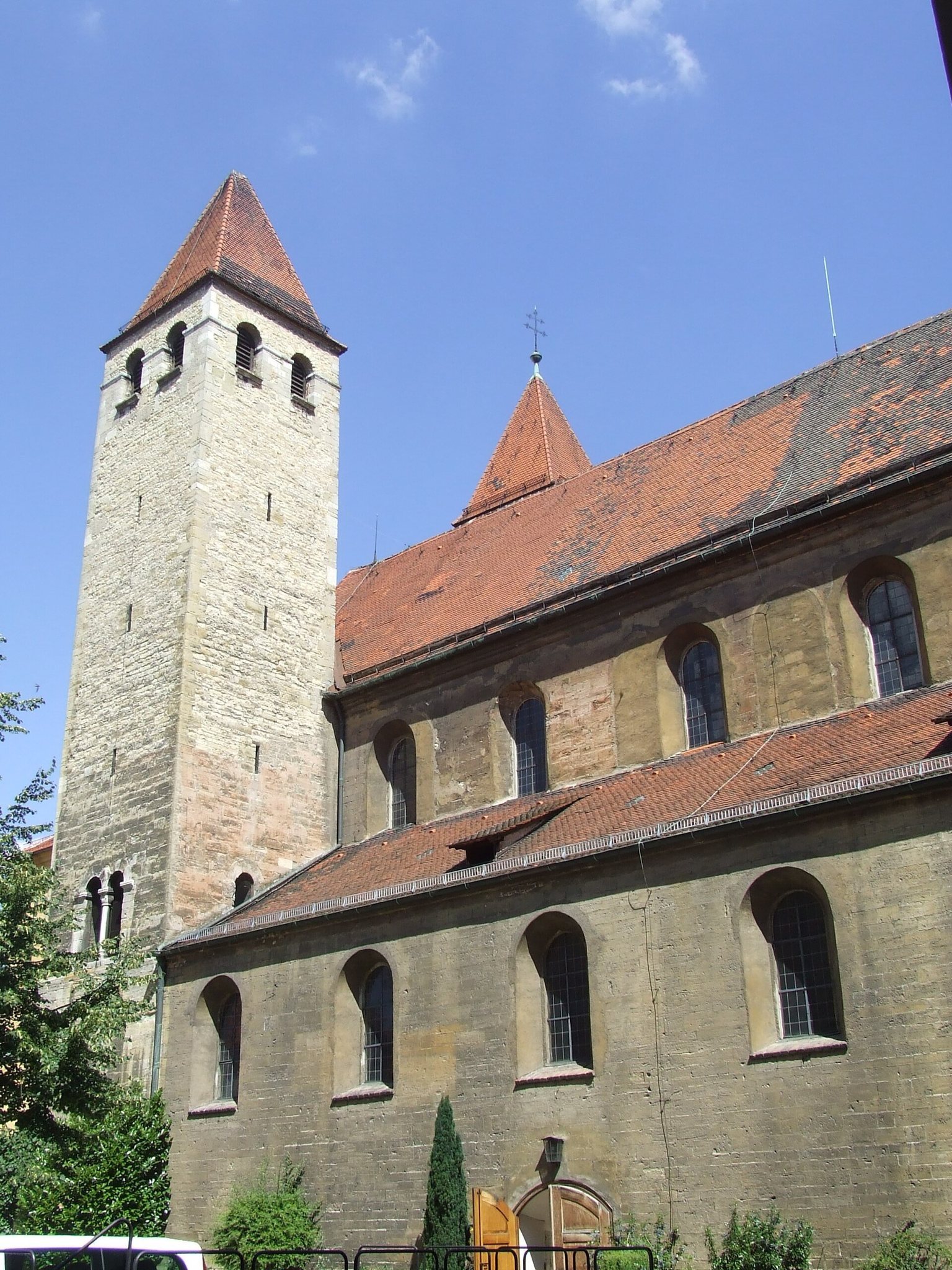
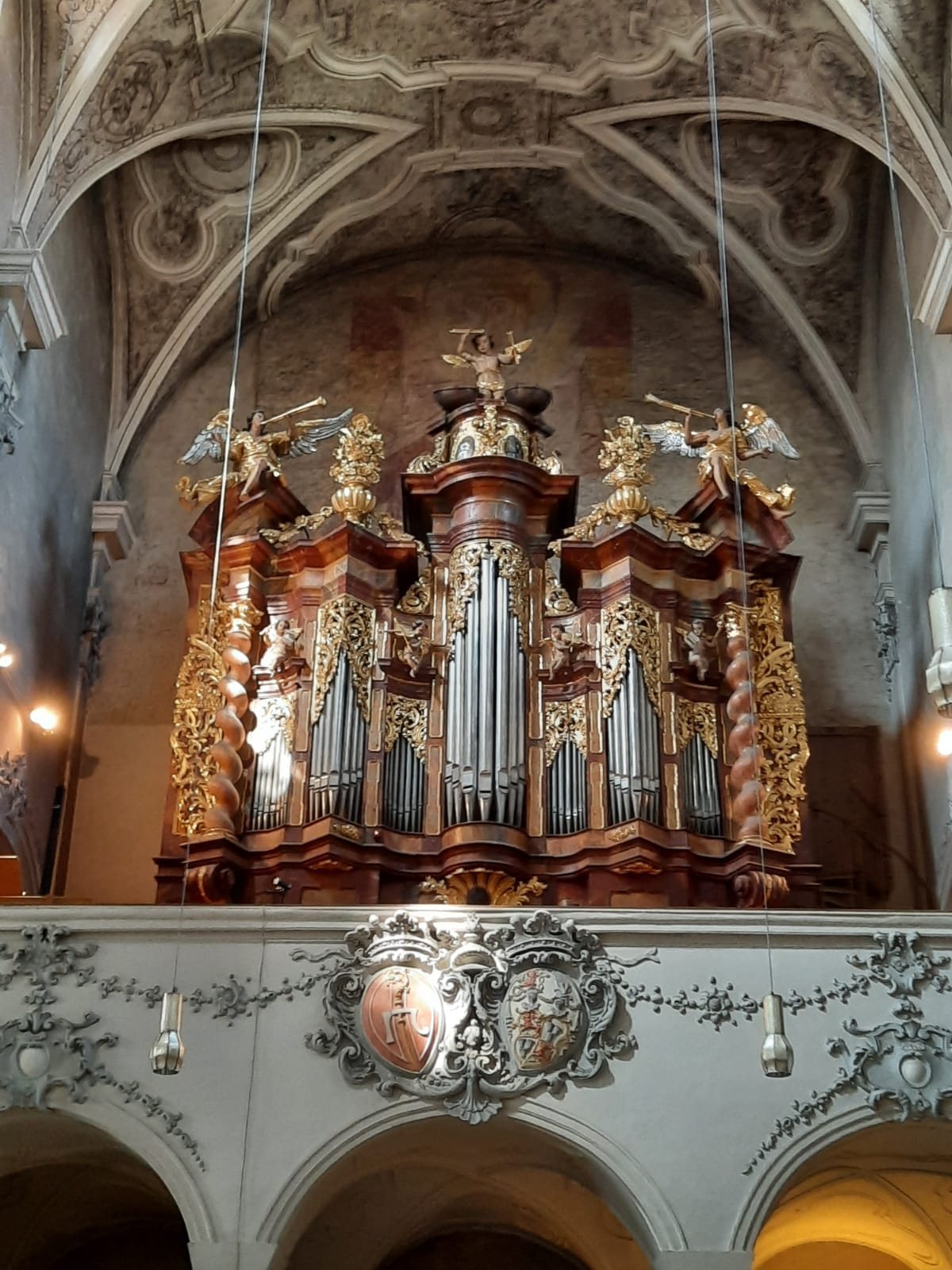
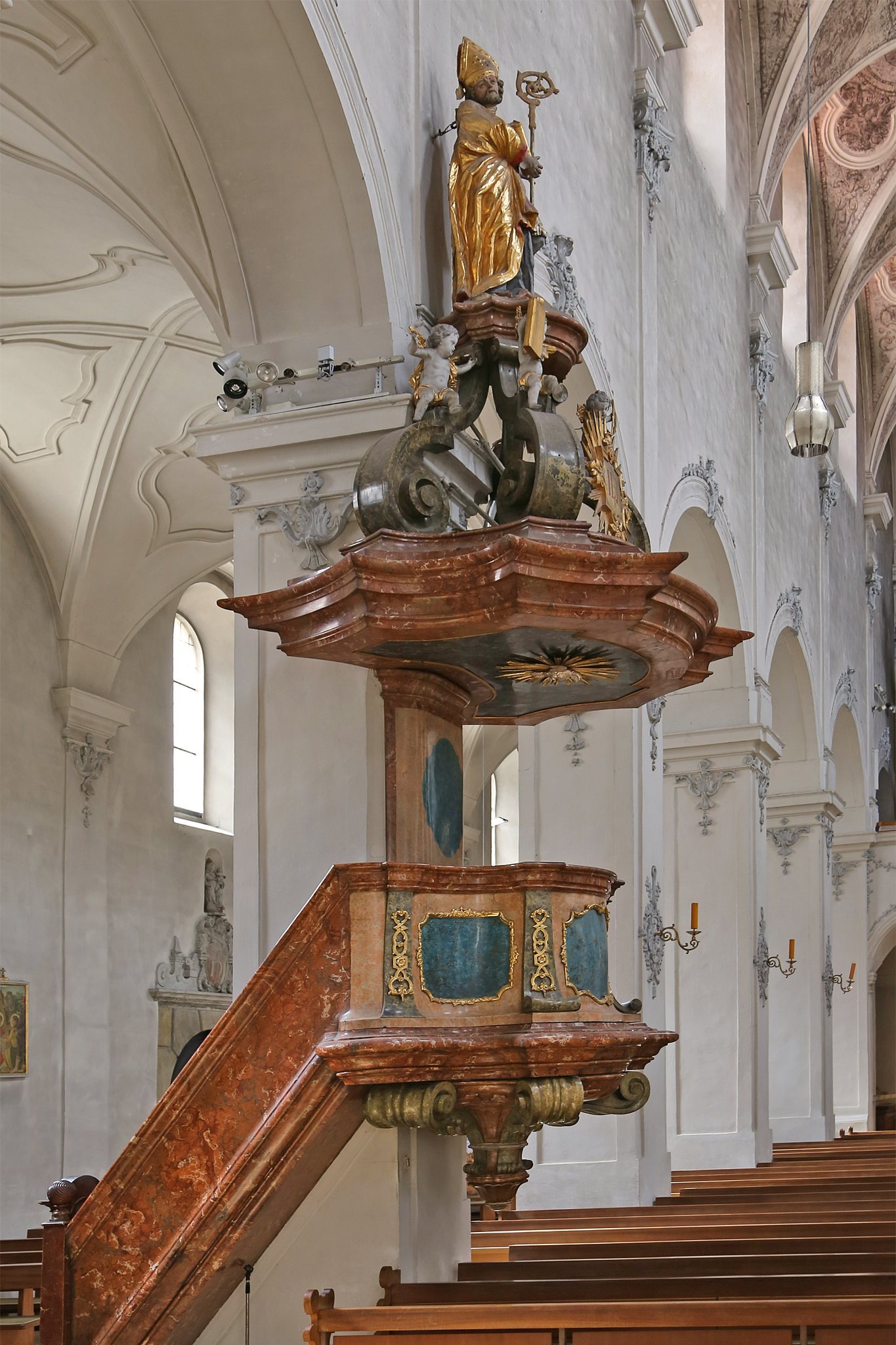
A fire destroyed the preceding structure, and Niedermünster Church was rebuilt in 1152 in the Romanesque style. The crypt of Saint Erhard survived from the earlier buildings. The church was modestly modernised during the seventeenth and eighteenth centuries and remains the parish church of Regensburg Cathedral.
Burials and underground archaeology
Saint Erhard’s tomb
Saint Erhard’s ancient sarcophagus remains several metres below the nave floor at its original location. Its position explains the continued alignment of the churches’ north walls. The tomb was found in 1963 together with other Bavarian ducal graves and foundations belonging to Castra Regina.
Roman and medieval foundations
Excavations beneath the church exposed foundations of Roman military buildings and the predecessors of the later churches. The underground document niedermünster presentation combines these remains with photorealistic three-dimensional reconstructions of Roman Regensburg, the camp of Legio III Italica, an early sacred building made from Roman stone, the Carolingian and Ottonian churches, the ducal graves, and Saint Erhard’s burial place. Legio III Italica was the Roman imperial legion stationed at Castra Regina.
Artworks and liturgical objects
Gisela Cross and Uta Gospel Book
Niedermünster’s associated historical works include the Gisela Cross and the Uta Codex, also known as the Uta Gospel Book. The manuscript was produced around 1025 and commissioned by an abbess of Niedermünster. The Gisela Cross was given by Queen Gisela, the daughter of Duke Henry II of Bavaria and wife of King Stephen I of Hungary, for her mother’s tomb. Her mother, Duchess Gisela of Bavaria, was buried at Niedermünster in 1006.
Crucifix and reliquary
The church contains a monumental bronze crucifix with a sorrowful Mary Magdalene by Georg Petel. A silver reliquary made in the nineteenth century was produced to house the relics of Saint Erhard.