Nemilkov Castle: A Renaissance Chateau and Estate Center in Czechia
Site at a Glance
- Rating
- 4.7
- Popularity
- Low
- Country
- Czechia
- Primary era
- Early Modern
- External website
- Open
- Eras represented
- Early Modern, Modern
- Civilizations
- Austrian Empire, Habsburg, Holy Roman Empire, Kingdom of Bohemia
- Site type
- Domestic
- Remains
- Castle
On this page9 sections
History
Nemilkov Castle is a historic chateau in Nemilkov, Czechia, first recorded in 1382 as a minor noble’s fortress and later rebuilt as a Renaissance residence. The estate became a cultural monument in 1964 and preserves evidence of aristocratic ownership, agricultural administration, and industrial activity across several centuries.
Medieval fortress and Renaissance rebuilding
In 1382, Ctibor Loveček died at the fortress, after which Pešík of Nemilkov claimed his inheritance. Another part of the village belonged to the Velhartice estate. Jan of Nemilkov held the minor noble estate at the beginning of the sixteenth century. During the middle of that century, Adam Lev of Rožmitál sold Nemilkov, then associated with the Velhartice estate, to Jan Bohuchval of Hrádek. The new owner rebuilt the fortress as a Renaissance chateau.
Seventeenth-century ownership changes
Jan Czernin of Chudenice acquired the estate toward the end of the sixteenth century and sold it in 1616 to Petr Suda Lukavský of Řenče. After the Battle of White Mountain in 1620, when Habsburg forces defeated the Bohemian estates and property was confiscated from many opponents, Nemilkov was taken from the Lukavský family. It was then sold at a symbolic price to the imperial general Martin de Hoeff-Huerta. His heiress, Anna Marie of Donín, sold the estate in 1649 to Jaroslav Jáchym Koc of Dobrš.
The Schreiner estate
The chateau passed through numerous hands in the following centuries and was completed in the Baroque period under Kateřina Khuen Belasi. Martin Bartoloměj Schreiner acquired it in 1800 or 1802, and the Schreiner family retained the property until 1945. Across four generations, they managed the estate for approximately 150 years and altered the chateau several times, including the addition of a Neoclassical wing with four guest rooms.
The estate also supported brewing and distilling. Its brewery probably existed by 1382 and was generally leased under the Schreiners, producing about 800 hectolitres annually on average. A distillery began operating beside it in 1837. In the early 1940s, Georg Schreiner considered selling Nemilkov to Ferdinand Menčík, a nephew of Tomáš Baťa, for conversion into a shoe factory connected with the Zlín shoe-manufacturing enterprise. The proposal was not implemented.
Postwar decline and restoration
After the Second World War, Georg Schreiner was expelled to Germany. The property was first taken over by the Nemilkov local national committee and later by an agricultural cooperative. The last alterations before the period of decline took place in 1962. From 1989 onward, the chateau, adjoining buildings, and land passed among several owners while remaining inaccessible to the public. The Kaplan and Hager families became owners in 2016, began repairs, and opened the chateau to visitors.
Remains
Chateau building and interiors
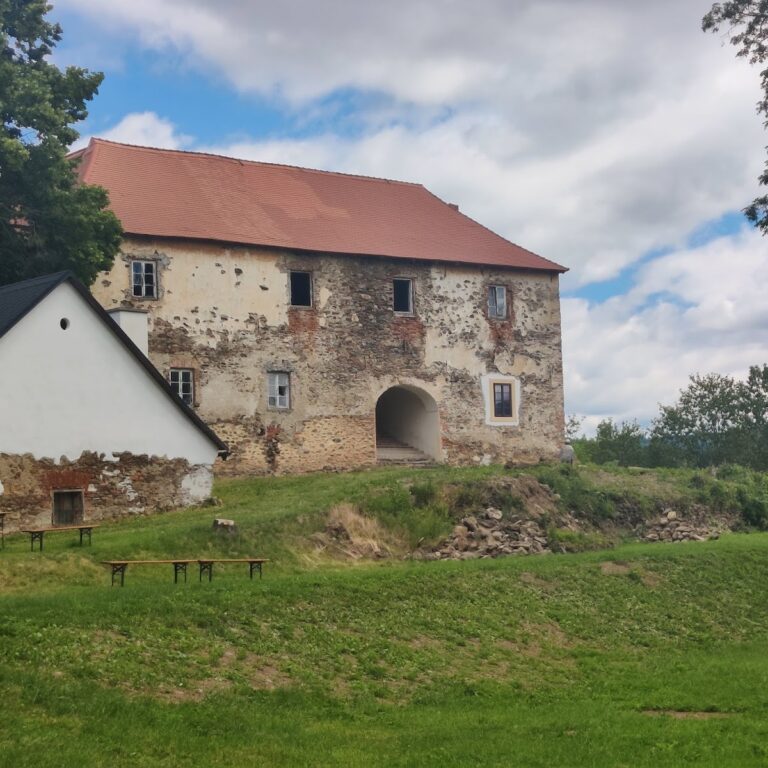
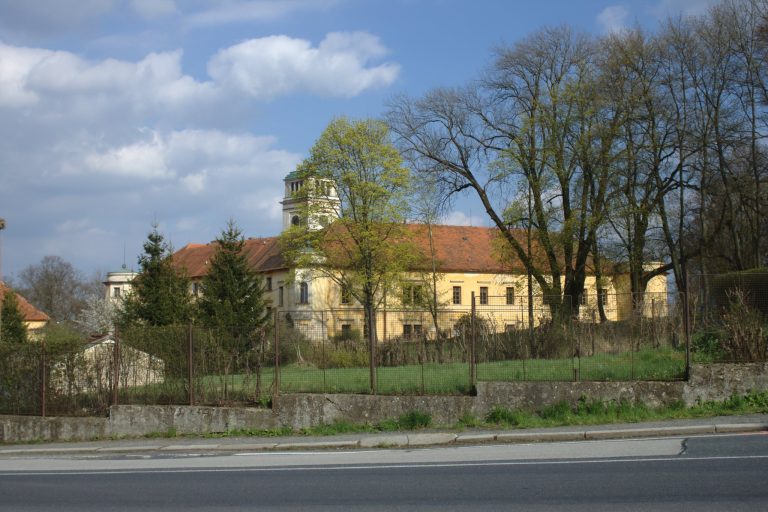
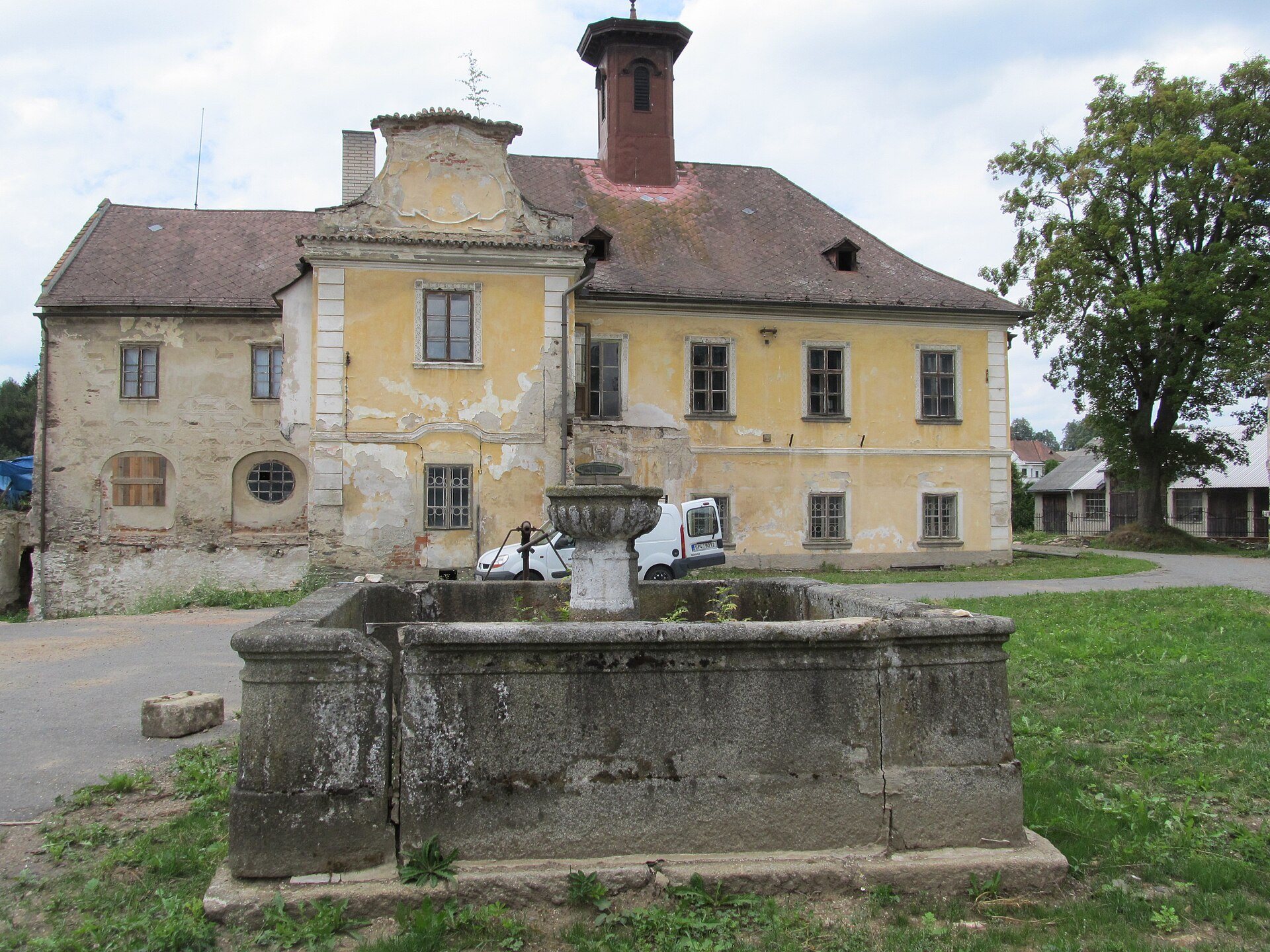
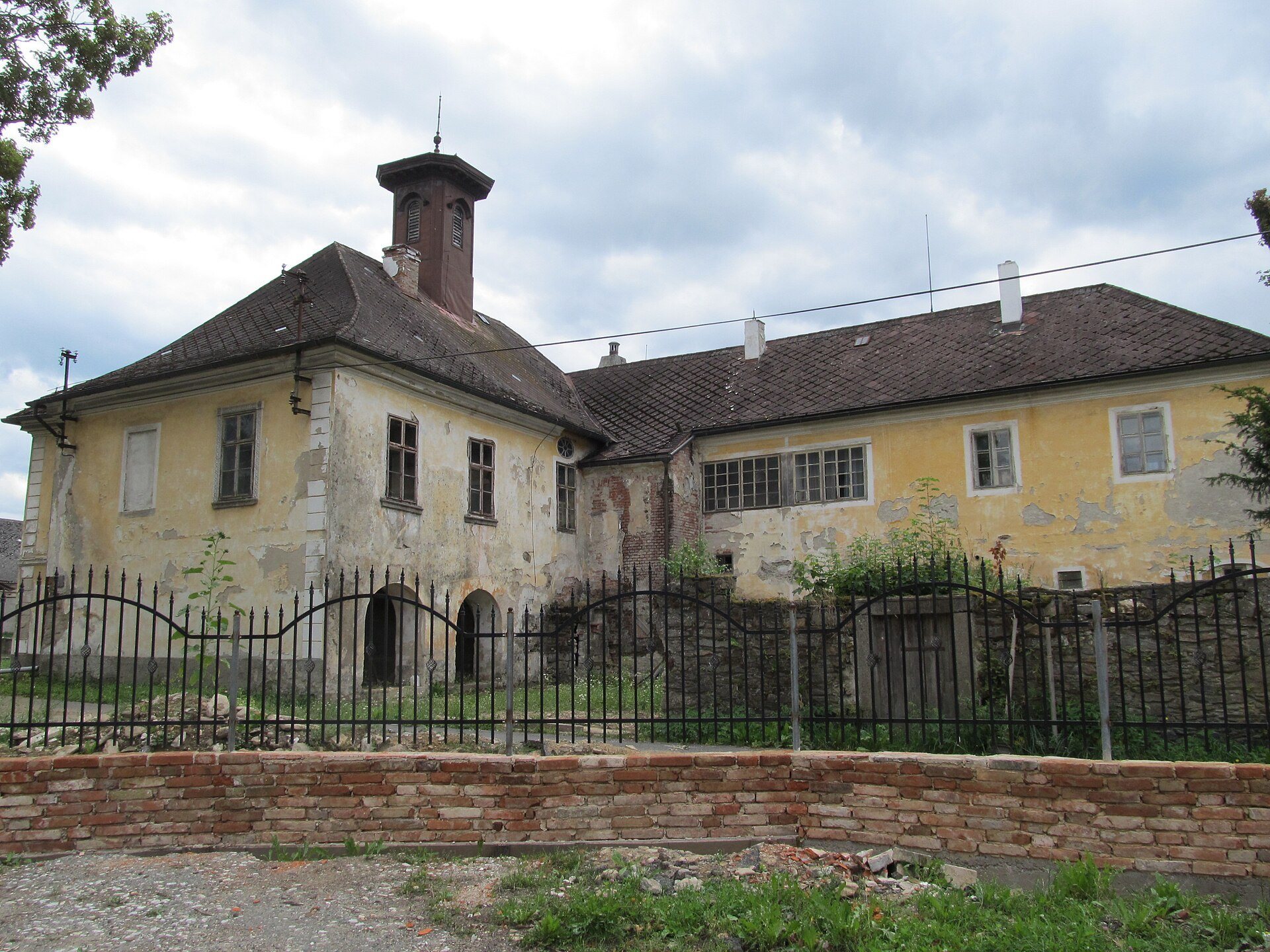
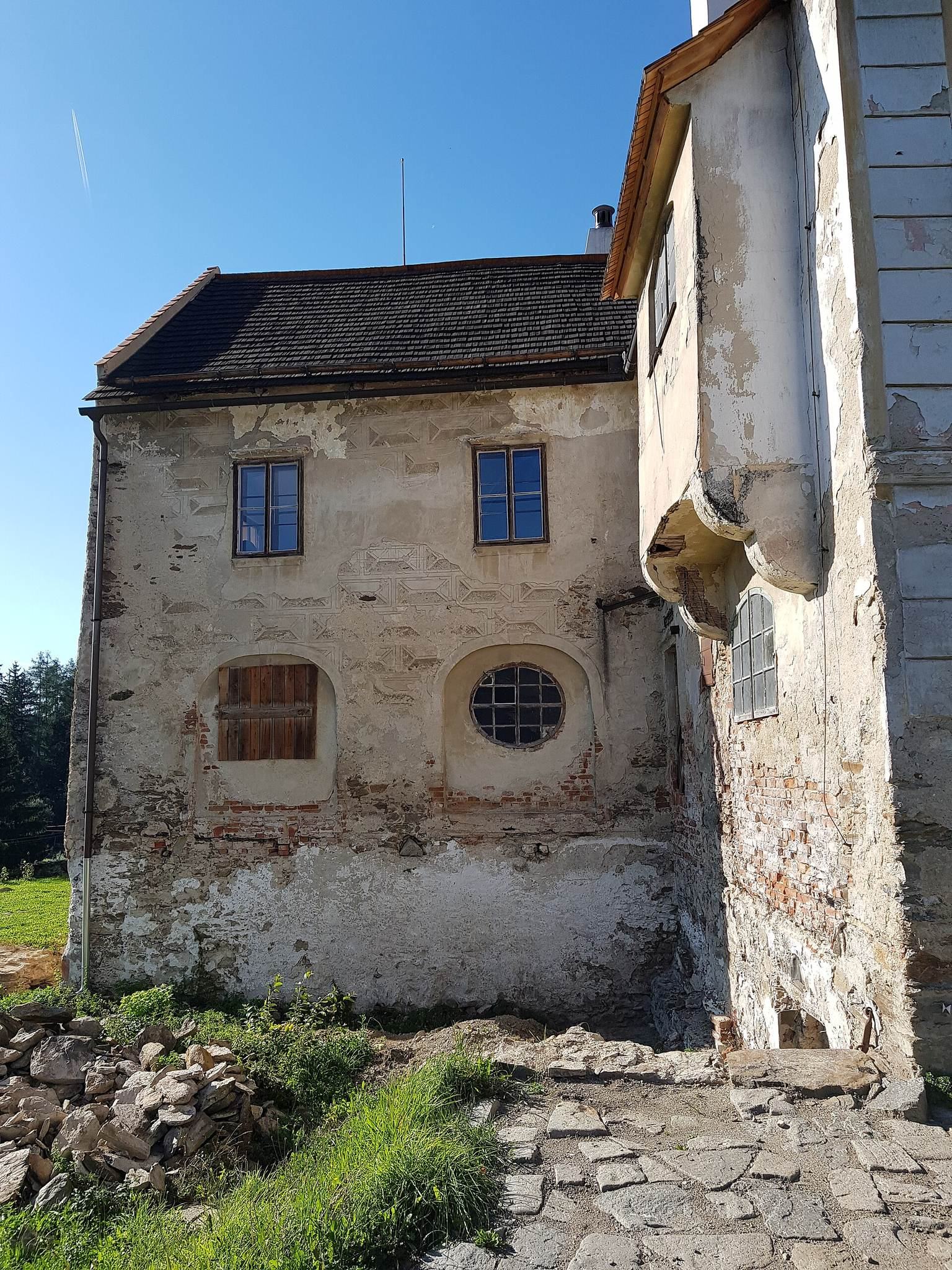
The chateau stands in the northwestern part of a demesne farmyard, the agricultural and service center of the estate. It is a two-storey masonry building with partial basementing and a complex plan resembling a Latin cross. Four rectangular wings of unequal length and width form the main structure, while a metal-clad prismatic tower rises above the northern wing. The southwestern wing and central section contain the oldest Renaissance masonry, including diamond-pattern sgraffito, a façade decoration made by scratching through a surface coating to expose a contrasting layer beneath. Hammered doors lead to a chapel or representative ground-floor room, and cross-shaped cresting survives on ceilings and in niches.
The entrance portal carries the date 1798, associated with the Schreiner family’s arrival on the estate. The northwestern wing was built around 1847, with service rooms on the ground floor and guest rooms above. The western wing is the youngest and longest part of the building. A room contains painted representations of estates held by the Schreiner family, while the chapel interiors feature illusionistic decoration that uses painted perspective to suggest three-dimensional architectural forms. In the oldest part, a small lighting fireplace held a torch or candles.
Courtyard fountain and park
A stone fountain in the courtyard bears the date 1849. Its square basin consists of granite slabs, with a cylindrical central pillar supporting a shell-motif bowl. Water spouts project from the sides of the bowl.
The rectangular park was used largely as a tree nursery, with a smaller area arranged as a landscape park, a designed park using a naturalistic arrangement of lawns and trees. Part of the grounds is now a football field, another area is mainly overgrown with deciduous trees, and the remainder is used for cattle breeding. Remnants of a solid stone wall about one metre high enclose the southern, eastern, and northern sides. Some trees may be around 150 years old. Trees raised at the nursery were reputedly planted across Europe after surviving Nemilkov’s harsher climate.
Brewery and distillery buildings
The brewery operated permanently until 1905, when competition from breweries in Čachrov, Březí, and Malonice brought production to an end. Its buildings were then used by the more successful distillery, which continued operating into the last decade of the twentieth century. Before the brewery buildings were demolished at the end of 2012, their surviving technical equipment was removed with them. A tall brick chimney remained. A retired steam locomotive boiler had been installed beside the brewery, allowing steam-powered operation and making Nemilkov the first brewery in the Klatovy region to use steam power.