Necropolis of Montessu: A Prehistoric Burial Complex in Sardinia
Site at a Glance
- Popularity
- Medium
- Country
- Italy
- Primary era
- Stone Age
- Eras represented
- Stone Age, Bronze Age, Classical
- Civilizations
- Unclassified
- Site type
- Burial
- Remains
- Necropolis
On this page13 sections
History
The Necropolis of Montessu is a prehistoric funerary complex at Villaperuccio in Sardinia, Italy, whose beginnings are associated with the Ozieri culture. It belongs to Sardinia’s pre-Nuragic past, before the civilization known for its stone towers. The tombs served communities over roughly a millennium, and burial activity continued into the Middle Ages.
Ozieri origins and prehistoric reuse
The Ozieri culture, a prehistoric Sardinian culture, is especially associated with Tomb 24 and the necropolis’s earliest phase. An Ozieri settlement was found on the plain, and its inhabitants are thought to have built and first used the rock-cut tombs. Later phases are linked to the Abealzu-Filigosa, Monte Claro, and Bonnanaro cultures, as well as Bell Beaker, a prehistoric culture associated with distinctive bell-shaped pottery.
Rich grave deposits in Tombs 2, 8, 10, 24, 25, 29, and 34 indicate that some tombs were reused during the Bronze Age. Finds from Tombs 2, 8, and 24 are associated with the Abealzu and Monte Claro cultures.
Later burial activity
During the Punic-Roman period, when Punic and Roman powers were present in the western Mediterranean, a cist burial, a burial in a stone-lined box, was dug at Tomb 33. Finds indicate that the tomb remained in use into the Middle Ages. Its traditional name, Sa Cresiedda, meaning Little Church, may refer to a rock-cut church or an earlier hermitage.
Quarrying, excavation, and protection
In the 1950s and 1960s, stone was taken from the necropolis to make animal-watering troughs. Dynamite was sometimes used, and several tombs were damaged or destroyed. Initial excavation took place in 1969, when Vittorio Pispisa worked in Tomb 2. Systematic work began in 1971 under Enrico Atzeni and Remo Forresu, and archaeological investigations have continued. Riccardo Cicilloni published the first comprehensive study in 2009.
Restoration was carried out at Tomb 25 in 2000–2004, in the western sector in 2006–2008, and later at Tombs 2 and 7. Montessu is protected as an archaeological park. In 2025 it became part of the UNESCO World Heritage property Funerary Tradition in the Prehistory of Sardinia – The domus de janas, a group of Sardinian rock-cut tombs commonly translated as fairy houses. The inscription includes 26 other prehistoric sites and falls under criterion III, which recognizes exceptional testimony to a cultural tradition or civilization. UNESCO is the United Nations agency for education, science, and culture.
Remains
Setting and groups
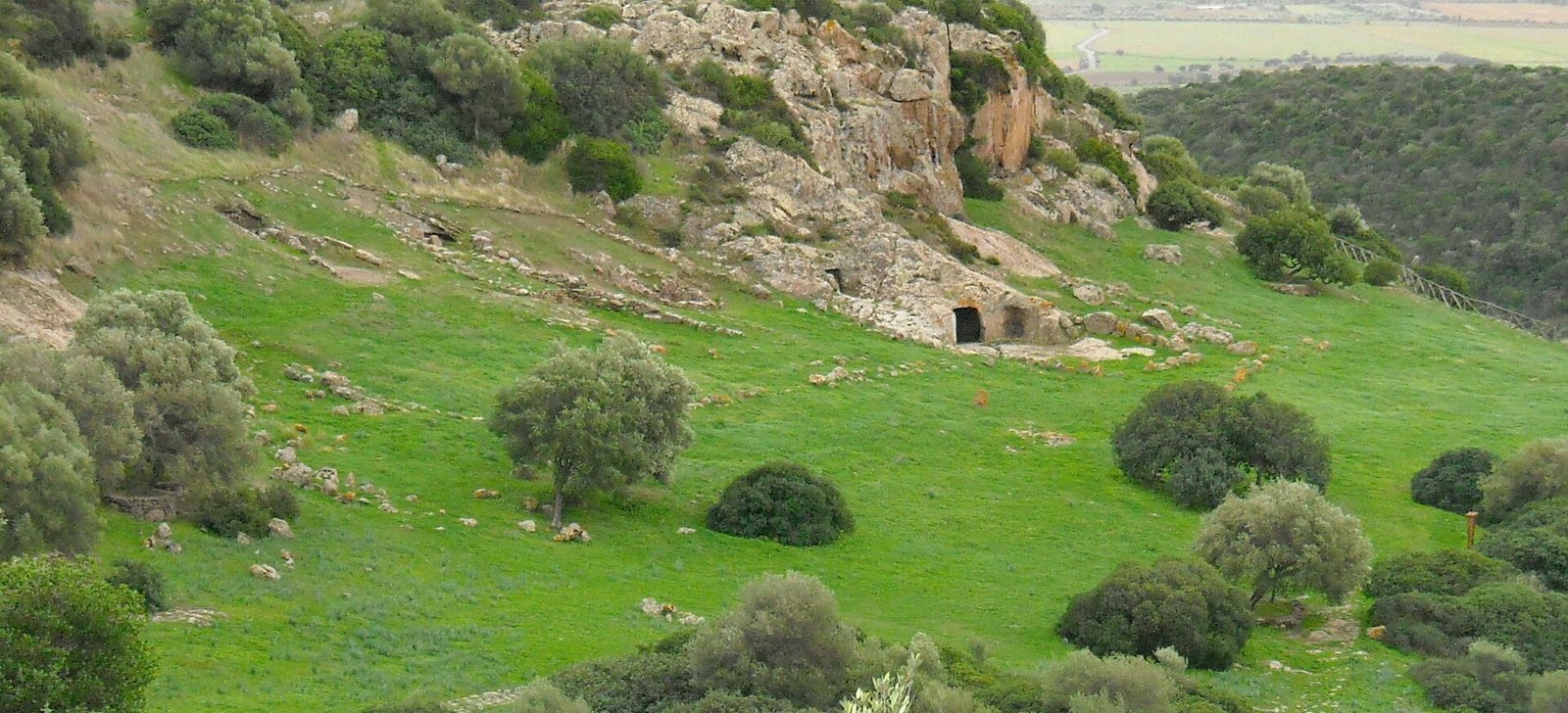
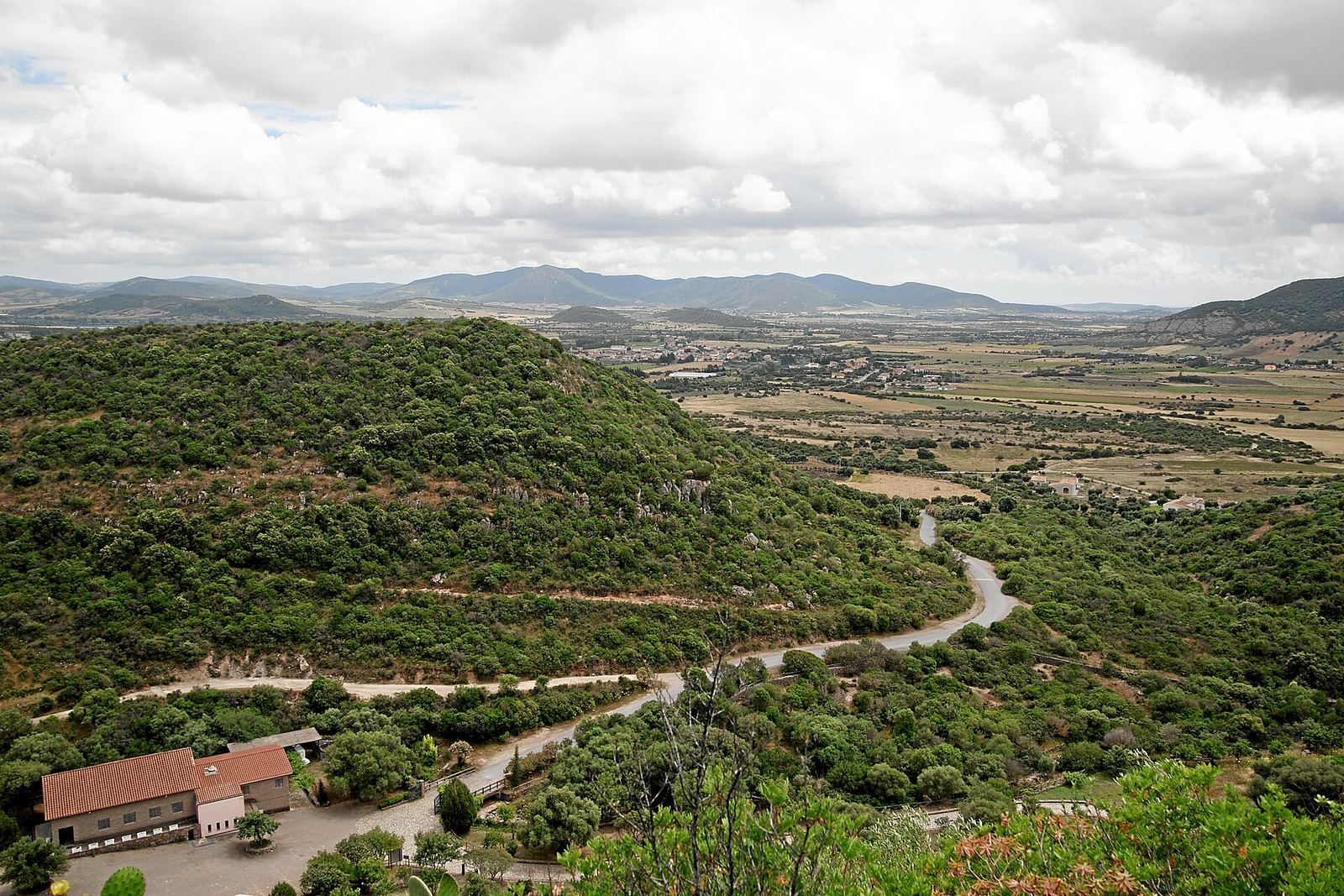
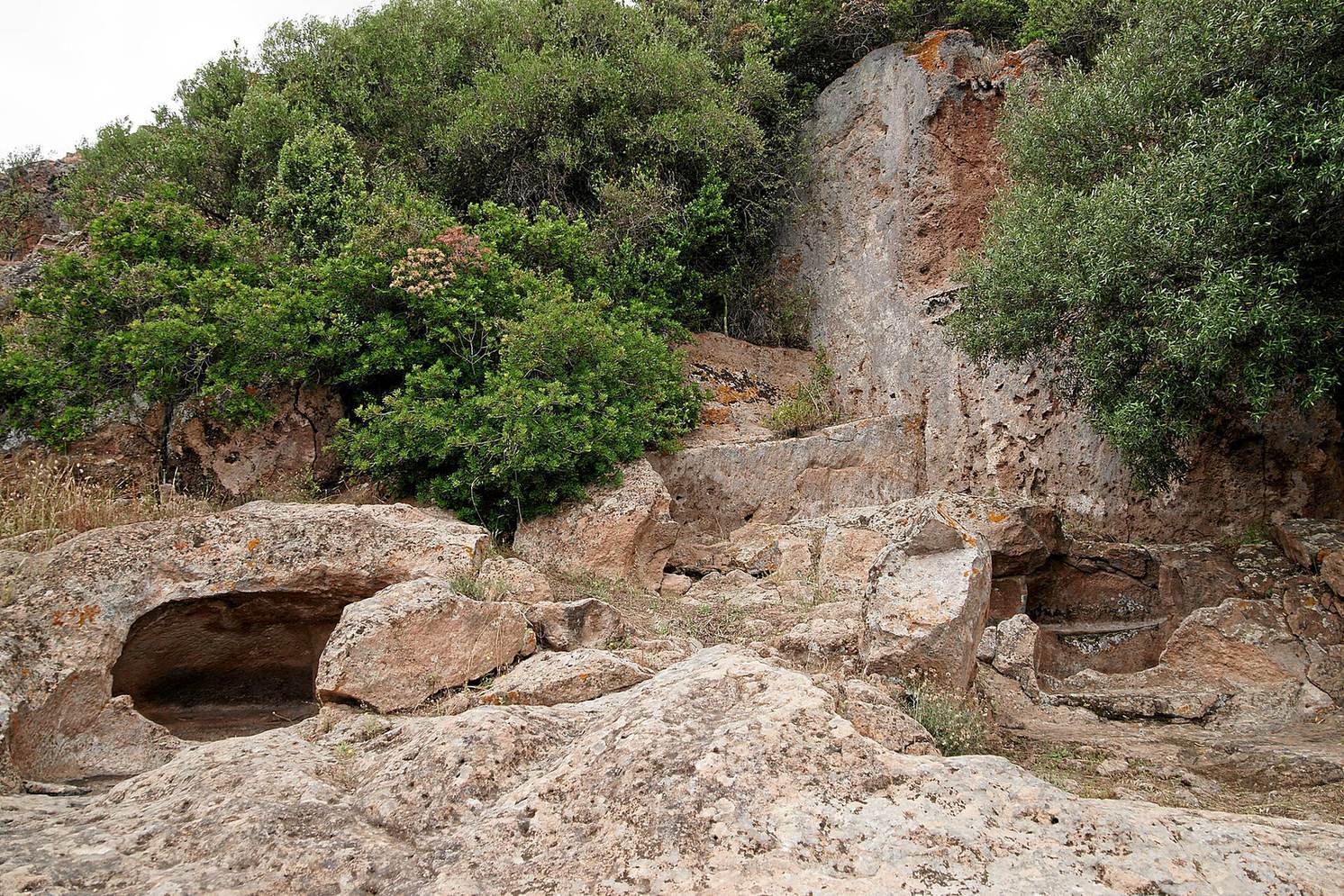
Montessu combines rock-cut chambers with megalithic construction in four groups spread for about a kilometre along the southern flanks of Sa Pranedda. The necropolis occupies a large natural amphitheater, on the slopes of two depressions at the southern edge of the Monte Essu plateau, overlooking a plain crossed by the Rio Palmas. Its name derives from Monte Essu. In the southeastern Su Crabi depression, Tombs 1–13 are accompanied by a covered passage. The Is Tuttoneddus group contains ten small tombs, numbered 14–23; Su Cungiau de Pittanu contains Tombs 24–28; and the western group comprises Tombs 29–35.
Tomb construction and decoration
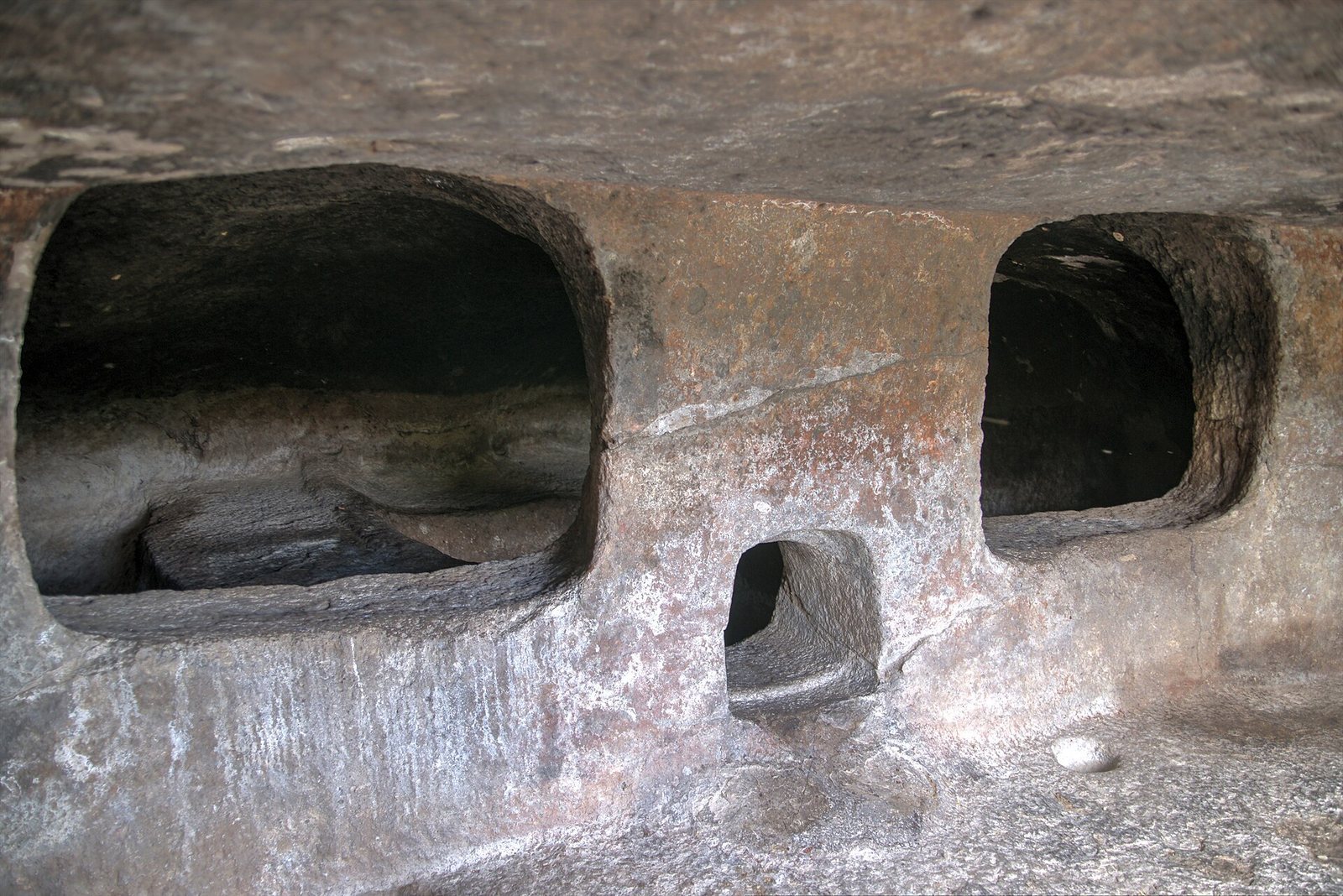
Monumental tombs have enclosed forecourts marked by one or two rows of upright stones, forming quadrangular spaces linked by straight corridors. At some entrances, large blocks extend rock-cut approaches into passages resembling dolmens, prehistoric stone-built burial monuments, or form semicircular extensions. Tomb plans range from a single chamber to several, with flat or half-domed ceilings. Chambers are reached by shafts or horizontal passages. Rectangular doorways survive in the best-preserved examples; trapezoidal and elliptical forms also occur, and some entrances have grooves for a closing device. Large carved fronts contrast with small entrances and occasional window-like openings. Some chambers open to the sky and collect rainwater. Decoration includes red-ochre painting, carving, and incision, with spirals, concentric patterns, symbolic doors that are not functional openings, and ox-horn or ox-head forms.
Individual tombs
Tomb 2
Known as the Tomb of the Spirals, Tomb 2 has two chambers and a rock-cut entrance corridor. A slab still stands on the right and may have served as an upright structural stone. Quarrying in the 1950s nearly destroyed the antechamber. Incised wolf-tooth patterns remain on its left wall. The semicircular, oven-shaped chamber has three funerary benches and carved and incised designs, including framed garlands of semicircles and spirals. Comb-shaped motifs and a carved ox skull appear on the right wall; another ox skull is carved below the entrance threshold.
Tomb 25
Tomb 25 has a façade of very large stones, reshaped into an exedra, a semicircular architectural space, with rows of masonry. This prehistoric restoration, made before the Nuragic civilization, compensated for the collapse of the tomb’s front wall. Its constructed façade may have suggested the appearance of a giants’ tomb.
Tomb 34
This small tomb has one chamber, reached by a step carved into the rock. Its circular room has an oven-vault ceiling and low floor-level niches separated by short projections of uncut stone. A relief ox skull decorates the entrance step. Long, sinuous horn forms, carved singly or overlapping, cover parts of the chamber walls and ceiling. This treatment is described as unique among the recorded horn motifs in Sardinian rock-cut tombs.
Tomb XIX
Curving horn designs cover the ceiling of the main chamber. The imagery represents a transitional form of the bull’s head, reduced to its horns after the ears and muzzle have disappeared. The paired design has parallels at Su Murrone and in the painted decoration at Enas de Cannuja.
Finds
Excavation outside Tomb 13 recovered metal and stone objects and pottery fragments associated with the Ozieri and Filigosa phases. Pottery characteristic of the El Argar culture, an Early Bronze Age culture in southeastern Spain, has also been found at Montessu. Finds from the necropolis are displayed at the museum in Santadi.