Castello di Salvaterra: Medieval Fortress of Iglesias, Italy


Site at a Glance
- Rating
- 4
- Popularity
- Low
- Country
- Italy
- Primary era
- Medieval
- Eras represented
- Medieval
- Civilizations
- Crown of Aragon, Republic of Pisa
- Site type
- Military
- Remains
- Castle
On this page5 sections
History
Pisan foundation
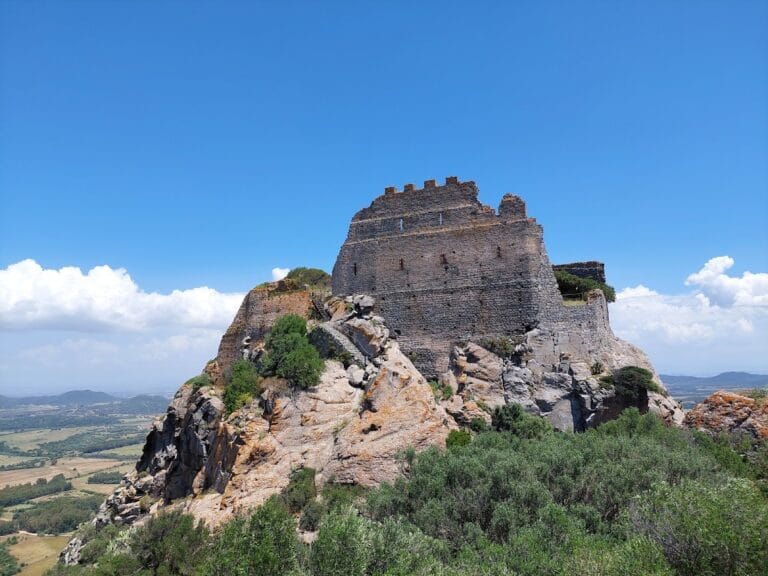
Castello di Salvaterra, also known as Castello di San Guantino, is a medieval fortified building in Iglesias, Italy. Construction began in the thirteenth century, probably during its second half, at the initiative of Count Ugolino della Gherardesca, a prominent Pisan nobleman. Iglesias was then known as Villa di Chiesa and stood under Pisan rule, first controlled by the Della Gherardesca counts of Donoratico and later by the Tuscan republic.
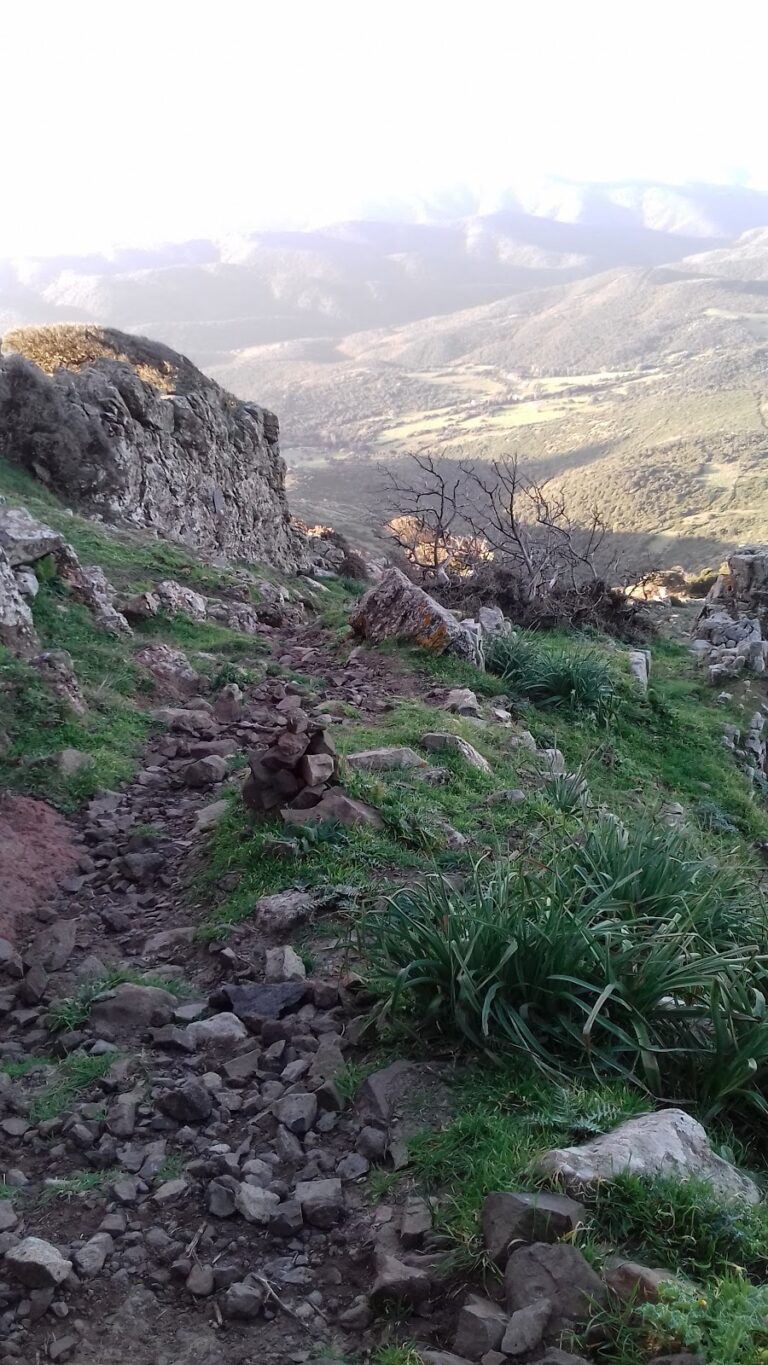
The castle was built on elevated ground above the settlement, on Salvaterra Hill. This position strengthened its defensive value and allowed communication with other castles in the surrounding territory, including Gioiosa Guardia, Acquafredda, and San Michele of Cagliari.
Aragonese conquest and expansion
The Crown of Aragon, whose expansion into Sardinia brought Iglesias under Aragonese control, conquered the castle in 1324 after the siege of Villa di Chiesa. The citadel and fortress were then granted as a feudal holding to Berengario Carròs, son of Francesco Carròs, the admiral who commanded the Catalan-Aragonese fleet.
Beginning in 1325, substantial extensions and strengthening works altered the castle. These changes also transformed its role, taking it beyond a purely defensive function and making it a symbol of royal power over the city. An inscription commemorating Berengario Carròs’s control remained visible on the gate lintel, the horizontal element spanning the top of a doorway or gate, until 1905. A drawing dated 1358 helps establish the fortress’s original appearance.
Nineteenth-century transformation
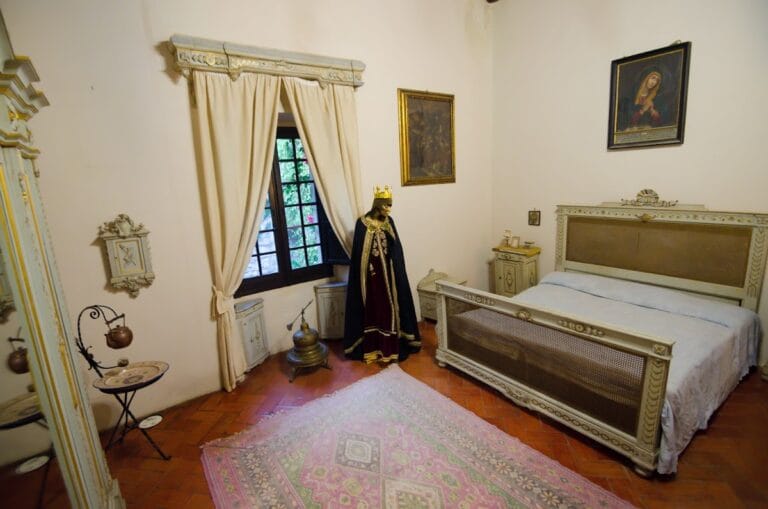
During the nineteenth century, the medieval castle was incorporated into a larger complex that included a Neo-Gothic villa and a glassworks. The castle is recognized as Italian national heritage.
Remains
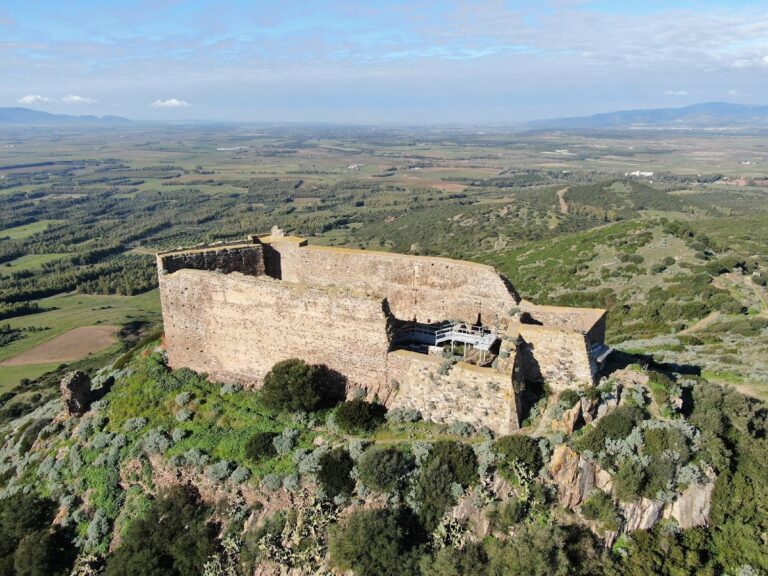
Castello di Salvaterra occupies elevated terrain on Salvaterra Hill above Iglesias. Its original fortress had a quadrangular plan with three towers, two placed at the sides and a third at the center. The entrance was located in the central tower, creating a compact fortified arrangement suited to the castle’s defensive purpose.
The surviving complex also reflects its nineteenth-century transformation, when the medieval fortress was joined to a Neo-Gothic villa and a glassworks. The castle is reported to be in good condition, allowing the original fortified structure and its later architectural setting to be considered together.