Monte Sirai: A Phoenician-Punic Settlement in Sardinia
Site at a Glance
- Popularity
- Medium
- Country
- Italy
- Primary era
- Classical
- Eras represented
- Bronze Age, Iron Age, Classical
- Civilizations
- Carthaginian, Nuragic, Phoenician
- Site type
- City
On this page15 sections
History
Monte Sirai is an ancient settlement in Sardinia, Italy, founded around the mid-eighth century BC by Phoenicians, an ancient eastern Mediterranean people, from Sulci on a site already occupied by the Nuragic culture, Sardinia’s prehistoric society known for its stone towers. Earlier occupation reaches back to the Neolithic period, and the settlement later stood where routes toward Sulci, now Sant’Antioco, met paths to the fertile Cixerri and Campidano plains.
Phoenician foundation and Carthaginian rule
Settlers from Sulci established their community within the older Nuragic settlement. Monte Sirai was chiefly a civilian town, rather than primarily a military center. Its fortunes changed during the second half of the sixth century BC, when it suffered severe damage, possibly during the failed Carthaginian expedition to Sardinia led by Malchus, a Carthaginian military leader.
Monte Sirai may have fallen to Nuragic Sardinians around 540 BC. Carthage regained control sometime between 535 and 510 BC in a conflict won by the Magonids, a powerful Carthaginian ruling family. Hasdrubal I died in battle, and his brother Hamilcar I also took part. After the conquest, about a dozen families from North Africa settled at Monte Sirai. Their arrival is associated with a shift in burial customs: cremation, common in the Phoenician period, gave way to inhumation during the Punic period, the Phoenician-derived culture of Carthage and its sphere.
The fortifications were strengthened around 370 BC, near the establishment of a tophet, a Phoenician-Punic sacred precinct for cremated remains and dedicatory carved stones called stelae. After the First Punic War, the first major war between Rome and Carthage, fought from 264 to 241 BC, the fortifications and the settlement’s principal tower were restored. A smaller second burial layer in the tophet came into use after 238 BC.
Roman period and later activity
Under Roman rule, the settlement’s main military installations were dismantled. Monte Sirai was abandoned around 110 BC, although coins from the Constantinian period, the fourth-century reign of Emperor Constantine I and its immediate era, found in the tophet point to later activity at the site.
Archaeological investigation
Archaeological investigation began after a local boy found a carved female figure on a tophet stele in autumn 1962. In August 1963, the local archaeological authority and the Institute of Near Eastern Studies at Sapienza University of Rome began excavations, which led to extensive study of the Punic settlement. A 2018 study of ancient DNA suggested that Sardinians and Phoenicians at Monte Sirai experienced integration and cultural assimilation.
Remains
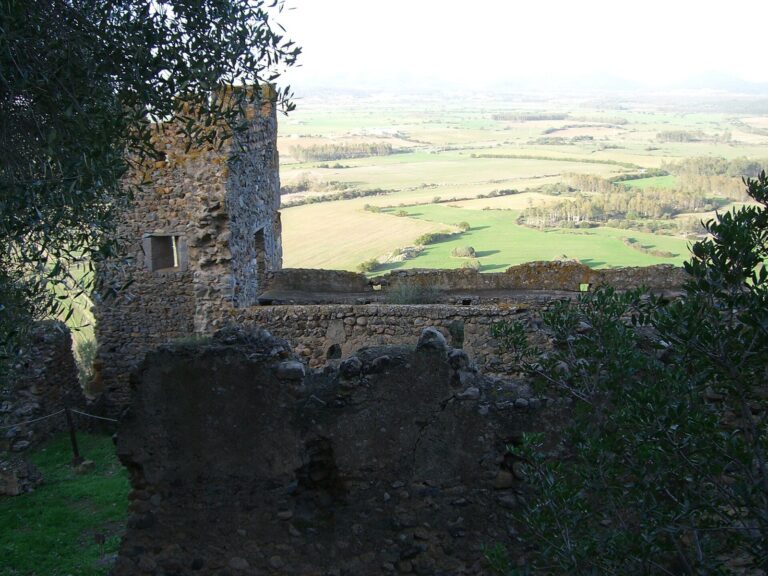
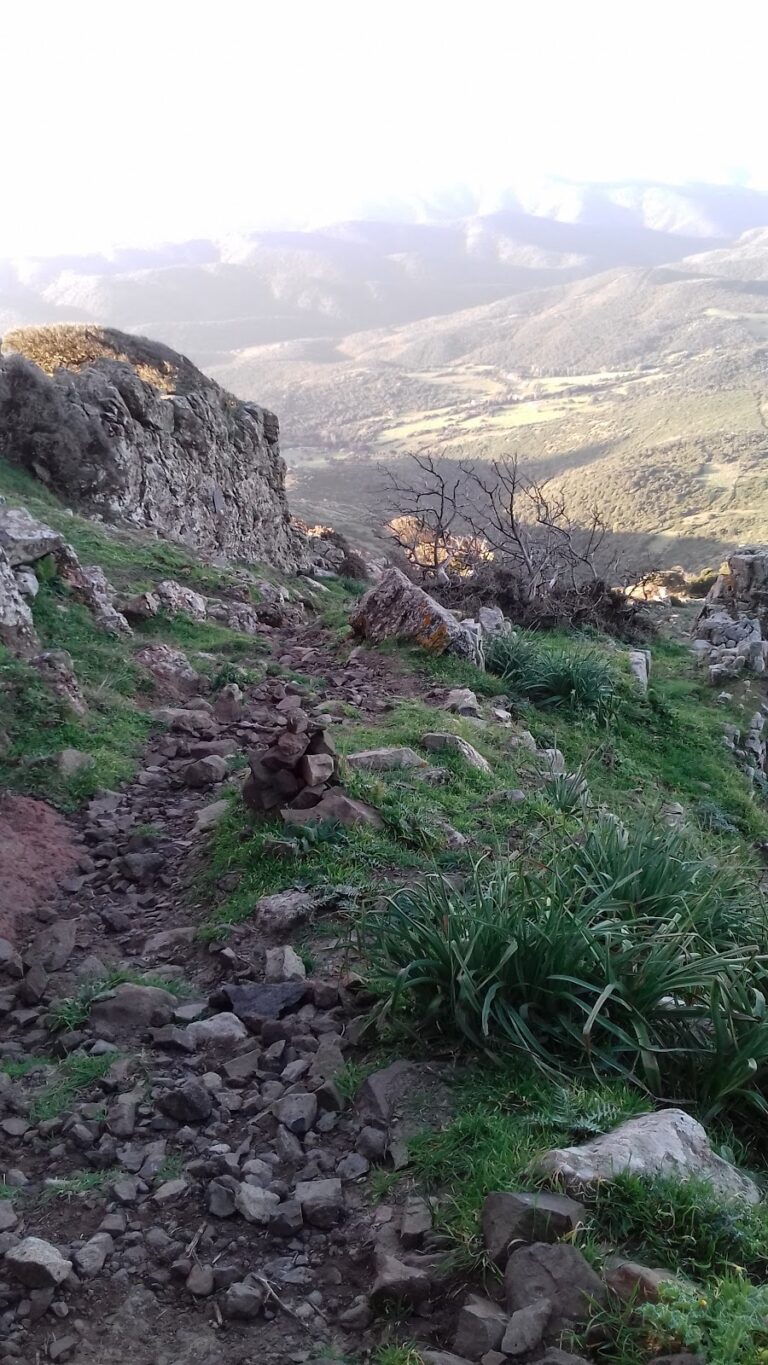
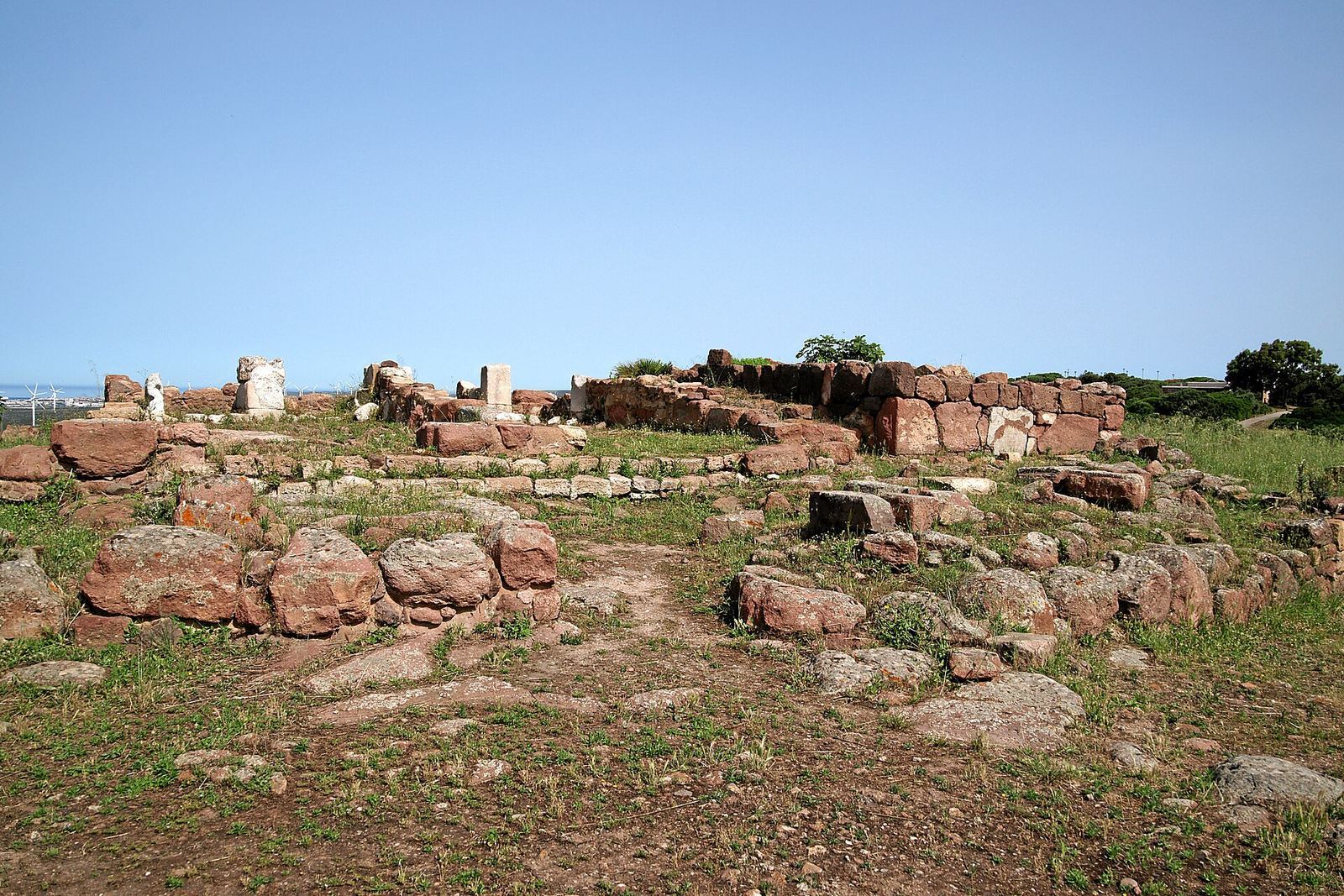
The site occupies the summit and plateau of a volcanic table hill 191 metres above sea level. Its principal areas are the elevated central settlement, or acropolis, the necropolis, and the tophet. Excavated foundations reveal the Phoenician-Punic town plan, its houses, and its building methods. Nuragic towers also survive as evidence of the hill’s earlier occupation.
Acropolis and settlement
The mastio
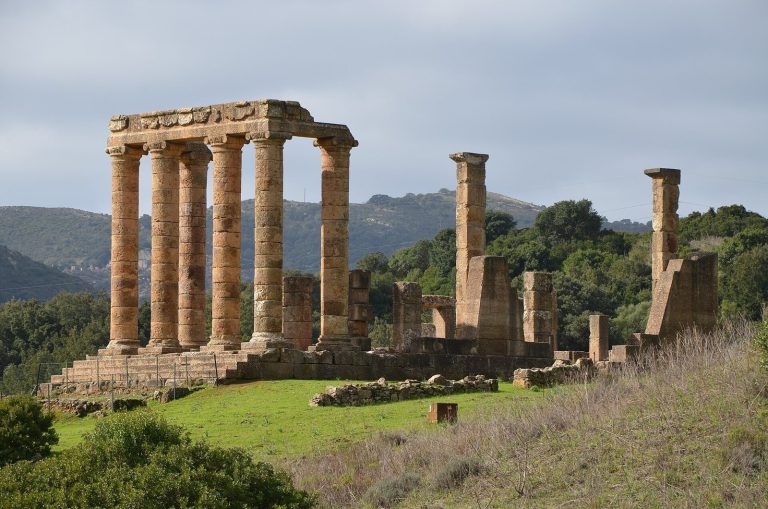
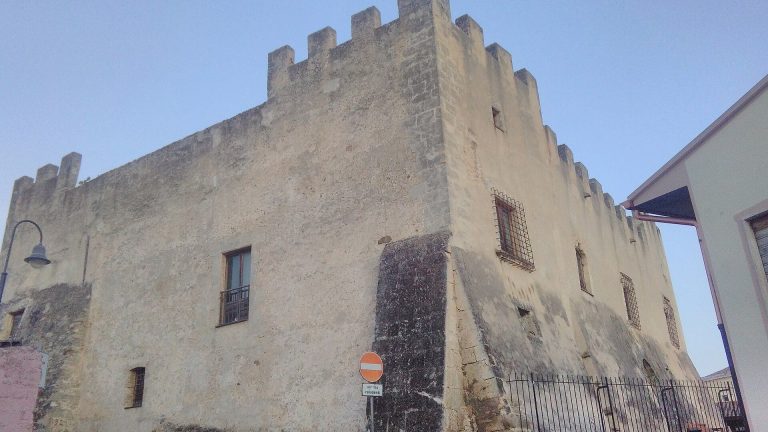
The settlement’s principal known public structure was a tower called the mastio, the main tower within a fortified settlement. It predates the Punic town and passed through four phases. Its Phoenician and Punic forms, in the sixth and fifth centuries BC, had a strong military emphasis. Around the third century BC, during the Sardo-Punic phase that combined Sardinian and Punic influences, it was adapted as a temple. In the Roman period, during the second and first centuries BC, it served both religious and military purposes. The Punic temple within the tower was divided into two rooms.
A stone sculptural torso found in one of the temple rooms probably represents Astarte, a goddess worshipped in the Phoenician and Punic world. Its features include pronounced eyebrows, lips, nose, and oversized ears, as well as tightly arranged curls. Found in 1964, the sculpture is now in the National Museum of Cagliari.
Houses and defensive works
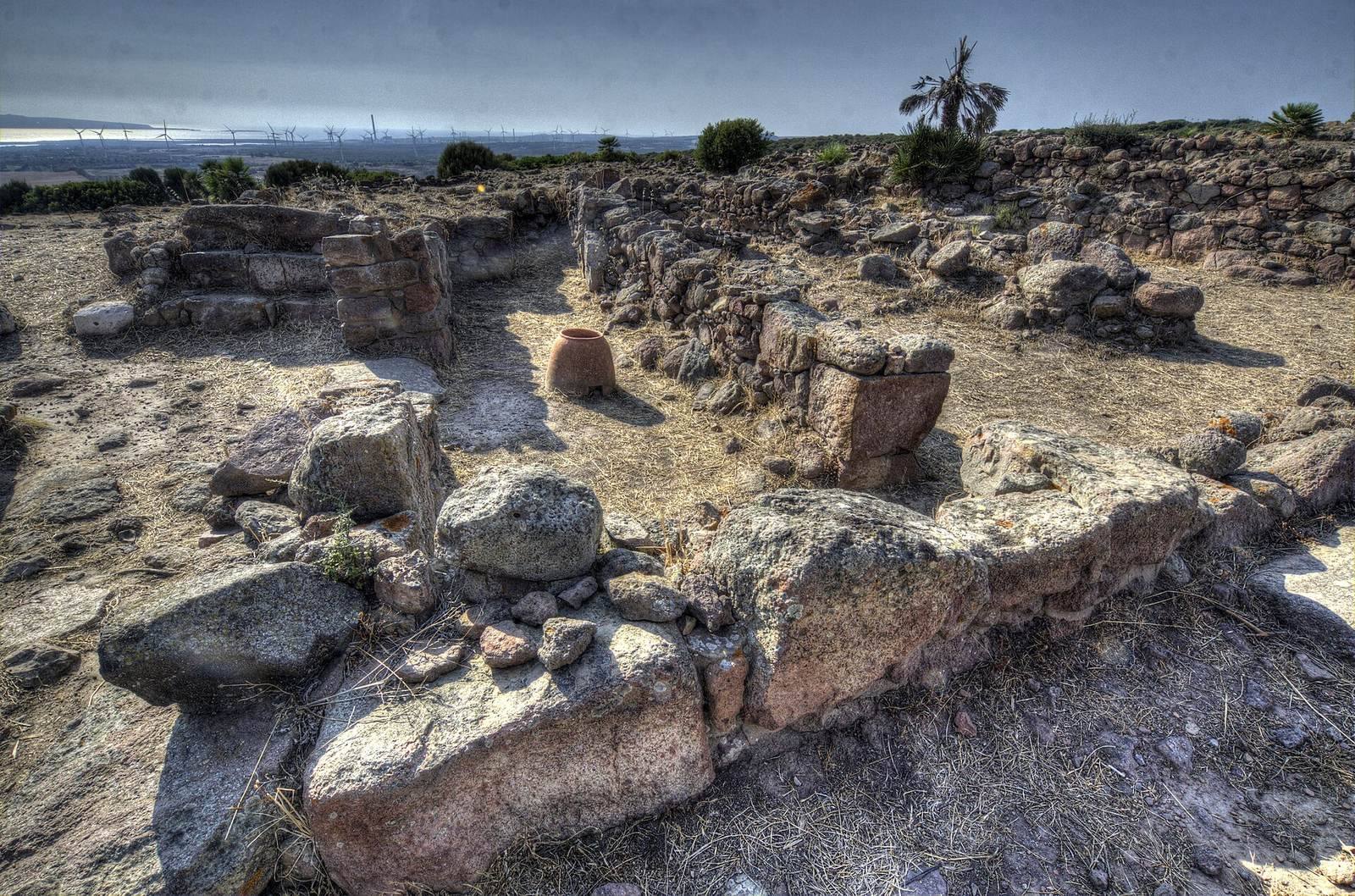
The Punic settlement occupied the acropolis and an outer defensive area. At the acropolis entrance, a defensive ditch was probably made by adapting a natural fissure. The outer area includes two buildings and domestic rooms and is dated to the third millennium BC.
Two houses have been studied in detail. Casa Fantar, named after its excavator, is entered through a corridor. The four-room House of the Talc Skylight takes its name from a talc slab used as a skylight. These houses resemble rural farmsteads in Sulcis and Iglesiente. Their roofs probably used beams and wooden shingles. The masonry includes opus africanum, a method that combines large upright blocks with smaller stonework between them.
Other finds
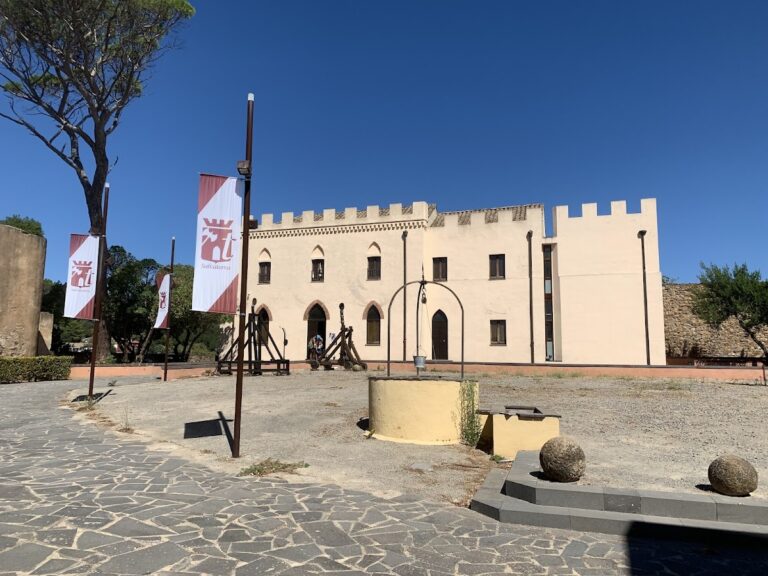
A male terracotta mask from Monte Sirai combines early Greek and Egyptian influences; similar masks are known from Carthage and Utica. Some artifacts from the site are displayed at Museo Villa Sulcis in Carbonia.
Necropolis
Phoenician burial area
The older Phoenician burial area lies in a hollow below the acropolis, where layers of marl emerge beneath trachyte. It contains about 50 graves dating to the seventh century BC. These shallow pits held burial urns in some cases; in others, the deceased had been cremated on a pyre above the grave, after which the remains were covered with stone and earth. A small number of Phoenician-period burials used inhumation.
Punic chamber tombs
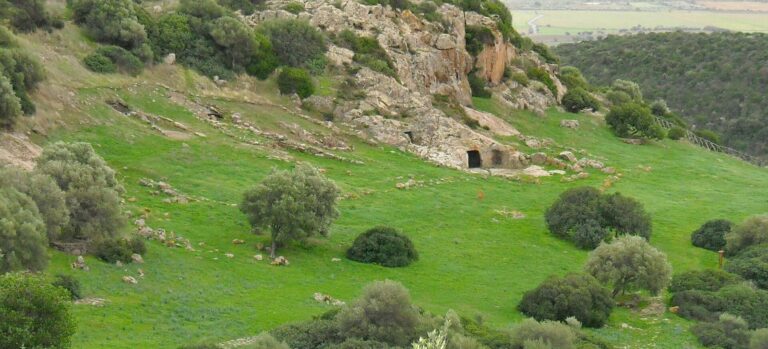
The Punic underground necropolis, dating from around the end of the sixth century BC, lies northwest of the older burial area. It comprises thirteen chamber tombs: eleven cut into the tuff, a volcanic rock covering the valley, and two at the foot of the cliff on which the tophet stands. The latter were made by enlarging earlier prehistoric rock-cut tombs in Sardinia. The chambers were designed for collective or multiple burials. Some entrances descend by stairways through passageways up to three metres deep, and a few entrance-closing slabs survive.
The tombs’ construction and decoration connect them with Sulci. Carved figures in the rock served as guardians of the dead, a practice also found there. Tomb 5 bears an upside-down relief of Tanit, a Punic goddess, attributed to Sardinian influence. Grave goods from Monte Sirai are less elaborate than those from Sulci.
Tophet
Urns and stelae
The tophet occupies a plaza on two levels. Urns were placed in the lower area; these cooking pots, covered with plates, contain cremated remains of children and some animals. Small amulets, jewellery, and miniature vessels were also found and may have been children’s toys rather than burial offerings. More than 100 stelae and around 300 urns were deposited at the precinct from the mid-fourth to the second century BC, with activity extending into the Roman period.
Most of the stelae have forms resembling Egyptian-style temples. Their designs follow models from Sulci, though they are generally less elaborate. Some show simple representations attributed to Sardinian influence.
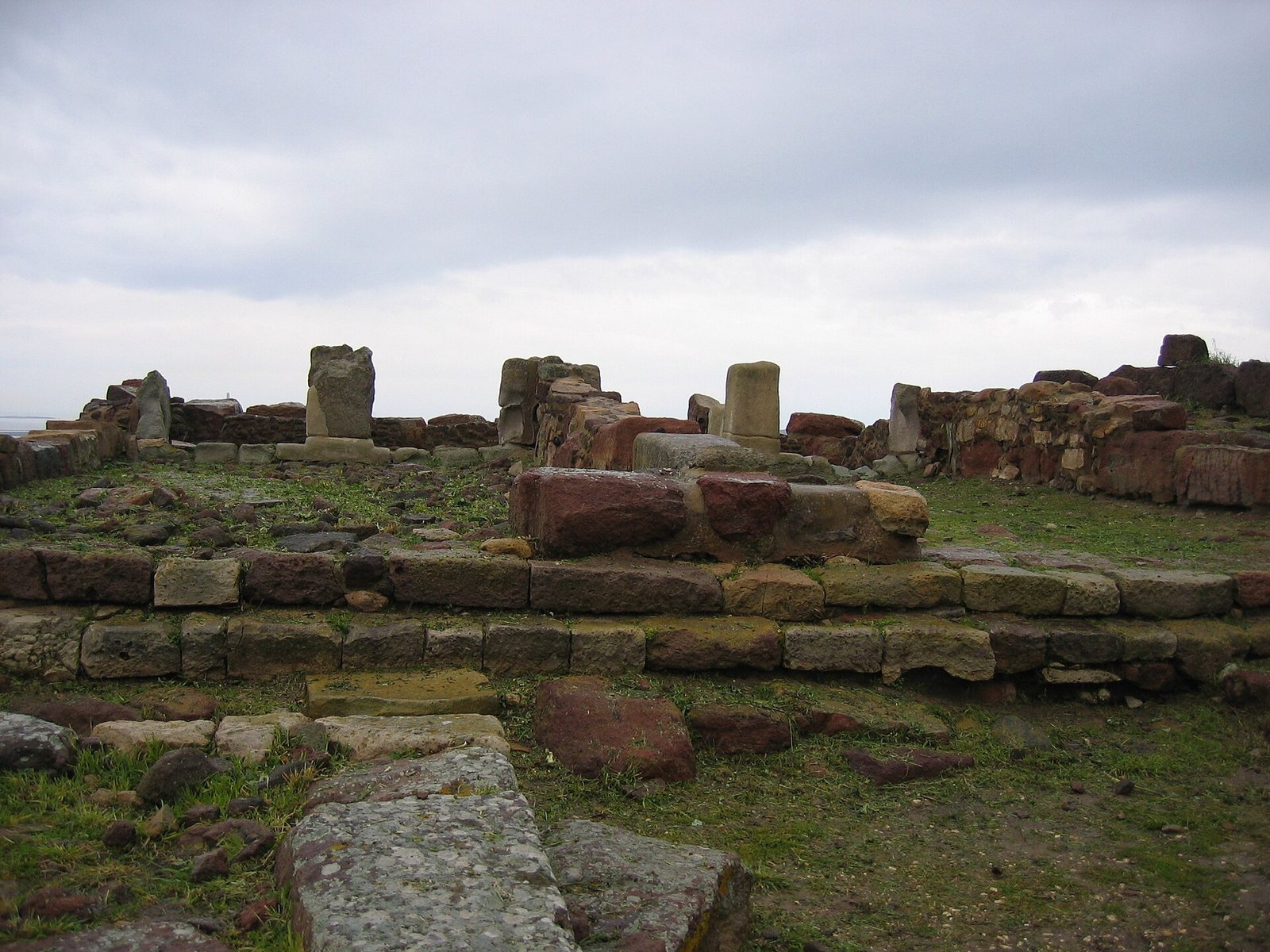
Terrace temple
A temple on the tophet’s upper terrace has three sections, two of them roofed, arranged on a north-facing plan. The final room contained bone remains and fragments of votive statues, probably broken during a particular ritual.