Castle of Acquafredda: A Medieval Fortress in Sardinia
Site at a Glance
- Rating
- 4.7
- Popularity
- Medium
- Country
- Italy
- Primary era
- Medieval
- External website
- Open
- Eras represented
- Medieval
- Civilizations
- Republic of Pisa
- Site type
- Military
- Remains
- Castle
On this page8 sections
History
Castle of Acquafredda is a medieval fortress in Siliqua, Italy, built during the twelfth or thirteenth century. Its precise foundation date is uncertain, but a papal bull, a formal document issued by the pope, refers to the fortress by the early thirteenth century. Tradition attributes the castle to Count Ugolino della Gherardesca, although its earlier establishment has also been linked to the marquises of Massa, the final judges of Cagliari.
Ugolino and the Judicate of Cagliari
Ugolino della Gherardesca, a Pisan count and political leader in thirteenth-century Sardinia and Tuscany, acquired the fortress after the division of the Judicate of Cagliari around 1257 or 1258. The Judicate was one of four medieval Sardinian states, ruled by judges, and its partition reshaped control of southern Sardinia. Ugolino is traditionally said to have expanded Acquafredda into a fortified stronghold. A settlement called Aquafredda occupied the plain below the castle.
After Ugolino’s death, the fortress passed to his surviving sons, including Guelfo. Guelfo may have had Vanni Gubetta, an accomplice of Archbishop Ruggieri degli Ubaldini, executed at Acquafredda. The castle later passed to the Republic of Pisa, which retained control until the Aragonese conquest of Pisan Sardinia in 1324. The Aragonese, rulers of the Crown of Aragon, then brought the fortress under the Aragonese crown.
Aragonese control and feudal decline
Aragon probably abandoned Castle of Acquafredda around 1408 to 1410. The property subsequently became a feudal possession and passed to Pietro Otger. From the sixteenth century onward, it was constituted as a barony, a feudal territorial jurisdiction held by a baron or comparable lord.
By 1785 the castle was described as destroyed and definitively abandoned. It later came under the rule of Victor Amadeus III, king of Sardinia and a member of the House of Savoy. During the nineteenth century, the fortress remained uninhabited or unused and progressively deteriorated. It is now regarded as one of Sardinia’s largest castle ruins.
Remains
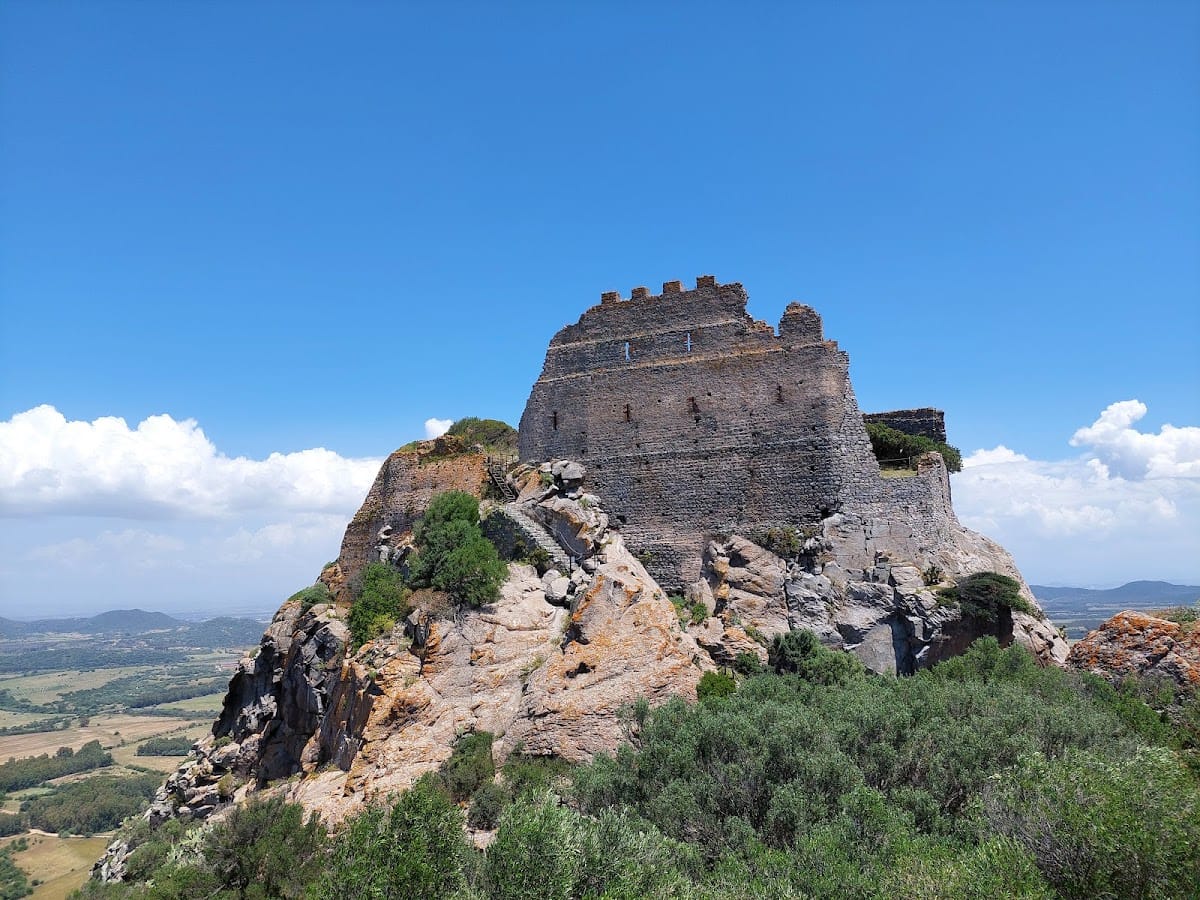
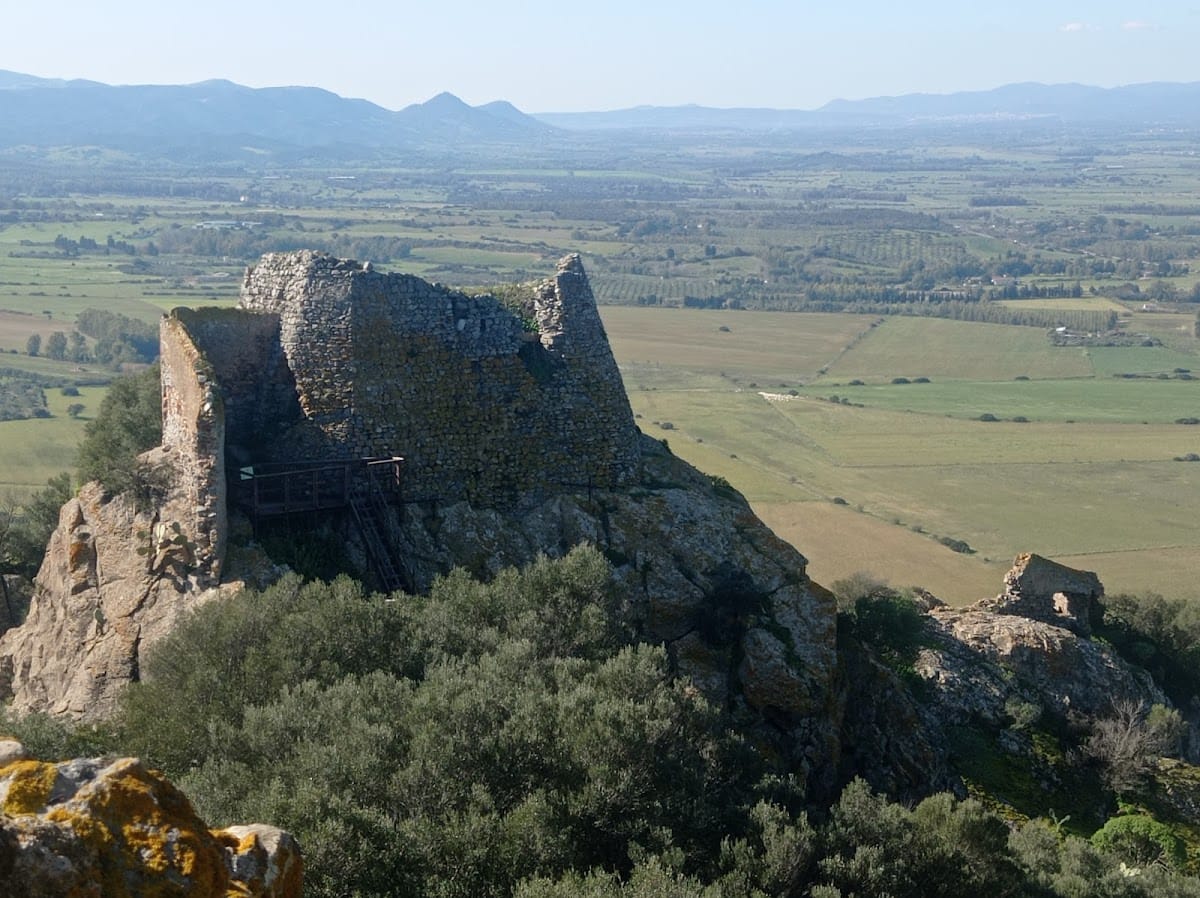
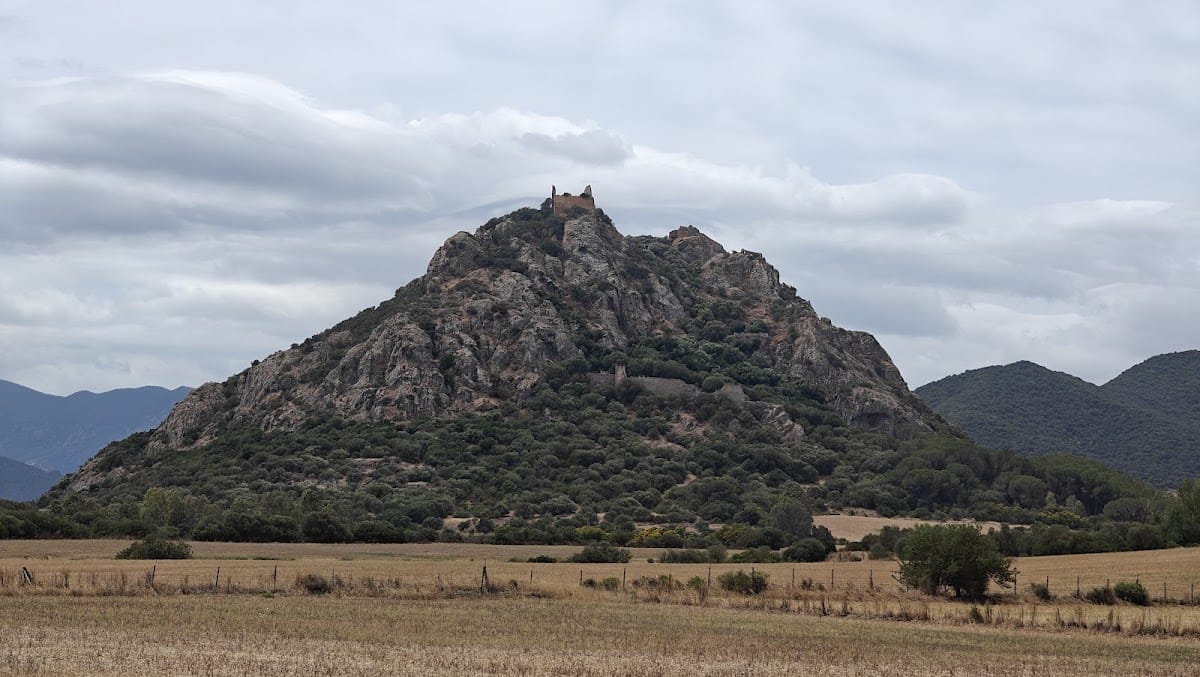
The fortified complex occupies the summit of a volcanic hill about 256 metres above sea level, overlooking the Cixerri valley. Its surviving arrangement extends across three levels and combines a lower settlement, a water-storage structure, and the principal castle. Sections of walls, towers, battlements, and a loophole remain among the ruins.
Lower settlement
At the base of the hill, a settlement was enclosed by walls with battlements. This lower area contained service buildings and facilities that supported the fortress, including accommodation for servants and troops, stables, and storage areas. Its position beneath the main castle formed the lowest level of the complex.
Cistern tower
The intermediate level contains a cistern tower divided into three rooms. The rooms were covered by a barrel vault, a continuous curved ceiling formed by extending an arch along a straight axis. The tower served as the castle’s water reserve and occupied the level between the lower settlement and the main stronghold.
Main castle and defenses
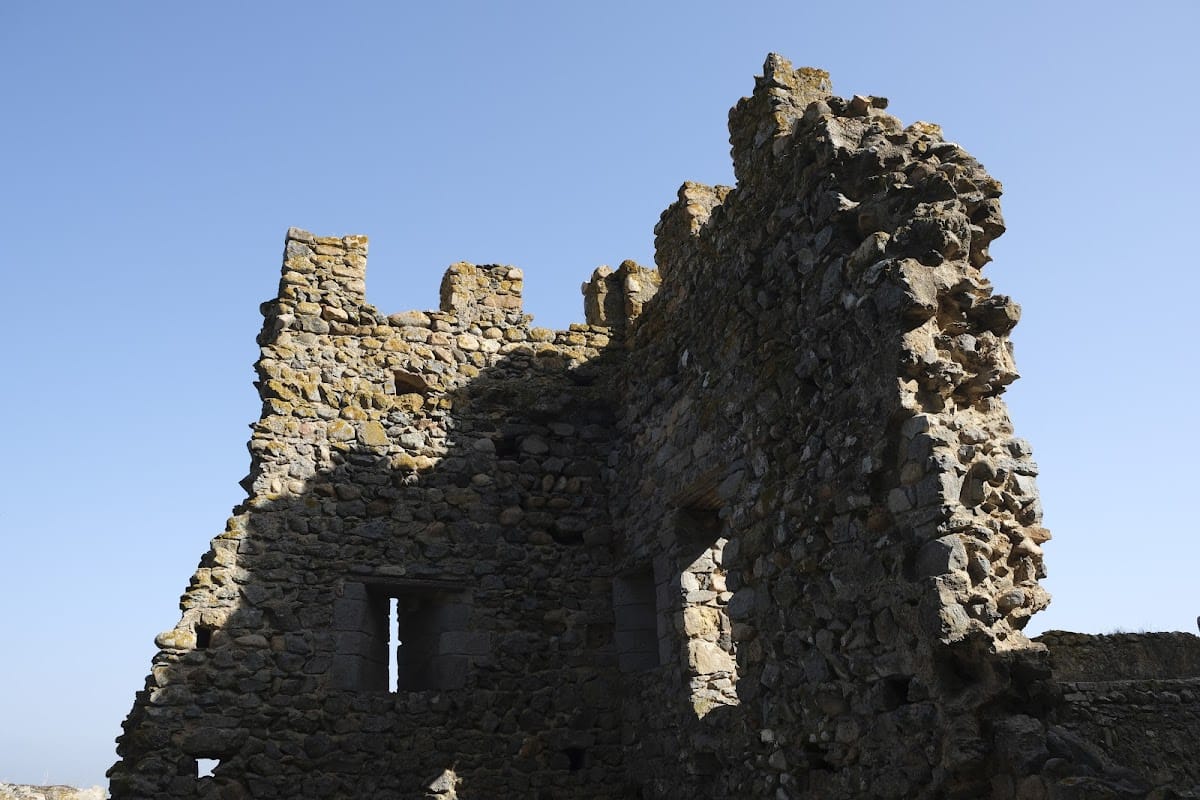
The principal castle originally had a U-shaped plan and three storeys. Its monumental guard tower survives within the ruins, together with sections of defensive wall, battlements, and a loophole. These elements formed the upper defensive core of the complex.
Courtyard burials and objects
Excavations in 2005 exposed three medieval human skeletons in the courtyard. The individuals were male and approximately 35 to 45 years old when they died; their bodies had been buried directly in the earth.
An inventory of the Aragonese castle from 1355 lists a large “Sardinian chest” containing crossbow bolts. The entry provides an early reference to a type of chest that Sardinian carpenters still make.