Panoría Megalithic Necropolis: A Prehistoric Burial Site in Granada
Site at a Glance
- Popularity
- Low
- Country
- Spain
- Primary era
- Bronze Age
- Eras represented
- Stone Age, Bronze Age
- Civilizations
- Unclassified
- Site type
- Burial
- Remains
- Necropolis
On this page4 sections
History
The Panoría Megalithic Necropolis is a prehistoric burial site in Granada, Spain, whose tombs were used over more than a millennium. It is one of the major concentrations of megalithic tombs on the Iberian Peninsula and the westernmost necropolis in a regional group that also includes sites at Gor, Gorafe, Laborcillas, Huélago, Fonelas, and Pedro Martínez in the Fardes basin.
Radiocarbon dates from 19 individuals in five tombs, assessed with probability-based statistical methods, place the earliest burials at about 3525 to 3195 BCE and the latest at about 2125 to 1980 BCE. The estimates suggest a total period of use between 1,055 and 1,410 years. The tombs were built at different times, sometimes centuries apart, by socially distinct groups that were probably unconnected. They did not form a shared cemetery for people living together in one settlement. Some tombs were used for only a few decades, no more than two generations, while others remained active for centuries. In some cases, burials resumed after long intervals without funerary activity.
This long history of ritual and burial makes Panoría one of Europe’s longest-lasting sacred places and the longest-lasting ritual and funerary site in Granada. The mountain is understood as a sacred landscape where communities from the Guadix basin could meet and engage with supernatural powers. Ritual practices there extended beyond funerary activity.
The necropolis was discovered in 2012. In 2015, GEA, a research group in the University of Granada’s Department of Prehistory and Archaeology, excavated five tombs. In 2023, the Andalusian government designated Panoría an Asset of Cultural Interest.
Remains
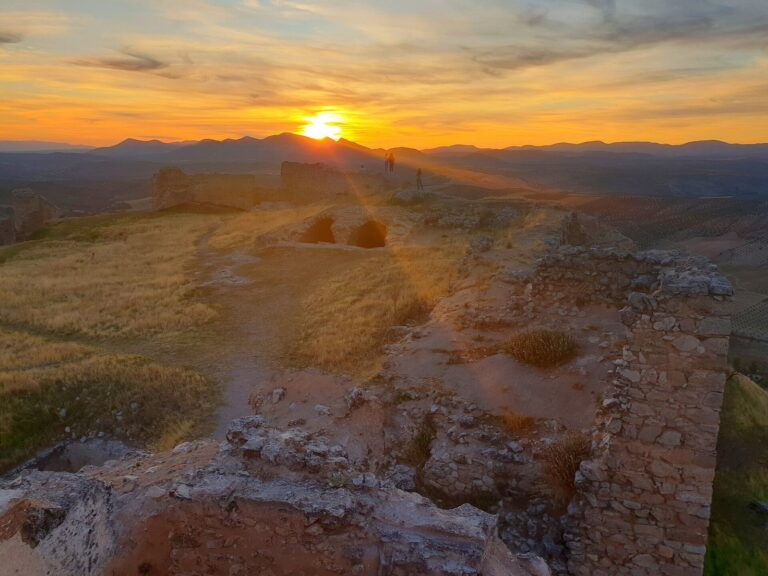
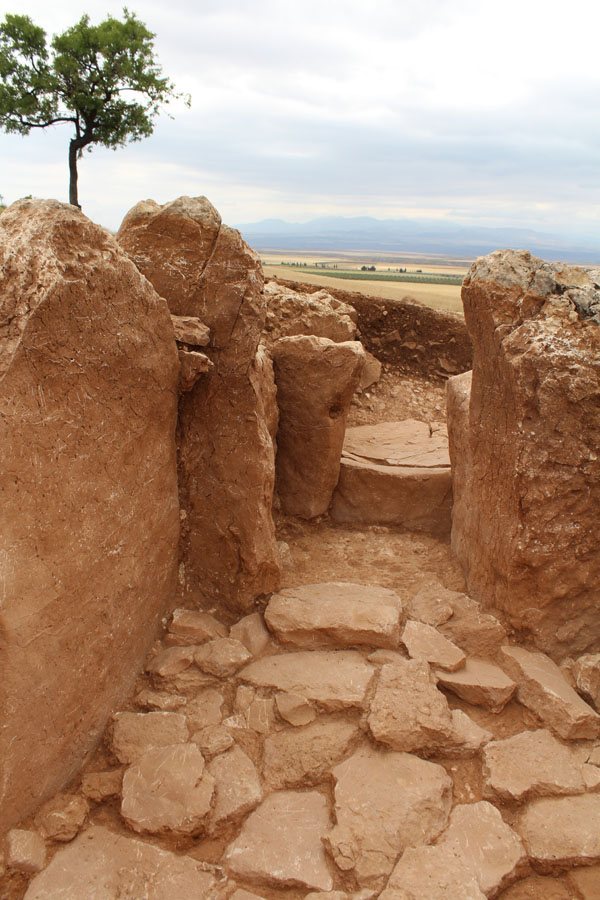
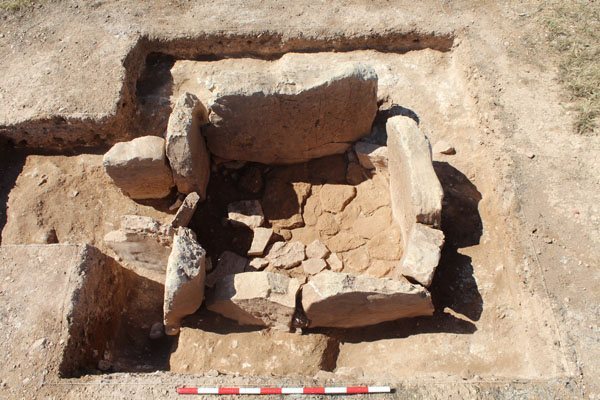
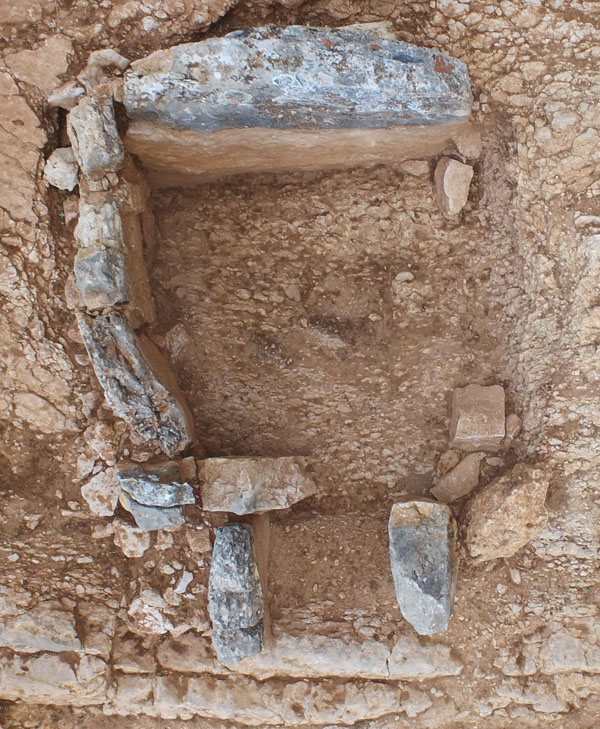
At least 19 tombs lie at the foot of Panoría Hill, on the southeastern slope at the eastern end of Sierra Harana, within the Guadix depression. The site is about 900 metres from Rambla Seca, a tributary of the Fardes River, and about two kilometres from the Cueva Horada archaeological site. Its partly buried tombs have mainly polygonal or rectangular chambers made from large slabs of locally available red, nodular limestone. Short, narrow passages lead into the chambers. Only the upper parts of the slabs project above ground, and the tombs were probably covered by burial mounds.
Tomb orientations
Three excavated tombs face the sunrise around the equinoxes, and surface evidence suggests that some unexcavated tombs may share this alignment. Tomb 6 differs, facing almost due south. Its orientation may have been directed toward the surrounding landscape, including Sierra Nevada and Cerro Trevélez.
Burial deposits
The tombs held collective burials. Most bones were disarticulated and gathered together, while complete or partly connected skeletons occurred only occasionally. People of both sexes and all ages were buried there, with at least 28 individuals counted in a single tomb. Their skeletal remains show degenerative conditions, especially osteoarthritis affecting the upper limbs. Objects placed with the dead included ceramic vessels, arrowheads, flint knives, and marine shells.