Necropolis Boljuni: A Medieval Burial Ground in Bosnia and Herzegovina
Site at a Glance
- Popularity
- Medium
- Country
- Bosnia and Herzegovina
- Primary era
- Medieval
- Eras represented
- Medieval, Early Modern
- Civilizations
- Kingdom of Bosnia, Ottoman
- Site type
- Burial
- Remains
- Necropolis
On this page11 sections
History
Medieval burial and carving
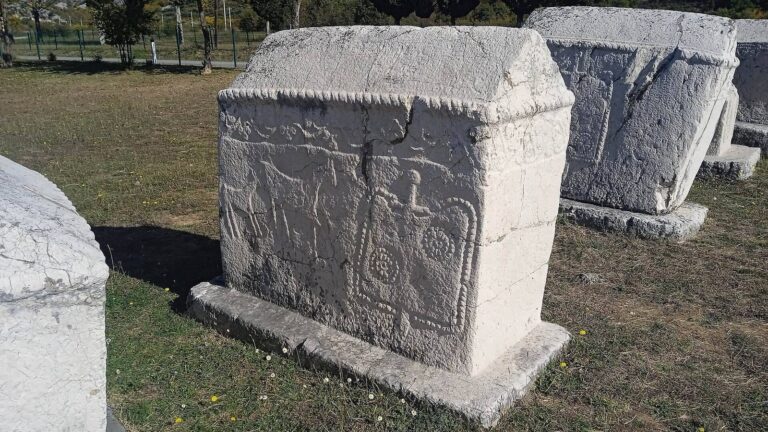
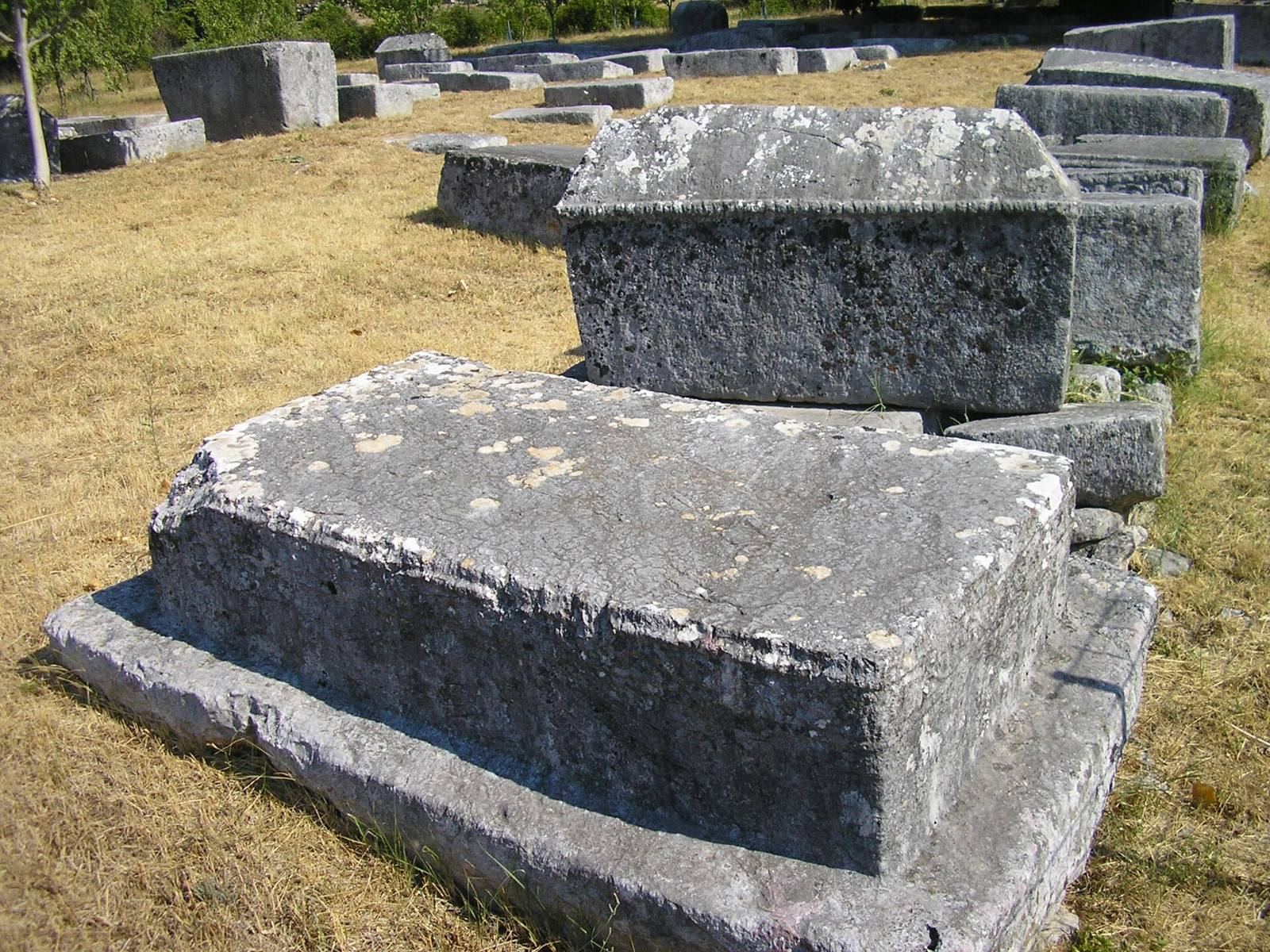
Necropolis Boljuni is a medieval burial ground in the hamlet of Boljuni, within Bjelojevići, about 15 km southwest of Stolac in Bosnia and Herzegovina. Burials began in the second half of the 14th century and continued into the early 16th century. Most of the tombstones date to the 15th century. The stones, known as stećci, are monumental medieval tombstones associated especially with Bosnia and the neighboring territory of Hum.
Inscriptions identify members of the Boljuni–Vladisalić group, who belonged to Donji Vlasi, a medieval community designation used in the region, along with people from other local families. Several carvers and scribes are named. Grubač, who is also buried at the necropolis, signed several monuments and is associated with a distinctive artistic style. The largest group of tombstones dates to his active years, around 1440–1460, and to the work of his pupils. Other named carvers include Milić, Zelija, and Dragiša; the inscriptions also name the scribes Semorad, Radoje, and Vuk. Their work points to Boljuni’s importance as a center of stone carving and artistic activity.
Inscriptions and historical interpretation
The inscriptions at Boljuni contribute to the cultural history of Bosnia and Herzegovina. In the 15th century, the area around Stolac was an important center for inscribed monuments. The people named at Boljuni include individuals also known from historical records.
A cross-shaped tombstone naming Vlatko Vuković Kosača was long identified as his grave, but that identification is rejected. Vlatko was lord of Hum and a commander of the Bosnian king Tvrtko I. He defeated Ottoman forces at Bileća on 27 August 1388, led troops in the 1389 Battle of Kosovo, a major conflict between Ottoman and Balkan forces, and died in 1392.
Boljuni was protected as a cultural monument of Bosnia and Herzegovina from 22 June 1971 and became a national monument in 2002. In 2016 it joined a UNESCO World Heritage serial property of 28 medieval tombstone necropolises: 20 in Bosnia and Herzegovina, three in Serbia, three in Montenegro, and two in Croatia. The property is inscribed under criteria iii and vi. The site has also faced maintenance concerns. Parts of the enclosed area between the entrance and the first tombstones were plowed, and the grounds were described as overgrown and lacking regular care. In October 2021, information boards and fencing at the UNESCO site were vandalized.
Remains
Layout and tombstone forms
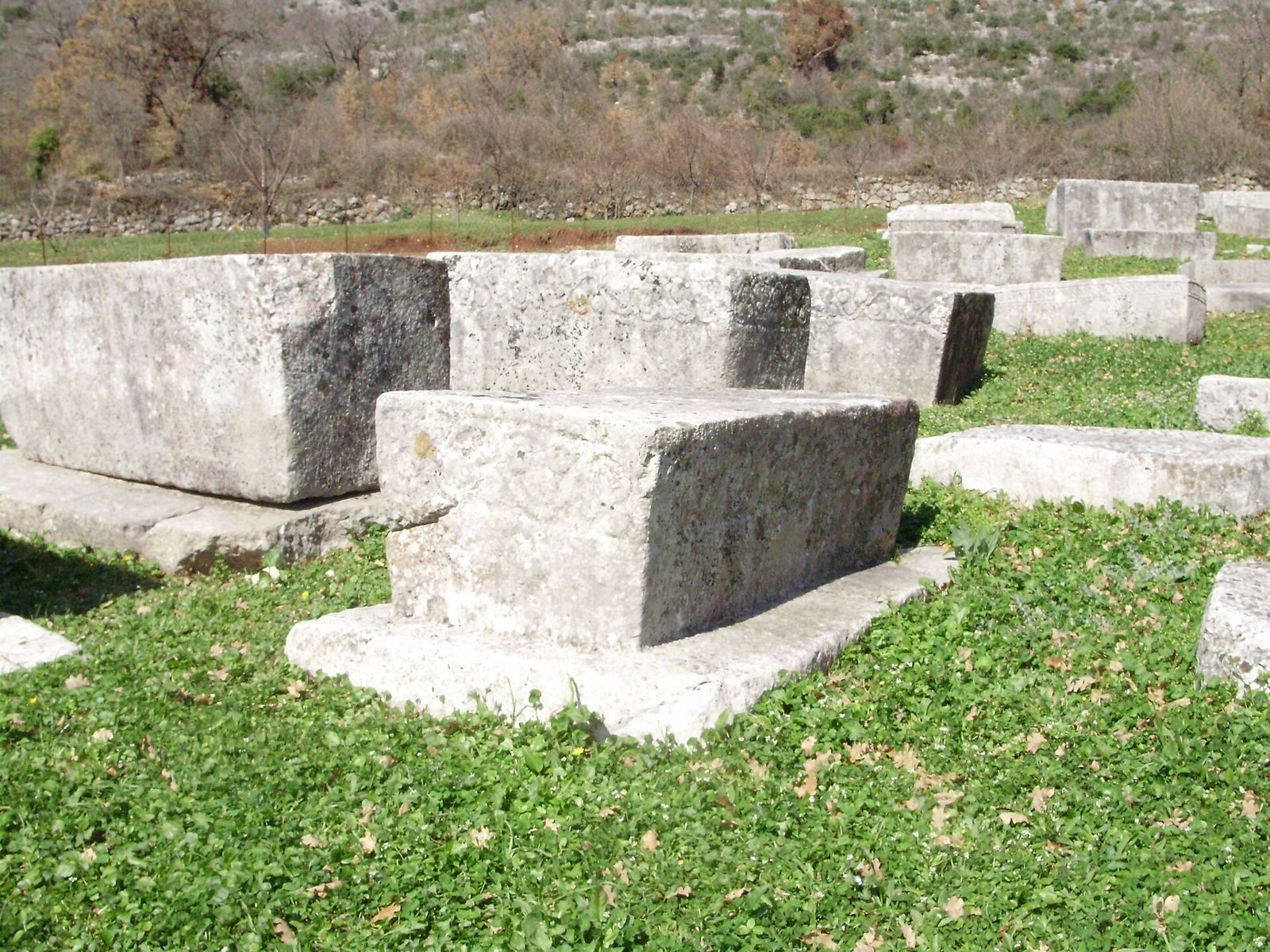
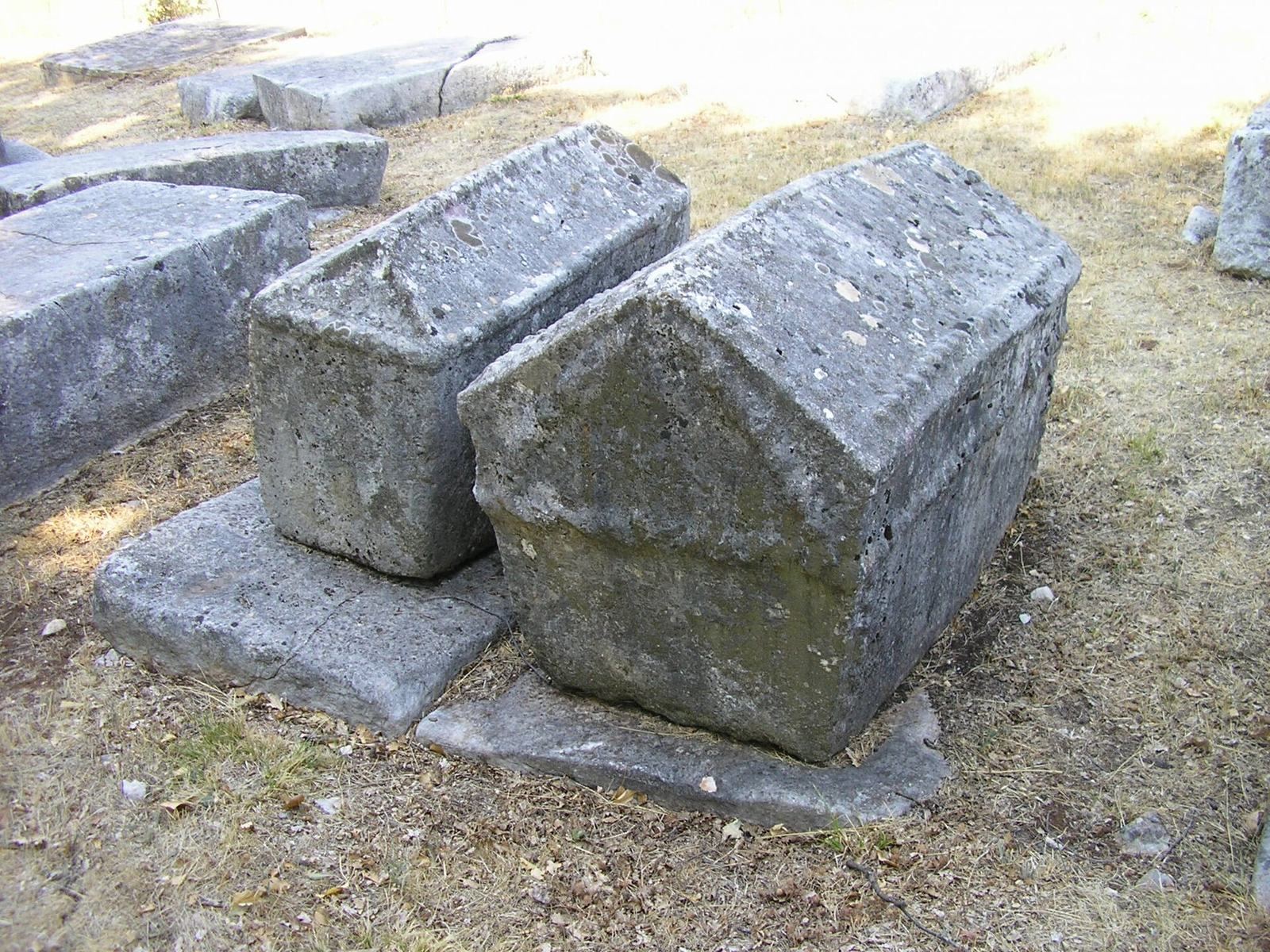
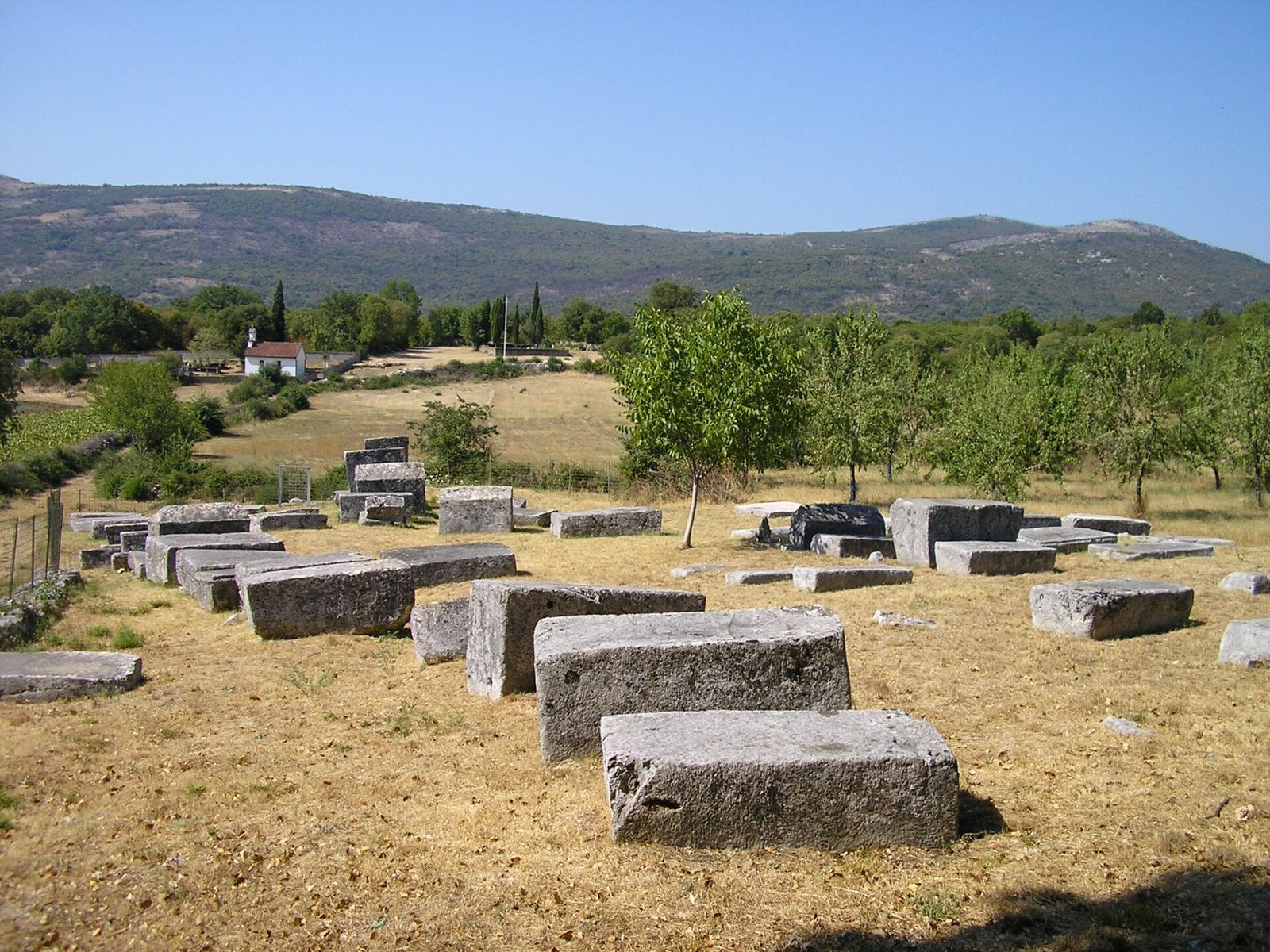
The necropolis lies on a plain beneath village houses and consists of two groups of tombstones roughly 400 m apart. The stones stand in rows, generally aligned west to east, sometimes with a slight deviation. The inventory lists 274 stećci: 176 chest-shaped monuments, 12 gabled stones, 82 slabs, and four cross-shaped monuments. Ninety-two are decorated, about 34 percent of the total. Two quarries lie about 200 m northwest and 200 m east of the necropolis, and the stone for the tombstones probably came from them. A feature called the Greek Well, locally known as Neveš Voda, is beside the cemetery.
Carved decoration
Winding vines with trefoil leaves appear as borders on the upper surfaces of slabs and as bands on the upright sides of chest-shaped stones. Other recurring designs include shields with swords, rosettes shown alone or with crescents or shields, rosettes within twisted circular wreaths, and cross-shaped rosettes. The carvings also include raised bands, borders, crosses, crescents, lilies, spiraling and grape-cluster plant forms, arcades, and swords.
Figural scenes show deer hunts, tournaments, circle dances, fantastic creatures, lions, and horsemen. Distinctive images include a woman holding a child, lizard-like fantastic creatures, and a dance leader riding a deer. The woman and child may represent the Madonna, the Virgin Mary in Christian belief.
Inscriptions and named tombstones
Nineteen inscriptions survive on the tombstones. They use Bosnian forms of Cyrillic, a writing system used in medieval Bosnia and neighboring regions, and vernacular language with elements of Church Slavonic, a literary language used in Slavic Christian texts.
Bogavac and Tarah Boljunović’s tombstone
Bogavac and Tarah Boljunović died before 1477. Their inscription identifies them as being from Jama and includes the words, “I lie on my noble estate at Golubača.” It credits Grubač with cutting the stone and asks for God’s mercy, with a wish that the earth be light and gentle. The tombstone is carved on all its upright sides, with inscriptions on its east and west faces.
The cross-shaped tombstone
The cross-shaped monument bears the inscription, “Here lies the good hero and man Vlatko Vuković; Semorad wrote [this].” It was erected later than a nearby slab and served as its headstone.
Other inscribed stones
An inscription for Radoslav Heraković credits Grubač with cutting the stone and includes a prayer for God’s mercy. Another names Vlač, credits Semorad as the writer and Vuk as the carver, and says Vuk made the monument for his father. Inscriptions also name Radić Vladisalić, Herak, Petar Vukić, and Petar’s brother.
Surrounding archaeological features
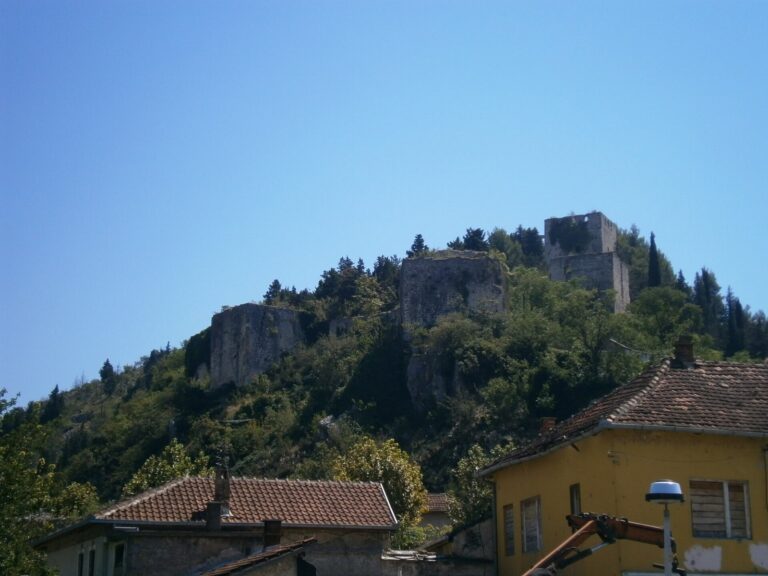
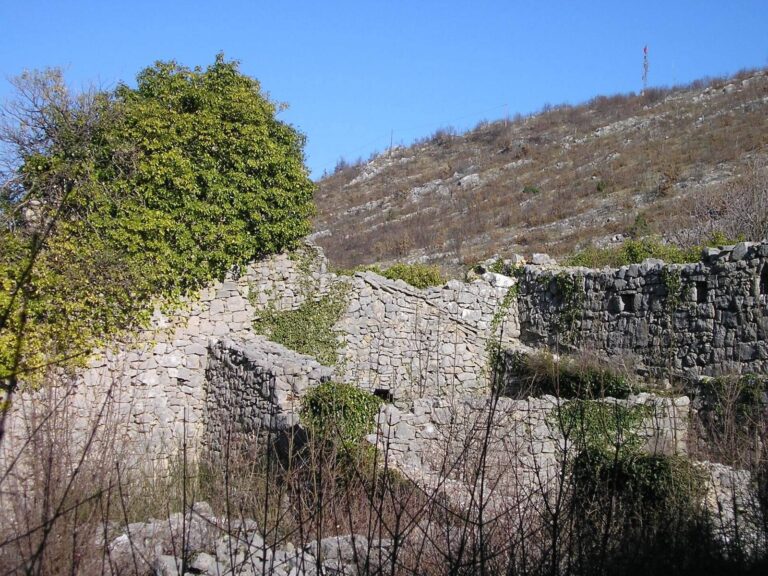
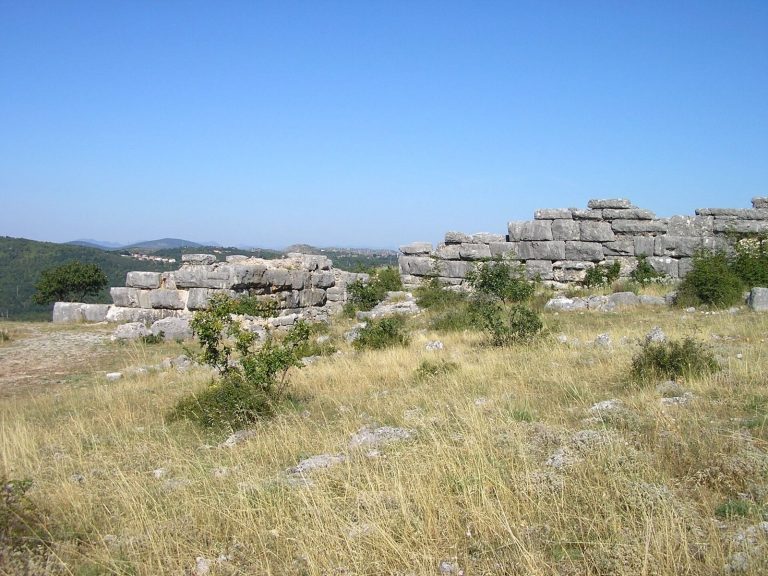
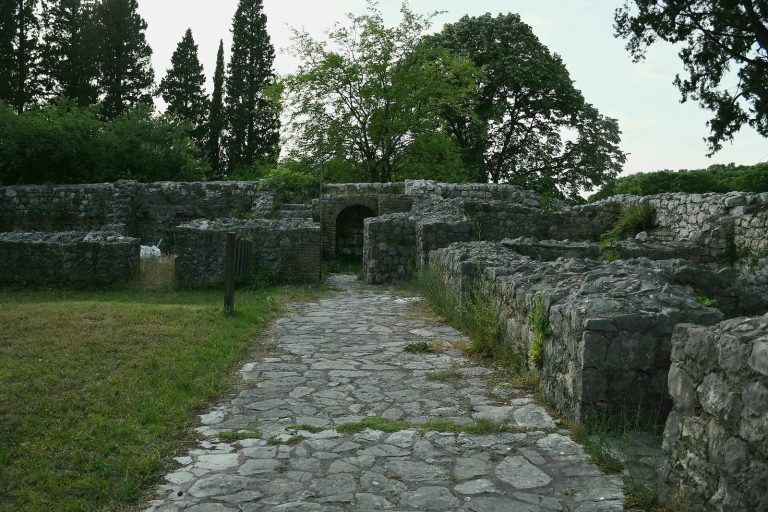
The surrounding area contains traces of hillforts and burial mounds from the period of the ancient Illyrians, peoples of the western Balkans before Roman rule. Nearby Crkvina probably dates to Late Antiquity, the transition between the ancient and medieval worlds, conventionally placed around the third to eighth centuries. Its cemetery remains may date to the early medieval period.