Daorson: An Illyrian Hill Fort and Capital


Site at a Glance
- Rating
- 4.8
- Popularity
- Low
- Country
- Bosnia and Herzegovina
- Primary era
- Classical
- Eras represented
- Bronze Age, Classical
- Civilizations
- Illyrian
- Site type
- City
On this page9 sections
History
Prehistoric foundations
Daorson is an ancient fortified settlement near Ošanjići in Bosnia and Herzegovina, built and developed by the Daorsi, an Illyrian community that occupied the Neretva River valley. Occupation may have begun as early as approximately 4000 BC. More secure evidence places settlement at the site from the early seventeenth or sixteenth century BC through the end of the Late Bronze Age, in the ninth or eighth century BC.
The later settlement grew over this earlier fortified site. The Daorsi were one of the ancient communities of the western Balkans known collectively as the Illyrians. Their capital flourished between approximately 300 and 50 BC, when contact and trade with Greek merchants encouraged the adoption of Greek language, artistic forms, institutions, and cultural practices, a process known as Hellenization.
The Daorsi and Rome
Daorson’s massive stone fortifications were erected in the fourth century BC, with the two towers probably added soon afterward. Other buildings on the acropolis were constructed or expanded later, continuing into the first century BC. The Daorsi also developed skilled craft production and issued their own coins. Their decorated buckles and pottery marked with graffiti reflect commercial and cultural connections with neighboring communities.
After making a peace treaty with Rome in 168 or 167 BC, the Daorsi minted their own currency. When the Delmatae attacked them, they joined Issa, a Greek-founded Adriatic polity centered on the island of Vis, in seeking Roman protection. They abandoned Caravantius, an Illyrian political and military figure involved in the conflicts preceding Roman intervention, and fought on Rome’s side with their navy. After the Illyrian Wars, Rome granted the Daorsi immunity.
Destruction and later recognition
The final destruction of Daorson and the end of permanent settlement have been dated in two ways. One interpretation connects them with the wars fought by the Roman praetor and commander Publius Vatinius against the Delmatae during the middle or second half of the first century BC. Another places the destruction in AD 43-44. Permanent settlement was not established on the ruins afterward.
Daorson became a National Monument of Bosnia and Herzegovina in 2003. It forms part of the Stolac natural and architectural ensemble, which also includes the nearby Radimlja necropolis and other sites. The ensemble is included on UNESCO’s Tentative List, a national inventory of places considered for possible future World Heritage nomination. Despite its heritage status, protective measures had not been undertaken at the site.
Remains
Settlement layout
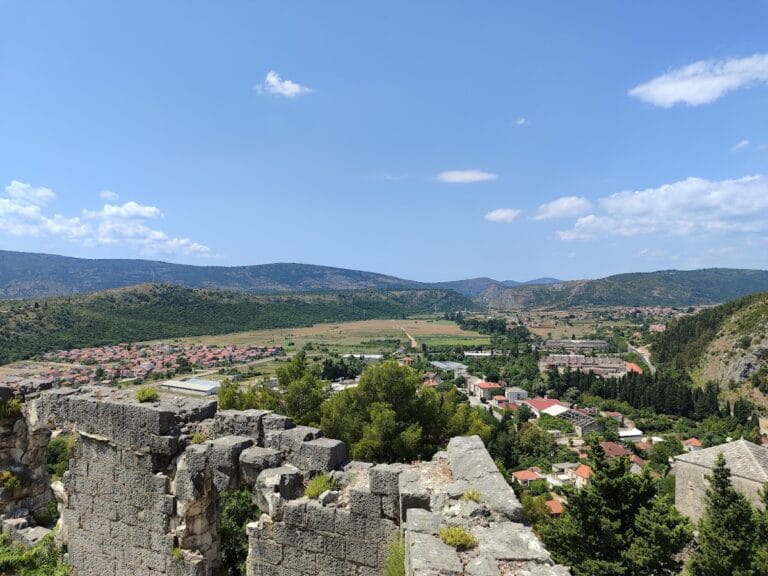
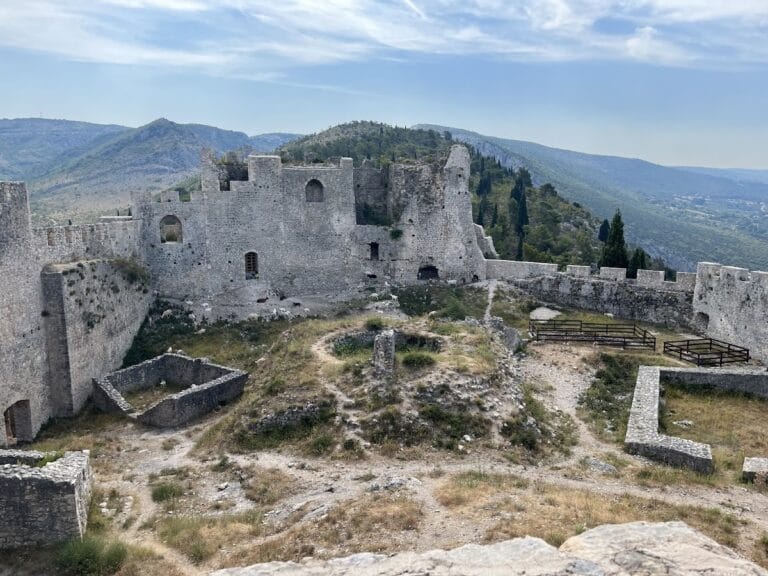
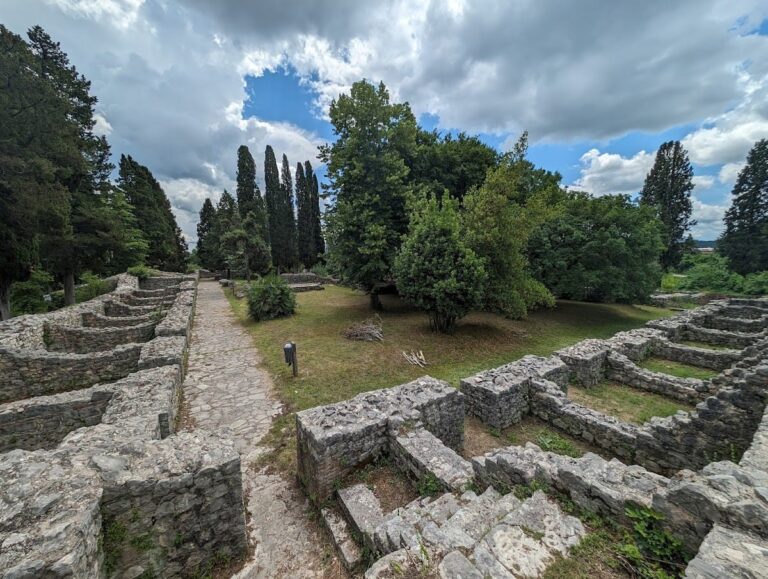
The archaeological site consists of three connected groups of stone remains arranged along the contours of the terrain. A dominant hill fort, or acropolis, occupies the center. Terraces extend along the ridge to the south and southwest, while the outer-acropolis area lies east of the hill on the Banje plateau. The acropolis stood above these areas and contained the principal administrative, public, and religious buildings. Residential and commercial quarters occupied the Banje plateau, including spaces associated with craft production and trade.
Megalithic defenses
A cyclopean defensive wall, built from enormous roughly fitted stone blocks, follows the terrain from southwest to northeast. It measured about 65 metres in length and 4.2 metres in width, while its surviving height ranged from 4.5 to 7.5 metres. Doors and towers stood on both sides of the wall, forming part of the settlement’s massive stone enclosure. Fragments of the megalithic fortifications survive at Ošanjići near Stolac.
Mint and commercial remains
A small building served as a mint. Thirty-nine different coins were found there, including twenty-nine showing the Hellenistic ruler Ballaios. Nine recovered coins carry Greek inscriptions and images of ships, while other issues bear the name Daorson. Numerous remains of wine amphorae, large ceramic transport vessels, and other pottery fragments were also found. Some pottery shards carry graffiti, adding evidence of the settlement’s writing practices and commercial connections.
Metalwork, sculpture, and mythological imagery
Among the notable finds is a bronze helmet probably made in the third century BC. Its decoration includes figures identified as Aphrodite, Nike, Dionysus, a Muse, and Pegasus, while its short Greek inscription resembles one on a helmet from North Macedonia. The inscription probably represents the abbreviated Illyrian name PINNES, understood as the owner’s name. Fragments of a granite sculpture depicting Cadmus and Harmonia include an Illyrian relief with thirteen snakes and five pairs of eagle wings.
Other finds include miniature metal figures, relief-decorated plaques, artistically ornamented buckles, and fragments of stone statues representing human figures approximately two metres high. Together with the coins, pottery, and helmet, these remains show the range of artistic and technical production associated with the settlement.