Musti: A Roman Municipium in Tunisia
Site at a Glance
- Popularity
- Medium
- Country
- Tunisia
- Primary era
- Classical
- Eras represented
- Classical, Medieval
- Civilizations
- Byzantine, Roman
- Site type
- Settlement
- Remains
- Town
On this page8 sections
History
Musti was an ancient city in northwestern Tunisia, first occupied by Numidian communities and later developed as a Roman town. Numidian occupation dates from the sixth to third centuries BC. In the late second century BC, the Roman general Gaius Marius settled veterans from Bononia at the site. Roman citizens, mainly merchants, were also present during the Republican period, although Musti did not receive colonists as Hippo Regius and Utica did.
Roman civic life
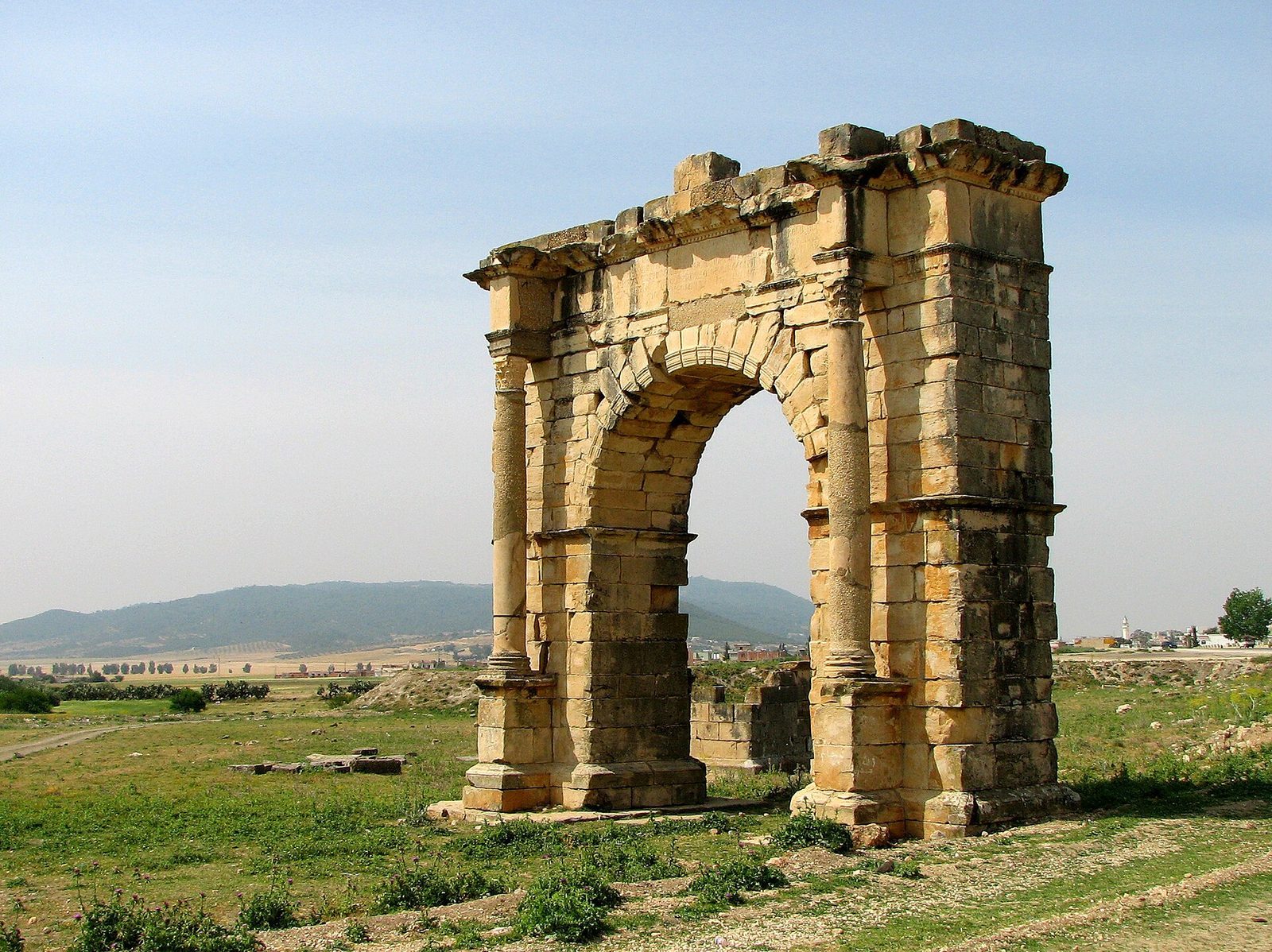
Under Julius Caesar, Musti became a municipium, a town with recognized civic status in Roman administration. Marcus Aurelius or Commodus granted it further privileges, and it retained its municipal status under Theodosius. Musti stood on the road between Carthage and Tebessa, about 90 Roman miles from Carthage. In 238, two arches were erected for Gordian III to mark the city’s limits.
Ancient geographical works, including Ptolemy’s account, the Antonine Itinerary, and the Peutinger Table, name the city. Inscriptions refer to its inhabitants as Musticenses or Mustitani, the latter name also used by Augustine. The geographer Vibius Sequester preserved a story that the Roman commander Regulus killed an enormous serpent at Musti.
Late antiquity and later use
In late antiquity Musti was a bishopric subordinate to the metropolitan church at Carthage. At the Council of Carthage in 411, a conference of Catholic and Donatist bishops, Felicianus, a Donatist Christian, and Victorianus, a Catholic, were assigned to the Proconsular see of Musti. Cresconius and Leontius belonged to a separate see of the same name in Numidia. One temple at Musti was converted into a basilica in the fourth century.
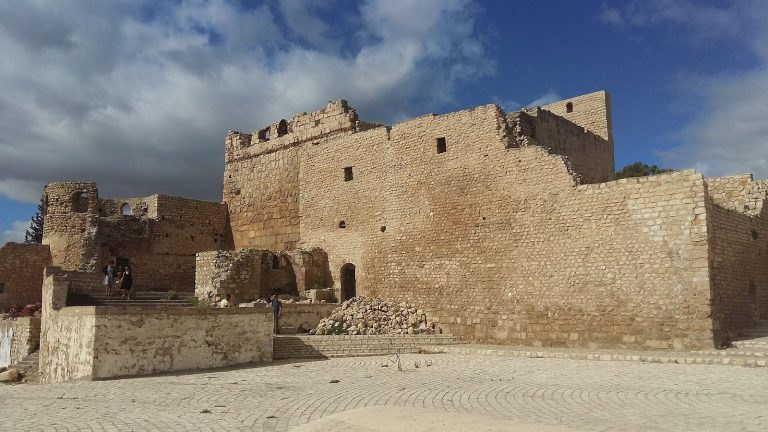
During conflicts with the Vandals, the Byzantines turned much of the city into a stronghold, including its forum, the central public space for civic, religious, and commercial activity. Scattered settlement continued at the site in the early Islamic period. In 1912, the former diocese was nominally revived as a Latin Catholic titular see, a historic title that does not denote an operating local diocese. It is usually of episcopal rank, with one archiepiscopal exception.
Archaeological investigations
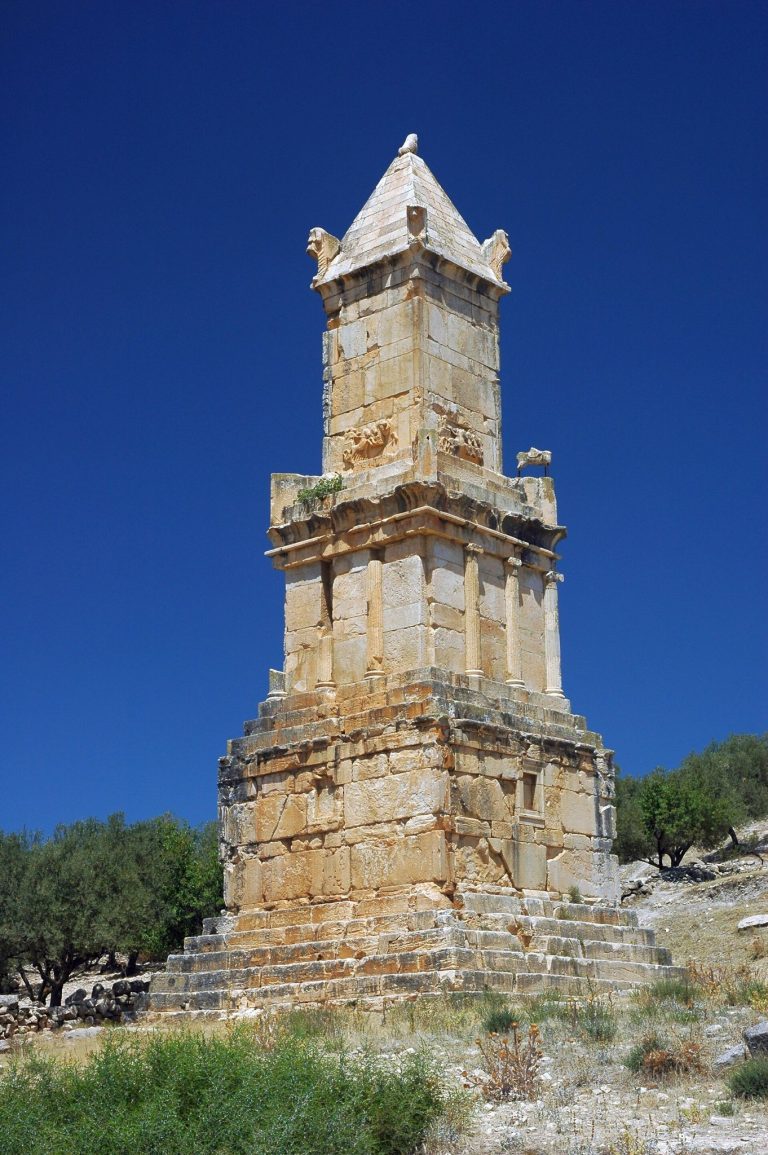
In 1967, Tunisia’s National Institute of Art and Archaeology and Historical Monuments Service restored the eastern arch and the nearby Mausoleum of the Julii. A Polish-Tunisian archaeological project begun in 2018 used magnetic and electrical-resistivity surveys, methods that detect buried features through physical properties of the ground. In 2019, epigraphists recorded more than 130 Roman-period inscriptions, while test excavations traced the site’s archaeological sequence back to its pre-Roman occupation.
Remains
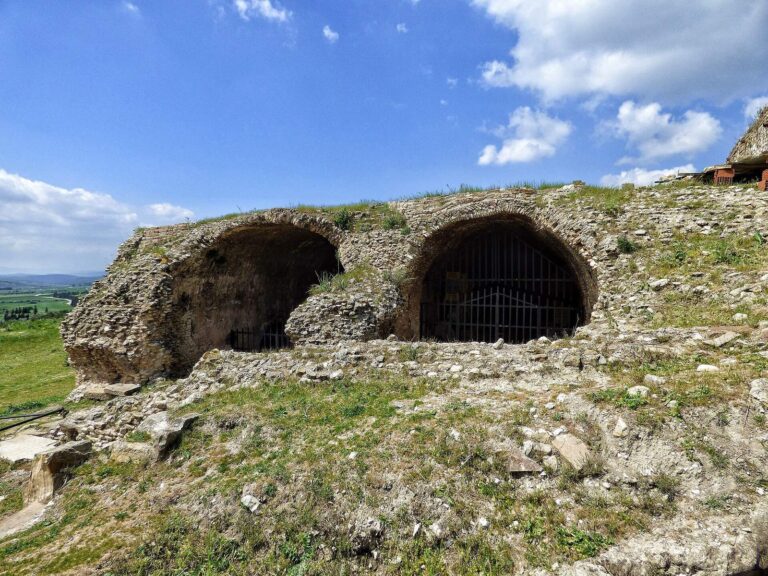
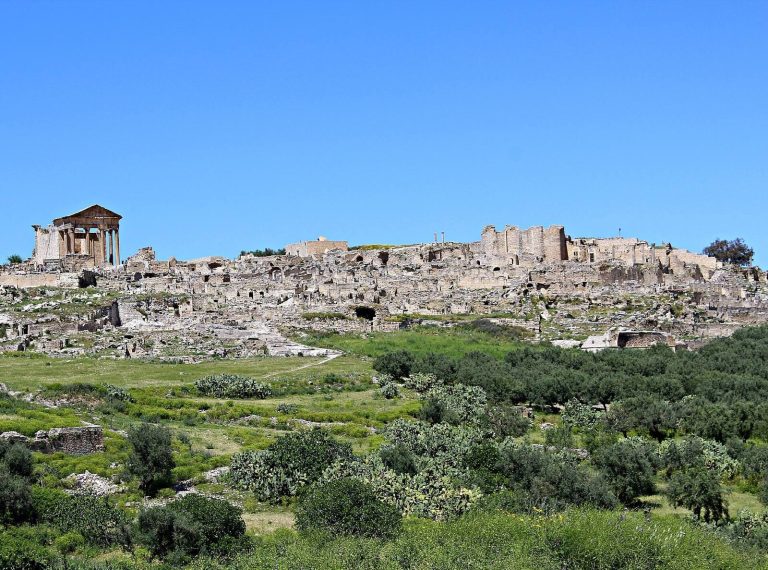
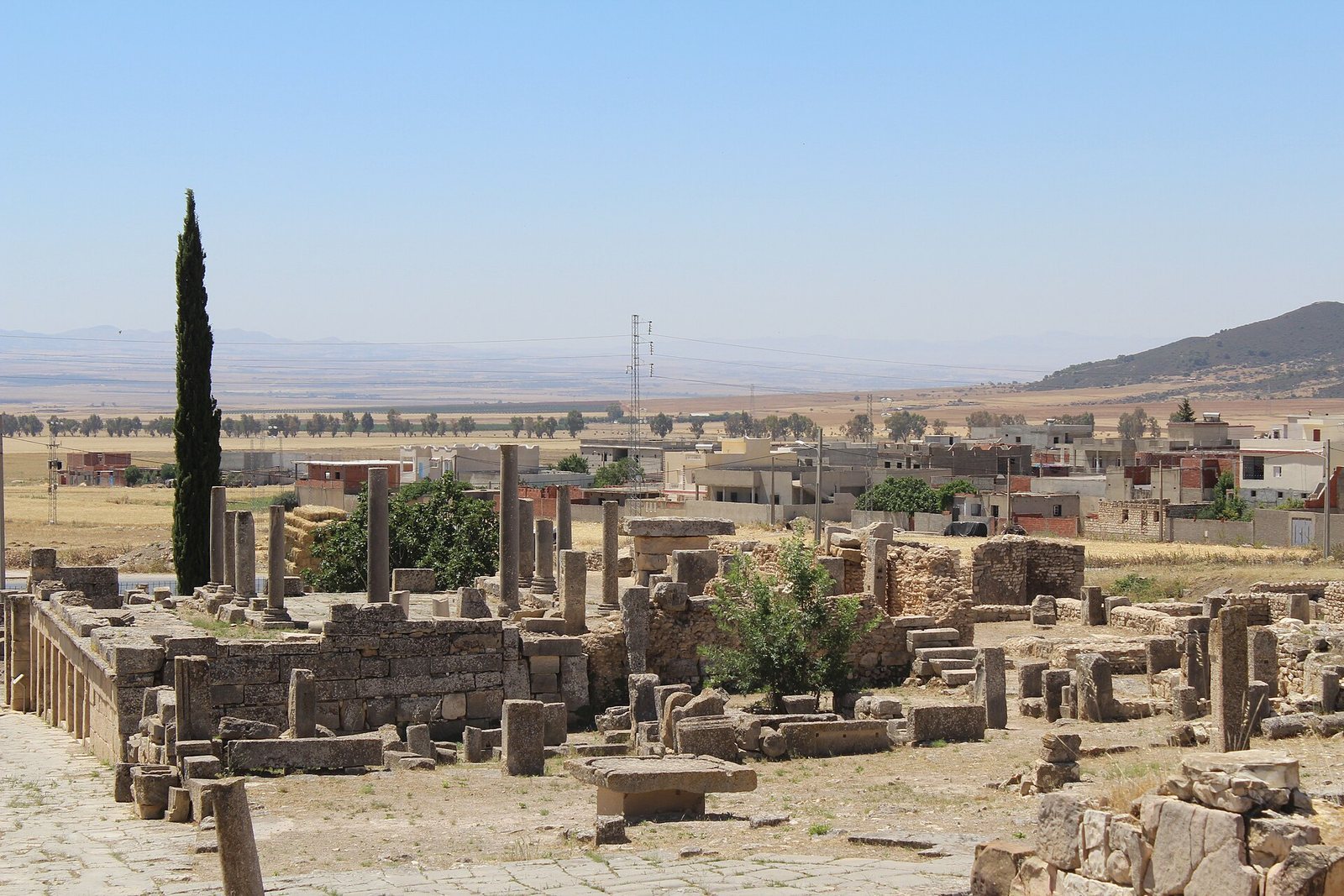
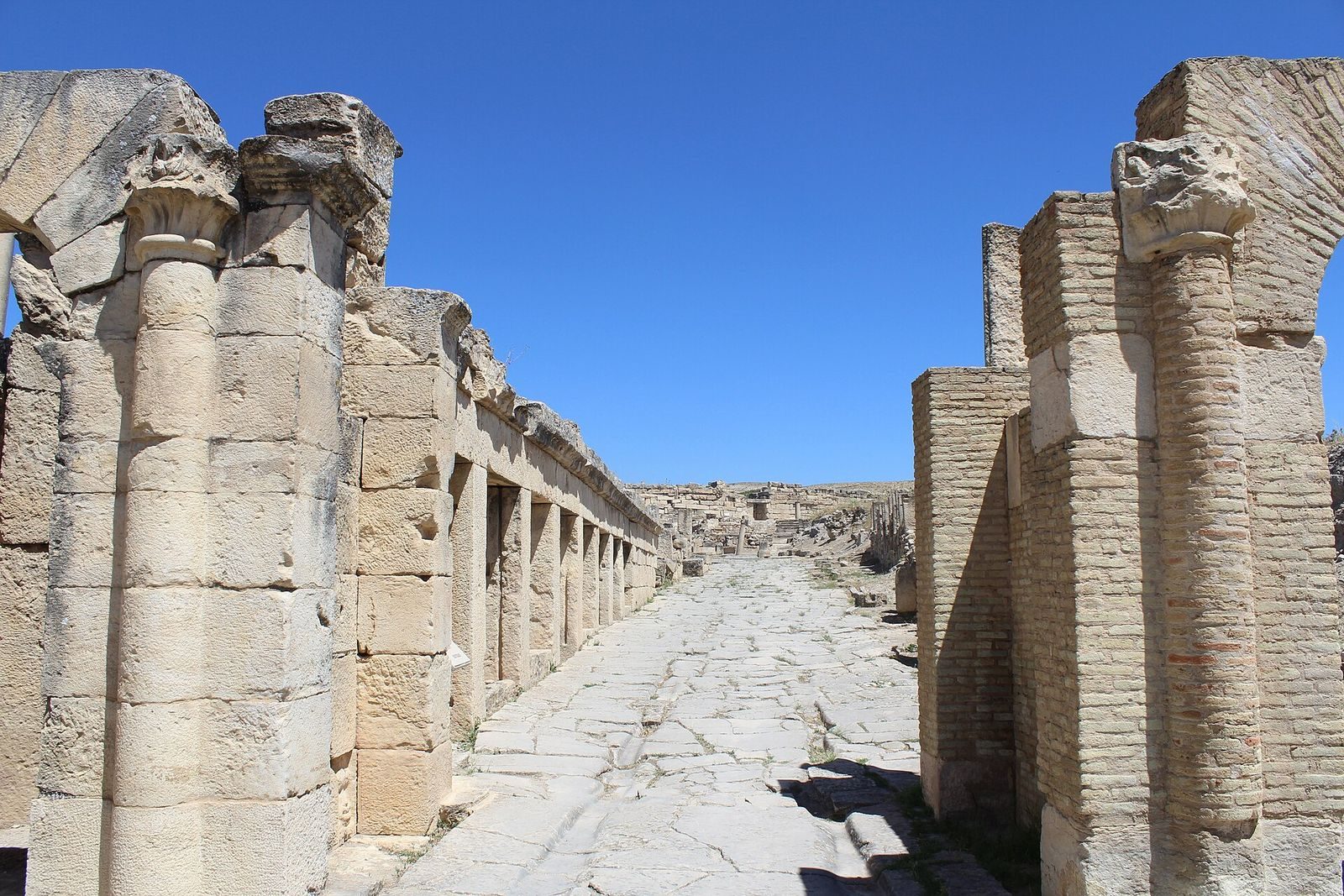
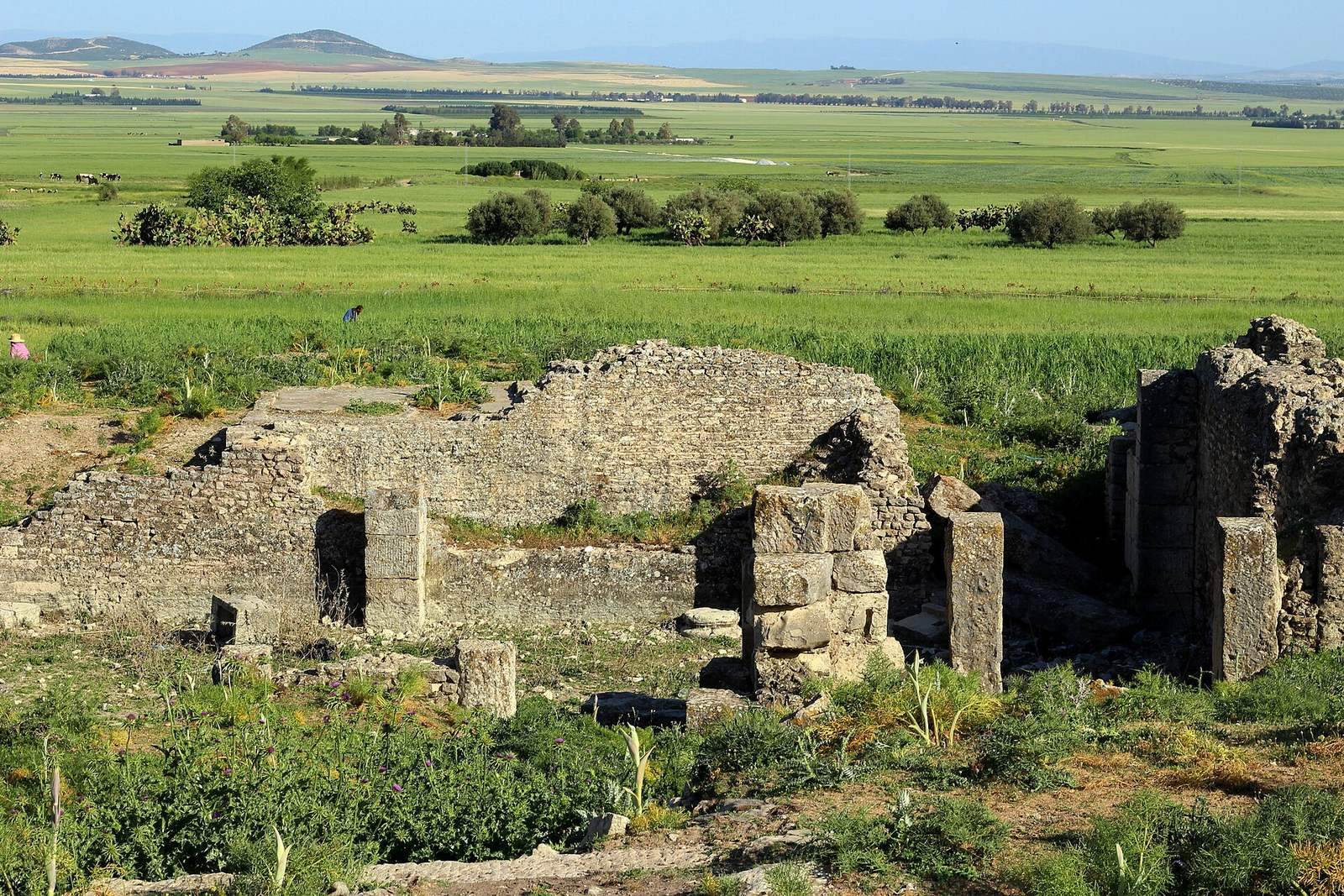
The urban area covers about 34 hectares on a plain at the edge of El Krib, at an elevation of roughly 400 metres. Only a small part has been excavated. An east-west road crossed the city, and two arches stand at opposite ends of the urban area.
Road, arches, and entrance
The arch at the entrance has no known attribution; the eastern arch was in very poor condition before its restoration. The entrance leads to a large paved courtyard and a gateway flanked by covered passageways. Shops along the courtyard sides served money changers, and its reliefs depict protective spirits. The marketplace was built of white calcareous stone. The Mausoleum of the Julii, a monumental tomb, stands near the arches.
Public buildings and temples
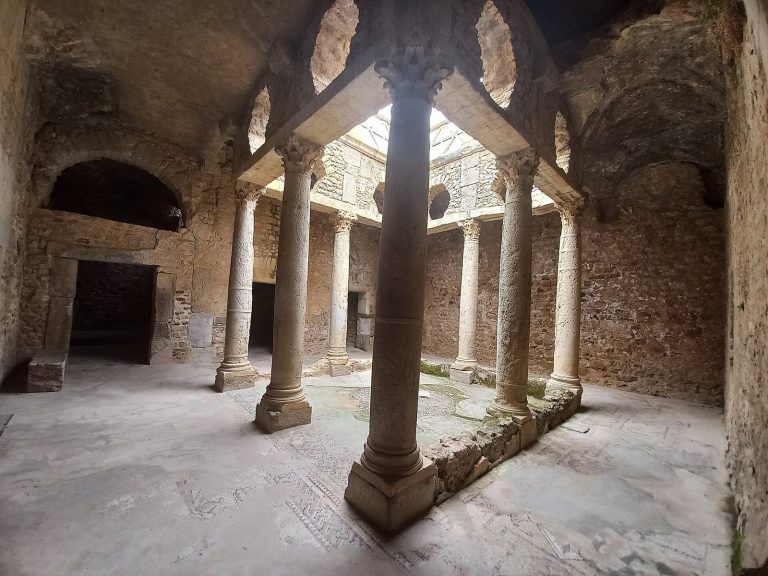
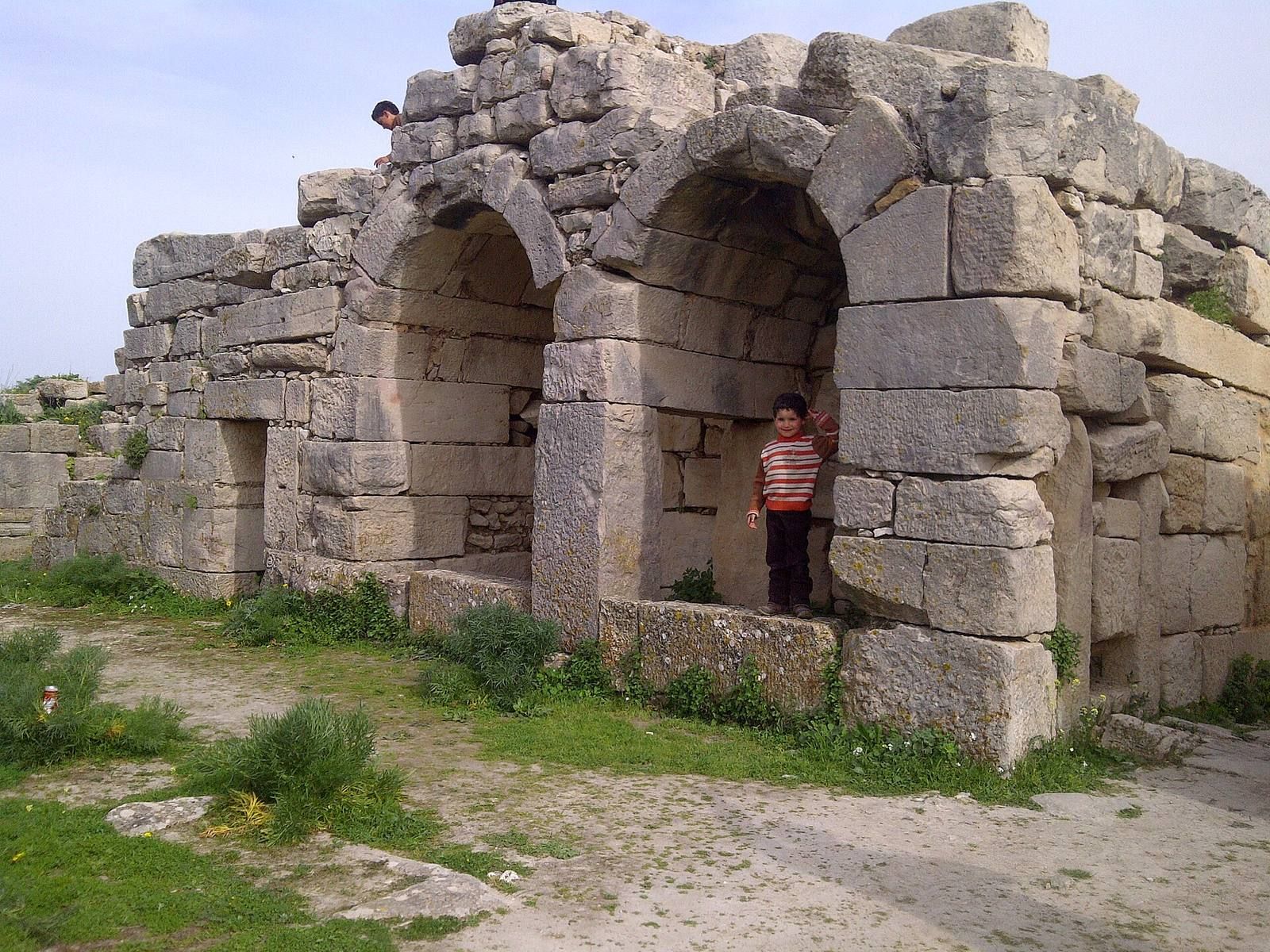
Excavated remains include the forum, marketplace, baths, cisterns, roads, and Roman houses. Three temples near the gateway were dedicated to Ceres, Pluto, and Apollo. A fragmentary inscription naming members of the Severan dynasty and dedicated to the Capitoline Triad, Jupiter, Juno, and Minerva, may indicate a Capitolium, a temple to those three gods. Other inscriptions include dedications to Minerva and Neptune, funerary texts, and a boundary stone from the reign of Antoninus Pius.
Christian buildings and fortification
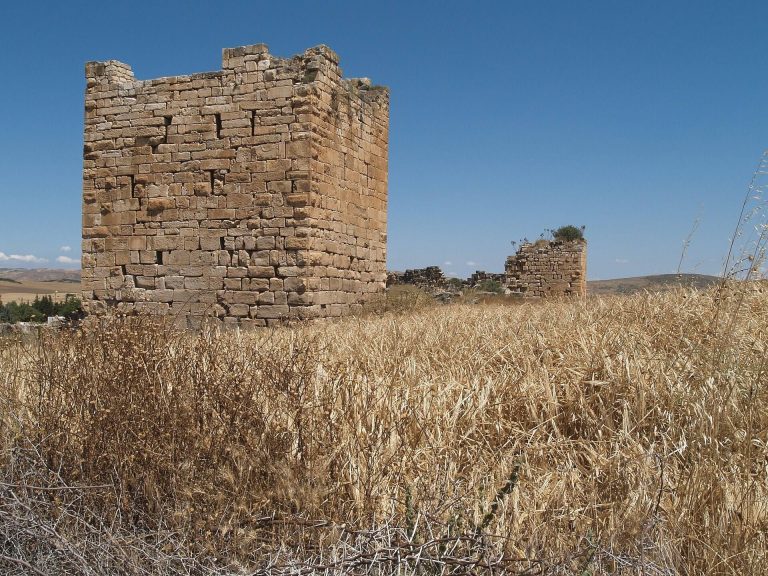
The Christian remains include a small fourth-century church and a basilica with three naves, meaning a central hall with side aisles. A raised area within the basilica contains a baptistery, an installation for Christian baptism. A Byzantine fortification adjoins these buildings. More than 200 Latin inscriptions have been catalogued at Musti, and the total has been estimated at over 500. Many were reused in the fortress walls.