Murska Sobota Castle: A Baroque Castle and Cultural Landmark in Slovenia
Site at a Glance
- Rating
- 4.3
- Popularity
- Low
- Country
- Slovenia
- Primary era
- Early Modern
- External website
- Open
- Eras represented
- Medieval, Early Modern
- Civilizations
- Hungarian
- Site type
- Domestic
- Remains
- Castle
On this page9 sections
History
Murska Sobota Castle is a historic castle in Murska Sobota, Slovenia, with medieval origins and a later Baroque remodelling. It succeeded an earlier castle or manor associated with Belmura, a major estate whose administrative center stood near trade and transport routes between the German lands and Hungary.
Medieval origins and noble ownership
From the eleventh century, the land around Murska Sobota belonged to the Hungarian royal domain. During the twelfth and thirteenth centuries, the territory was divided into feudal estates, and Belmura became one of the larger ones. A charter from 1255 indicates that a castle already existed. Later documents from 1478 and 1498 refer to the site as castellum in Belmwra and castellum Mwrayzombath.
In the second half of the fourteenth century, the Hungarian noble Széchy family acquired the manor and its surrounding estate. A medieval castle was built near the settlement, and the property later passed through marriage to the Batthyány family. Its architectural history also includes a late-sixteenth-century Renaissance phase, when European builders revived classical forms in architecture.
Batthyány rebuilding and Szapáry ownership
Hajduk troops serving Stephen Bocskai, a Transylvanian prince whose forces campaigned in the early seventeenth century, burned the city. During the rebuilding that followed, the urban center developed around the castle. Between 1648 and 1655, Adam Batthyány commissioned the reconstruction, which was carried out by craftsmen from Regede.
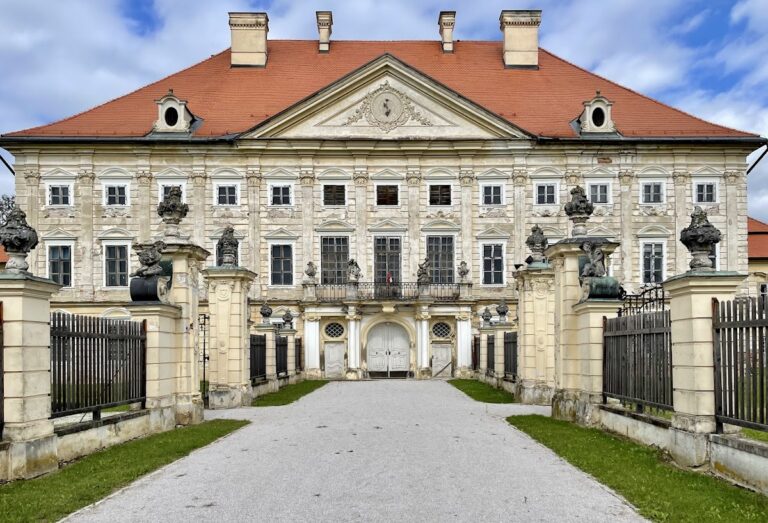
Peter Szapáry purchased the estate and castle in 1687. The property remained with the Szapáry family for about two and a half centuries. Members of the family lived there, and during the eighteenth century they commissioned the Baroque remodelling that shaped much of the present complex. Baroque architecture is characterized by theatrical spatial planning, strong visual effects, and elaborate decoration.
Municipal ownership and twentieth-century use
After the Treaty of Trianon, Murska Sobota and the castle passed from Hungary to the newly formed Kingdom of Serbs, Croats and Slovenes. Before the municipal acquisition, much of the castle’s interior equipment had been sold, including its large library. Izidor Hahn, owner of the Prekmurje printing works, purchased most of the books.
In 1934, the last owner, László Szapáry, sold the castle at auction to the municipality of Murska Sobota, which has remained its owner. During the Second World War, Hungarian occupying forces established themselves in the building. The castle also served as a prison and execution site for Yugoslav Partisans.
After the war, the castle took on cultural and public functions. It housed the Murska Sobota Regional Museum, a youth and cultural club, the Grajski hram inn, a cultural-events hall, and the Murska Sobota Regional and Study Library. During the final third of the twentieth century, it accommodated several public-service institutions. It now includes the Murska Sobota Regional Museum and a permanent exhibition on the history of the Prekmurje region. The castle was designated a monument of local importance on 29 March 1991.
Remains
Enclosed castle plan
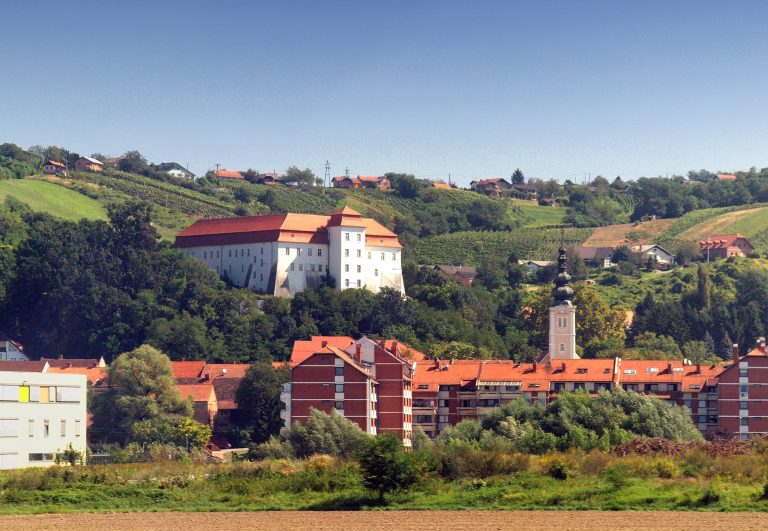
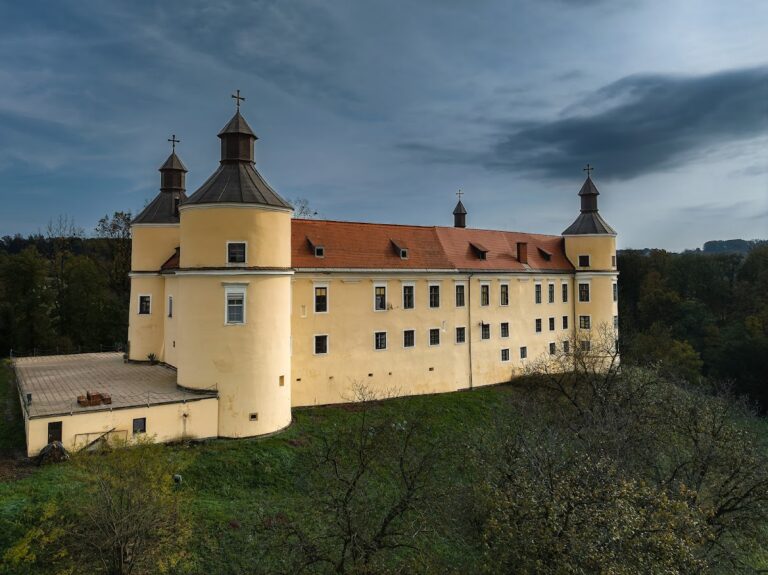
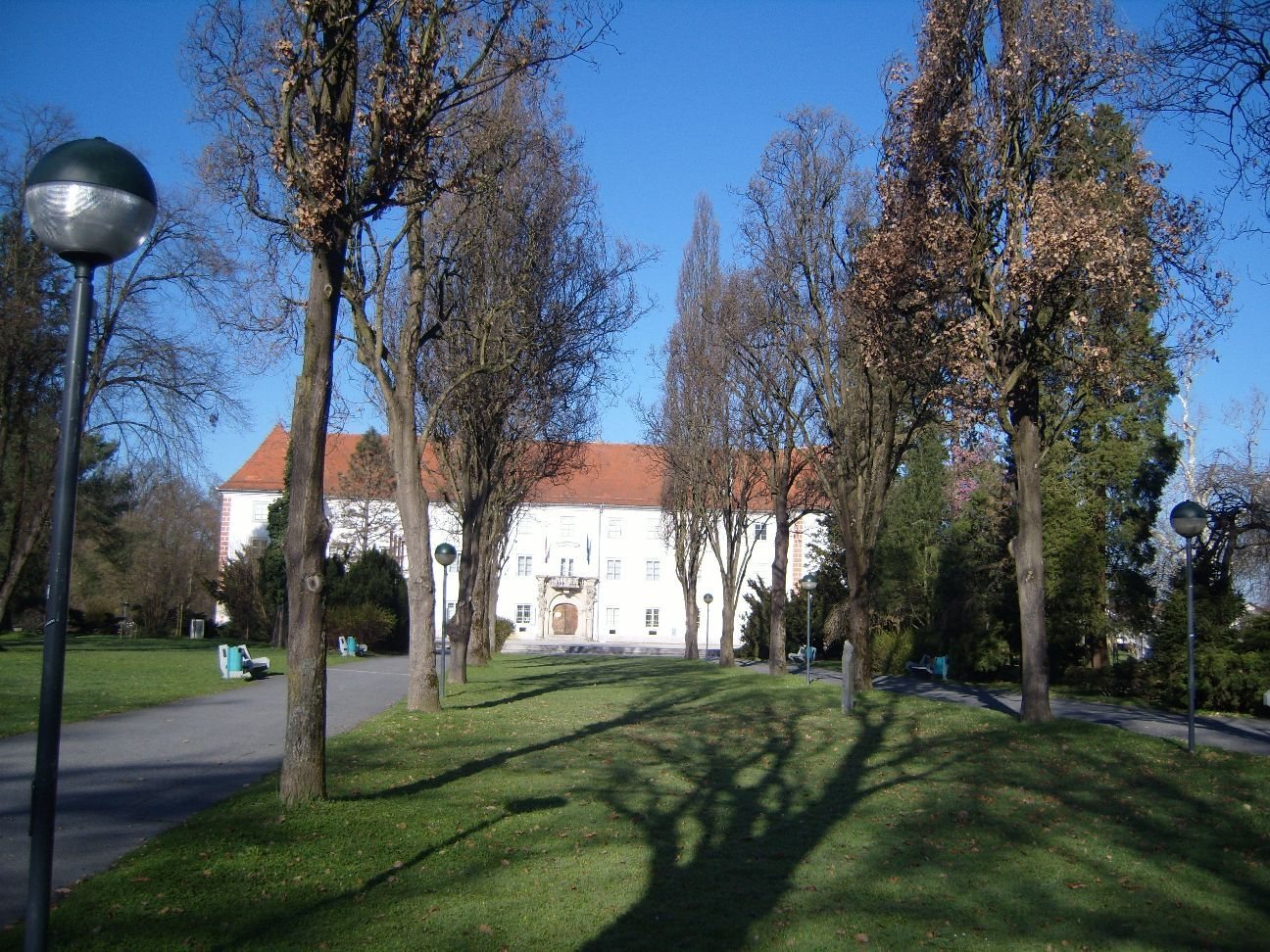
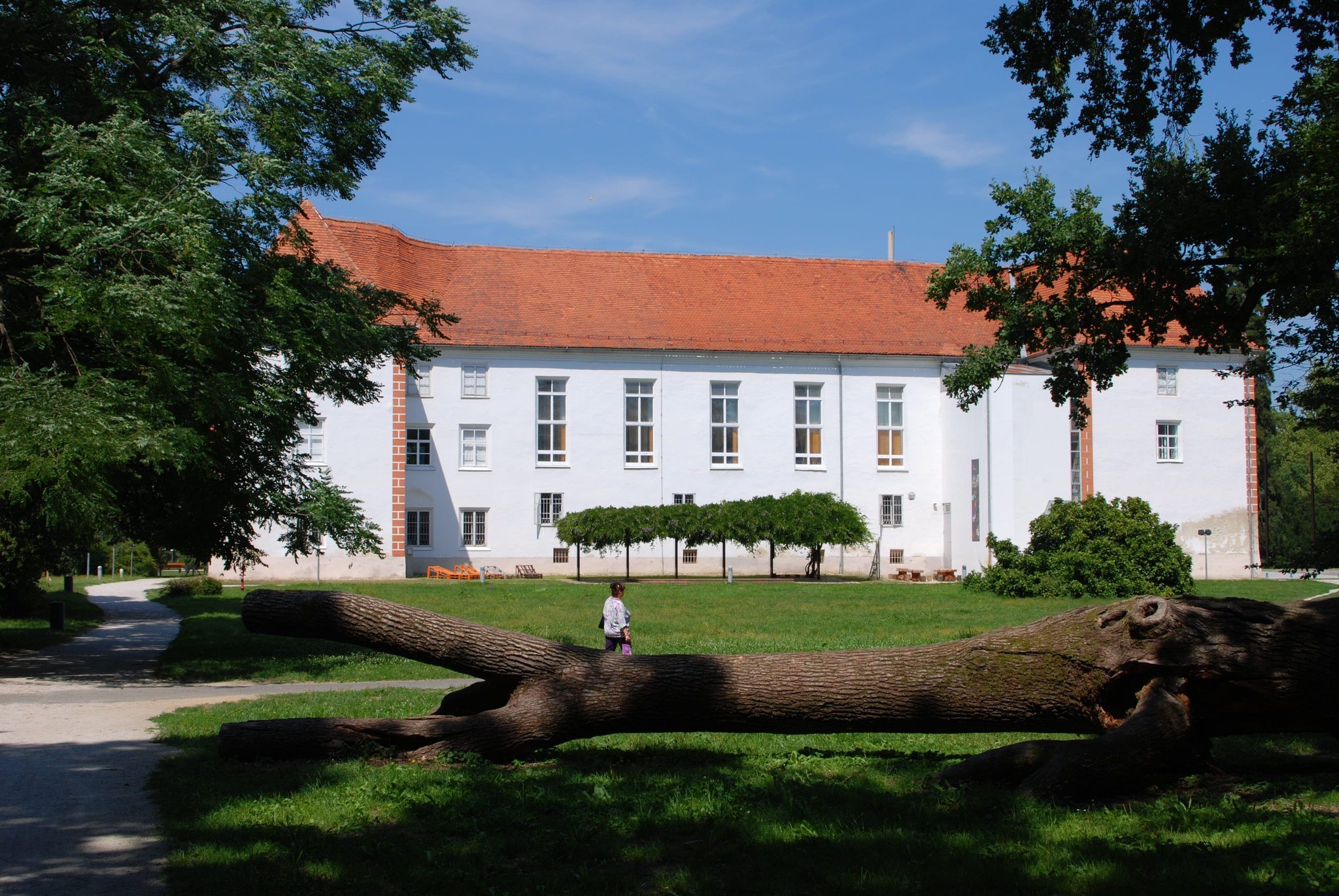
The castle stands in the center of the 9.5-hectare Peace Park in Murska Sobota. Its present complex follows a regular enclosed square plan, with four residential wings of equal height arranged around a rectangular inner courtyard. The two-storey wings enclose the courtyard, which is surrounded by arcaded passageways and marked by corner towers. The main entrance is placed on the eastern side, opposite the large chapel that interrupts the western wing.
Baroque architectural features
Main entrance portal
The eastern entrance has a richly carved stone portal decorated with Atlas figures, sculpted human figures used as architectural supports. It is one of the most prominent Baroque elements of the castle. Its form has been compared with the former Grassalkovich Palace in Budapest and with the surviving gate of the Péterffy Palace.
Chapel and ceremonial spaces
A large Baroque chapel interrupts the western residential wing. Together with the period ceremonial hall, it is among the most conspicuous interior spaces in the castle. Baroque decoration is also especially visible in the facade of the northern wing and in the interior treatment of the complex.