Murat Pasha Mosque: A Fifteenth-Century Ottoman Mosque in Istanbul


Site at a Glance
- Rating
- 4.6
- Popularity
- Medium
- Country
- Turkey
- Primary era
- Medieval
- Eras represented
- Medieval
- Civilizations
- Ottoman
- Site type
- Religious
- Remains
- Mosque
On this page6 sections
History
Foundation and Completion
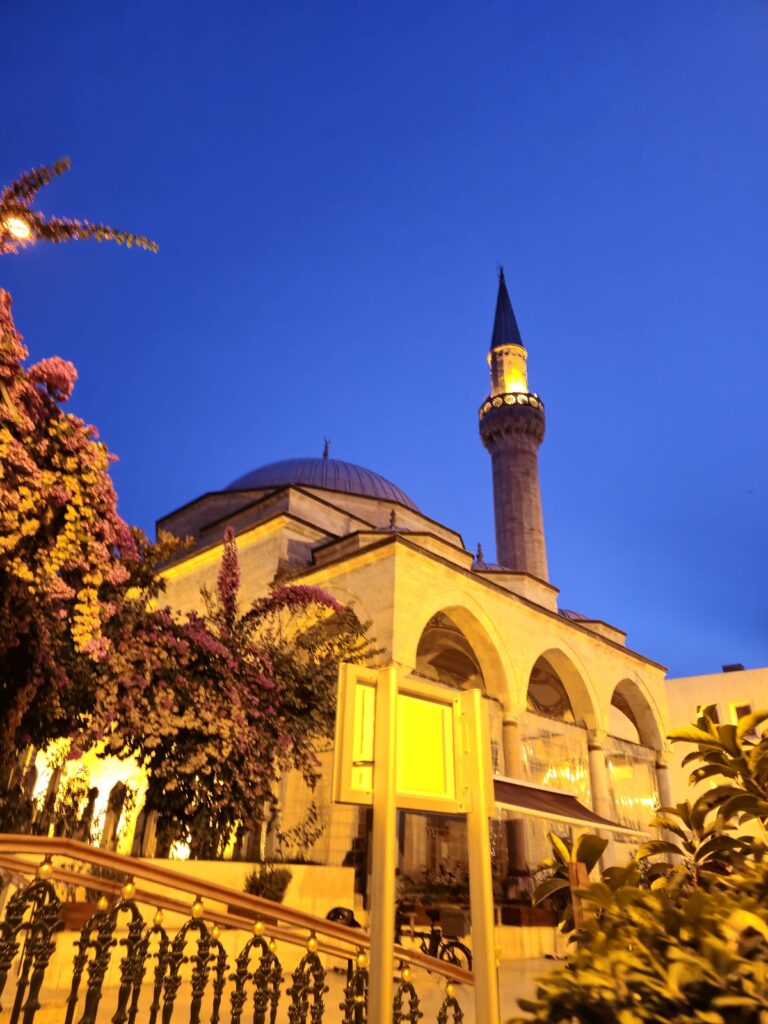
Murat Pasha Mosque is a fifteenth-century Ottoman mosque in Istanbul, Turkey, commissioned in 1465–1466 by Hass Murad Pasha, a senior Ottoman official. It belongs to the early Ottoman architectural tradition developed in Bursa, where regional Islamic forms were combined with inherited Byzantine and other influences. The building remains in use as a mosque in Aksaray, within Istanbul’s Fatih district.
Construction continued after Hass Murad Pasha’s death and was completed in 1471 by his brother Mesih Pasha, also a senior Ottoman official. Mesih Pasha was buried at the mosque. The building originally formed part of a larger religious and charitable complex, most of which has since disappeared.
Urban and Historical Setting
The mosque stands near the former Byzantine Forum Bovis, an urban space that no longer survives. Its position is also associated with the convergence of two major roads in Istanbul’s historic walled city, Adnan Menderes Boulevard and Turgut Özal Millet Avenue. Today, it is situated between busy roads linking Aksaray and Yusufpasha.
Remains
Prayer Hall and Domes
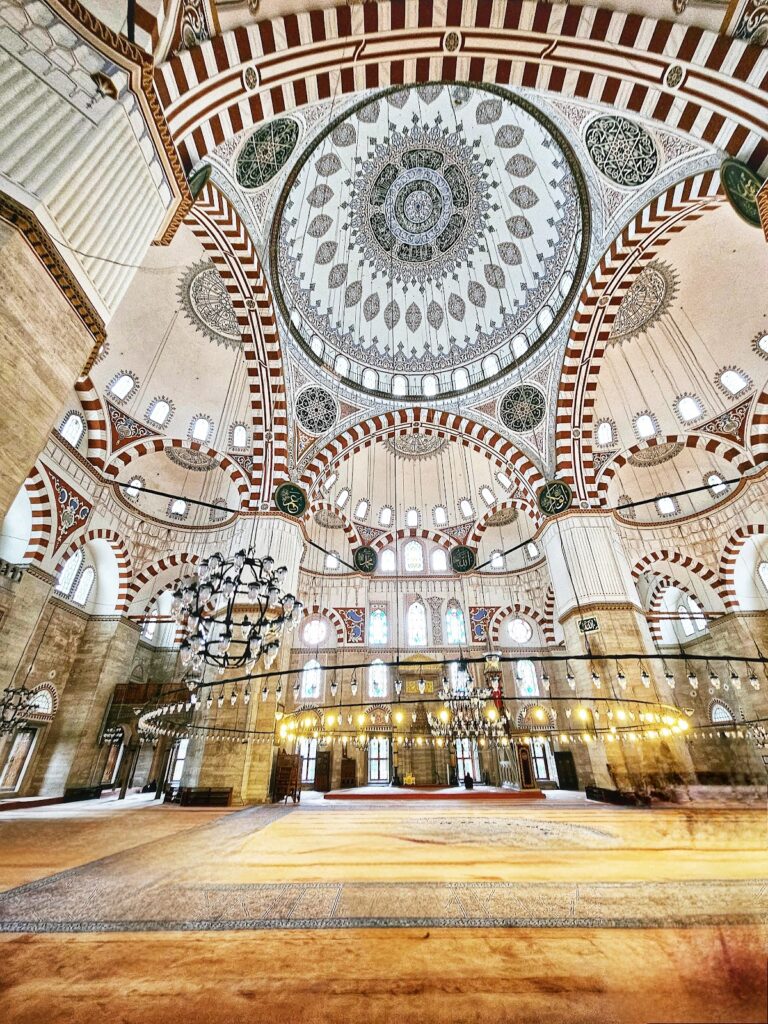
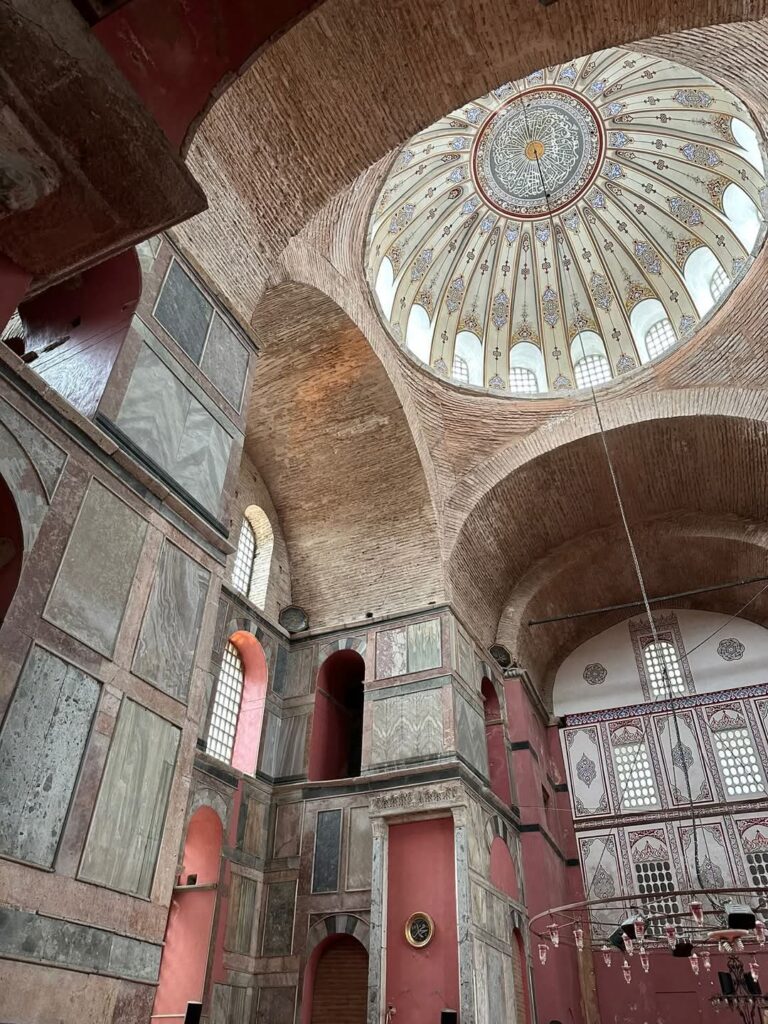
The mosque’s main space is rectangular, with proportions of two to one. Two identical domes cover the interior, each approximately 21 metres high and 10.5 metres in diameter. On the short side of the rectangle, the mihrab, a niche indicating the direction of Mecca, and the minbar, the raised pulpit for the Friday sermon, define the principal worship area.
Entrance and Construction
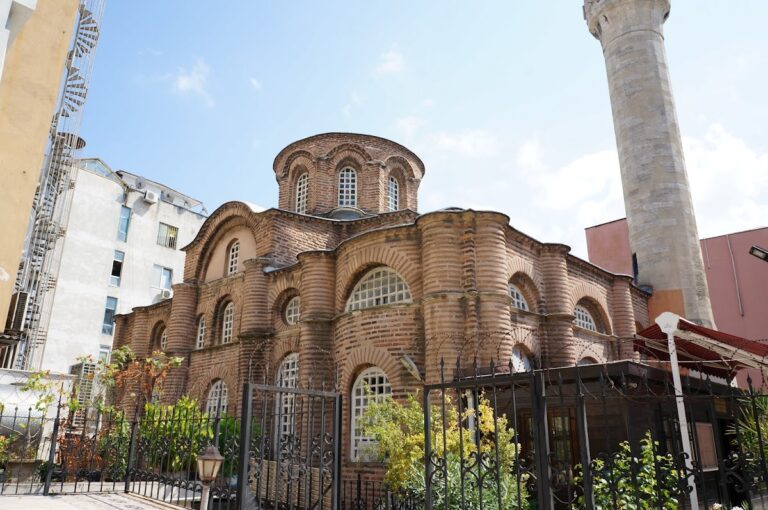
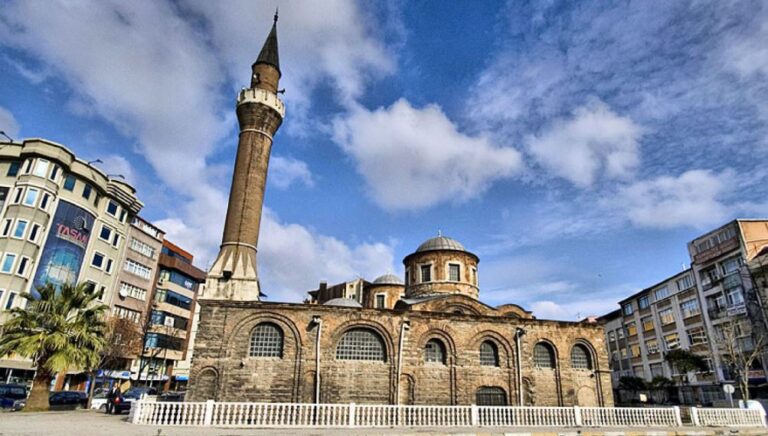
Access to the main space passes through a narthex, an entrance or transitional area before the principal interior. Its form resembles narthexes found in Byzantine churches. A portico stands in front of it, creating the mosque’s principal approach. The walls use alternating courses of two rows of brick and one row of cut stone, while brick and stone are also among the building’s listed materials. The mosque has one minaret, with the entrance, front facade, portal, interior, mihrab, minbar, and twin domes forming its principal surviving architectural elements.