Munsterbilzen Abbey: From Benedictine Nunnery to Noble Chapter
Site at a Glance
- Popularity
- Medium
- Country
- Belgium
- Primary era
- Early Modern
- Eras represented
- Early Modern
- Civilizations
- Holy Roman Empire
- Site type
- Religious
- Remains
- Monastery
On this page18 sections
History
Foundation and medieval prominence
Munsterbilzen Abbey was a Catholic religious house for women in Belgium, traditionally founded around 670 during the Merovingian period, an early medieval Frankish dynasty. Its Benedictine nuns followed the Rule of Saint Benedict, a guide to communal monastic life. Saint Landrada is named as its founder in one tradition, while another credits Saint Amor of Aquitaine, a hermit associated with the area around Maastricht. A story tells that a cross of fire fell from the sky at the site, and the foundation may have taken place under Lambert, a seventh-century bishop of Maastricht. The community was first called Belisia.
The abbey is regarded as the oldest women’s convent in the Dutch-speaking Low Countries, called the Greater Netherlands in this historical context, and was among the leading monasteries in the Dutch-speaking part of the Diocese of Liège. It also shaped the identity of the nearby settlement, which became known as Belisia Monasterii, or Munsterbilzen, to distinguish it from Beukenbilzen and Eikenbilzen.
Vikings devastated the abbey in 881. It was rebuilt in the third quarter of the 10th century and thereafter took the name Monasterium Sancti Amoris, in honor of Saint Amor. The abbey church was also associated with his name.
During the 10th and 11th centuries, the church was connected with the emergence of the County of Loon, a medieval territory in the region of present-day Belgian Limburg. It served as the burial place of Count Clodulf and Countess Hilda, Count Bengarius and Countess Berta, and, in 1044, Count Gozelo I of Verdun. Around the middle of the 11th century, Ida of Boulogne, mother of Godfrey of Bouillon, a leader of the First Crusade, and Baldwin I, the first ruler of the Crusader Kingdom of Jerusalem, received her education at the abbey. In 1096 she endowed it with lands and property in Bilzen, Riemst, Waltwilder, Martenslinde, Gellik, Eigenbilzen, and Rijkhoven.
Imperial status and secular chapter
The abbey held imperial status within the Holy Roman Empire and was administered separately from the County of Loon. Its abbess exercised lordship over Munsterbilzen and held rights in Wellen, Haccourt, Hallembaye, and Kleine-Spouwen. She also ranked as a princess of the Empire.
By the end of the 12th century, the community had become a noble chapter of secular canonesses, members of a religious chapter who were not bound by the full monastic vows required of nuns. The count of Loon acted as its secular guardian. Candidates had to demonstrate noble ancestry through sixteen family lines. The canonesses joined the daily choral prayers, while many lived outside the abbey in later centuries.
From the 17th century, the cathedral chapter of Saint Lambert at Liège, the clergy attached to its cathedral, and the prince-bishop contested the abbess’s rights. A prince-bishop held both religious authority as a bishop and secular rule over a territory. After lengthy legal proceedings, the abbess acknowledged the prince-bishop’s sovereignty in 1773.
Dissolution and later use
In 1794, during the French Revolution, a period of political upheaval in France, the French invasion led to the dissolution of the chapter and the sale of the abbey’s property. During the 19th century, most of the buildings, including the abbey church, were demolished.
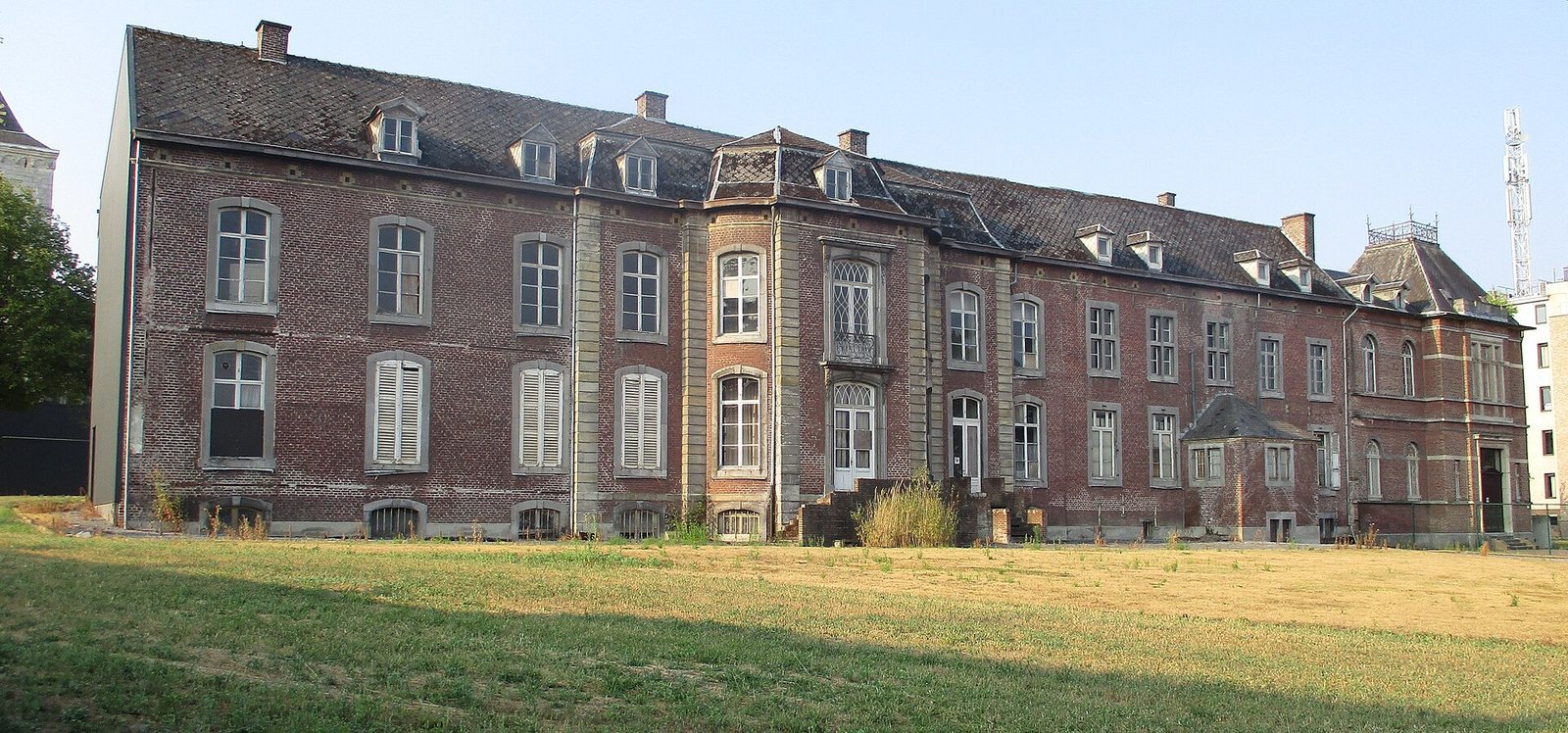
The De Lamberts de Cortenbach family owned the abbey in the late 19th century. From 1895, surviving buildings housed a care institution for people with psychiatric disorders. Four Sisters of Saint Joseph from Clermont-Ferrand initially ran it after leaving France amid an anti-clerical climate. In the following decades, the sisters established more than fifteen schools, including in As, Lommel, Opitter, and Bree. The institution is now known as Medical Center Sint-Jozef.
Manuscripts and scholarly links
By 1591, Arnold Wachtendonck, a canon of Liège, held a benefice, an ecclesiastical office or grant of income, at the abbey’s Landrada altar. The pope had appointed him to oversee the monastery’s property and income during a dispute between two candidates for the abbacy. Wachtendonck lent the Wachtendonck Psalter to Justus Lipsius, a Leuven humanist and scholar of classical literature, who copied and studied it.
In 2008, a campaign helped keep the Munsterbilzen Gospel book from being auctioned in London. The manuscript remained with the Bollandists, a Jesuit scholarly society devoted to research on the lives of saints, in Brussels, where it had been held since 1842.
Remains
The surviving fabric includes a bell tower and parish church beside the former abbey church site, sections of the enclosure wall, and buildings once used by the abbey. Their dates range from the medieval period to the 18th century, and surviving features include carved coats of arms, a commemorative stone, and objects associated with the community.
Church remains
Our Lady’s Church and tower
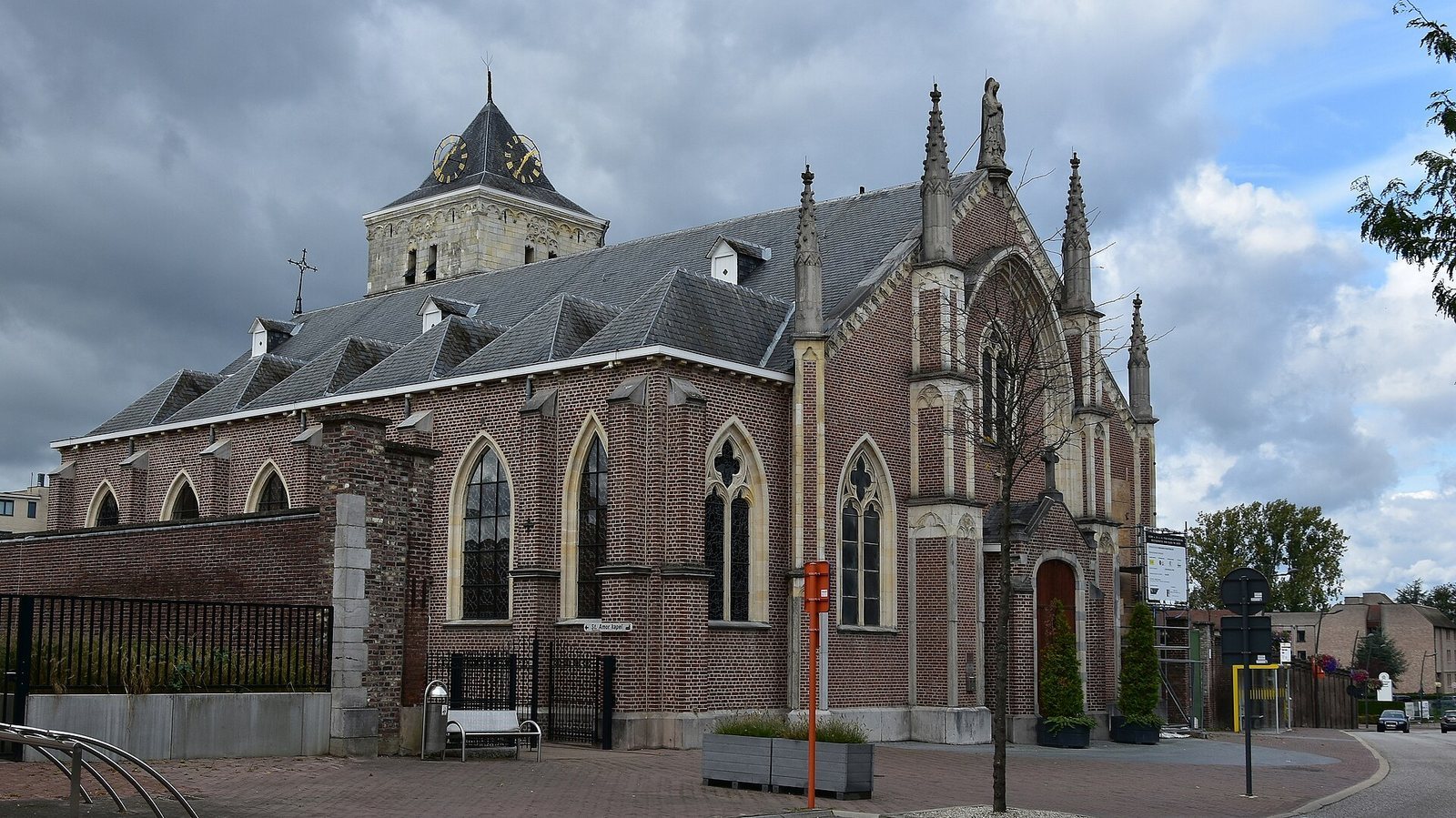
A tower dated 1565–67 now serves as the bell tower of the Neo-Gothic parish church of Our Lady. Neo-Gothic is a revival of medieval Gothic architecture. The parish church stands beside the site of the demolished abbey church.
Early church beneath the parish church
Excavations in 2006 beneath the parish church revealed remains of an early medieval hall church, a building with a simple hall-like plan. It measured 11 by 5.7 metres.
Font, tombstone, paintings, and sculptures
The parish church contains a baptismal font in the Romanesque style, associated with rounded arches and massive forms, as well as the tombstone of canoness Anna van Merode. Its paintings and sculptures date from the 15th to the 18th centuries.
Abbey precinct and later buildings
Abbess’s residence and entrance
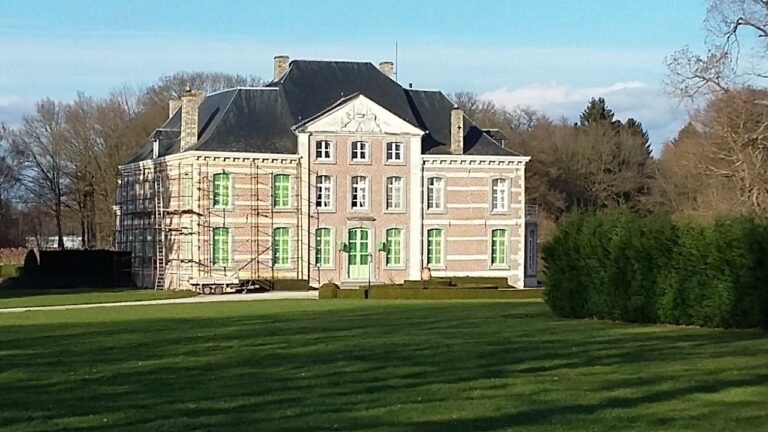
Around 1730–50, the abbess’s residence and the main entrance were remodeled to designs by Aachen architect Johann Joseph Couven. The entrance follows the Maasland Renaissance, a regional Renaissance style associated with the Maasland area.
Enclosure wall
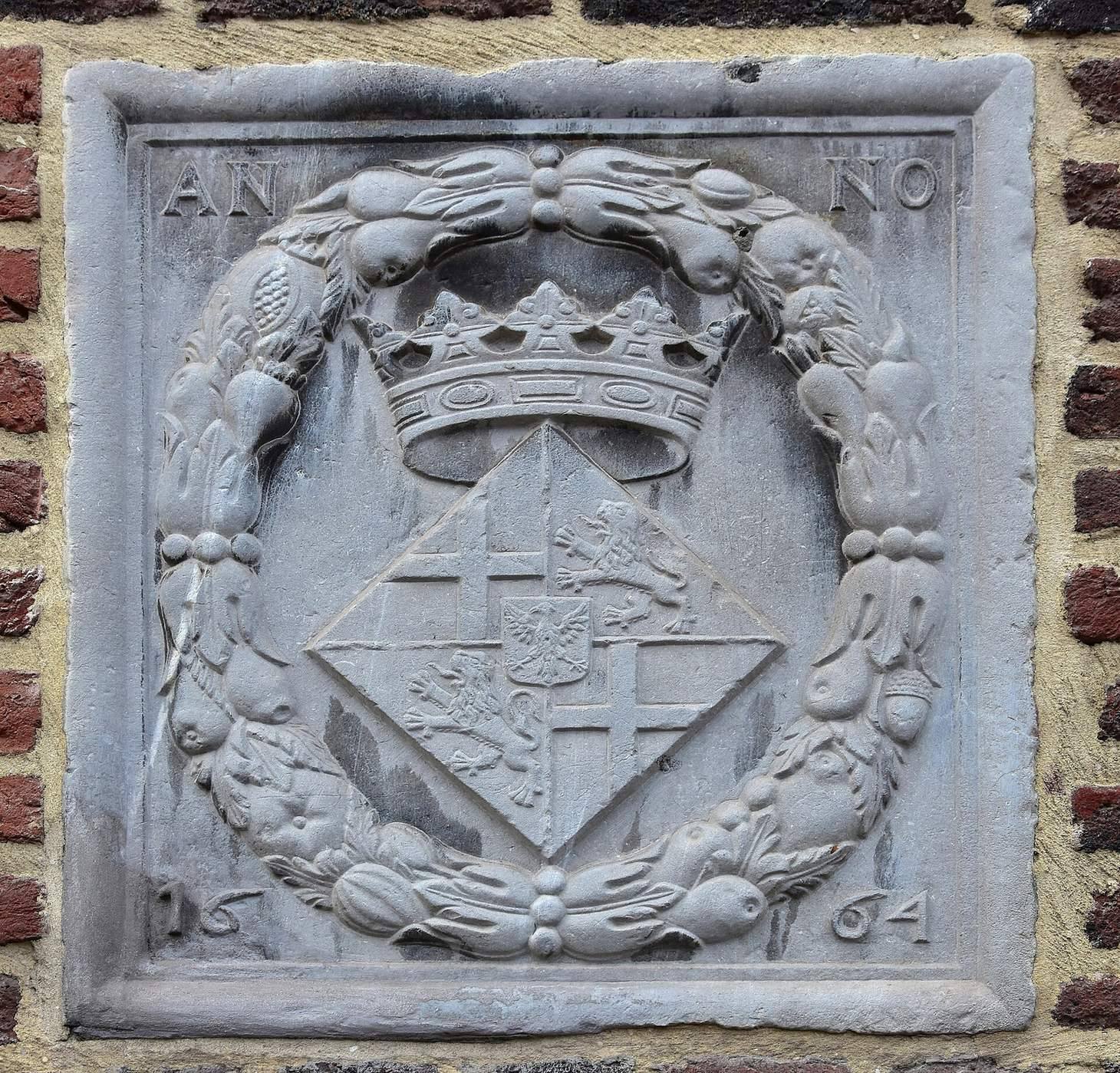
Sections of the partly renewed enclosure wall display the coats of arms of several abbesses. One surviving stretch incorporates a commemorative stone dated 1660.
School and former abbey buildings
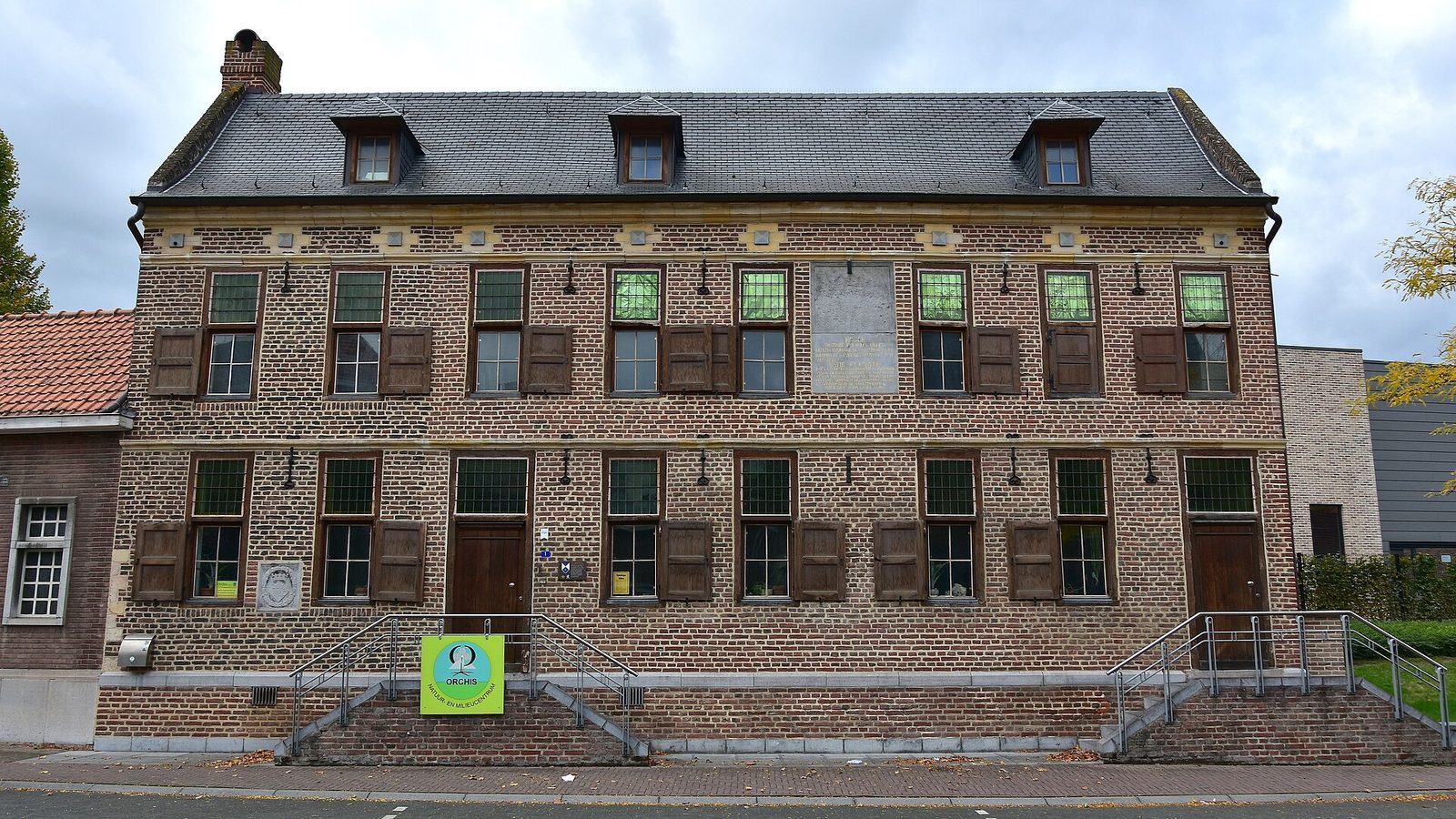
The former abbey school, built in 1664 in association with Abbess Isabelle Henriette d’Aspremont-Lynden, was intended in part to provide free education to six poor girls. Its fabric bears an abbess-associated coat of arms and the date 1664. The building later served as a town hall. Other former abbey buildings were used as a post office or town hall, while 18th-century buildings were adapted for a school and psychiatric institution.
Collections and manuscripts
Museum objects
A small museum at the site holds paintings and objects associated with the abbey. These include a spoon and bowl attributed to Saint Landrada and a staff attributed to Saint Amor.
Munsterbilzen Gospel book
The Munsterbilzen Gospel book is a Carolingian manuscript, from the period of the dynasty that followed the Merovingians and included Charlemagne. Beneath a list of names, six words added in 1130 praise the community as noble and beautiful. The manuscript also contains an Ordo Stellae, a religious drama about the Star of Bethlehem and the Three Kings, regarded as the oldest play in the Low Countries.
Wachtendonck Psalter
The Wachtendonck Psalter is a Carolingian book of psalms dating to the early 9th century and formerly kept at the abbey. Tradition linked it to Saint Amor. Its Wachtendonck Psalms, preserved through Lipsius’s copy and excerpts made by others, are the oldest known book in an early form of Dutch.