Castle Groenendaal: A Historic Estate in Bilzen, Belgium
Site at a Glance
- Rating
- 4.5
- Popularity
- Low
- Country
- Belgium
- Primary era
- Early Modern
- Eras represented
- Early Modern, Modern
- Civilizations
- Belgian, Holy Roman Empire, Prince-Bishopric of Liège
- Site type
- Domestic
- Remains
- Castle
On this page9 sections
History
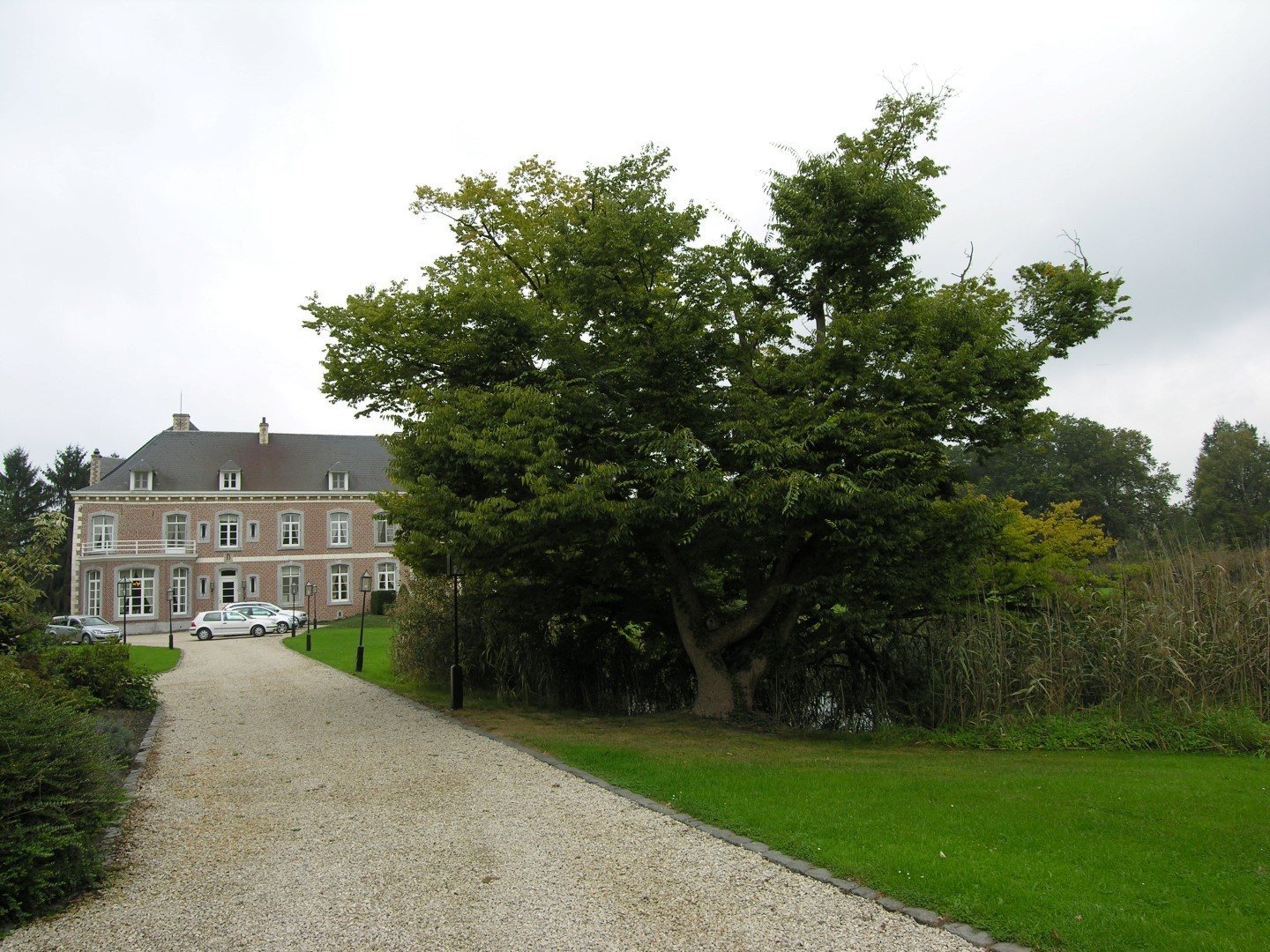
Castle Groenendaal is a historic castle estate in Waltwilder, within Bilzen, Belgium, with a seventeenth-century core later remodeled in the Classicist style. Its estate was first known as Croenendael or Croonendael; the later name Groenendaal was regarded as factually incorrect.
Medieval origins
Croenendael belonged to the County of Loon, a medieval county in present-day Belgian Limburg. It was held as a fief, land subject to a feudal relationship, together with Hoelbeek and Jonckholt until the combined holding was divided in the late fourteenth century. Croenendael then passed to Aleidis van Jonckholt, who was married to Godenoel van Elderen, already lord of Elderen.
Lamboy and de Grady ownership
The estate passed to the Lamboy family in 1477. An estate official died on Christmas Day in 1693. In May 1730 the estate manager was Godefridus Danzel, married to Joanna Rosseau. Egidius Pacquaij, married to Margareta Iaddoul, held the position in November 1736; Joannes Leonardus Du Mont, married to Barbara Broeffaer, held it in December 1739. In 1744 the last couple’s surnames were written as Lemont and Mouffar.
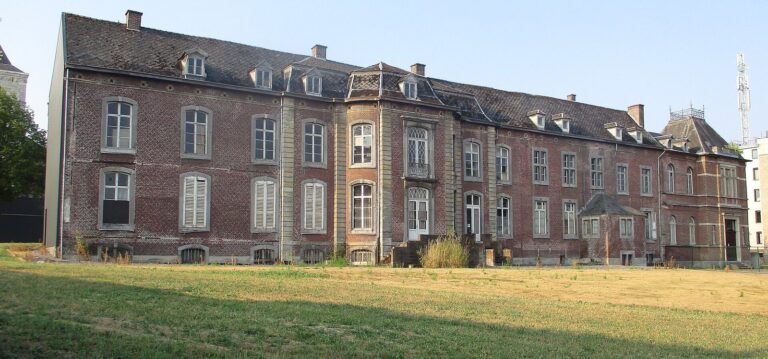
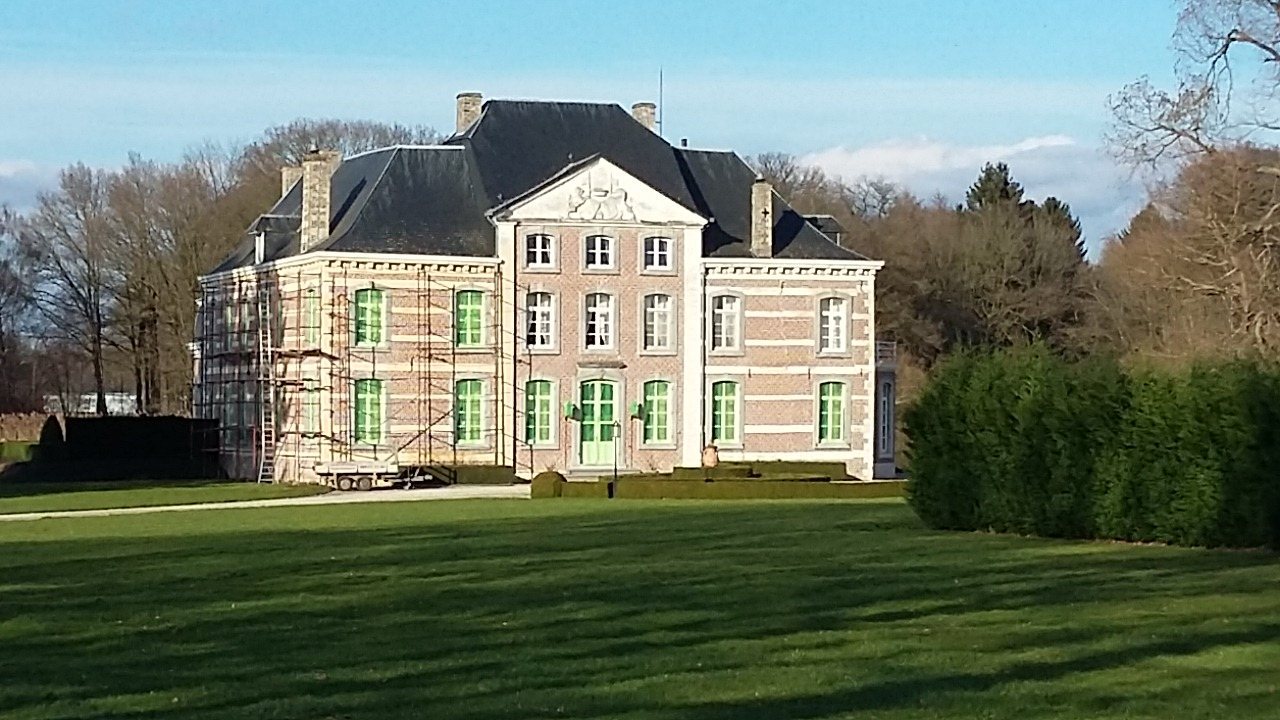
In 1757 the estate passed to the de Grady family. Around 1761, Michel Joseph de Grady, who died in 1786, remodeled the seventeenth-century castle from the Mosan Renaissance, a regional style associated with the Meuse, into Classicist architecture, which draws on ancient Greek and Roman forms. The adjoining farm was also renovated in the Classicist style.
Nineteenth-century and later ownership
Emile de Rosen de Borgharen acquired the estate in 1861 and had an English landscape park laid out, designed in a naturalistic rather than strictly geometric manner. The estate remains privately owned. After Pierre de Rosen de Borgharen died in 1990, it was sold in 1992.
Remains
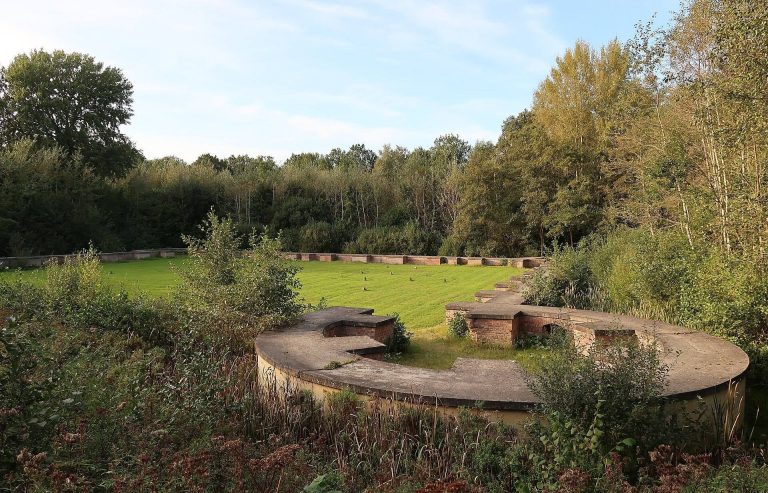
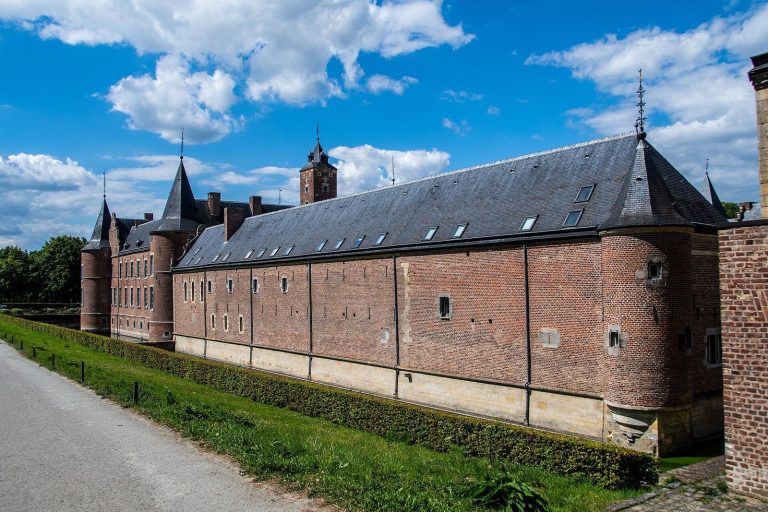
The estate’s surviving layout includes a castle, an enclosed agricultural complex, and a landscape park incorporating remnants of an earlier moat. The castle retains elements of its seventeenth-century core alongside later alterations.
The castle
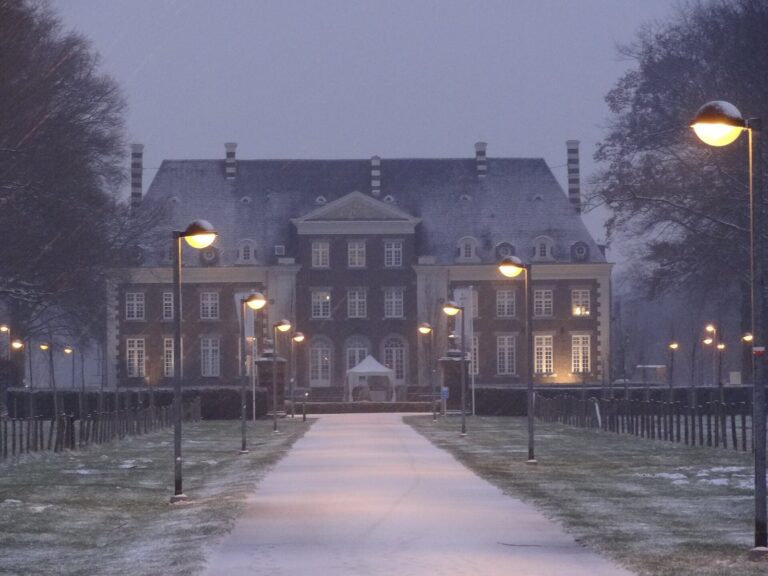
Wall anchors and architectural details in marl stone reveal the castle’s older fabric, especially on the south façade and the front of the east wing. The interior was adapted to late eighteenth-century taste, including the French Louis XV and Louis XVI decorative styles associated with the reigns of those kings. In the central salon, stucco work features floral garlands, vases, turtle doves, and baskets of fruit.
Farm and landscape
Farm complex
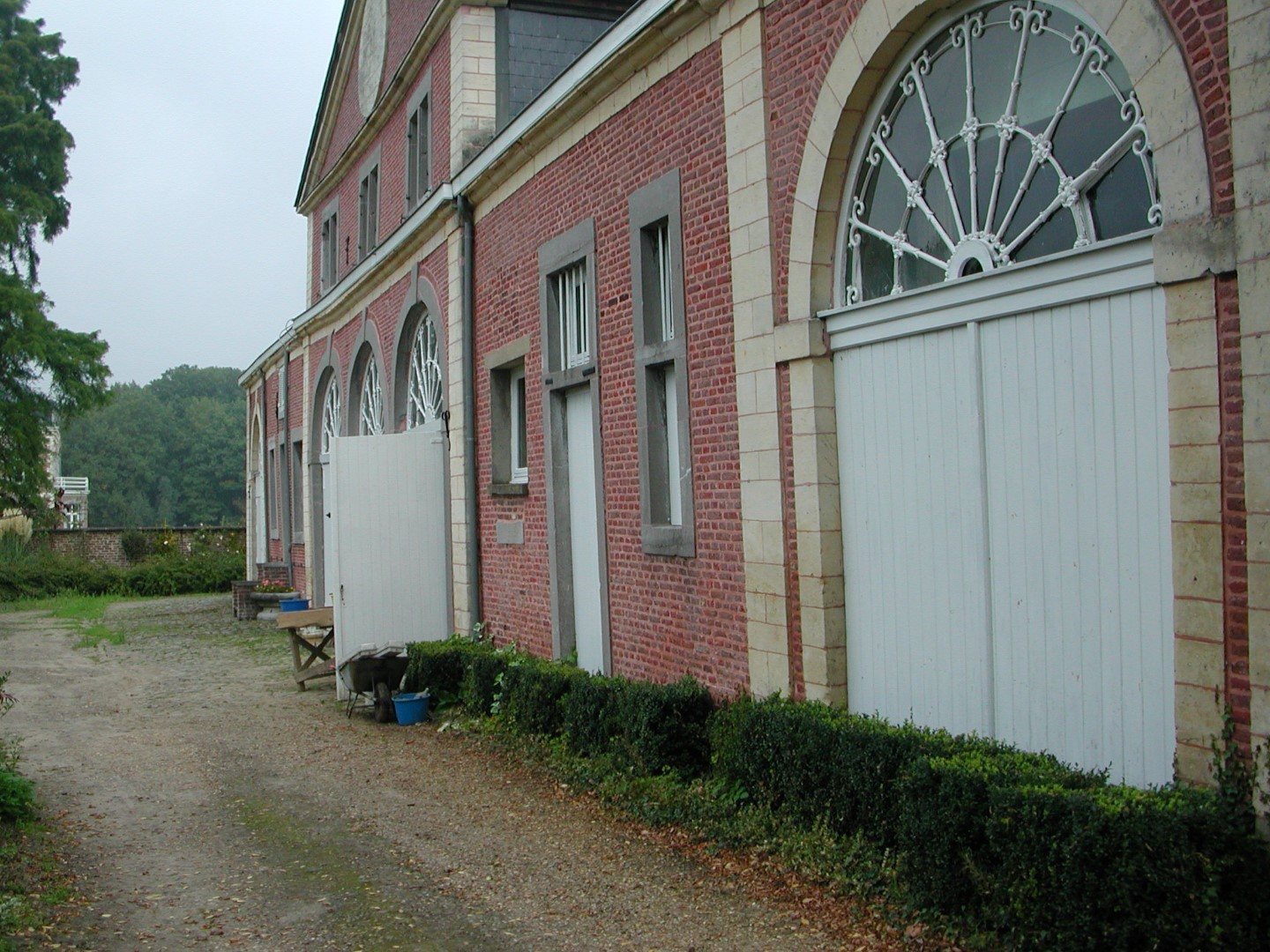
The farm at Groenendaal 2 forms an enclosed agricultural complex with some surviving seventeenth-century elements. It underwent extensive alteration in the nineteenth century, while several service buildings date from the late twentieth century.
Park and moat
Remnants of the estate’s earlier moat were incorporated into the landscape park.