Muel Dam: A First-Century Roman Dam in Spain
Site at a Glance
- Popularity
- Medium
- Country
- Spain
- Primary era
- Classical
- Eras represented
- Classical
- Civilizations
- Roman
- Site type
- Infrastructure
- Remains
- Dam
On this page9 sections
History
Roman construction and water supply
Muel Dam is a first-century Roman gravity dam on the Huerva River in Spain. A gravity dam holds back water mainly through its own weight. Built to supply Colonia Caesaraugusta, the Roman colonial city at present-day Zaragoza, the dam formed its reservoir early in the century under Augustus, Rome’s first emperor. It is regarded as one of Spain’s best-preserved examples of Roman hydraulic engineering.
Stone for the structure came from a nearby quarry, where marks suggest that extraction was organized in the Roman manner and may have been controlled by the colony. Some interpretations link the marks to construction by soldiers of Legio IV Macedonica, a Roman legion. Other readings see evidence of different work teams without establishing the legion’s involvement; the few inscriptions are ambiguous, and the attribution remains debated.
Water was diverted from the dam toward Caesaraugusta. The surviving canal may have connected with the city’s water conduits, but it could instead have supplied irrigation. Drinking water may have come from other springs.
Abandonment and later changes
Natural silting led to the dam’s abandonment around the third century, amid urban decline in the middle Ebro valley. The Huerva was not dammed again until work began on Mezalocha Dam in 1731. As the reservoir filled, its basin became part of the fertile Huerva valley, a market-gardening area near Zaragoza. The river also took over the drainage of nearby Torrubia ravine, forming its present course.
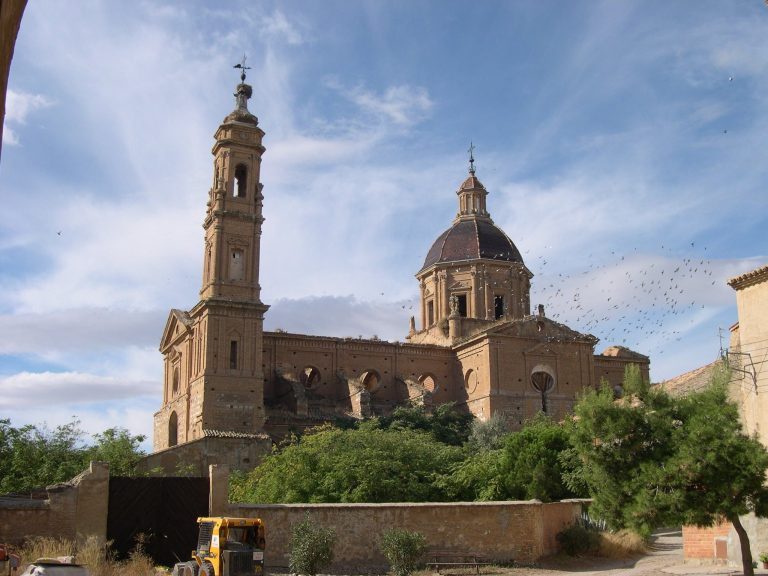
In 1770, the church of Virgen de la Fuente was built over the former reservoir. Archaeological excavations in the area also brought to light burials dating from the fourteenth to seventeenth centuries.
Study and protection
Manuel Pellicer published the first academic description of the dam in 1957, followed by Guillermo Fatás’s first archaeological study in 1964. After a long pause, research resumed from 2009 to 2012 alongside investigation of the nearby Roman quarry during planning for Muel’s urban development. In 2012, the dam received Spain’s Asset of Cultural Interest designation, a formal heritage status.
Remains
Dam and reservoir
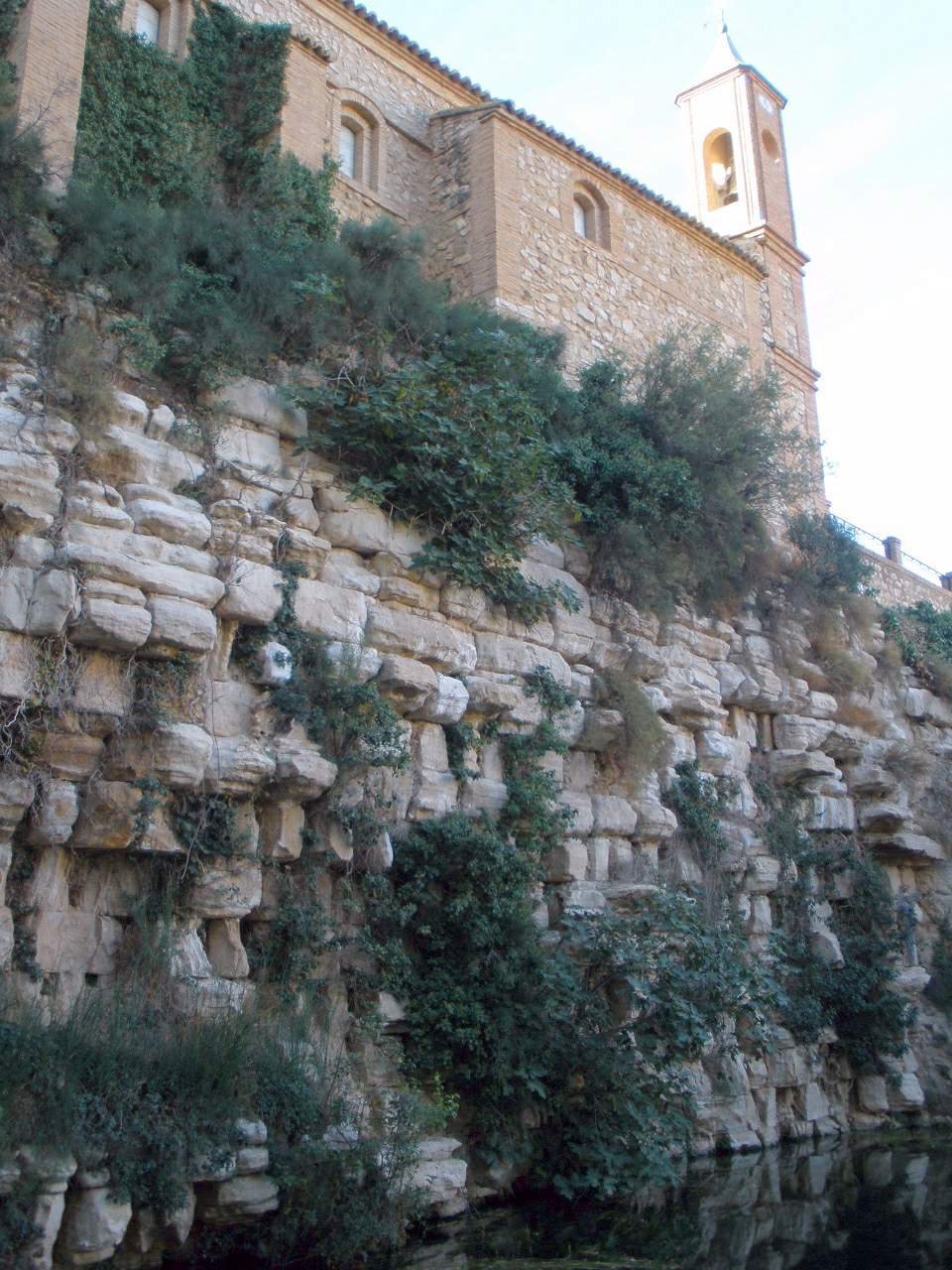
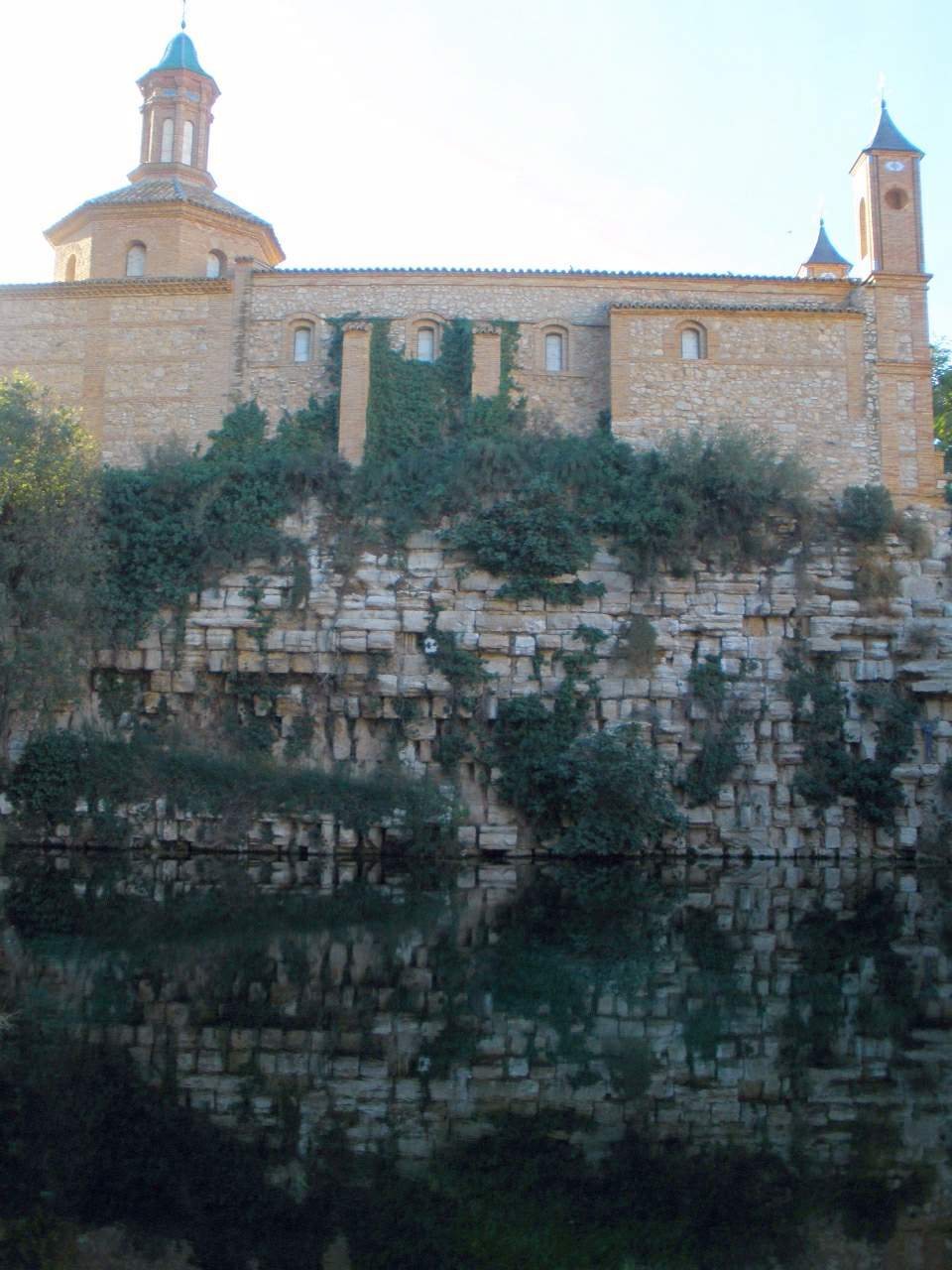
The surviving wall is about 10.35 metres high and at least 60 metres long. Its base is estimated at 11.5 metres thick, tapering toward the top. A concrete core is faced with carefully arranged limestone blocks of irregular shape. The blocks alternate between lengthwise and cross-wall placement, in horizontal rows averaging about 50 centimetres high. A layer of loose stone at the foot of the wall helped protect its foundation from water erosion and reduce seepage.
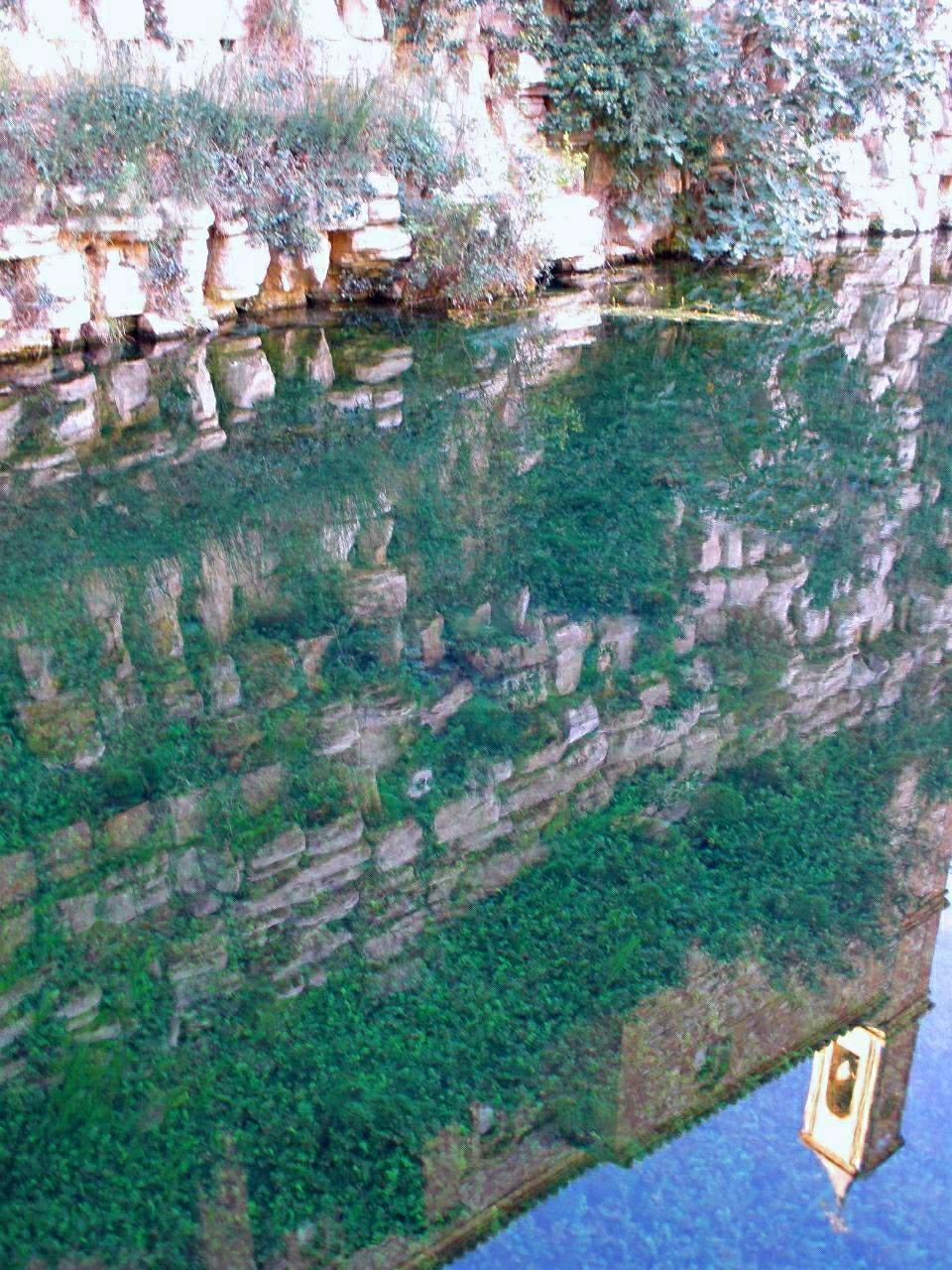
The reservoir once covered about 80 hectares, measuring approximately 2,000 by 400 metres. It has since filled with sediment to the top of the wall, while the dam’s lower portion remains preserved. The old structure now holds back a small pond in an area that has been made into a park.
Other remains
Canal
Part of the canal survives on the Huerva’s right bank, marking the route by which water left the dam toward Caesaraugusta.
Church and burials
The church of Virgen de la Fuente stands above the former reservoir. Its construction reused upper ashlar blocks from the dam, and the church contains frescoes painted by Francisco de Goya. Burials from the fourteenth to seventeenth centuries were excavated in the surrounding area.