Quarai: A Southern Tiwa Pueblo and Spanish Mission in New Mexico
Site at a Glance
- Rating
- 4.8
- Popularity
- High
- Country
- United States
- Primary era
- Early Modern
- Eras represented
- Medieval, Early Modern, Modern
- Civilizations
- Spanish
- Site type
- Settlement
- Remains
- Village
On this page7 sections
History
Pueblo settlement and mission
Quarai is an archaeological site about eight miles north of Mountainair, New Mexico, in the United States. It preserves the history of a Southern Tiwa Pueblo community, a Spanish mission, and later ranching activity. Quarai was a Tiguex community, Tiguex being a historical name for a Southern Tiwa-speaking Pueblo people, and one of several Tiwa-speaking groups in the Salinas basin. Settlement at the site is estimated to have begun around 1300, and a large pueblo compound stood there by the early seventeenth century. Spanish records called the people Cuarac. The name Quarai derives from Kuah-aye, a word for the area where they lived.
Spanish missionaries arrived in 1626 and received permission from the Quarai to build a mission. Founded in 1629 and completed in 1632, it was named Nuestra Señora de la Purísima Concepción de Quarai. The community prospered until drought began affecting the region in the late 1660s. Water shortages and Apache attacks contributed to the community’s departure in the 1670s. Survivors moved toward the El Paso area and later returned to Rio Grande communities, including Isleta del Sur.
Ranching and abandonment
Spanish ranchers Miguel and Juan Lucero arrived in the 1820s and put the ruined mission residence and work quarters to use as a sheep pen. They also built irrigation works from stone and brick salvaged from the ruins. The church still had its roof and was used for services led by itinerant preachers. In 1829, the Luceros and other ranchers petitioned the Mexican governor for permission to build a new church. Although permission was granted, disputes among residents and with officials stopped the project; the church was built instead at Manzano. An Apache raid in 1830 helped bring about the abandonment of the Lucero settlement, and the Quarai church roof collapsed.
Preservation and protection
The state acquired and stabilized the ruins in the 1930s and operated Quarai as a state monument. The site became part of Salinas Pueblo Missions National Monument in 1980 and was designated a National Historic Landmark District in 1962. The National Park Service took over in the 1980s as the monument was expanded and renamed.
Remains
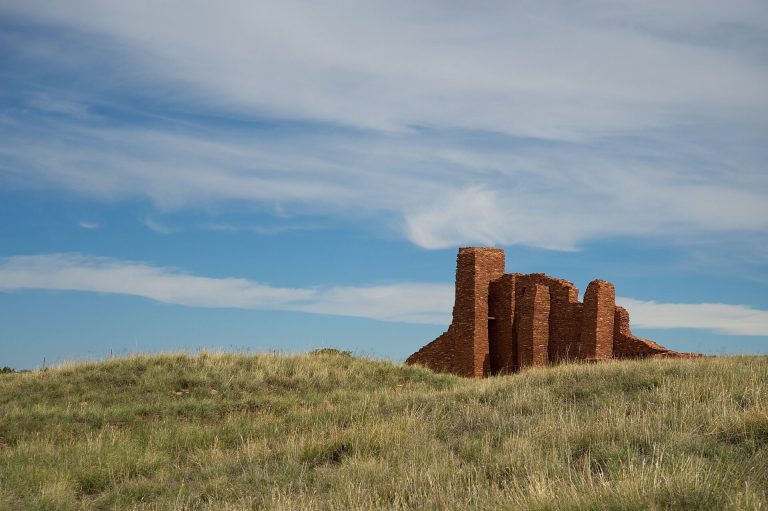
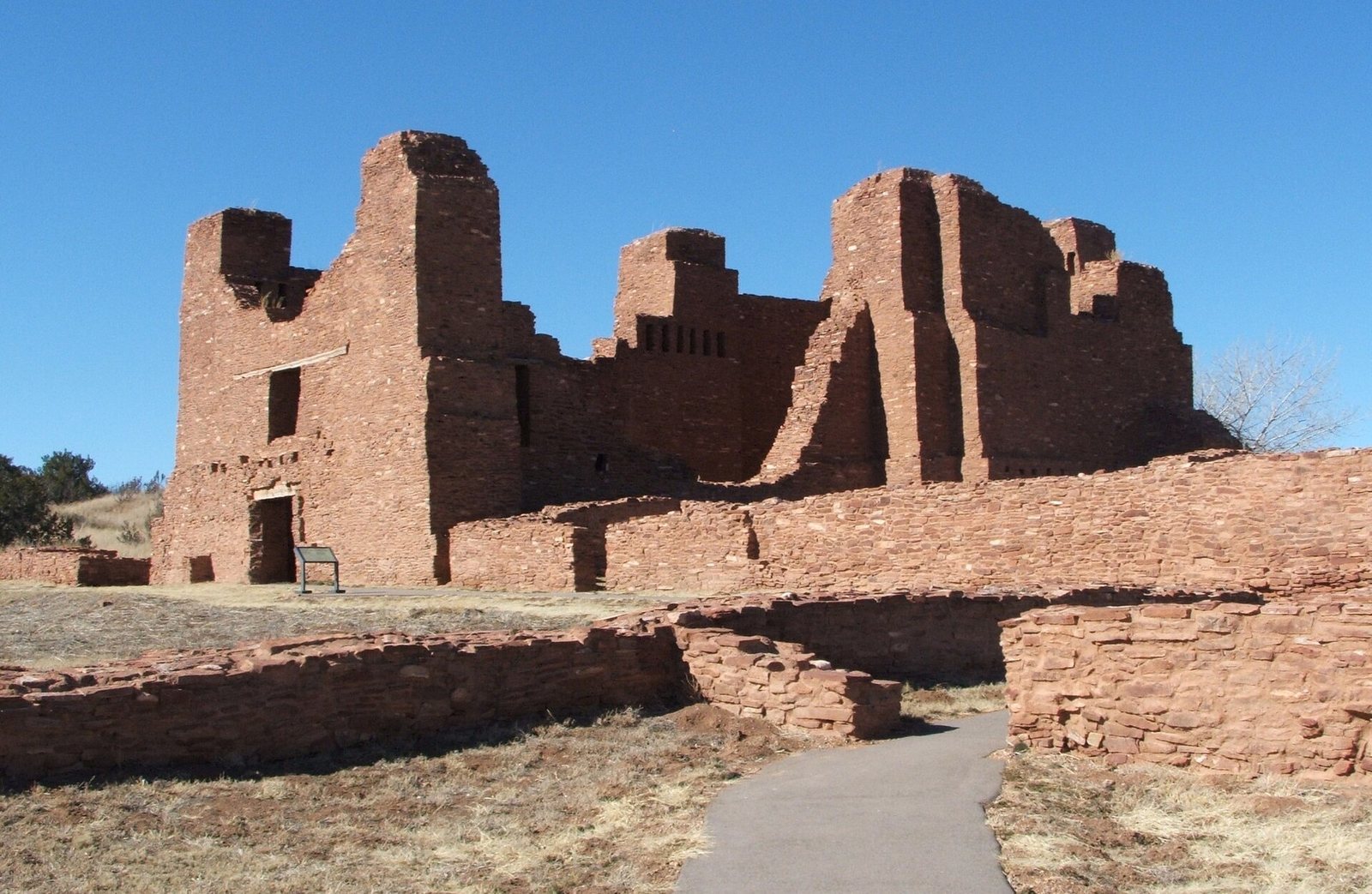
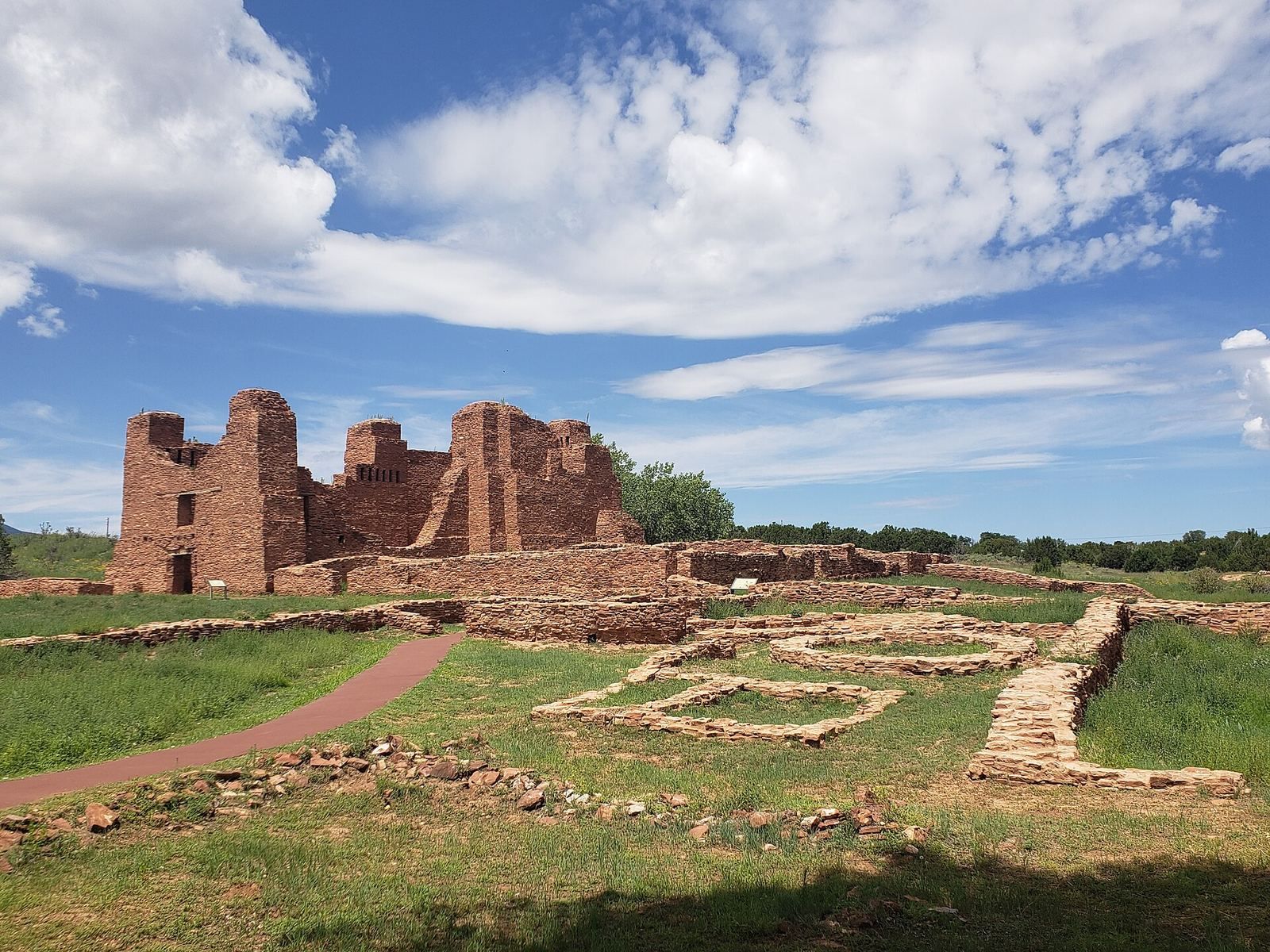
The site covers about 65 acres in a rural desert setting. Its archaeological remains include early settlements, the pueblo, the mission compound, and features from nineteenth-century ranching. The pueblo and mission church walls are the largest features.
Pueblo and mission
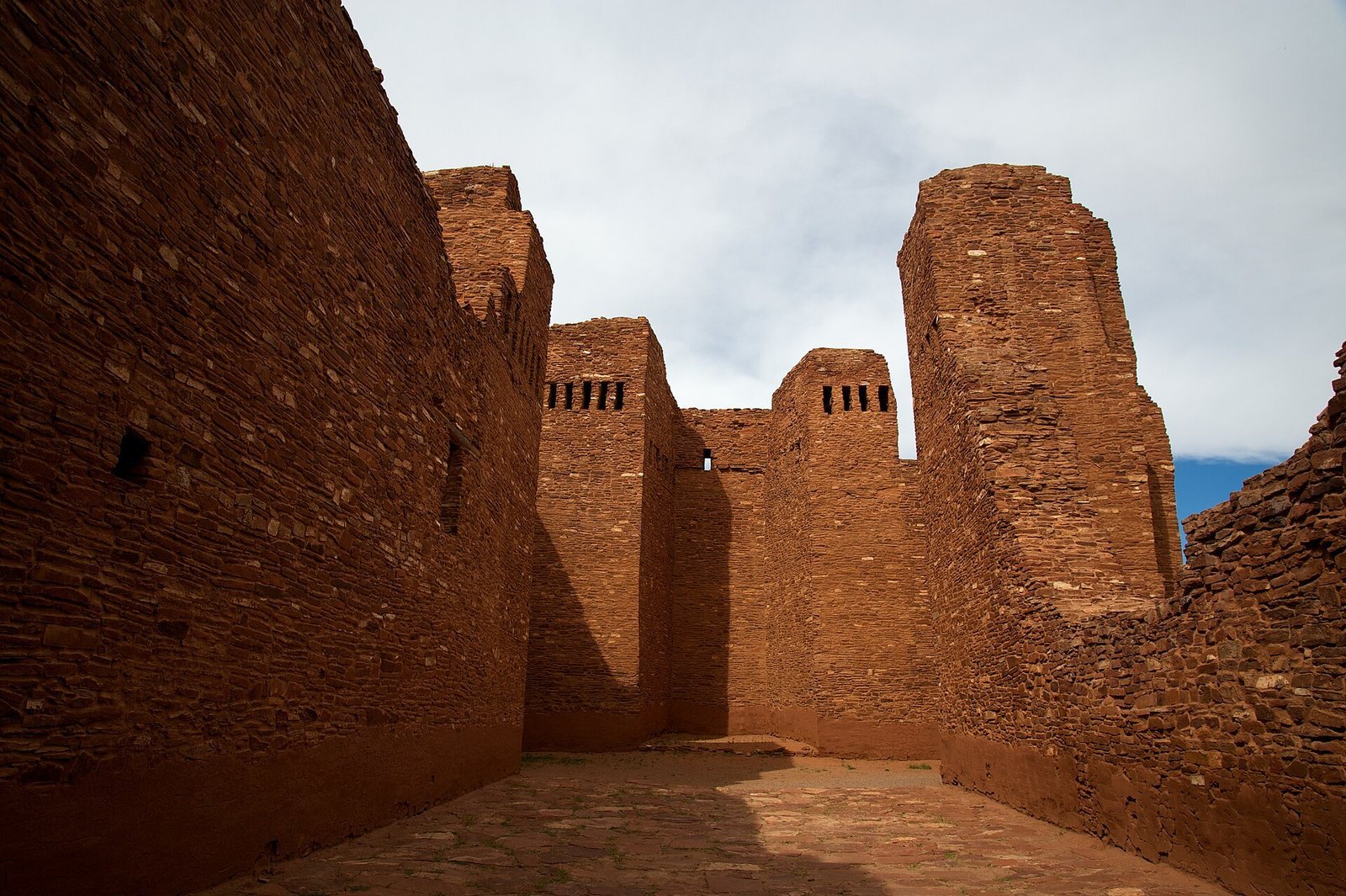
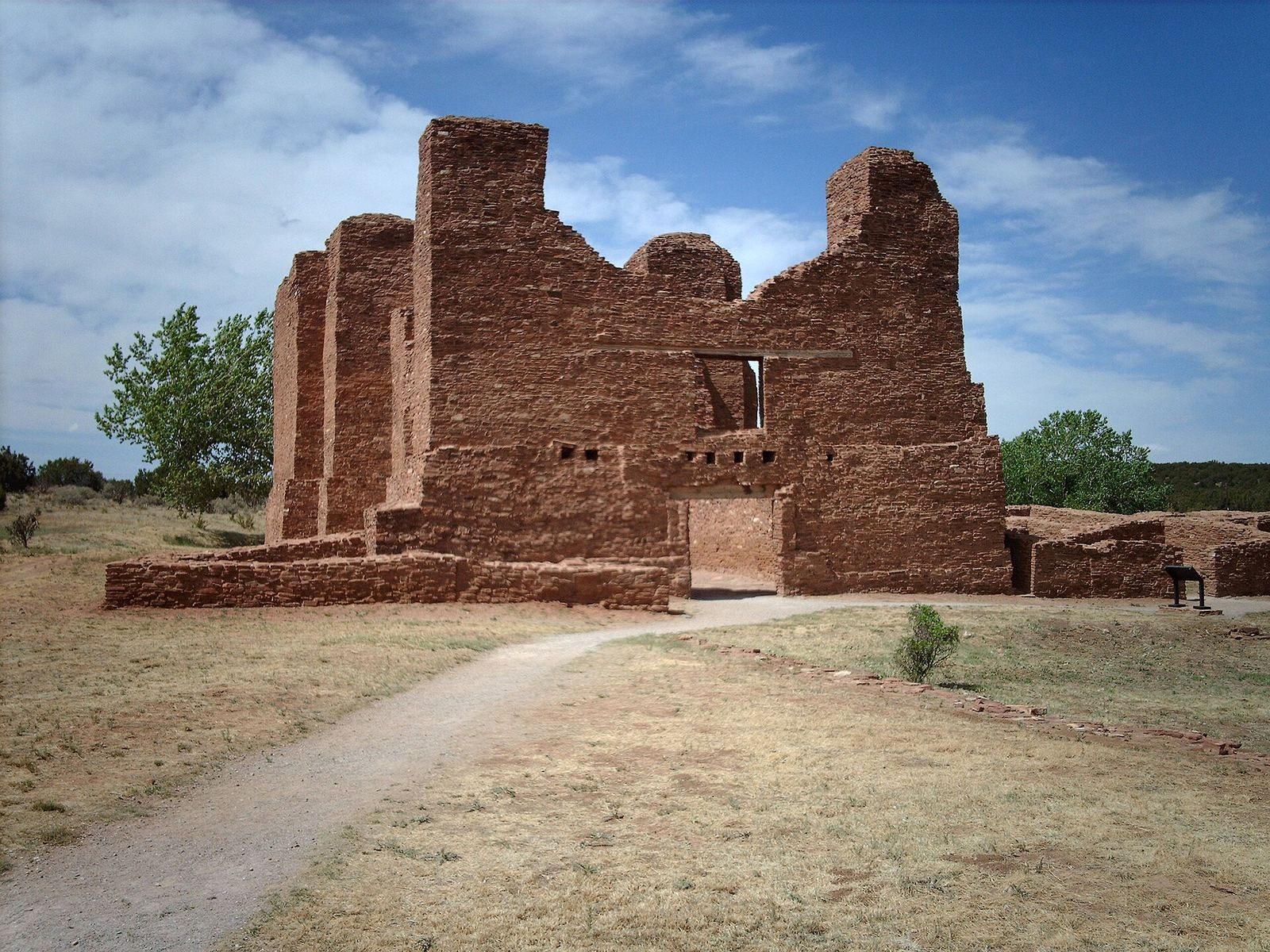
Mounds mark earlier building remains. Both the church and one of the Luceros’ houses were built over earlier construction mounds. The church was a wall-and-beam building, probably among the largest of its kind in North America. Its walls are about three to six feet thick and are thought to have once reached roughly 40 feet in height. The surviving walls form part of the principal ruins.
Ranching remains
Two fortified ranch compounds, organized around protected courtyards, date to the 1820s and 1830s; this type of site is exceptionally rare. The Luceros’ irrigation system also survives as evidence of ranching activity, incorporating stone and brick taken from the ruins.