Château des comtes de Challes: A Medieval Castle and Historic Hotel in France
Site at a Glance
- Rating
- 4.4
- Popularity
- Medium
- Country
- France
- Primary era
- Medieval
- External website
- Open
- Eras represented
- Medieval, Modern
- Civilizations
- French, Holy Roman Empire
- Site type
- Domestic
- Remains
- Castle
On this page8 sections
History
Château des comtes de Challes is a medieval castle in Challes-les-Eaux, France, built in the thirteenth century by Étienne de Challes. Originally known as Château de Challes, it served as the residence of the counts and later the marquises of Challes, placing it at the centre of the lordship’s political and family history.
The lords of Challes
The château remained associated with the Challes lineage until Louis de Challes died without a direct heir in 1590. He was the last descendant of Étienne de Challes. In 1594, the estate passed to Louis Milliet, Baron of Faverges, beginning a long period of Milliet ownership.
The Milliets were an old Savoyard family from Geneva. Their members held the titles of Baron and later Marquis of Faverges, Baron and later Marquis of Challes, and Baron and later Marquis of Arvillars. The family was divided into the Faverges, Challes, and Arvillars branches. The lordship of Challes passed from Louis Milliet to his son Hector, then through Jean Louis, Jean Baptiste, and Henri Joseph Milliet de Challes. Henri Joseph, the last member of his branch, died in 1777, after which the château passed to the senior Milliet de Faverges branch.
Rousseau and the château
During the period of the marquises of Challes, Jean-Jacques Rousseau, an eighteenth-century Genevan philosopher and writer who also worked extensively on music, gave music lessons at the château to Catherine Françoise and Gasparde Milliet de Challes. He later described the two women in his Confessions, linking the residence to the cultural life of eighteenth-century Savoy.
Revolutionary and nineteenth-century changes
During the French Revolution, Jacques-Antoine Balmain, a judge at the Court of Appeal of Grenoble, acquired the Challes estate and its dependencies through a contract dated 5 Thermidor, Year IV. Balmain’s daughter later married Louis Domenget, a physician to the King of Sardinia and the syndic, or municipal head, of the commune.
In 1841, Domenget discovered the mineral spring that transformed the commune. The development of its waters contributed to the town’s renaming as Challes-les-Eaux in 1872. Domenget subsequently sold the château and the mineral waters to the Challes Mineral Water Company, which adapted the residence for hotel use and operated the thermal facilities.
Hotel use and present ownership
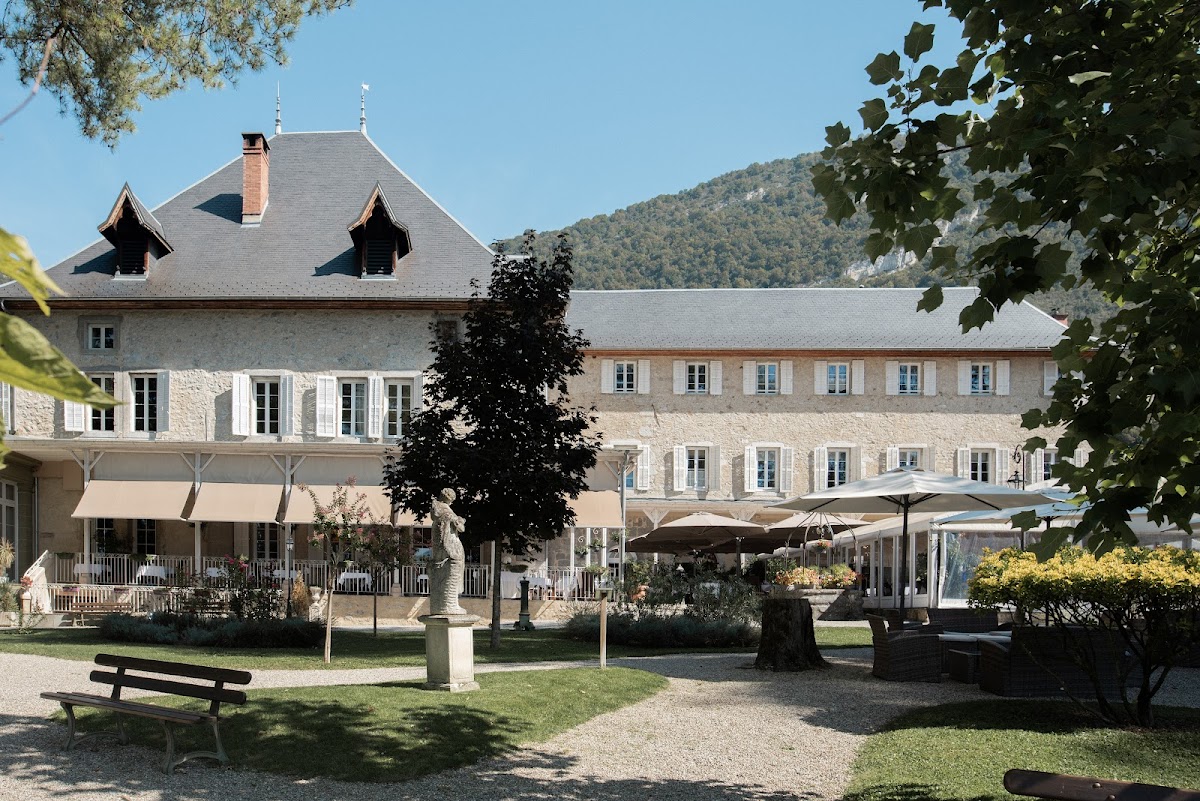
The company constructed a building around the medieval donjon, the principal fortified tower of a castle, and renamed the complex Hôtel du Château. The property therefore entered a new phase in which its historic buildings were connected with accommodation and the growing mineral-water enterprise.
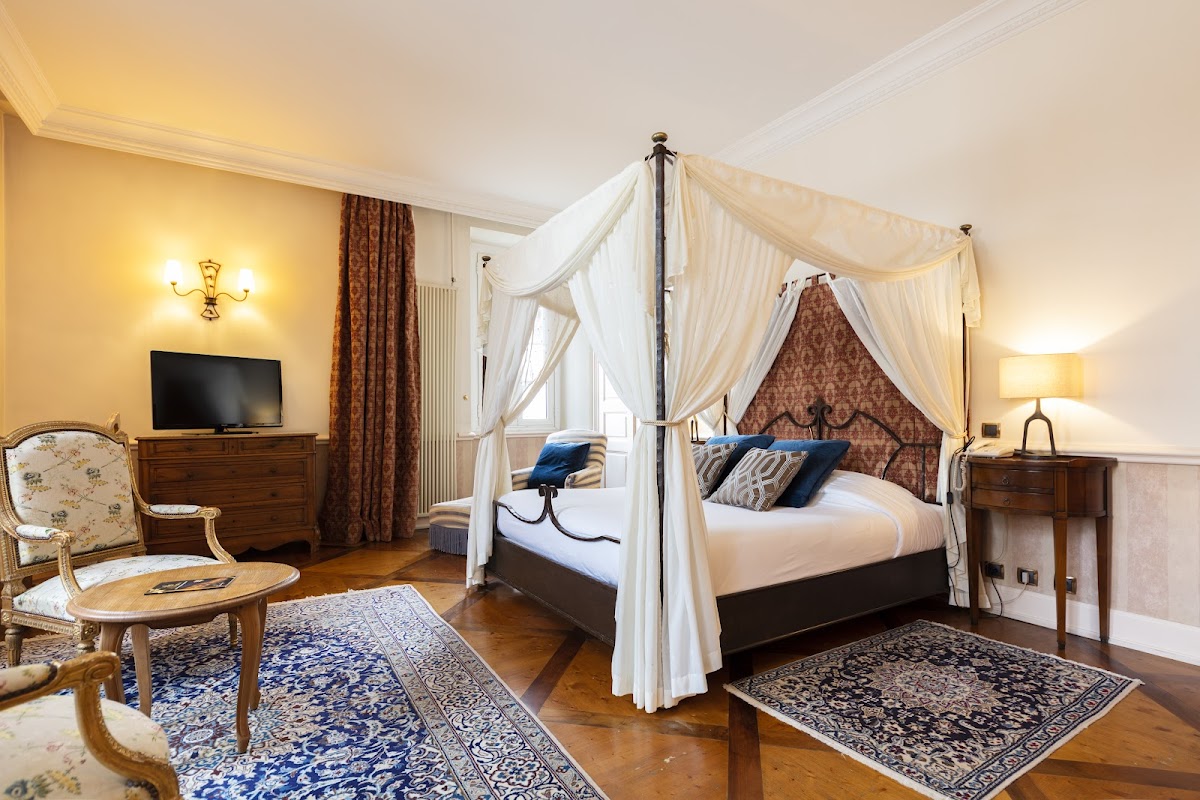
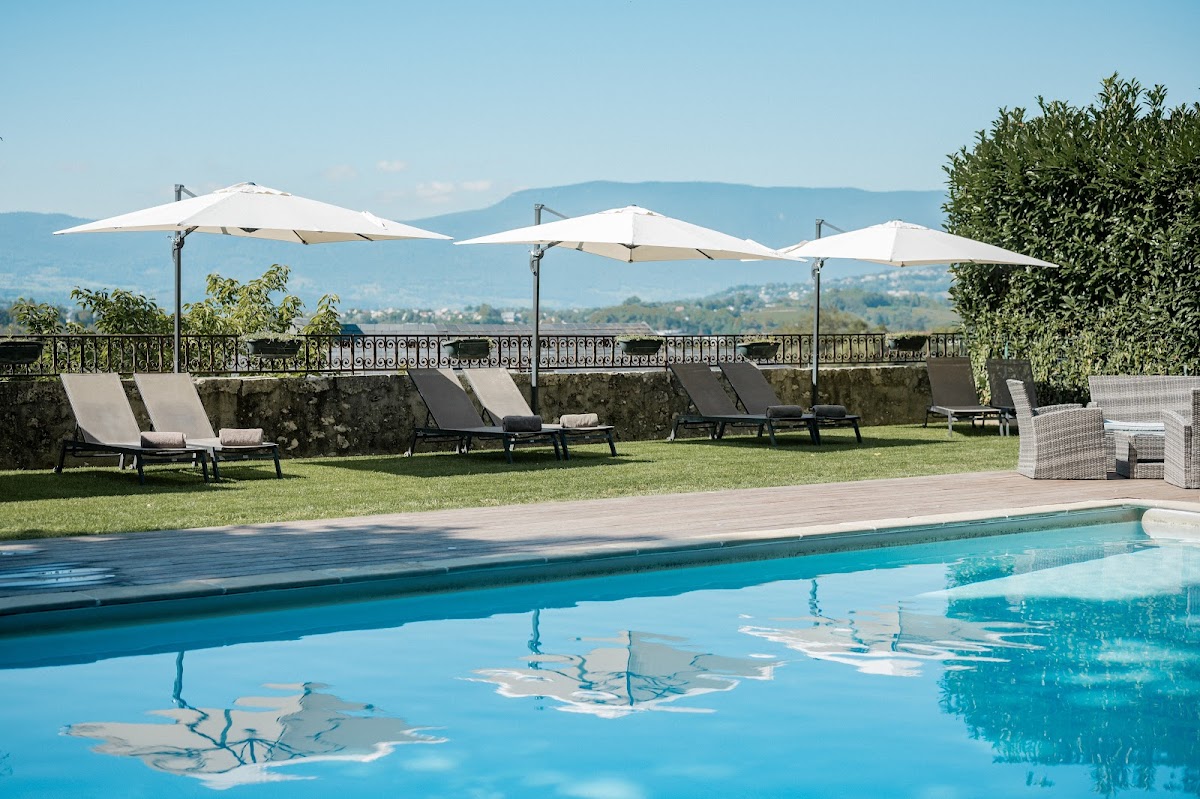
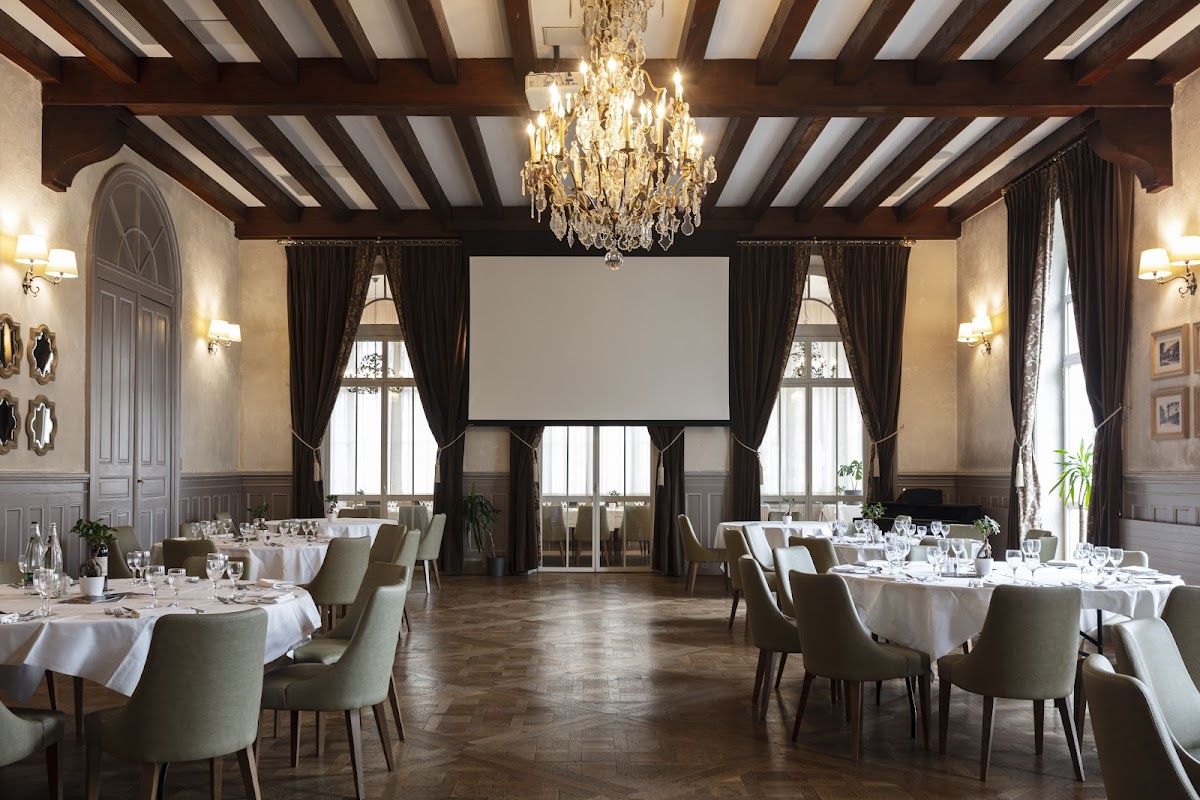
Gérard Trèves bought the property in 2002 and continued to operate it as a hotel and restaurant under the name Château des Comtes de Challes. He currently owns the property, which stands on Montée du Château in Challes-les-Eaux, in the Savoie department of the Auvergne-Rhône-Alpes region.
Remains
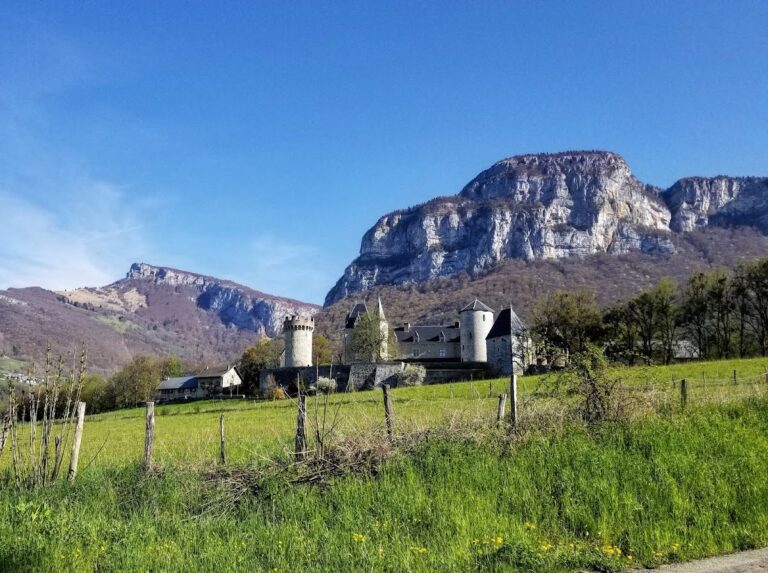
The surviving complex is organized around a medieval castle and its donjon. The donjon forms the principal fortified element of the site, while a later building was constructed around it when the château was converted into a hotel. This combination preserves the relationship between the medieval stronghold and the later hospitality complex, which is still used as a hotel and restaurant.
The medieval castle
The château’s essential historic feature is its donjon, the fortified tower that served as the castle’s principal stronghold and residence. It belongs to the medieval phase established in the thirteenth century by Étienne de Challes.
The hotel complex
A later structure surrounds the donjon, reflecting the building’s conversion for hotel use by the Challes Mineral Water Company. The complex is known today as Château des Comtes de Challes and continues to combine the historic château with its later hotel function.