Mount Kōya: A Shingon Buddhist Center in Japan
Site at a Glance
- Rating
- 4.1
- Popularity
- Medium
- Country
- Japan
- Primary era
- Medieval
- External website
- Open
- Eras represented
- Medieval, Early Modern
- Civilizations
- Tokugawa, Toyotomi regime
- Site type
- Religious
- Remains
- Monastery
On this page25 sections
History
Mount Kōya is a Buddhist temple settlement in Wakayama, Japan, established as a center for Shingon Buddhism. In 816, the monk Kūkai received permission from Emperor Saga to create a place for meditation and religious practice. Shingon is an esoteric Buddhist tradition centered on ritual, meditation, and mandalas, symbolic diagrams of Buddhist teachings and the cosmos.
Foundation and early growth
Kūkai had visited the mountains on earlier retreats and chose the high plateau, in part because it lies among surrounding peaks. The Danjōgaran, the principal Buddhist precinct, was the first part of the complex to be built. Few buildings were completed during Kūkai’s lifetime. After his death in 835, his successor Shinzen Daitoku continued development, overseeing the West Pagoda in 887 and other construction. Kūkai’s mausoleum became a center of devotion, with tradition holding that he remains in meditation while awaiting Maitreya, the future Buddha.
In 921, Emperor Daigo granted Kūkai the honorific title Kōbō Daishi, helping to strengthen support for the monk and Shingon Buddhism. A major fire in 994 destroyed most of the complex, although the Miedō survived; the monk Meizan subsequently led restoration. Jōyo arrived in 1016, a journey tradition links to a vision of Kannon, the bodhisattva of compassion. He also developed ways to help monks withstand the mountain’s severe winters. Emperors Shirakawa and Toba later made pilgrimages, and Toba’s consort Bifukumon’in was buried at Mount Kōya. Another fire, in 1149, destroyed the Danjōgaran and many Buddhist images and paintings.
Medieval pilgrimage center and conflict
By the eleventh and twelfth centuries, Mount Kōya had become a major pilgrimage destination and a principal center of Shingon Buddhism, compared in prominence with Tō-ji in Kyoto. It continued to prosper despite monastic disputes, fires, and efforts by military leaders to control the complex. During the Kamakura period, an era of samurai government, warrior families established temples there. Subtemples and devotional halls eventually numbered more than 2,000.
Fires in 1401 and 1464 destroyed buildings and religious texts. In 1464, conflict between monastic factions accompanied the destruction. A still more devastating fire in 1521 consumed more than 300 temple buildings, 19 pagodas, and over 3,900 monks’ quarters and other structures.
Warring-states era and Tokugawa patronage
In 1580, five former retainers of the military commander Araki Murashige took refuge at Mount Kōya. After monks killed a messenger associated with Oda Nobunaga, Nobunaga ordered an attack in 1581. His forces seized 1,383 Kōya holy men and executed them in Kyoto, while an army estimated at 137,000 approached the site. The intended burning did not take place after Nobunaga died in 1582 during the Honnō-ji Incident, a revolt by one of his retainers.
Toyotomi Hideyoshi, another powerful military leader seeking control over religious institutions and their lands, spared Mount Kōya after the monk and former military commander Mokujiki Ōgo pledged the temple’s obedience. The complex nevertheless lost some of its lands. Hideyoshi ordered Seigan-ji built in 1593 in memory of his mother, then visited Mount Kōya the following year for her third-anniversary memorial. He also held poetry and Noh gatherings there.
During the sixteenth century, Mount Kōya’s lands yielded an annual income of 170,000 koku, a traditional measure of rice also used to assess agricultural income. Under Tokugawa patronage in the Edo period, the complex remained a major religious center and supported affiliated temples across Japan. Regional lords placed stone pagodas along pilgrimage routes, and prominent families chose burial places near Kūkai’s mausoleum.
Fires repeatedly damaged the complex. In 1630, lightning struck the Great Pagoda and the resulting fire spread to other buildings. Fires followed in 1690 and 1691; the latter destroyed 89 temples. Further outbreaks occurred in 1792 and 1809. In 1843, a fire that began at the eaves of the Danjōgaran’s treasure storehouse destroyed 14 buildings, including the Great Pagoda. Fire also destroyed Seigan-ji’s main hall in 1860; it was rebuilt in 1863.
Modern change and rebuilding
In 1869, Seigan-ji and Kōzan-ji were joined under the name Kongōbu-ji, which became Mount Kōya’s central temple. That year, an order separating Buddhism and Shinto, Japan’s indigenous religious tradition, was issued. The Niutsu-Hime shrine, long associated with Mount Kōya, became independent. The Meiji government’s transfer of temple lands and forests to the state weakened the complex’s economic base. Further temple mergers took place in 1877 and 1886.
Fires in 1870, 1872, 1879, 1882, 1884, and 1888 destroyed numerous buildings. The two fires of March 1888 caused especially extensive damage. The first consumed 21 large temples, 30 smaller temples, and more than 70 houses. On the following day, another fire destroyed buildings in Renge Valley and much of East Valley. The losses included religious images, manuscripts, and treasures, among them two of the five paintings of the Five Great Power Bodhisattvas. From more than 680 temples in the early Meiji period, the number had fallen to 130 by 1895.
Women had long been forbidden to enter the sacred precinct and instead prayed at women’s halls outside its approaches. The ban was formally abolished in 1872, although its practical removal was associated with preparations for the 1906 anniversary of Mount Kōya’s founding. The opening of the site to women helped renew interest in pilgrimage. Railway links developed over several decades: trains reached Hashimoto from Osaka in 1915, the line extended to Shiide in 1925, and the mountain cable car from Gokurakubashi opened in 1930. Bus service between Kōya-guchi Station and Shiide began in 1919.
Fire continued to take a toll in the twentieth century. Jimyō-in burned in 1910, followed by Ryūsen-in, Taiun-in, and Tokuzen-in in 1911. In 1923, a fire destroyed a timber building at Kongōbu-ji and then devastated Shōchi-in, including 600 volumes of the Great Perfection of Wisdom Sutra. The Danjōgaran’s Kondō burned in 1926. Shōchi-in suffered another fire in 1938, while rain-triggered ground movement behind Myōō-in badly damaged its main and memorial halls. Gobō Jakujō-in burned in 1940.
Mount Kōya remains the headquarters of the Kōyasan Shingon school. It has 117 subordinate temples, and Kongōbu-ji oversees the religious affairs of 3,600 Shingon temples. A university for religious studies, founded in 1926, is also based there. The mountain is a starting point for the Shikoku Pilgrimage, a Buddhist circuit associated with Kūkai. UNESCO inscribed the Sacred Sites and Pilgrimage Routes in the Kii Mountain Range, including Mount Kōya sites and routes, as a World Heritage property in 2004. Six areas form parts of a national historic site, and 12 buildings are included in the World Heritage property. In 2016, additional pilgrimage routes and the Niutsu-Hime shrine were added to the property.
Remains
Mount Kōya occupies a basin on a plateau about 800 metres above sea level, rather than a single mountain peak. The plateau extends roughly six kilometres from west to east and three kilometres from north to south, surrounded by peaks about 900 metres to over 1,000 metres high. The three peaks identified as the Three Mountains of Kōya are Mani, at 1,004 metres; Yōryū, at 1,009 metres; and Tenjiku, at about 920 metres. Buddhist interpretation likens the surrounding mountains to a lotus and to the arrangement of an eight-petaled mandala.
The area divides the headwaters of the Kino River to the north, the Arida River basin through the center, and the Totsu River basin to the east. The Arida begins on Yōryū’s southern slope and runs through the upper part of Mount Kōya. Its waters form where the Odo and Tama rivers meet at Nakanohashi. Streams from the eastern slopes feed the Nyū River. Japanese cypress, cedar, fir, hemlock, red pine, and umbrella pine were traditionally planted in logged areas, a practice considered to support forest diversity.
The Danjōgaran precinct
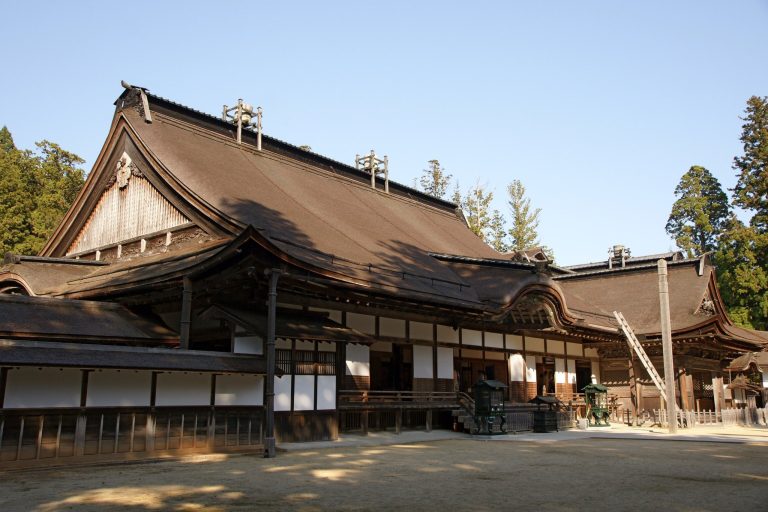
The complex’s principal religious precinct brings together halls, pagodas, a scripture storehouse, a bell tower, a lecture hall, buildings dedicated to deities, a Shinto shrine, and an assembly hall used for ceremonies.
Konpon Daitō
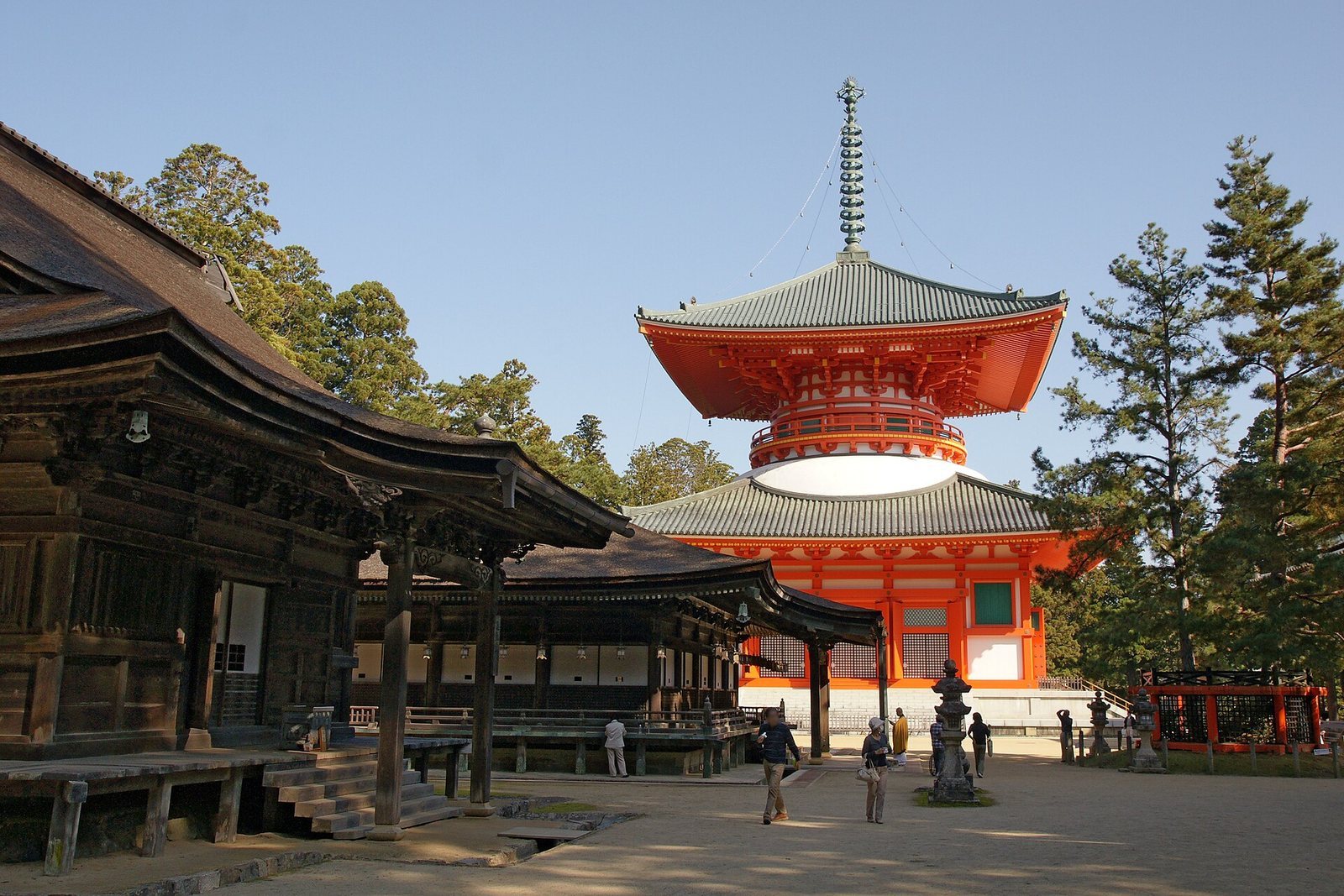
The vermilion Konpon Daitō rises about 49 metres. In Shingon teaching it represents the center of a mandala encompassing Japan. Inside are an image of Dainichi Nyorai, the central Buddha in Shingon, and a mandala of the Two Realms, the Womb Realm and Diamond Realm.
Kondō
The Kondō was the first hall where Kūkai taught and spoke with his disciples. It contains copies of images of Yakushi Nyorai, the Buddha associated with healing, and the Blood Mandala. The originals were lost when the hall burned in 1926. The fire also damaged the hexagonal sutra repository, Kujaku-dō, and the sutra-reception office. Images of two local deities, a statue of the Peacock Wisdom King made by Kaikei, and 24 boxes of gold-lettered scriptures survived and were moved to the Reihōkan.
Miedō and the sacred pine
The Miedō, where Kūkai lived, stands opposite a sacred pine. Local tradition says a vajra, a ritual implement in esoteric Buddhism, that Kūkai threw from China landed there. The pine’s clusters of three needles, rather than the usual two, are regarded locally as auspicious. The hall contains a portrait of Kūkai with his 16 disciples, painted by his student Shin’nyo Hoshino, and opens once each year for the Mieku memorial ceremony.
Other halls and pagodas
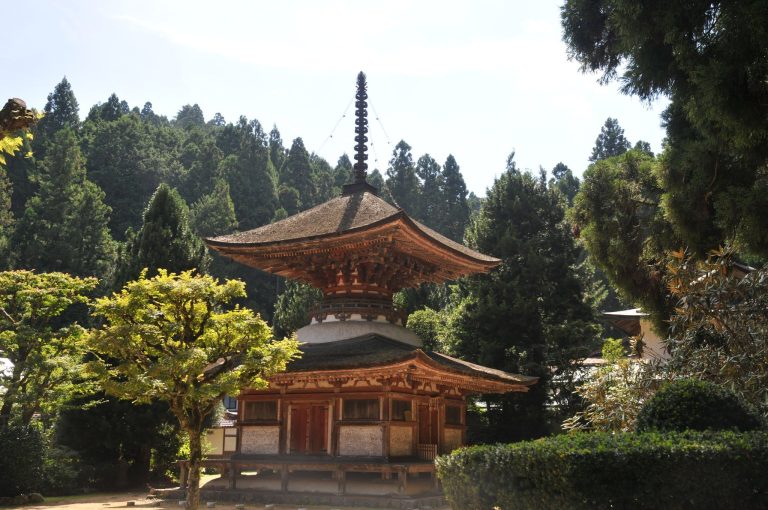
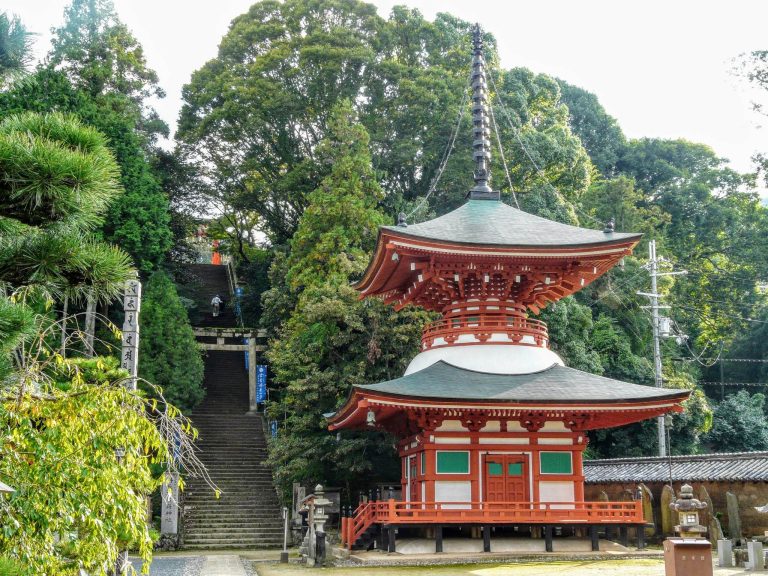
The precinct’s other buildings include the Juntei-dō, with a statue of Juntei Kannon, whom Kūkai chose as protector during his novitiate, and the Kujaku-dō, built in 1200 at Emperor Go-Toba’s request after monks’ prayers for rain ended a drought. The West Pagoda was built in 887 by Shinzen Daitoku on Emperor Kōkō’s order; the East Pagoda is another principal structure in the precinct.
The Fudō-dō houses a sculpture attributed to Unkei of Fudō Myōō, a wrathful Buddhist deity, with eight youthful attendants. The Aizen-dō is dedicated to Aizen Myōō, a deity associated with love and desire. The name Sanmai-dō recalls the abbot Saiko’s deep meditation there in the ninth century. Princess Itsutsuji Saijin, a daughter of Emperor Go-Toba, built the Daie-dō in her father’s memory.
Sannō-in and Myō-jinja
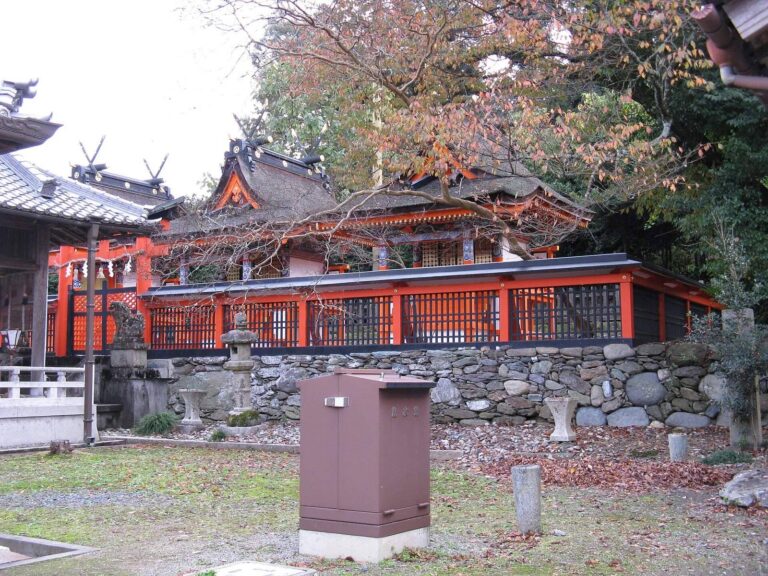
Sannō-in dates to the period of Fujiwara-family political dominance and served as a setting for monks’ debates and examinations on the sixteenth day of each month. The Myō-jinja shrine was built for the local Shinto deities Niutsu-Hime and her son Kariba-myōjin.
Temples and memorial buildings
Kongōbu-ji
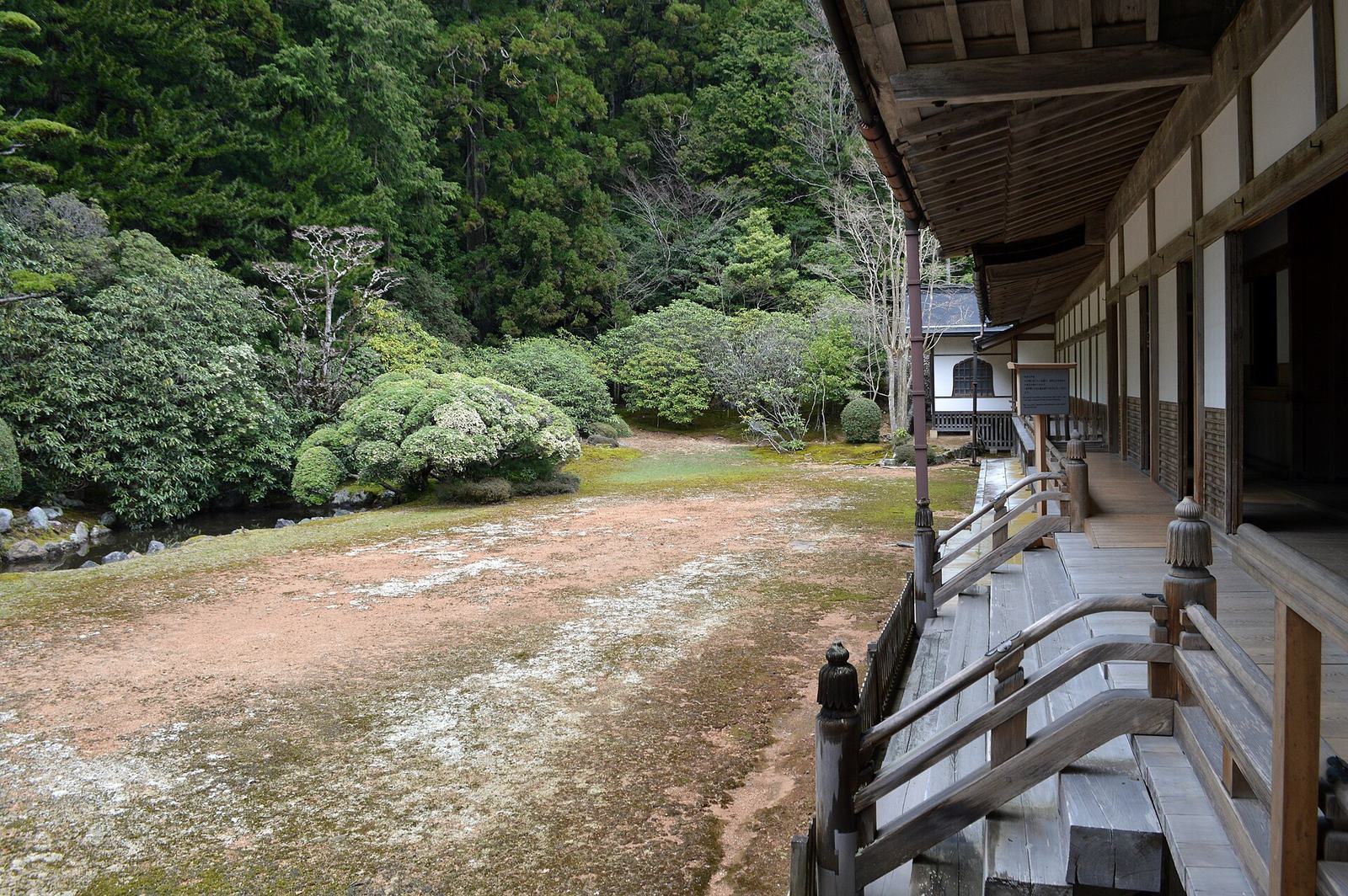
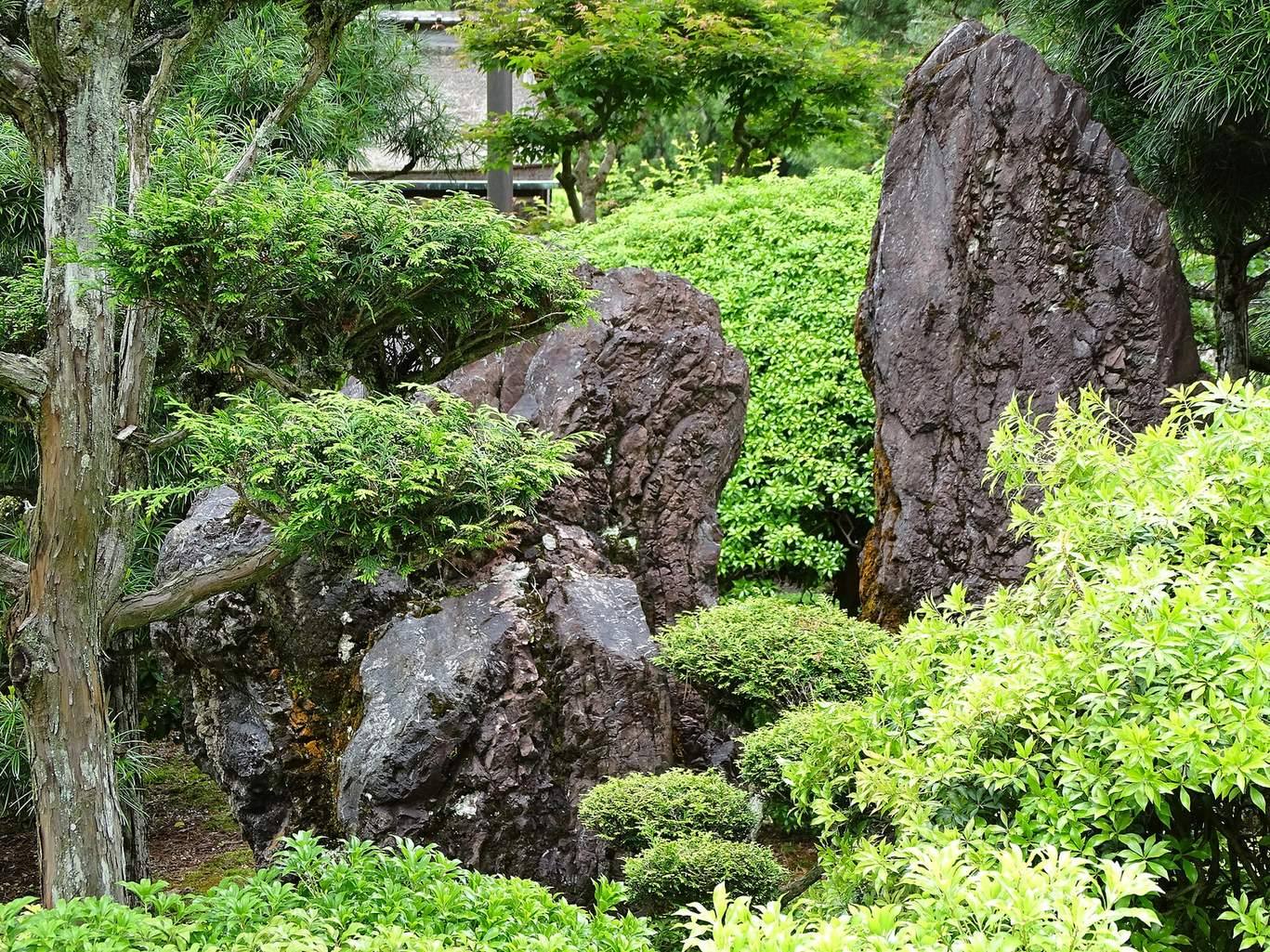
Kongōbu-ji is the complex’s central temple and includes a stone garden. Its predecessor, Seigan-ji, was built by Toyotomi Hideyoshi in memory of his mother; Seigan-ji and Kōzan-ji were later combined to form Kongōbu-ji.
Kongōsanmai-in
The Kongōsanmai-in precinct contains an early thirteenth-century pagoda commissioned by Hōjō Masako to commemorate Minamoto no Yoritomo and his son Minamoto no Sanetomo. Adachi Kagemori was ordered to oversee its construction. The precinct also includes a guest hall and a scripture repository.
Great Gate
The Great Gate was once Mount Kōya’s principal entrance. The present structure dates to 1705 and measures about 25 metres high, 21 metres wide, and seven metres thick. Its two guardian figures were carved by Koi and Uncho during the Edo period. The gate was dismantled and raised during work carried out from 1981 to 1986.
Bell of the Six Watches
Between Kongōbu-ji and the entrance to the Danjōgaran stands the Bell of the Six Watches. Fukushima Masanori commissioned it in 1618 for his mother’s memorial. After the bell burned, his son Fukushima Masatoshi had it reconstructed in 1635. It is rung hourly between 6 a.m. and 10 p.m.
Tokugawa mausoleum
The Tokugawa mausoleum consists of two richly decorated buildings constructed by Tokugawa Iemitsu in 1643; their construction took ten years. Their architectural style is associated with the Tōshō-gū shrine at Nikkō. Tokugawa Ieyasu is enshrined in the right-hand building and his son Hidetada in the left. Carvings and brass fittings decorate the structures.
Okunoin and its cemetery
Kūkai’s mausoleum and Lantern Hall
Okunoin is the sacred area that contains Kūkai’s mausoleum. At the center of the cemetery stands the Tōrō-dō, or Lantern Hall, where two flames are believed to have burned continuously for about a thousand years.
Forest cemetery and memorials
Nearly 200,000 tombs lie beneath old Japanese cedars in the forest cemetery. They include burials of prominent families, public figures, and ordinary people. A memorial stele honors Japanese convicted of war crimes and executed after the Second World War, referring to them as the Showa martyrs. Other memorials honor Japanese imprisoned or executed for wartime atrocities; these have been criticized for valorizing Japan’s wartime aggression.
Pilgrimage routes and women’s halls
Chōishimichi
The Chōishimichi connects Jison-in, about 20 kilometres north of the main precinct, with the central complex. Established in the ninth century as an administrative office and reception point for pilgrims, Jison-in marks the route’s northern end. Five-tiered stone pagoda markers stand at intervals of about 108 metres along the route.
Women’s Route and Fudōzaka hall
Seven approaches to Mount Kōya were traditionally recognized, with paths linking women’s halls outside their entrances forming the Women’s Route. The hall at the Fudōzaka entrance served women who were barred from the sacred precinct. It remains a stop on the pilgrimage route.
Reihōkan
The Reihōkan was established in 1921 to preserve and display Mount Kōya’s treasures. Its collection comprises about 50,000 objects, including 21 National Treasures and 142 Important Cultural Properties.