Motto Bartola: A Swiss Artillery Fort Above Airolo
Site at a Glance
- Popularity
- Medium
- Country
- Switzerland
- Primary era
- Modern
- Eras represented
- Modern
- Civilizations
- Swiss
- Site type
- Military
- Remains
- Fort
On this page11 sections
History
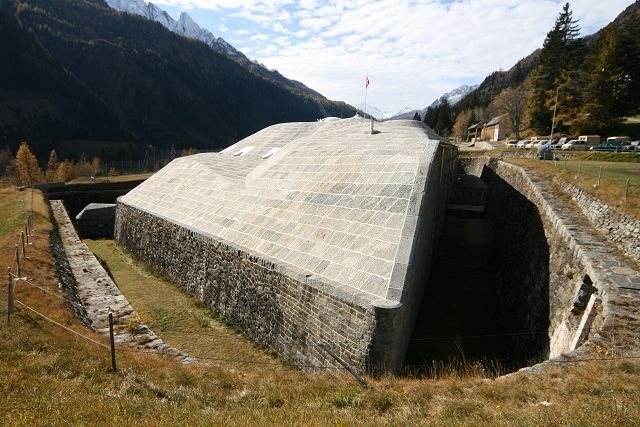
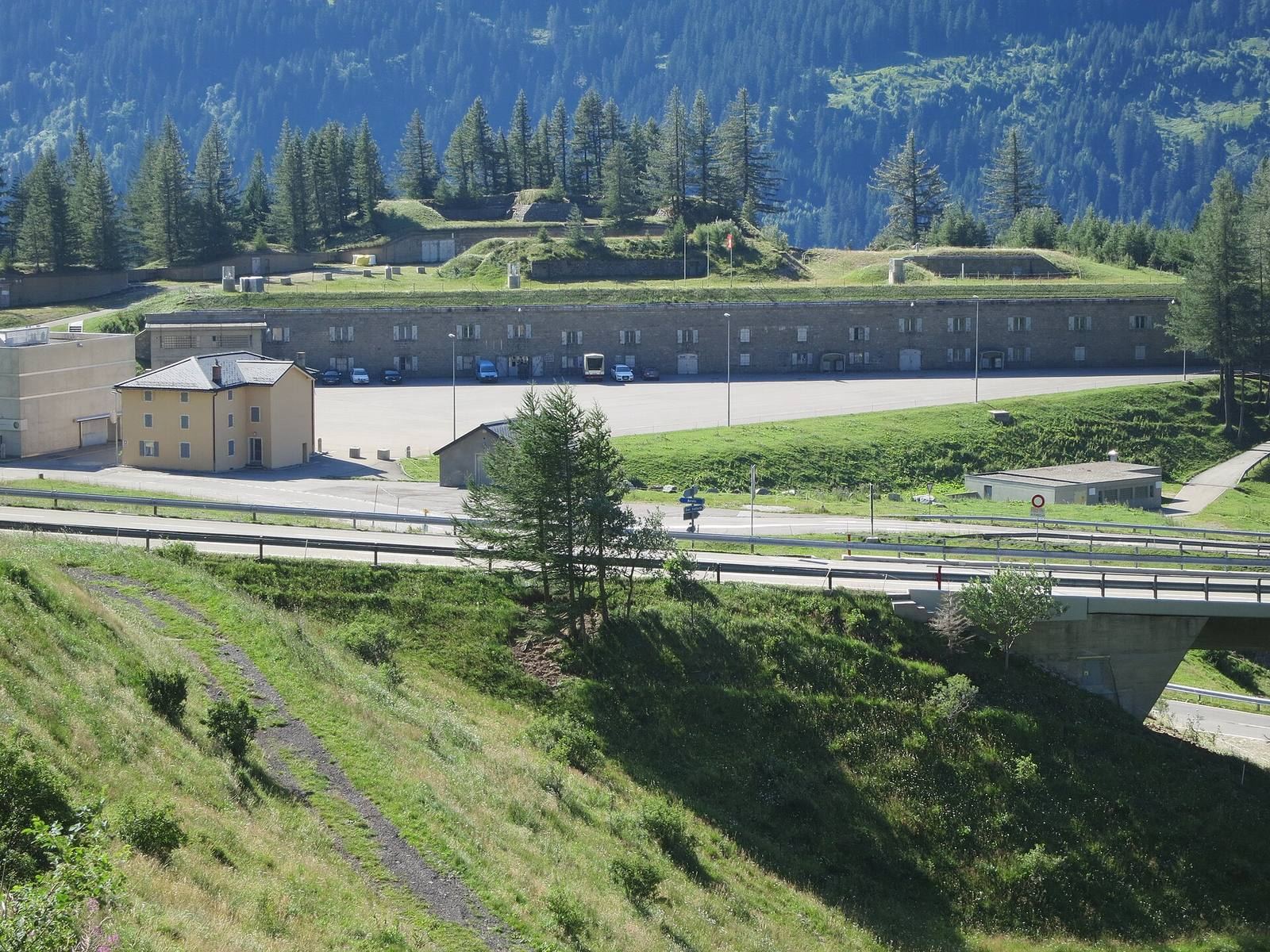
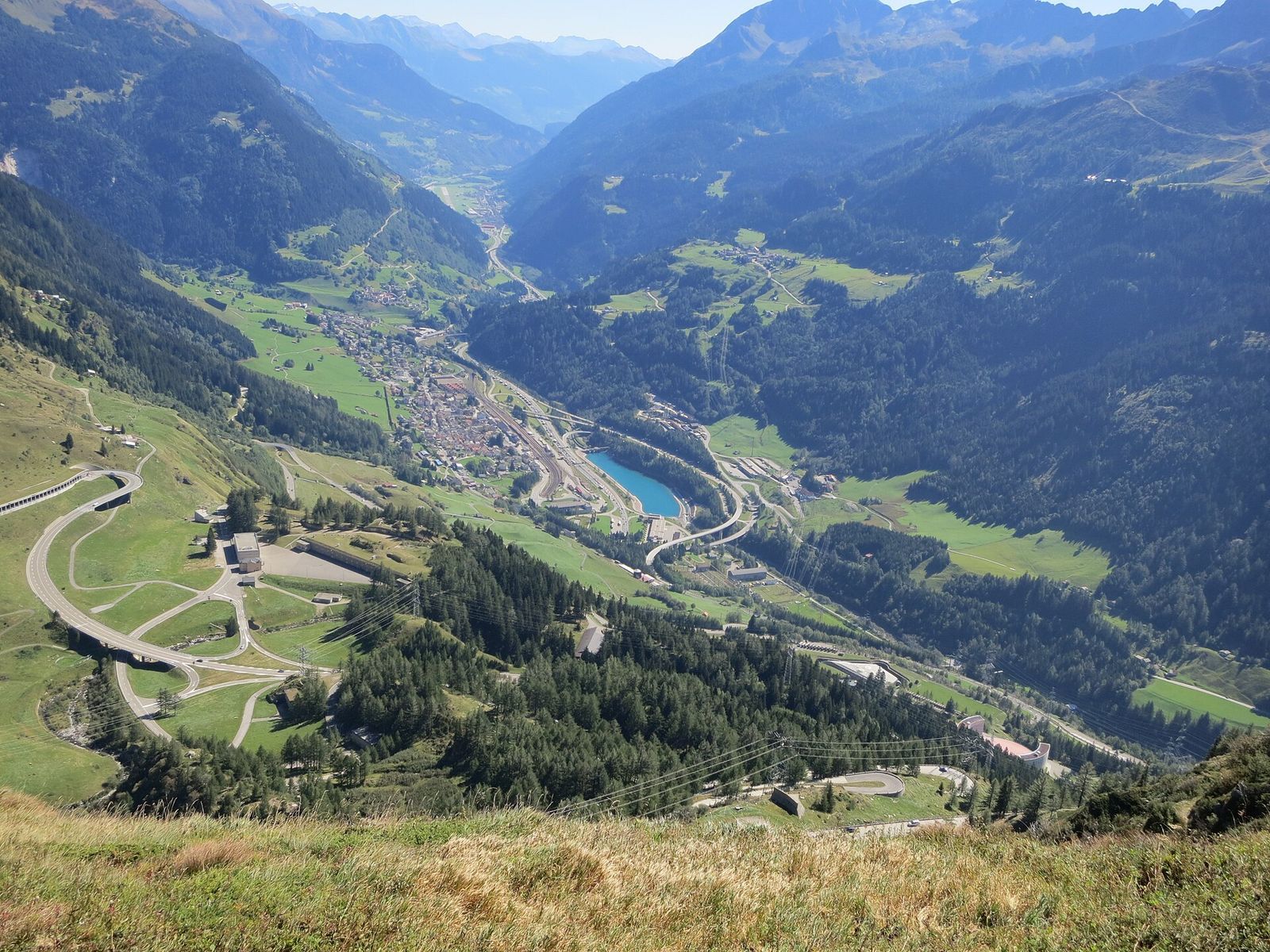
Motto Bartola is an artillery fort in Airolo, in the canton of Ticino, Switzerland, on the southern side of the Gotthard Pass. Construction began in 1888, and the fort was completed in summer 1890 as a provisional defense while nearby Forte Airolo was still under construction. It was intended to protect the Airolo basin and defend the Gotthard road and the route into Val Bedretto.
Construction and defense role
Forte Airolo had been under construction since 1887, but there was concern it might not be ready in time to meet an attack. Motto Bartola was therefore built above it as an interim artillery position. Its fortress company comprised 95 men.
Alterations and military use
A small wartime barracks was added in 1901, and six individual gun positions were built before the First World War. The open battery could be seen from Alpe di Fieud, at about 2,000 metres, so defenses were developed there to help protect the fort. The Banchi fortified road and barracks were established in 1898, two infantry strongpoints, fortified posts for infantry defense, followed in 1903, and a third work was built in 1905.
In 1947 Motto Bartola ceased to serve as a combat installation in the Gotthard Fortress Area and became a barracks. The Swiss Army uses it as a barracks. Fortress Artillery Battalion 13 held a retraining course there in 2004. After Army Reform XXI, a Swiss military restructuring initiative, it was the last remaining fortress artillery battalion. Its disbandment in 2011 brought Swiss fortress artillery to an end.
Remains
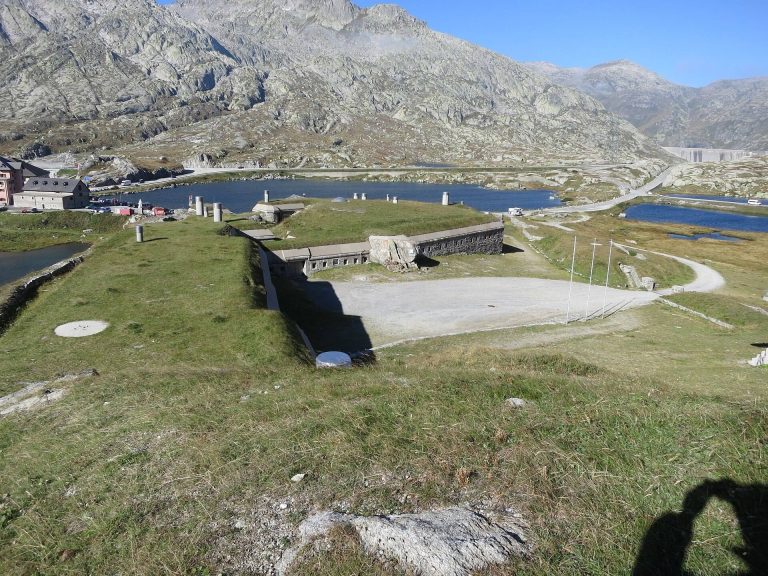
The site combines an artillery fort with separate gun positions and defensive works at Fieudo. Motto Bartola stands at 1,527 metres above sea level, near the entrance to the Tremola on the old Gotthard road. Fortress Foppa Grande is less than 300 metres away.
Main fort
Artillery layout
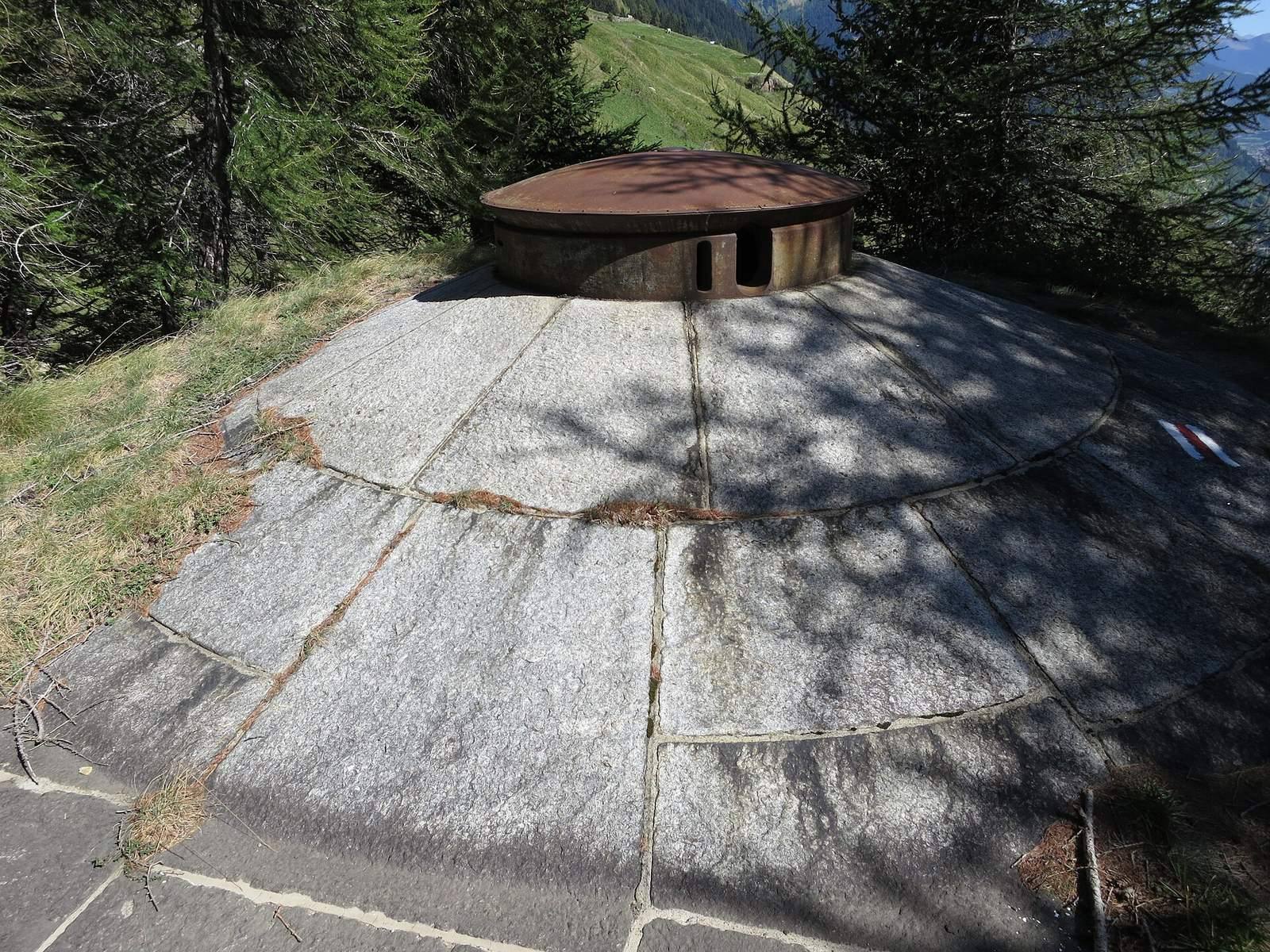
The fort’s planned artillery comprised one group of four 12-centimetre guns and two groups of four 8.4-centimetre guns. Six separate positions for 12-centimetre guns supplemented existing positions A and B. Two of the six faced toward Bedretto and four toward Leventina. The 12-centimetre positions had fixed pivots for the gun carriages’ recoil-brake frames, mechanisms that absorb some of a gun’s backward movement when fired.
Support buildings
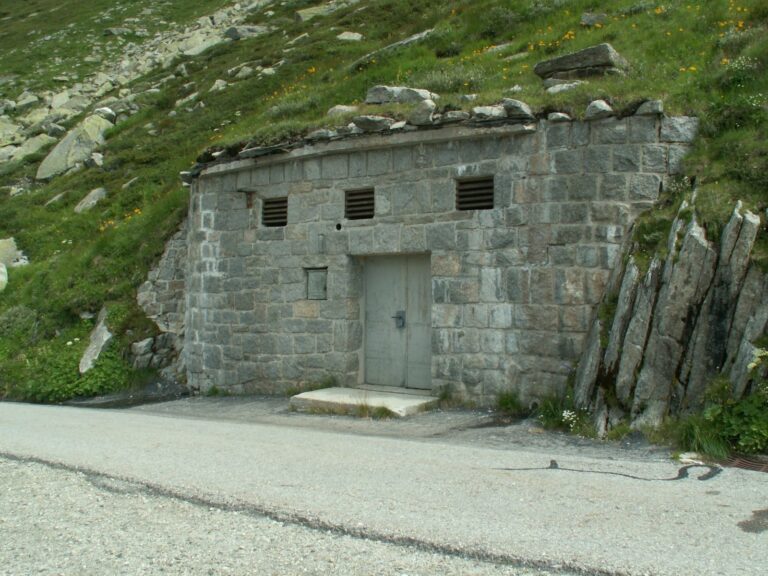
An ammunition casemate, a protected enclosed space used for military purposes, served as the fort’s ammunition store. The small wartime barracks was a separate part of the complex.
Fieudo defenses
Banchi road and barracks
The Banchi fortified road ran from Gotthard Hospice to Alpe di Fieud, where barracks stood at the alpine site.
Infantry posts
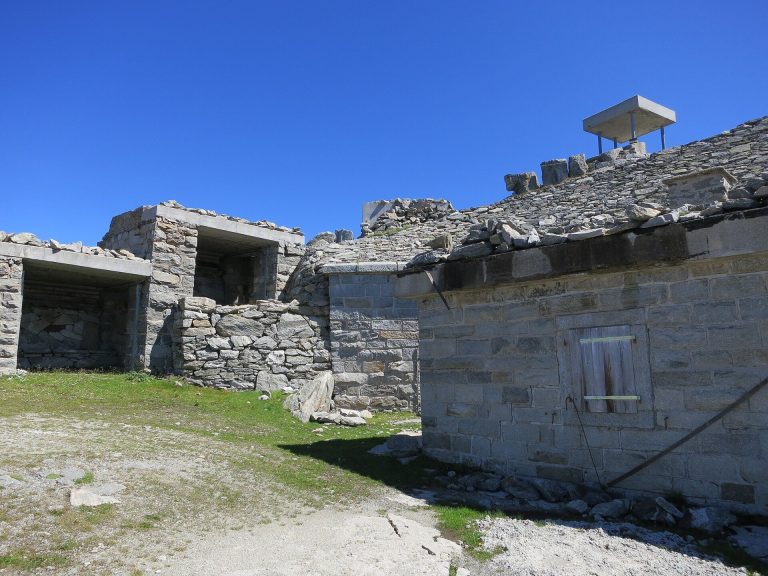
The two infantry posts included open rifle trenches and masonry accommodation rooms for about 70 men. The lower post lies at 1,930 metres, below the Belvedere viewpoint on the motorway. The upper post is at 2,070 metres, northeast of the southern entrance to the road tunnel. The lower trenches are also identified as Cassina del Buco.
Upper work
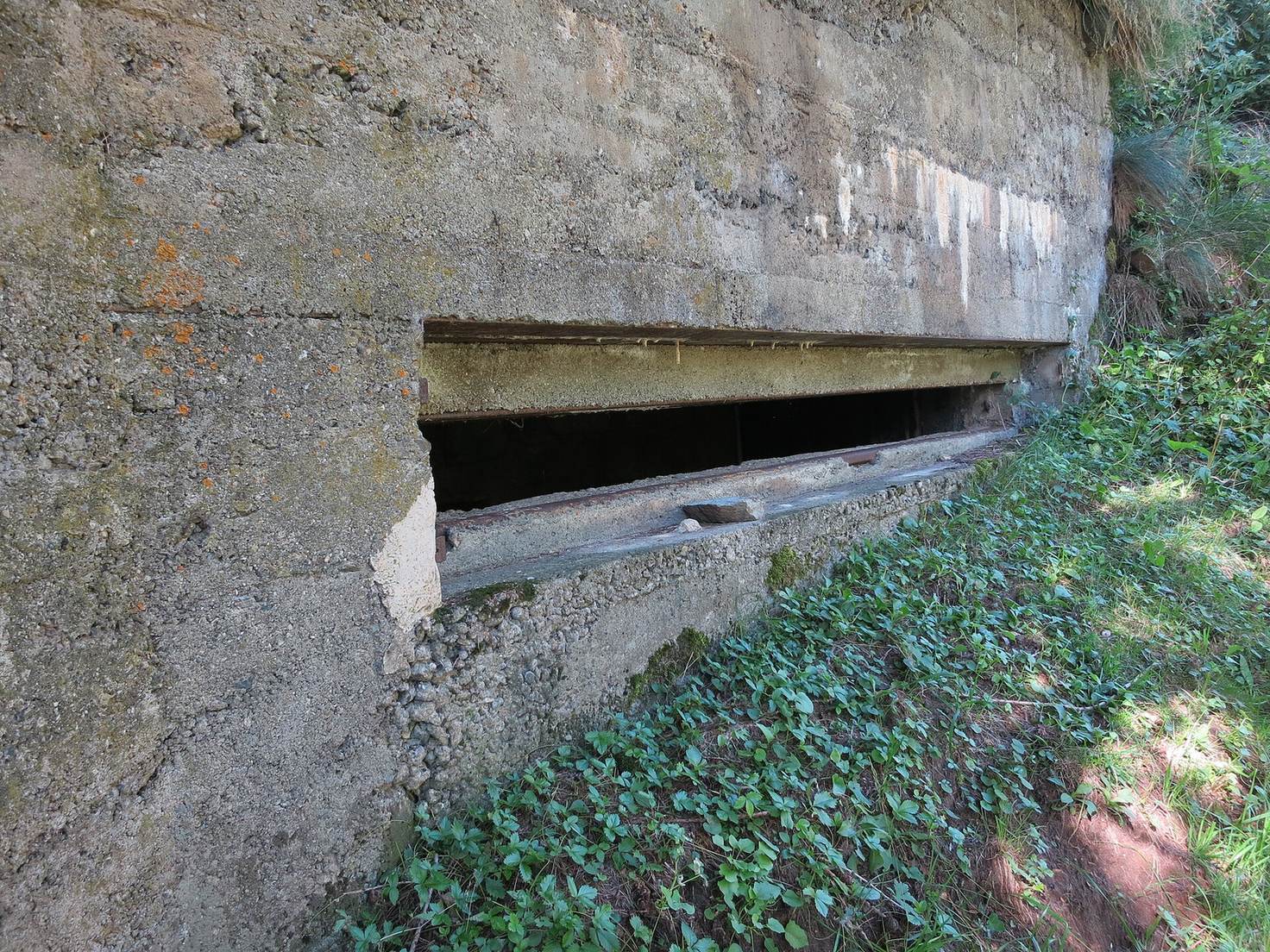
East of Lake Fieud, at 2,131 metres, a separate work has a polygonal plan and granite facing. It is fully covered and has openings, called embrasures, for rifles and machine guns.