Church of Saint John the Baptist, Jerusalem: A Greek Orthodox Church
Site at a Glance
- Popularity
- Medium
- Country
- Israel
- Primary era
- Medieval
- Eras represented
- Classical, Medieval, Modern
- Civilizations
- Byzantine, Ottoman, Roman
- Site type
- Religious
- Remains
- Church
On this page11 sections
History
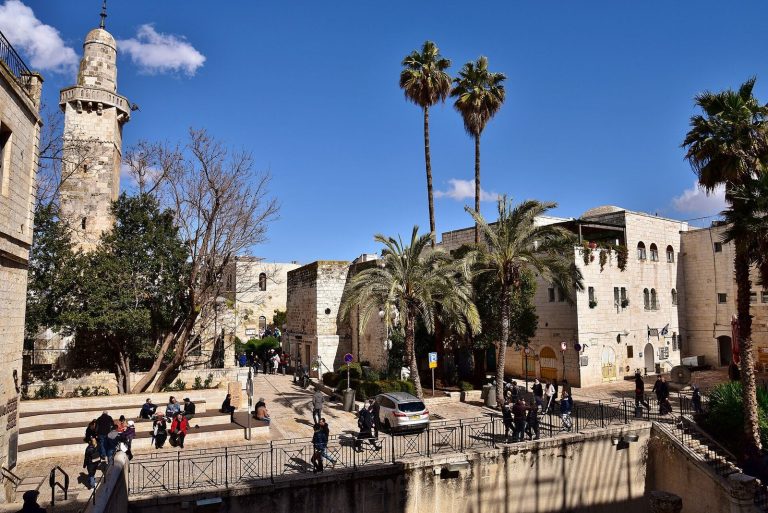
In Jerusalem, Israel, the Church of Saint John the Baptist is a Greek Orthodox church in the Muristan area of the Christian Quarter. Its earliest structure was built sometime between the fourth and sixth centuries, though its original purpose is unknown. Most of the church above ground dates to the eleventh century, when the site became a church, hospital, and pilgrim hospice.
The early building and its uncertain origins
The first structure was damaged during the Persian conquest of Jerusalem in 614 and then substantially altered. A restoration in the seventh century by John the Almoner, the senior bishop of Alexandria, is possible. A longstanding tradition says that Empress Eudocia founded a church here around 450–460 and that it was restored after the Persian attack, but this identification is not established.
Some proposed links to early Christian accounts remain uncertain. The sixth-century writer John Rufus may refer to a Jerusalem church dedicated to Saint John the Baptist, and Byzantine accounts describe a shrine in western Jerusalem that held relics of the Baptist’s head. Neither reference has been securely connected to this church. Archaeologist Jean-Baptiste Humbert considered whether the first building was a shrine to the Baptist’s head, without Eucharistic worship, or a secular structure later rededicated as a church. He also considered possible construction under Constantine, Eudocia, Justinian, or Anastasius, without establishing an attribution. Humbert suggested that a possible restoration by John the Almoner may have helped create a later association with the Baptist. A pilgrim hospice established nearby by Charlemagne around 800 was associated with Saint Mary, pointing to a later origin for the Baptist dedication.
The medieval church and hospital
By the eleventh century, the ancient building had been converted to storage. Amalfitan merchants, merchants from the Italian city of Amalfi, established a pilgrim hospice, hospital, and church at the southwest corner of Hadrian’s forum, a Roman civic space. They built the church over the older structure and dedicated it to Saint John the Baptist. Benedictine monks, members of a Christian monastic order, served the church.
During the siege of Jerusalem in 1099, wounded Crusader knights received care at the hospital. After recovering, they established the Order of the Knights of the Hospital of Saint John of Jerusalem, later known as the Knights Hospitaller, a Christian military-religious order named for the church. When Saladin, sultan of the Ayyubid Muslim dynasty, captured Jerusalem in 1187, debris was apparently placed in the church’s basement.
Greek Orthodox use and archaeological investigation
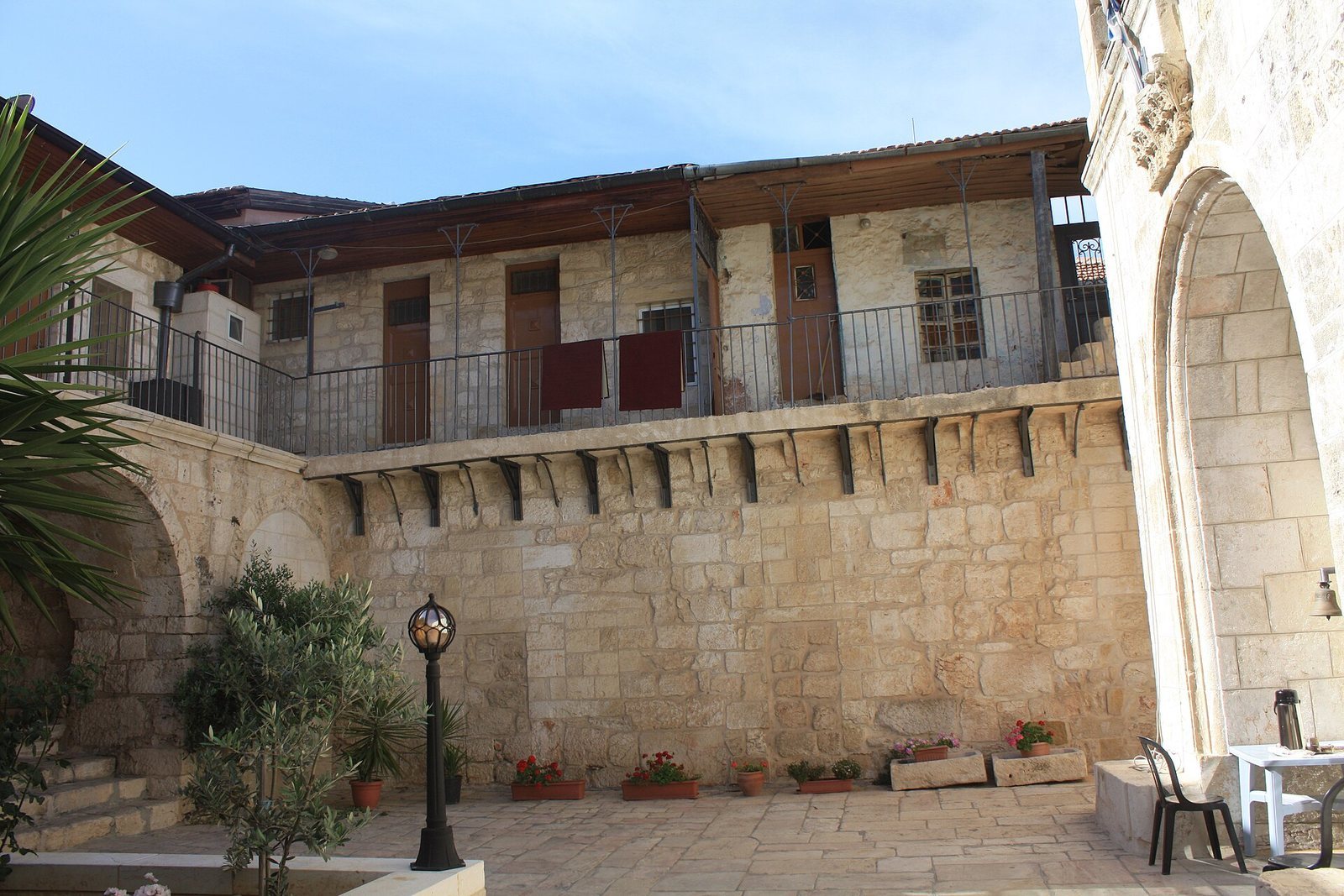
The Greek Orthodox Patriarchate of Jerusalem acquired the church at the end of the fifteenth century and probably turned its basement into a chapel. Humbert considered this possibly the first time the ancient structure was used for worship. The church served briefly as a mosque in the sixteenth century, then returned to Greek Orthodox use. In 1660, the Orthodox built a large pilgrim hospice beside it.
In the nineteenth century, workers cleared the underground chamber beneath the church and found a reliquary embedded in the altar masonry. The chamber may then have served as a chapel below the upper church. Louis-Hugues Vincent and Félix-Marie Abel recorded the site in 1914 and 1919. Humbert excavated the ancient structure in 2010–2011, before its renovation by the Greek Orthodox.
Remains
The church occupies two levels: an earlier, north–south building below ground and a later church above it. The upper church follows the lower building’s three-lobed plan, with three rounded apses, a long entrance hall, and a dome supported by four pillars.
Lower and upper buildings
The lower building
The lower structure has a north–south orientation and a trefoil plan, meaning it has three rounded lobes. It lies at least three metres below street level. Its date is broadly Late Roman or Byzantine, around AD 324–500. By the eleventh century, its doors and windows had been blocked, and it formed the basement beneath the church above.
The upper church
The upper church largely dates to the eleventh century. Its three apses (rounded ends of a church) and long entrance hall are arranged around a dome carried on four pillars. The plan follows the shape of the lower building.
Furnishings, paintings, and exterior
Interior features
A green-and-gold iconostasis, an icon-bearing screen separating parts of an Eastern Orthodox church, dates to 1853. Described as one of Jerusalem’s longest, it bears icons showing episodes from the life of Saint John the Baptist. A jeweled reliquary, a container for sacred relics, is said to hold a fragment of the Baptist’s skull.
Twentieth-century wall paintings by Romanian artists Michael and Gabriel Moroshan include a scene of Jesus raising Adam and Eve from their graves. The ceiling bears portraits of the Four Evangelists, while paintings in the entrance area depict scenes involving Zechariah, the Baptist’s father.
Exterior features
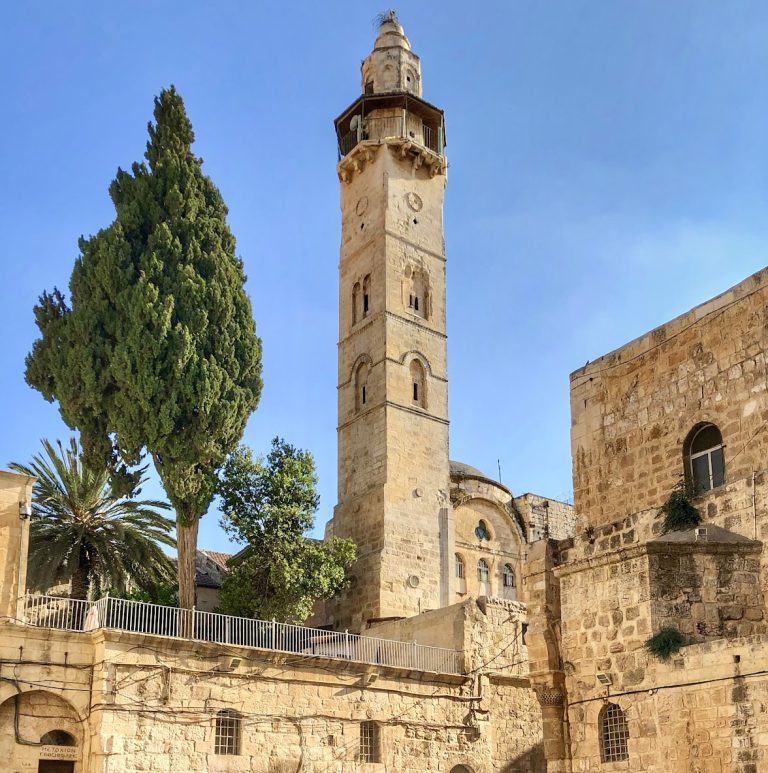
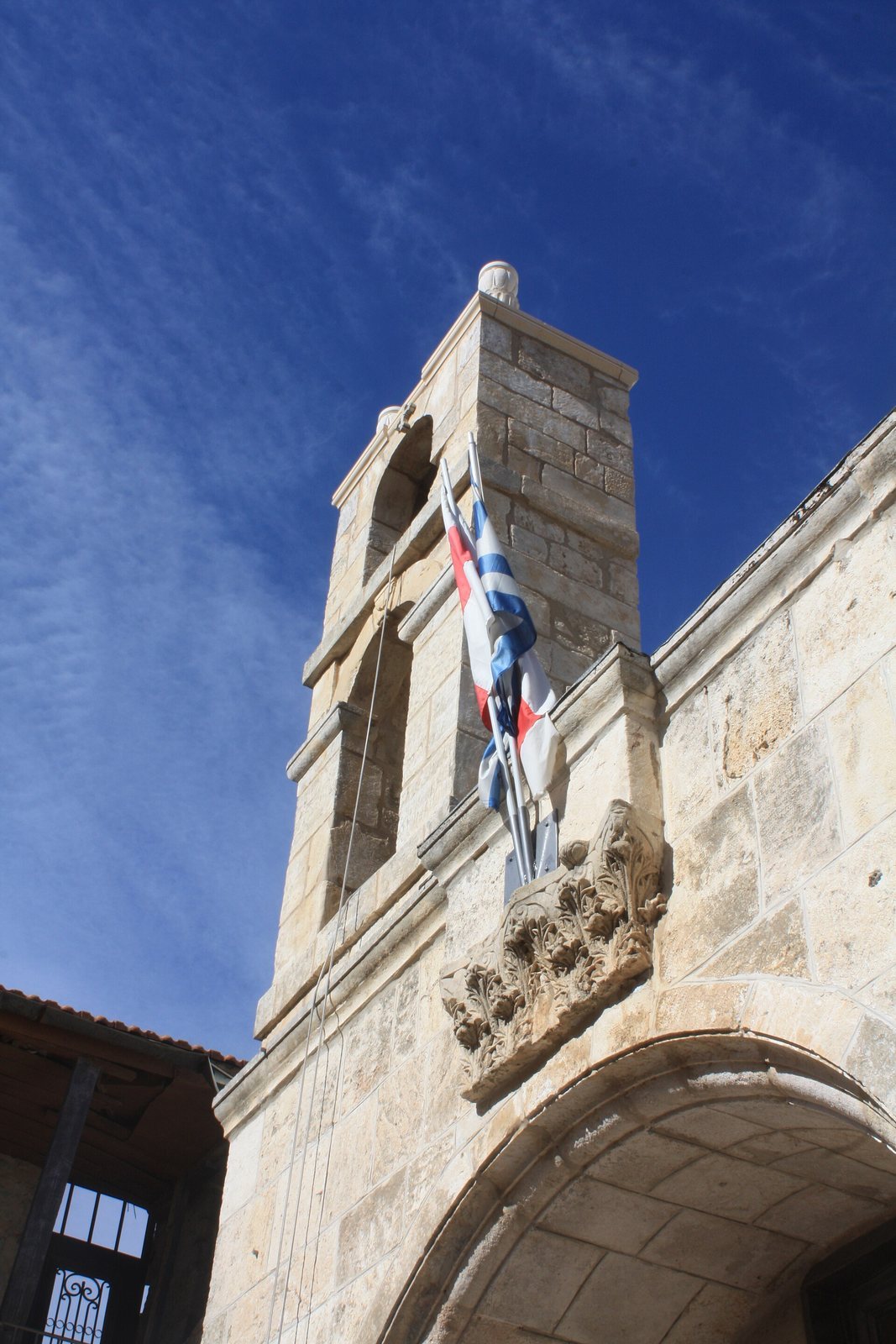
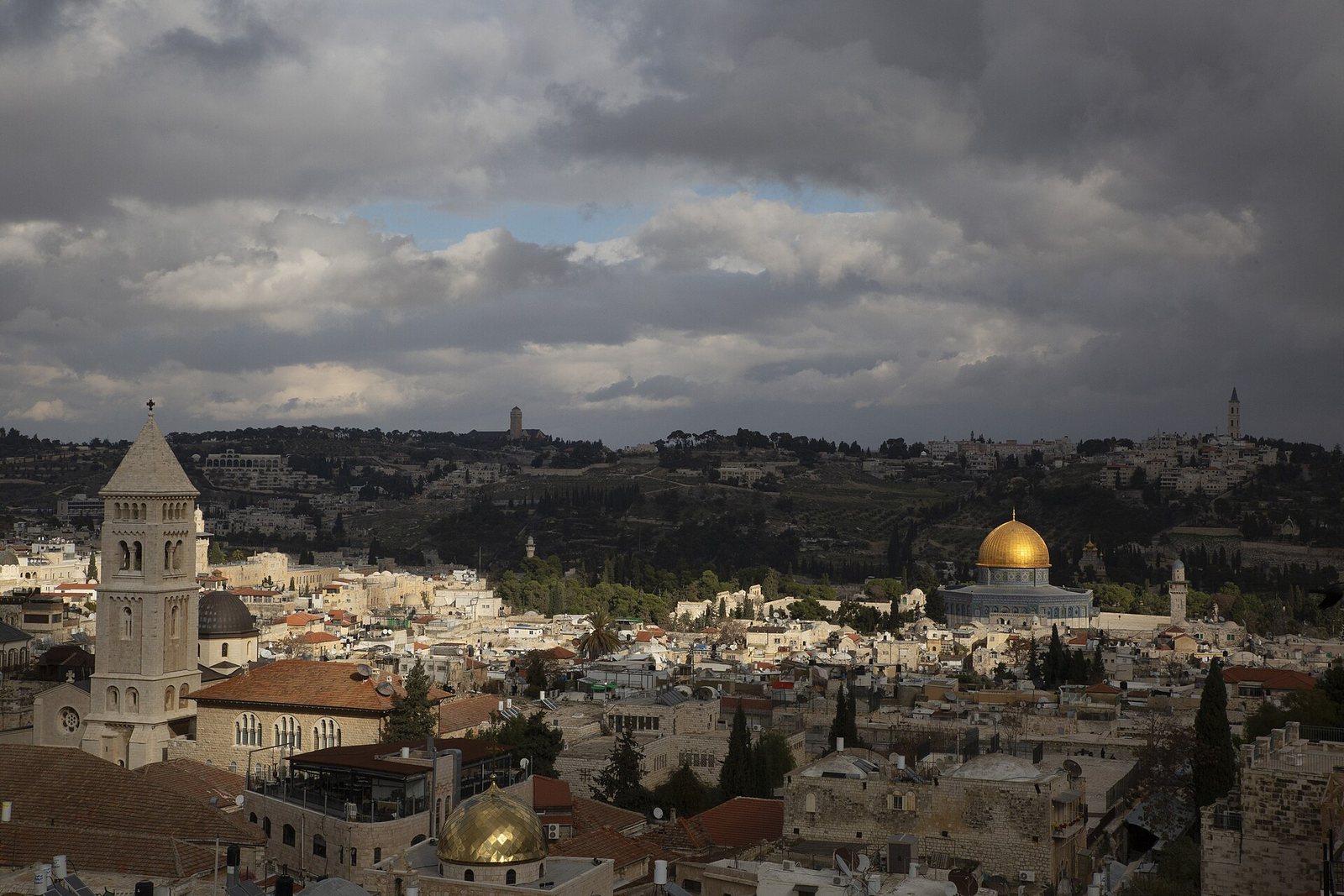
A modern double bell tower and a silver-painted dome rise above the Muristan market. The silver dome gives the church its other name, the Silver Church.