Moni Theologou: A Medieval Church and Monastery on Mount Hymettus


Site at a Glance
- Rating
- 4.6
- Popularity
- Low
- Country
- Greece
- Primary era
- Medieval
- Eras represented
- Medieval
- Civilizations
- Unclassified
- Site type
- Religious
- Remains
- Church
On this page5 sections
History
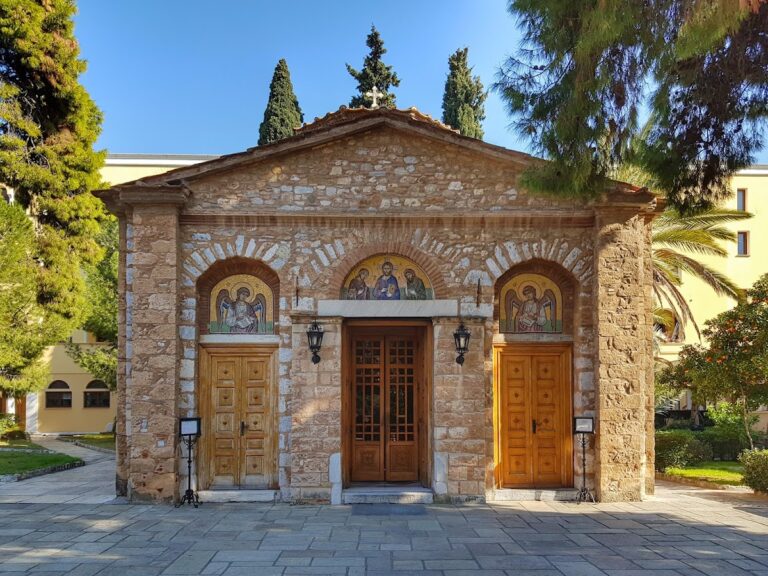
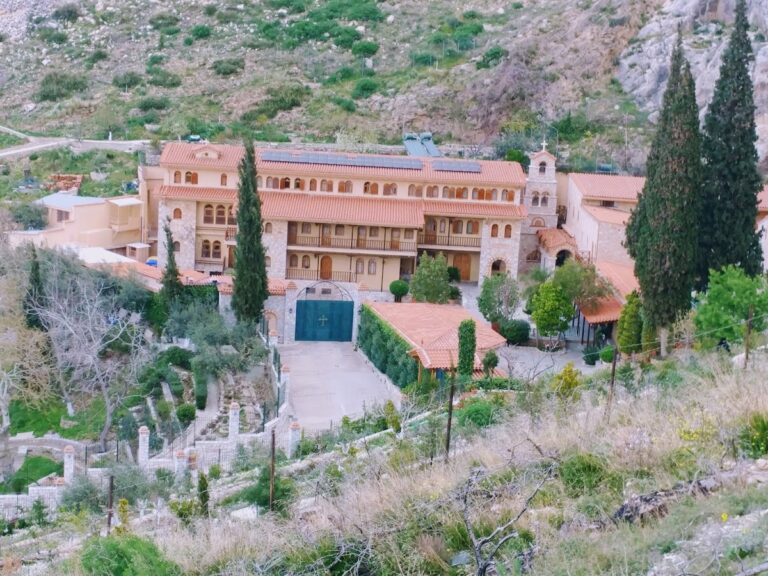
Moni Theologou is a medieval church in Athens, Greece, built during the thirteenth or fourteenth century in a domed cross-in-square form. It stands in the Kareas area on Mount Hymettus and formed part of a monastery whose origins and founder remain uncertain.
Origins and Patmos connections
The monastery’s name has been associated, following the interpretation of the Greek art historian Manolis Chatzidakis, with the Monastery of Saint John the Theologian on Patmos. That monastery was founded by Christodoulos Latrinos, an Orthodox monk who died in 1093. Its main architectural model was the Church of Saint John the Forerunner, or John the Baptist, “in Trullo” in Constantinople. Through dependent monastic establishments, the Patmos monastery’s influence spread during the twelfth century.
Moni Theologou’s precise foundation date and founder are not known. Later information about the monastery is preserved in documents from the archive of Petraki Monastery, which eventually acquired its lands.
Ottoman-period records and transfer of land
In 1702, the head of Petraki Monastery, known as a hegumen, paid six grosia to the voevoda of Athens. A voevoda was a provincial military or administrative official under Ottoman rule. The following year, a document states that the Ottoman official responsible for Athens received 600 aspra as the monastery’s tithe from Gennadios, the hieromonk and hegumen of Moni Theologou. A hieromonk was a monk ordained as a priest, while the aspra was a small Ottoman silver coin and the grosion a larger monetary unit.
Three Ottoman documents from 1722, consisting of one land deed and two legal deeds, record the sale of Moni Theologou’s lands on Mount Hymettus to Petraki Monastery. These records trace the monastery’s property and its eventual transfer during the Ottoman period. In modern Greece, the site is recognized as an archaeological site and a protected listed building.
Remains
The domed church
Moni Theologou survives as a domed cross-in-square church. In this plan, the arms of a cross are enclosed within a roughly square building, while a central dome rises above the crossing. The dome rests on four columns, whose capitals follow the Corinthian style and feature the classical acanthus-leaf form.
A narthex, or entrance hall adjoining the main body of the church, was added later. This addition distinguishes the entrance area from the original central church structure and reflects the building’s alteration after its initial construction.