The Lyceum: Aristotle’s Philosophical School in Athens
Site at a Glance
- Popularity
- Very High
- Country
- Greece
- Primary era
- Classical
- Eras represented
- Iron Age, Classical
- Civilizations
- Ancient Greek
- Site type
- Civic
- Remains
- University
On this page9 sections
History
The Lyceum was a sanctuary and philosophical school in Athens, Greece, first dedicated to Apollo Lyceus, an epithet of the Greek god Apollo. Aristotle established his formal school there around 335 BC, making the precinct a centre of philosophical teaching and research. Its name reflects its original religious association, while its history also encompassed civic activity, military training, exercise, and learning.
A sanctuary and public precinct
Before Aristotle founded his school, the Lyceum was used for philosophical debate. Socrates, Protagoras, and Prodicus of Ceos were associated with teaching and discussion there. Rhapsodes, performers who recited poetry, also spoke at the precinct, and Isocrates taught rhetoric there in the fourth century BC.
The grounds served public and military purposes as well. Athenians held Assembly meetings there before the Pnyx became the city’s official meeting place in the fifth century BC. The precinct hosted military training, exercises, and religious rites conducted by different groups. Xenophon describes Athenian troops gathering at the Lyceum during a Spartan invasion from the direction of Dekeleia.
Aristotle’s school
Aristotle founded his school at the Lyceum around 335 BC, after returning from Asia while Athens was under Macedonian rule. He had previously tutored Alexander of Macedon. Aristotle taught and lectured at the site, and the school became associated with instruction conducted while walking. Its teaching served both advanced students and broader audiences, with talks on subjects including rhetoric and dialectic.
Students worked together on research and took turns administering the school, with a new student administrator chosen every ten days. Their inquiries ranged across natural history, biology, cosmology, philosophy, rhetoric, and politics. They studied plants and animals through close observation and dissection, and investigated archives and political records. One collection of studies covered 158 cities and peoples; other work treated poets, dramatic festivals, Homeric questions, constitutions, mathematics, astronomy, medicine, and the histories of philosophy and science.
Alexander sent plant and animal specimens to support Aristotle’s investigations during his military campaigns. These contributions are credited with helping the school develop its work in zoology and botany, as well as a zoo and botanical garden. The Lyceum’s combination of a sanctuary of the Muses, deities associated with the arts and learning, and a library also influenced later institutions. Its intellectual influence spread across the Greek-speaking world in the century after Aristotle.
Theophrastus and the later school
Aristotle left Athens in 322 BC amid renewed opposition to Macedonian rule and entrusted the Lyceum to Theophrastus, his successor. Theophrastus led the school until his death in 286 BC and continued its religious communal life, which included regular meetings and monthly banquets devoted to the Muses. Aristotle had established rules for shared meals and drinking at the school’s ceremonies. Theophrastus inherited land and buildings associated with the Lyceum from Demetrius of Phalerum, and in 315 BC acquired land near the main gymnasium, along with buildings for a library and work space. He also left land to friends so that philosophical teaching could continue.
Under Aristotle’s successors, the school continued medical and anatomical teaching, including through illustrated medical treatises. Its medical work was connected with the traditions of Cnidus and Alexandria, two ancient centres of medical learning, and with the physician Diocles of Carystus. Theophrastus advanced botanical study, while Eudemus and Meno were associated with histories of mathematics and medicine. The school closed for a year in 306 BC when foreign philosophers were required to leave Athens.
Library, decline, and later phases
Theophrastus’s will assigned the library to Neleus, while the school’s elders selected Strato as its next head. In the mid-third century BC, Neleus took the collection to Skepsis in Mysia. It contained works by Aristotle and Theophrastus, student research, and histories of philosophy. Some books appear to have been sold to the Library of Alexandria, while others were apparently hidden by Neleus’s family. A tenth-century catalogue lists works by both Aristotle and Theophrastus.
The Lyceum declined from around 300 BC and had largely disintegrated sometime after 225 BC, following the death of Lyco of Troas, who left the school to his colleagues rather than appointing one successor. The library was apparently bought back from Neleus’s heirs during the first century BC. When the Roman general Sulla attacked Athens in 86 BC, the Lyceum was destroyed and its books were taken to Rome; about one-fifth of Aristotle’s works were lost during the transfer.
The succession of school leaders is traced into the first century BC. Andronicus of Rhodes, associated with the Lyceum around 65–47 BC, is credited with arranging and editing Aristotle’s surviving works for use at the school, probably between 73 and 20 BC. The school’s activities are dated as ending in 47 BC. A refoundation in the first century AD has been proposed; the school is said to have flourished again in the second century and to have ended when the Heruli and Goths sacked Athens in AD 267.
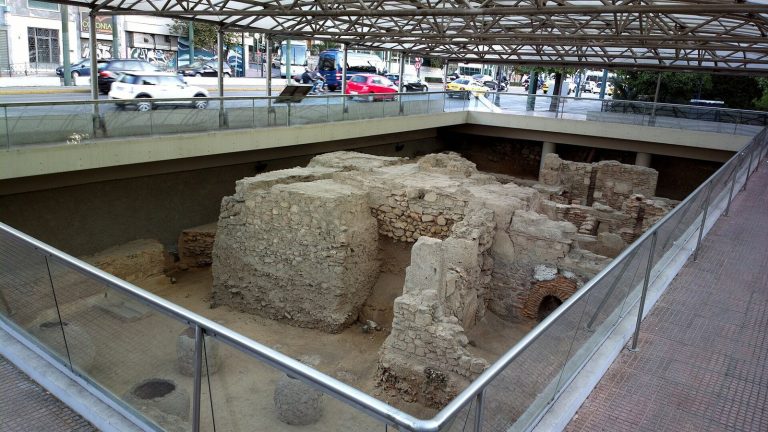
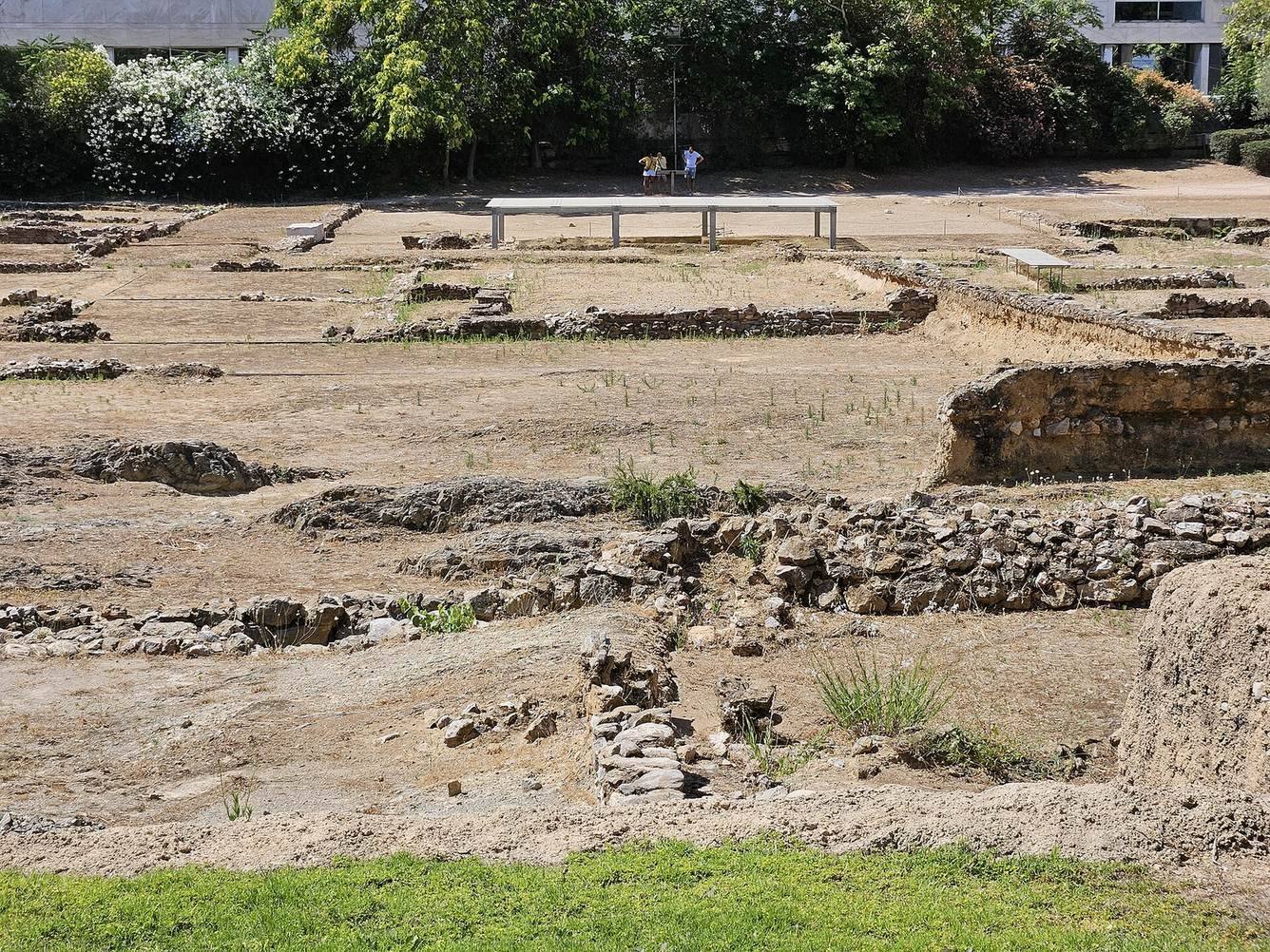
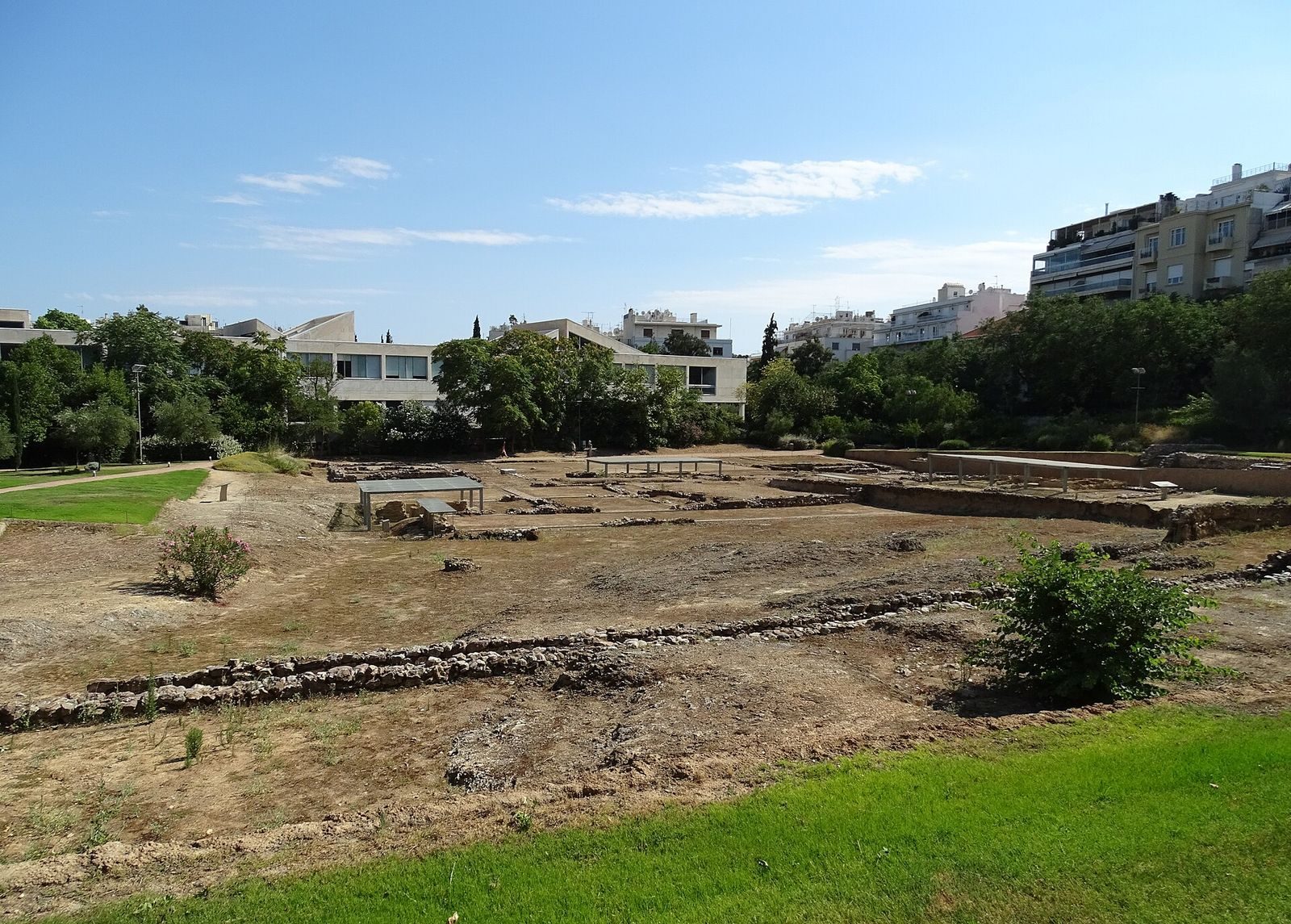
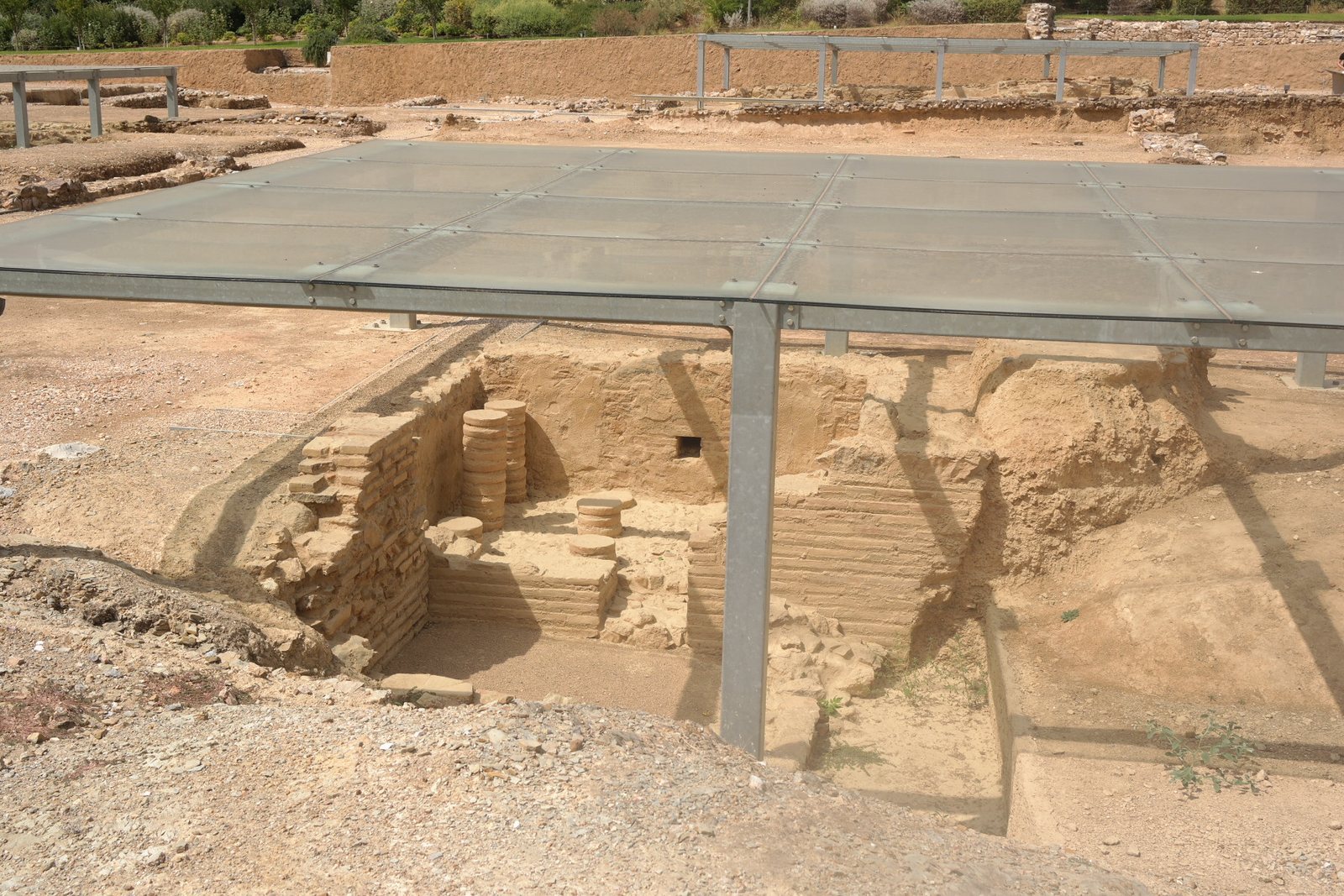
Excavations in 1996, undertaken while ground was being cleared for a modern art museum, uncovered remains identified with the Lyceum, including its temple precinct, gymnasium, and wrestling area.
Remains
The ancient Lyceum occupied a broad precinct east of Athens’s city wall, with a sanctuary, gymnasium, wrestling ground, and landscaped grounds among its principal features. Its remains are in a park near the junction of Rigillis and Vasilissis Sofias Streets, close to the Athens War Museum, the National Conservatory, and the Byzantine Museum.
Excavated buildings
Excavated building foundations rest on bedrock and are identified with the Lyceum. The precinct included a gymnasium and a wrestling ground used for athletic practice, religious activity, and philosophical discussion. Plato set his Euthydemus in the wrestling area. The gymnasium’s initial construction has been attributed either to Pisistratus in the sixth century BC or to Pericles in the fifth century BC; it was repaired in the 330s BC. A changing room belonged either to the gymnasium or to the wrestling ground.
School grounds and facilities
The school grounds included a large garden, a tree-lined promenade, and several dwellings. Its facilities for teaching and research comprised a sanctuary of the Muses with statues and an altar, a library, and lecture rooms. Teaching materials included boards, anatomical tables, geographical maps, models of the celestial globe, and star charts.
Landscape and water features
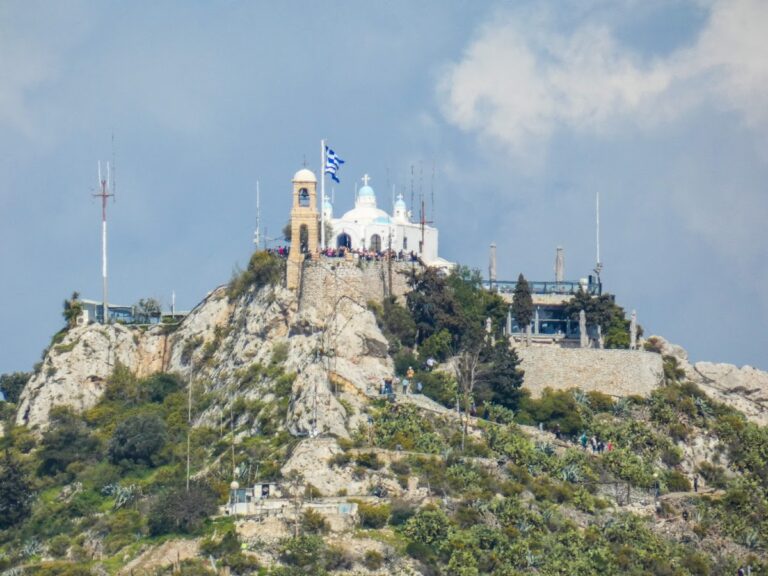
The precinct lay in open, wooded country between the Ilissus River to the south and Lycabettus Hill to the north; the Eridanos was also associated with the area. Its wider extent is thought to have reached north towards modern Kolonaki Square and south to the Ilissus, taking in ground now occupied by the National Garden and reaching near modern Amalias Avenue at its western edge. Roads approached from within and beyond Athens, while paths and promenades ran east–west through the area of modern Syntagma Square and the Parliament building. The number of buildings in the surrounding area grew between the sixth century BC and the sixth century AD.
A springhouse called Panops is associated with the Lyceum. In Plato’s Lysis, Socrates walks from the Academy to meet friends near a spring, and Strabo places Panops near the Lyceum. The Ilissus was described as flowing past the precinct.