Monastery of Panagia of Goumenissa: An Orthodox Monastic and Pilgrimage Centre in Greece


Site at a Glance
- Rating
- 4.8
- Popularity
- Low
- Country
- Greece
- Primary era
- Early Modern
- External website
- Open
- Eras represented
- Early Modern, Modern
- Civilizations
- Ottoman
- Site type
- Religious
- Remains
- Monastery
On this page10 sections
History
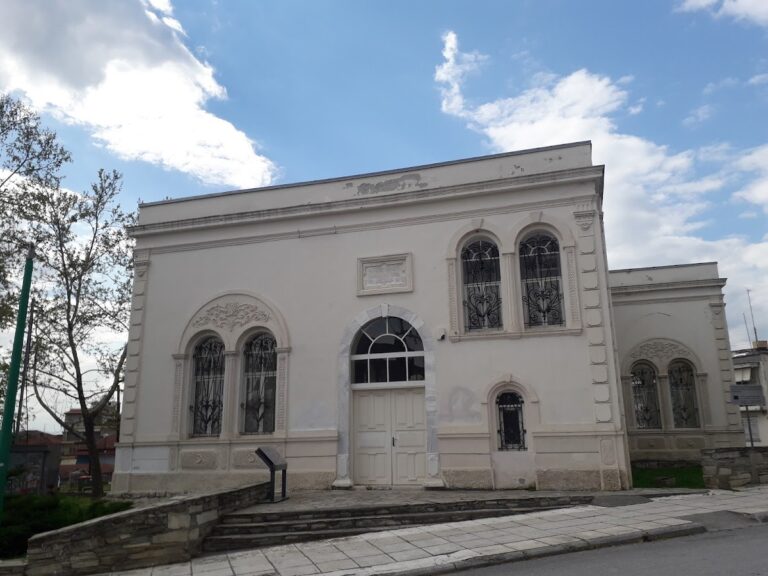
The Monastery of Panagia of Goumenissa is an Orthodox monastery in Greece, associated with the settlement that grew around it. Its present principal church, or katholikon, belongs to the late seventeenth and early nineteenth centuries and follows the traditional basilica form. The monastery became a major religious and national centre under Ottoman rule and later served as the seat associated with the Metropolis of Goumenissa, Axioupolis and Polykastron, established in 1991.
Fourteenth-century foundation and Iviron
The monastery is traditionally identified with a katholikon granted in 1346 by an imperial chrysobull, a Byzantine charter bearing the emperor’s golden seal. Emperor John V Palaiologos granted it to Iviron, one of the historic monasteries of Mount Athos, and it became a metochion, or monastery-owned dependency, of that foundation. It remained under Iviron’s administration until 1931.
A foundation tradition places the beginning of the community on the slopes of Mount Paiko during the fourteenth century. Monks there venerated an icon of the Virgin Mary, known in Greek Orthodox devotion as Panagia, meaning “All-Holy.” According to the tradition, the icon repeatedly moved to the site of present-day Goumenissa. Local shepherds and farmers then built a church at that place, which later became the monastery’s katholikon.
Ottoman-period importance and rebuilding
From 1430 to 1912, when the region was under Ottoman rule, the monastery became an important centre of religious and national life. Donations brought it substantial landed property. It was also attacked and looted by bands of Turkish and Turco-Albanian brigands. During one such episode, the abbot was hanged from a plane tree in the monastery forest. The settlement’s name, Goumenissa, is traditionally linked to the title of this martyred abbot.
The present church is not the original building. One account places its fabric in the late seventeenth century and describes major alterations made in 1802 under the appearance of repairs, at a time when Ottoman restrictions limited the construction of Christian churches. Another architectural account identifies the church as having been erected in 1802 as a cemetery church at the old cemetery in the southwestern part of the town. In 1802, it was enlarged to the south and west with a vaulted porch and an upper gallery. The sanctuary was renovated in 1837, and the building was extended westward in the middle of the nineteenth century, when the southern portico was added.
From local parish church to active monastery
The monastery continued to support Goumenissa’s religious life after the larger Church of Saint George was built in 1864. Following the arrival of thousands of Greek refugees from Asia Minor, Pontus, and Eastern Rumelia in 1924, Iviron transferred the Panagia dependency and its movable and immovable property to the state and the local church in 1931. The transfer supported refugee resettlement. Sacred objects and relics were returned to Iviron, while the monastery cells were converted into housing for refugees.
In 1951, a royal decree merged the parishes of Panagia and Saint George and re-established the Monastery of Panagia of Goumenissa. A shortage of monks later led to its conversion into a shrine, although it formally kept its monastic status. In 1991, Metropolitan Demetrios Bekiaris established an active monastic brotherhood there, ending the shrine-only arrangement. Since then, the monastery has operated as a male coenobitic community, in which monks share worship, work, and material resources, and the church has served as the katholikon of the re-established monastery.
The church was declared a cultural monument in 1983 and underwent another repair campaign in 1999. The venerated icon of Panagia of Goumenissa remains central to the monastery’s religious life. It is honoured on the Feast of the Presentation of Christ on 2 February, the first Sunday of March, the third day of Easter, and during the celebrations for the Dormition and Translation of the Virgin Mary from 15 to 17 August. The Dormition commemorates the Virgin Mary’s death, while the Translation refers to her being taken into heavenly glory.
Remains
Monastery complex
The complex includes the old Church of Panagia, the newer chapel of the Holy Girdle, a renovated guesthouse, and accommodation for the monastic brotherhood. The church forms its principal devotional space and contains the icon that gives the monastery its enduring religious importance. The complex is also associated with a church dedicated to a group of saints that includes Thecla, Menodora, Metrodora, Nymphodora, Eustathius, Paraskevi, George, Marina, Charalambos, the Unmercenaries, Tryphon, Eleutherius, Barbara, and the Neomartyrs Raphael, Nicholas, and Irene.
Church structure and additions
Plan and entrances
The katholikon is a three-aisled, timber-roofed basilica. Its internal dimensions are given as 16.1 by 23.8 metres, while another description gives the building as 27 by 15 metres. Eight pairs of columns divide the aisles, with the last pair standing behind the iconostasis. The main entrance is on the south side and a secondary entrance is on the west. Southern and western additions created a vaulted porch supported by piers and arches, together with an upper gallery whose plan is L-shaped.
Sanctuary and construction
The sanctuary has a polygonal apse, with the diakonikon and prothesis niches contained within the eastern wall rather than projecting beyond it. The apse is semicircular inside and octagonal outside. Eight engaged half-columns with capitals articulate its exterior. The church is built mainly from river stones, while the apse is made entirely of dressed stone blocks. Two inscriptions set into the outside of the apse record the dates 15 August 1802 and 1 March 1821.
Interior decoration and devotional objects
Frescoes cover the north, south, and west interior walls. They are poorly preserved because of age and destructive interventions, including damage attributed to Bulgarian schismatics. The carved wooden furnishings include the iconostasis, the ciborium over the altar, and the proskynetaria, stands or shrines used for the public veneration of icons. The iconostasis includes scenes from the Old and New Testaments.
The principal devotional object is the miraculous icon of Panagia of Goumenissa, described as a work of the thirteenth century. It is placed in a proskynetarion and remains the focus of worship in the church. The survival of the icon, the later basilica, its inscriptions, and its carved and painted furnishings together express the successive religious phases of the monastery from its association with Iviron to its modern life as an active monastic community.
Nearby sites