Sts. Peter and Paul Church, Chalkidonas: A Nineteenth-Century Cemetery Church in Greece


Site at a Glance
- Rating
- 4.4
- Popularity
- Low
- Country
- Greece
- Primary era
- Modern
- Eras represented
- Medieval, Modern
- Civilizations
- Byzantine, Ottoman
- Site type
- Religious
- Remains
- Church
On this page6 sections
History
Nineteenth-Century Orthodox Church
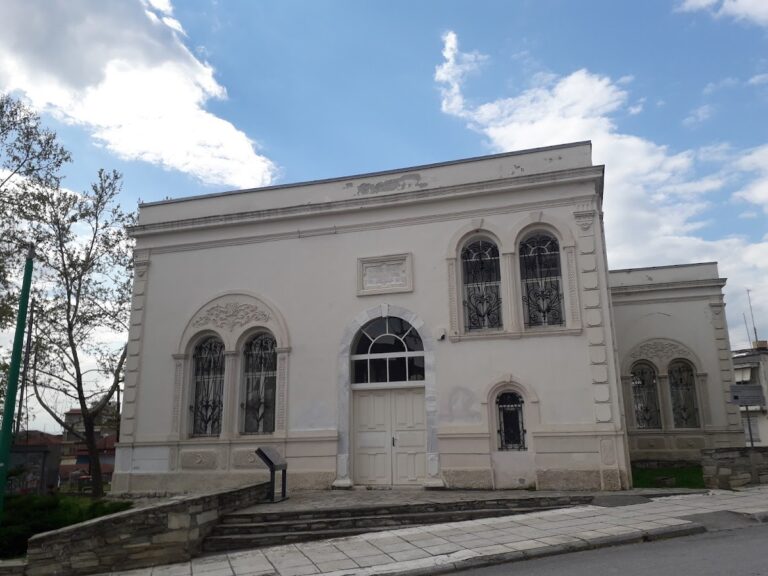
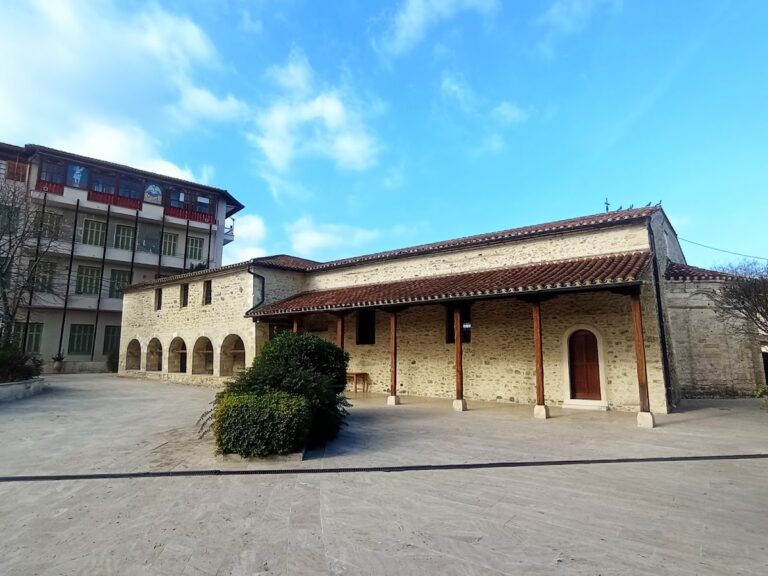
Sts. Peter and Paul Church is a nineteenth-century Orthodox cemetery church in Chalkidonas, Greece, also known as Ilidzievo or New Chalkidona in the Thessaloniki area. It remains an active place of worship and belongs to the Ecumenical Patriarchate, one of the principal patriarchates of Eastern Orthodox Christianity. Ecclesiastically, it is associated with the Diocese of Vodena, Pella and Moglena and the Kufalovo deanery, while the cemetery is also identified with the Diocese of Edessa, Pella and Almopia.
The Medieval Cemetery and Later Protection
A medieval Bogomil cemetery was discovered beside the church and dated to the tenth century. Bogomilism was a medieval Christian movement whose communities spread through the Balkans and were regarded as heretical by established ecclesiastical authorities. These communities flourished in the region from the tenth to the fifteenth century.
In 1988, the church and cemetery were declared protected cultural monuments. The cemetery also received protection as an archaeological monument and a national historical monument. In 2011, the Vinozhito political party reported that vandals had removed a stone from the church wall because it carried a Slavic inscription.
Remains
Church Structure
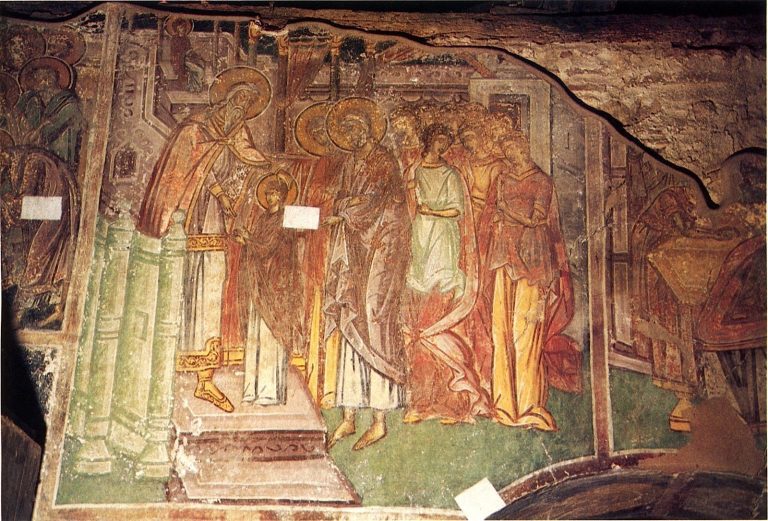
The church is a three-nave basilica, meaning that rows of arches or supports divide its interior into a central nave and two side aisles. A bell tower forms part of the building, which continues to function as a cemetery church. Frescoes decorate the arches separating the three naves.
Medieval Cemetery Monuments
The cemetery beside the church contains fourteen upright stone monuments, or stelae, and thirty-nine equal-armed stone crosses whose arms are approximately the same length. The monuments carry carved symbols and inscriptions. The largest stele rises to 2 metres and is more than one span thick, while other large stone crosses also reach heights of up to 2 metres. Their forms and decoration have been compared with monuments in Bulgaria, Bosnia, southern France, the Iberian Peninsula, Germany, and England.