Mittelburg: An Inhabited Medieval Hilltop Castle in Germany


Site at a Glance
- Rating
- 4.4
- Popularity
- Low
- Country
- Germany
- Primary era
- Early Modern
- External website
- Open
- Eras represented
- Medieval, Early Modern, Modern
- Civilizations
- Holy Roman Empire
- Site type
- Domestic
- Remains
- Castle
On this page11 sections
History
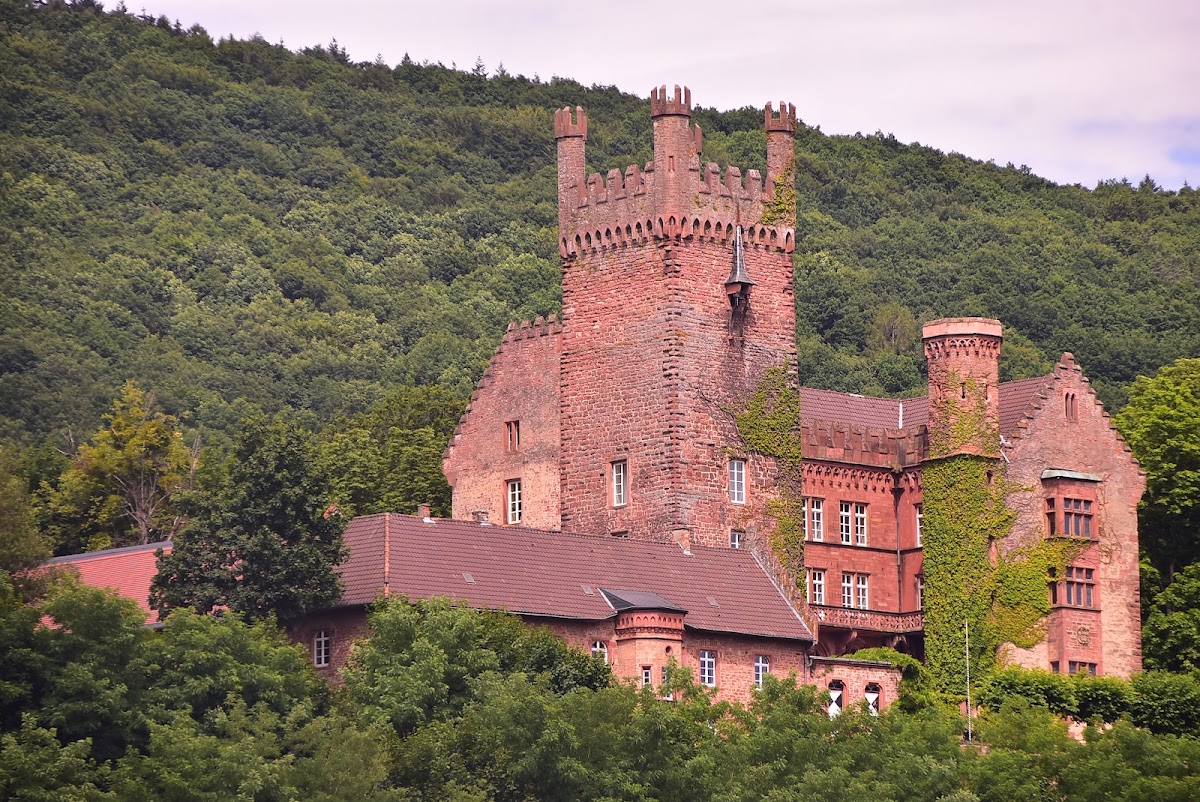
Mittelburg is an inhabited medieval hilltop castle in Neckarsteinach, Germany, built by the Steinach family around 1165. Standing at 160 metres above sea level, it is the second oldest of the four castles known as Vorderburg, Mittelburg, Hinterburg, and Schwalbennest. The castle began as a divided holding, with one half held as a fief from the Bishopric of Worms and the other held as hereditary property.
Foundation and divided ownership
Conrad I von Steinach, the youngest son of Bligger II von Steinach, probably built Mittelburg around 1165. The distinction between its two forms of ownership shaped the castle’s later history. A fief was property held from a superior lord in return for defined obligations, while hereditary property was held independently of feudal tenure.
After the death of Conrad’s last descendant, Boppo von Steinach, the Worms half passed in 1325 to his son-in-law Luzzo von Helmstatt. Conrad von Erbach, another son-in-law, received the hereditary half and immediately sold it to Matthias, Archbishop of Mainz. Matthias then made a castle peace with Luzzo and appointed Conrad von Helmstatt as administrator of the Mainz share.
Late medieval changes of possession
The Worms half was pledged several times before passing in 1382 to Luzzo’s son, Boppo von Helmstatt, who thereby held the entire castle. In 1398, Boppo sold the Worms half to Hans von Hirschhorn. When Boppo died around 1400 without male heirs, the Mainz portion passed to Reinhard von Neipperg, who pledged it in 1442 to Weiprecht III von Helmstatt, a previous owner of the Hinterburg.
After Weiprecht’s death in 1478, his nephew Martin, who held the Mainz half, disputed ownership of several associated properties with Hans von Hirschhorn, holder of the Worms half. In 1483, Otto von Hirschhorn and his nephews received the Worms portion as a feudal grant.
The Landschad period
In 1497, Blicker XIV Landschad von Steinach, lord of the Vorderburg, held one quarter of Mittelburg. His heirs sold this share to Heinrich VII von Handschuhsheim, who already owned the Hinterburg. Following a lengthy lawsuit in the 1540s, the von Handschuhsheim family was forced to leave the Hinterburg. In January 1550, they sold their share of Mittelburg to the brothers Hans, Hans Pleikard, and Christof Landschad von Steinach.
During the sixteenth century, the Landschad family regained the whole castle. Christof I Landschad von Steinach was its sole owner in 1575, and Mittelburg remained in the family until the death of his grandson Friedrich in 1653. Friedrich was the last male member of the Landschad line.
Reunification and later ownership
After the Landschad line ended, the ecclesiastical territories of Worms and Speyer reclaimed the former fiefs, which included the Hinterburg, Vorderburg, and half of Mittelburg. These church-held territorial powers briefly administered the properties directly before granting them in 1657 to Wolf-Heinrich von Metternich zu Burscheid. That same year, he acquired the Landschad hereditary property from Eva Elisabeth Landschad and the remaining half of Mittelburg from the Barons von Venningen. By the last third of the seventeenth century, all four castles were again under one owner.
When the Metternich line became extinct in 1753, Worms and Speyer reclaimed both the former fiefs and the hereditary property. In 1803, secularization and mediatization reshaped the political ownership of many church territories in the German states. The entire property passed to the Landgraviate of Hesse-Darmstadt, a territory ruled by a landgrave. A settlement with Baron von Dorth, heir to the hereditary property, gave him Mittelburg as an official residence and also transferred the Hinterburg ruin to him.
Baron von Dorth later acquired the Vorderburg from Dr Wegerich, who had bought it from the state. The von Dorth family relinquished the Hinterburg ruin in 1910, returning it to state ownership. After the death of the last Baron von Dorth, Ludwig, in 1925, Mittelburg and Vorderburg passed to Boemund Baron von Warsberg-Dorth, the son of his deceased adopted son Alexander. Johann-Jakob Baron von Warsberg is the current owner. Mittelburg remains inhabited and is not open to visitors.
From medieval castle to palace
The original castle was enlarged over time and transformed into a Renaissance palace. The Renaissance was a European period that revived classical architectural forms. The remodeling followed the model of Heidelberg Castle and introduced features including a columned gallery and an arched hall. Around 1820 to 1830, the building was remodeled again in the Neo-Gothic style, a nineteenth-century revival of medieval Gothic architecture. The extent of any involvement by Georg Moller and Ignaz Opfermann remains uncertain.
Remains
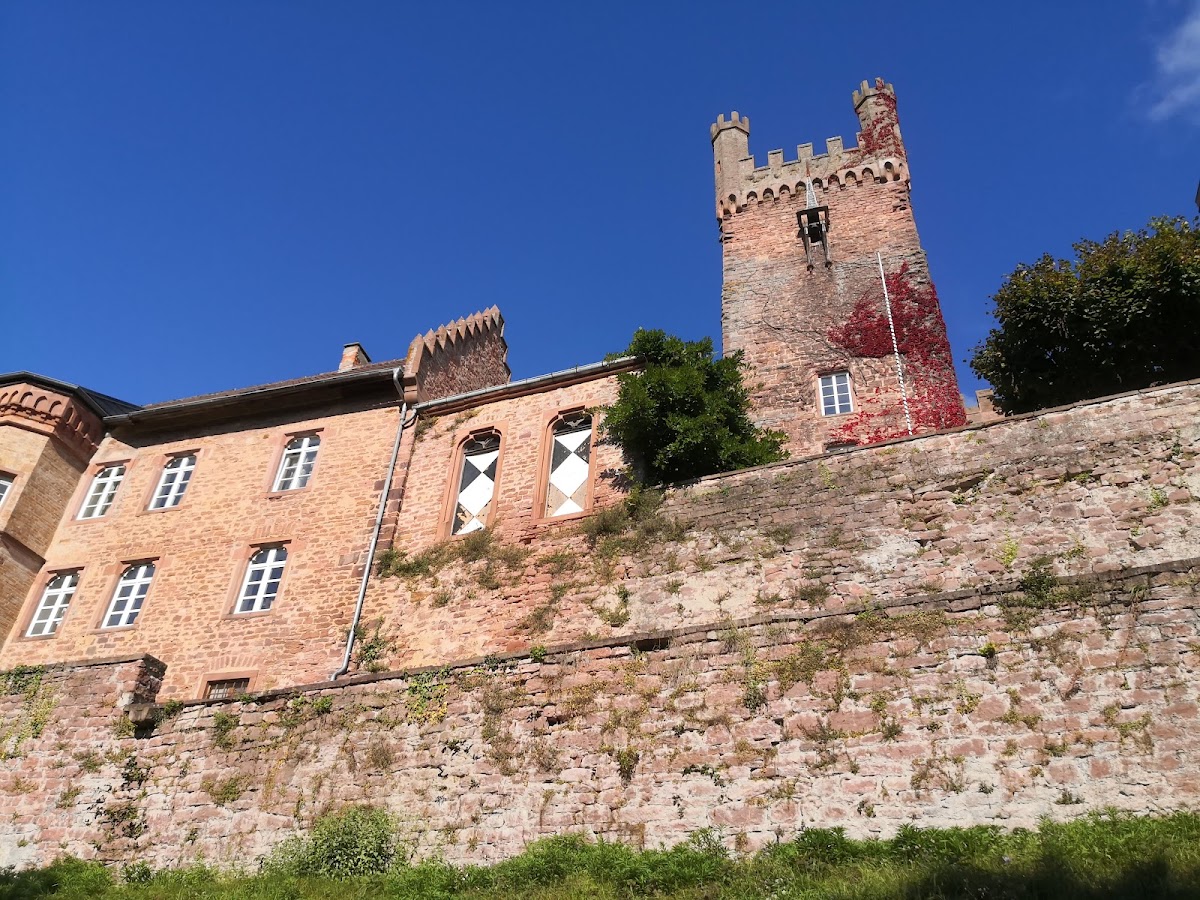
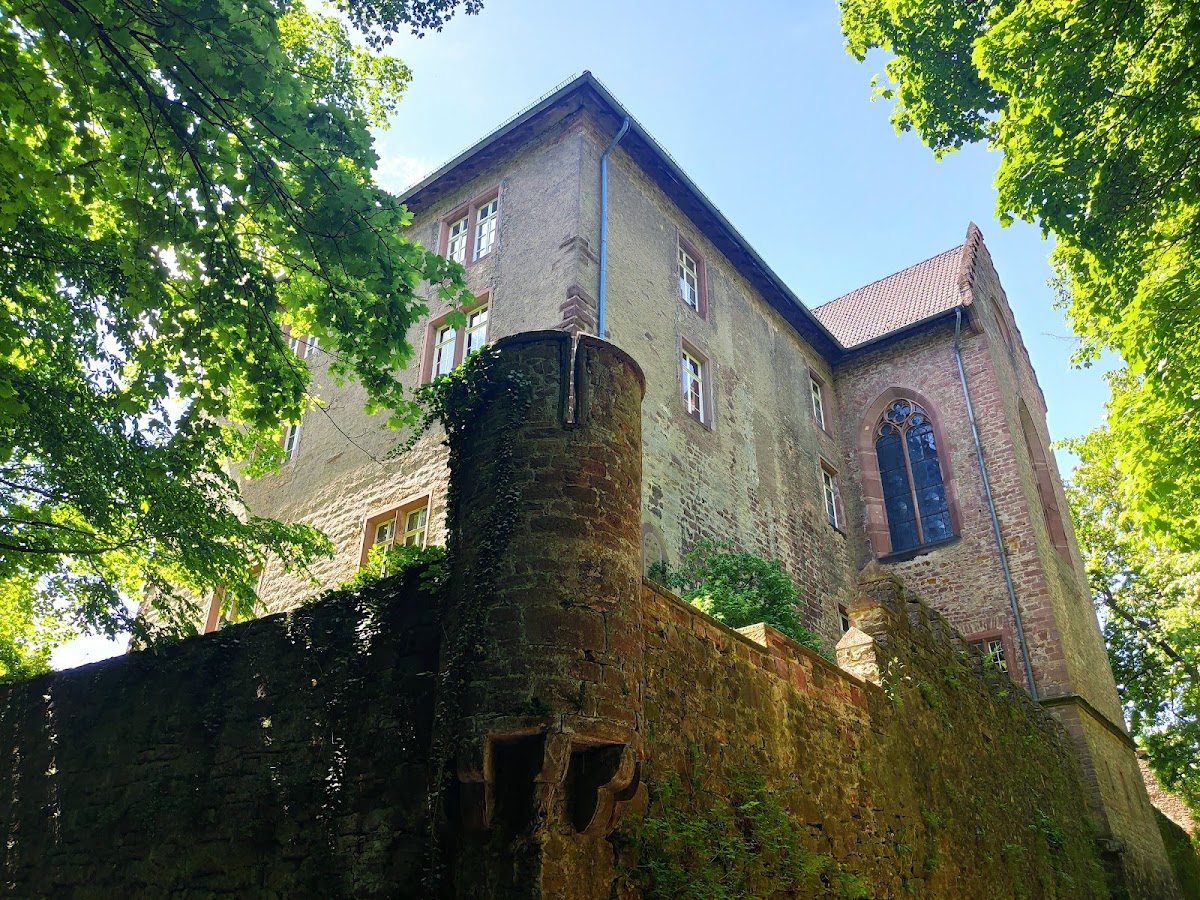
Mittelburg occupies a hilltop site near Neckarsteinach at 160 metres above sea level. Substantial parts of the castle survive, although its present form reflects successive medieval, Renaissance, and Neo-Gothic changes. The initial complex was arranged around a powerful keep and a small inner castle, while later rebuilding altered both its defensive enclosure and residential character.
Medieval core and Renaissance palace
Keep and inner castle
The first complex consisted of a keep, the principal fortified tower of a castle, together with a small inner castle. These elements formed the core of the medieval hilltop settlement and remain part of the building’s preserved structure.
Renaissance additions
The medieval castle was remodeled as a Renaissance palace on the model of Heidelberg Castle. A columned gallery and an arched hall were added during this transformation. Much of the earlier curtain wall, the defensive wall enclosing the complex, disappeared, and the drawbridge entrance on the eastern side was also removed. A drawbridge was a movable bridge used to control access across an entrance.
Neo-Gothic remodeling and surviving setting
A further remodeling around 1820 to 1830 gave Mittelburg its Neo-Gothic phase. This nineteenth-century work followed the earlier conversion from fortress to palace and contributes to the architectural character of the inhabited structure that survives today. A population of wall lizards occurs on the castle grounds.