Dolmen des Issières: A Final Neolithic Tomb in France
Site at a Glance
- Popularity
- Very Low
- Country
- France
- Primary era
- Stone Age
- Eras represented
- Stone Age
- Civilizations
- Unclassified
- Site type
- Burial
- Remains
- Tomb
On this page10 sections
History
The dolmen des Issières is a Final Neolithic megalithic tomb in the Bois des Issières near Brevilliers, France. It is associated with the Horgen culture, a central European Neolithic tradition influenced by the tombs of the Seine-Oise-Marne region. The dolmen is one of 18 megalithic monuments identified in the area. It is also known as Pierre des Gaulois and Dolmen de Brévilliers.
Early records and investigation
Prehistorian H. L’Épée first mentioned the dolmen in 1885 and noted another monument about 100 metres away. The owner of the field later destroyed that second monument. In 1924, residents of nearby Héricourt excavated the dolmen clandestinely. L. Meyer, curator of the Belfort museum, produced an imprecise account of it in 1925.
A methodical archaeological excavation took place in 1968. In 1979, the dolmen received French Historic Monument designation.
Remains
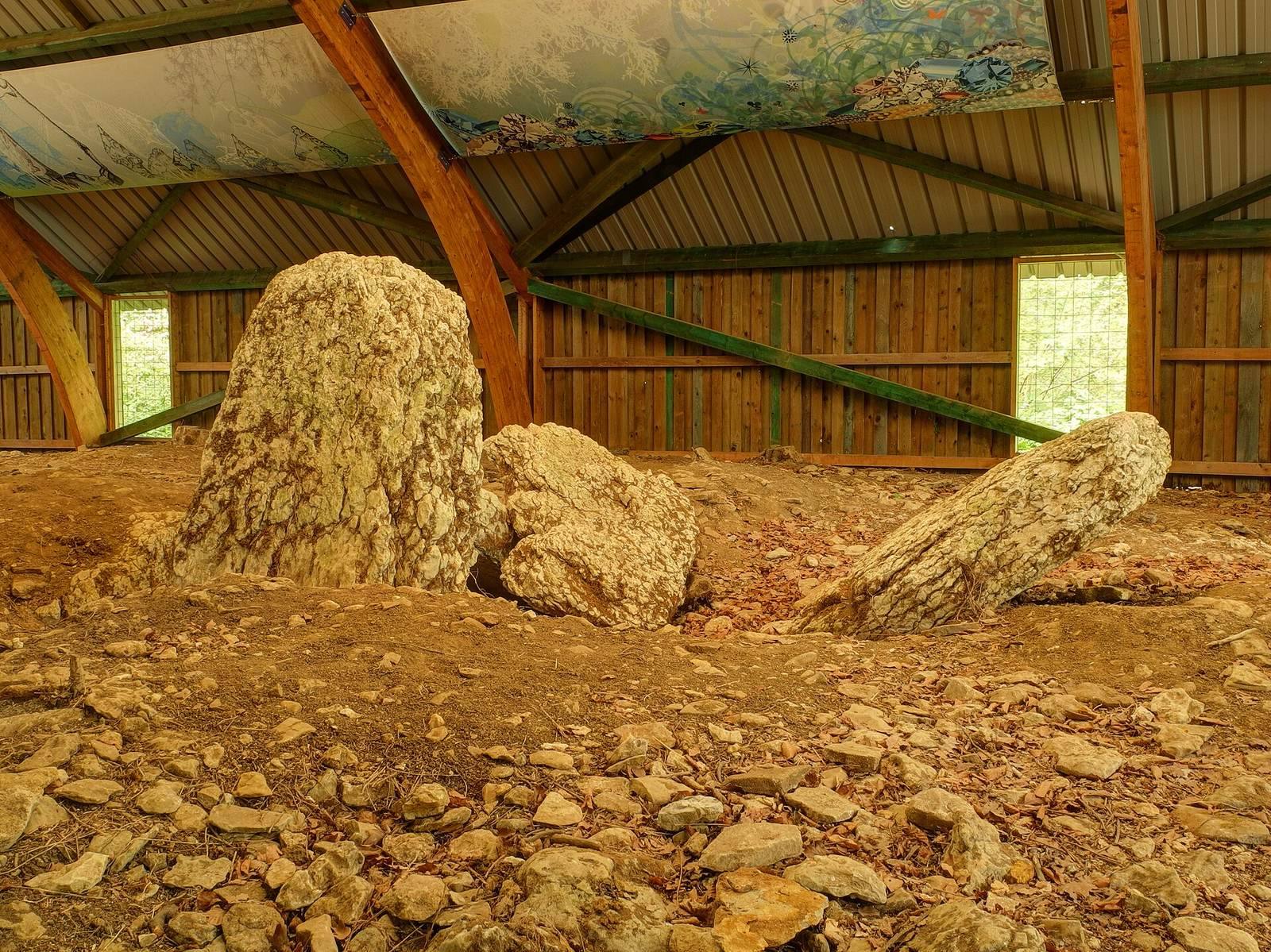
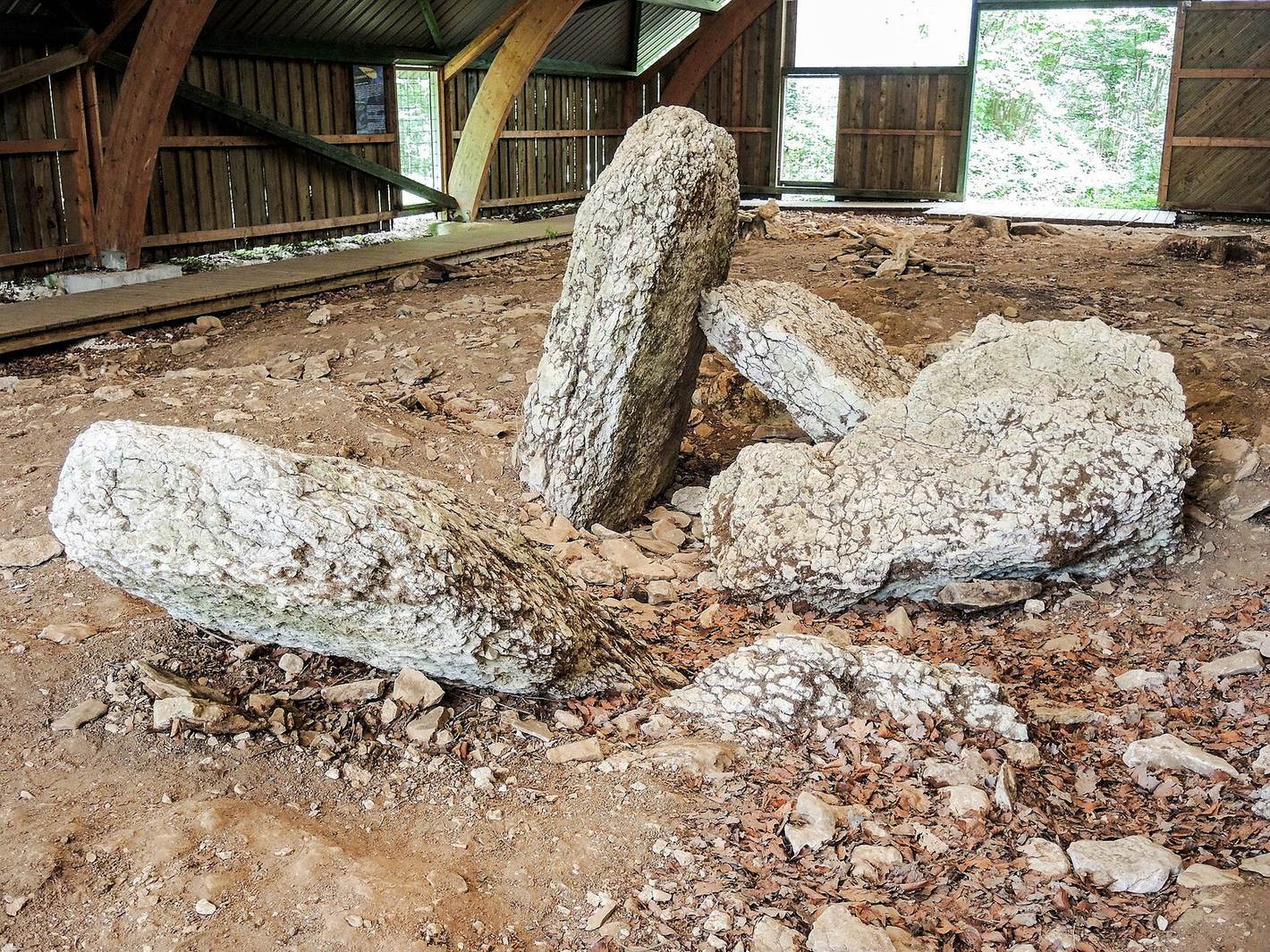
Set on the crest of a low rise, the dolmen is oriented east and measures about 5 metres long by 2 metres wide. Its limestone burial chamber is flanked by paired projecting slabs that define the sides of a forecourt. The monument is now housed in a hall.
Chamber and entrance
Chamber construction
Four principal upright stones form a nearly square burial chamber. Its plan is about 2 metres to a side, while the interior measures 1.4 metres long and about 0.9 metres high. The stones were placed in foundation pits cut 0.40 to 0.60 metres into the underlying limestone, then secured with clay and limestone pieces. The principal slabs are grey limestone of a kind that occurs locally as exposed pavement.
Slabs and access
The four principal slabs differ in form and condition. Slab I is trapezoidal, with a rounded top, and is badly frost-damaged. Slab II is the largest and has a natural groove, 0.30 to 0.40 metres wide, extending down its full height. Slab III rests on Slab I at the top; it is broken in two and stood at least 2.20 metres high, though frost damage has affected its top. Slab IV remains upright and has a regular top. Antenna slab V lies flat on the ground.
Four of the seven stones included in the reconstructed arrangement survive, displaced from their original positions. The reconstruction shows a covering slab and access through a “soul hole,” an opening understood as an entrance to a megalithic tomb. The original form is uncertain following the early twentieth-century digging. A southeast opening has been interpreted as the position of a slab or a short wall.
Pavement and mound
A carefully laid stone pavement surrounded the chamber. Large slabs made up its lower layer, covered by a second layer of smaller pieces. Limestone slabs associated with a paved passage are of poorer quality than the chamber stones and may have been added later.
The dolmen probably first stood within a circular mound. A trapezoidal mound was later built over it, about 20 metres long, with a front approximately 9 metres wide.
Burials and finds
Human remains
Human bones from the chamber were highly fragmented. Despite disturbance from earlier digging, the long bones appear to have been pushed along the chamber walls. Analysis of 400 teeth suggests a population of at least 25 people older than seven, as well as two children.
Objects from the tomb
The 1968 excavation recovered 14 stone arrowheads, including diamond-shaped forms and types with stems, some barbed. Finds also included a small dagger or retouched flint blade and two pebble hammerstones. Pottery comprised Bell Beaker fragments, from a tradition associated with characteristic beaker-shaped vessels, and coarser grey ware tempered with coarse quartz and crushed calcite. Meyer’s 1925 account described a parietal bone mounted as an ornament. An ochre pellet came from the chamber fill during the 1968 excavation. The recovered assemblage is attributed to the Final Neolithic.