Meteon: An Illyrian Fortified Settlement in Montenegro
Site at a Glance
- Popularity
- Medium
- Country
- Montenegro
- Primary era
- Classical
- Eras represented
- Classical, Medieval
- Civilizations
- Illyrian, Serbian
- Site type
- Military
- Remains
- Fortified Town
On this page9 sections
History
Meteon, also called Medeon and known in Latin as Medione, was an Illyrian fortified settlement above Gornji Medun in present-day Montenegro. Its fortress and later urban settlement are dated to between the fourth and third centuries BCE. The Labeatae, an Illyrian people, held a stronghold here on routes connecting the coast with Dardania, an ancient region in the western Balkans, and Shkodra with Rhizon.
Illyrian stronghold and Roman conflict
The region had come under Greek cultural influence by the sixth century BCE, and Meteon’s later urban growth developed within Greek and Hellenistic traditions. The fortifications are thought to have flourished from the fourth century BCE. The site’s position on important routes made it a strategically valuable stronghold.
Although the settlement may have existed earlier, the Roman historian Livy provides its first known ancient written mention. He describes Meteon as a city of the Labeatae where Illyrian king Gentius and Macedonian king Perseus exchanged hostages. Perseus sought allies against Rome during the conflict between Rome and Macedon.
During the Roman-Illyrian War of 168 BCE, Gentius’s half-brother Karavantius organized resistance from Meteon. After the Illyrian defeat, Gentius, his wife and children were brought to the city before being taken to Rome. The Romans also captured Karavantius.
Medieval restoration and later history
Ancient references to Meteon cease after the middle of the second century BCE. A seventh-century geographical work names a city called Medion beside Burzunom. Burzunom has been proposed as the settlement called Birziminum on the Peutinger Table, which has in turn been identified with present-day Podgorica.
The fortress was restored during the Middle Ages under Serbian rule. Medieval descriptions called it the ‘key to both Zetas’. Zeta was a medieval region and polity in what is now Montenegro. In 1444, the fortress was recorded as a possession of Stjepan Vukčić Kosača, a grand duke of the medieval Bosnian state. The following year, he transferred Upper Zeta and the fortress to Serbian despot Đurađ Branković, a high-ranking ruler in Balkan polities. In 1452, one of Branković’s commanders defended Medun against Stefan I Crnojević, a Zetan lord serving Venice. By 1456, the fortress had passed under Ottoman control.
In the nineteenth century, military leader, political figure and writer Marko Miljanov (1833–1901) lived below the city walls.
Remains
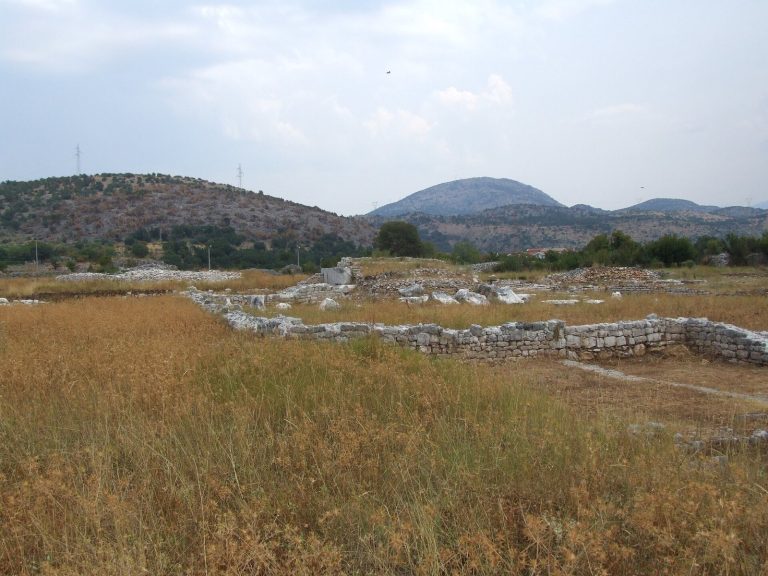
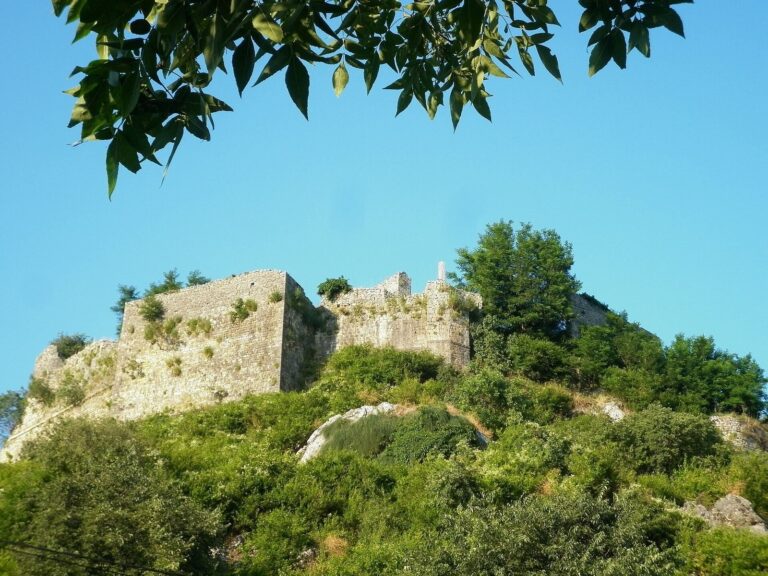
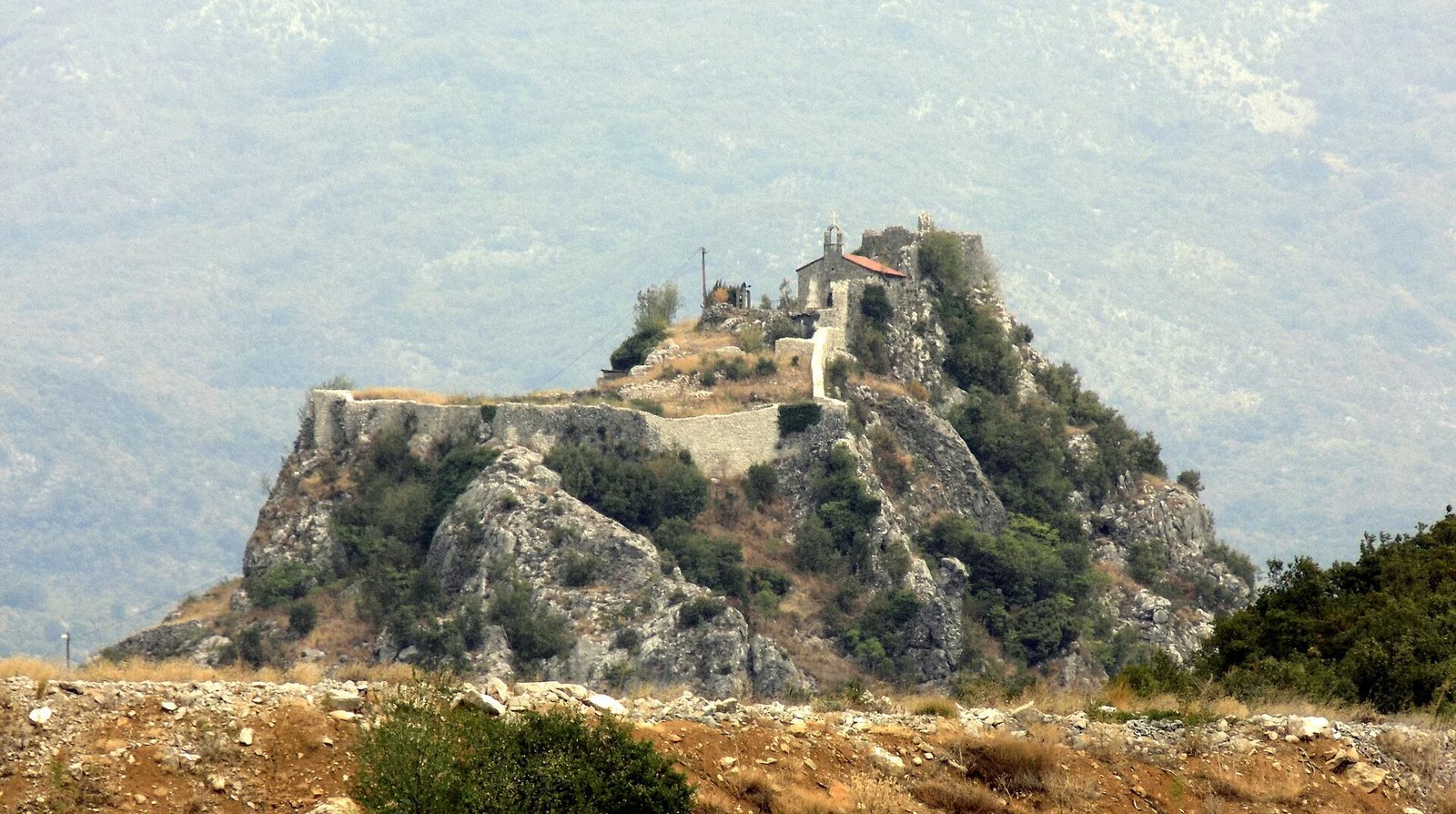
The ruins occupy Ilija Hill above Gornji Medun, in the settlement of Medun about 13 kilometres from Podgorica. The fortified settlement consisted of an acropolis, the defended upper part, and a lower town. Its surviving remains include large stone walls and rock-cut steps.
Walls and settlement defenses
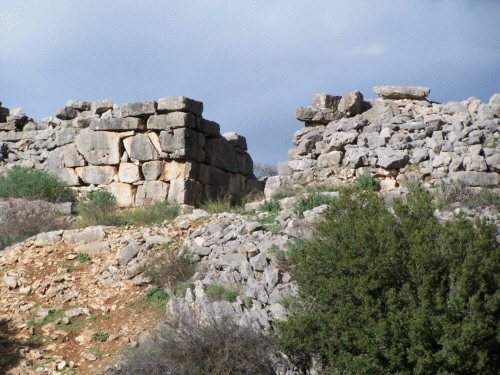
The ancient walls were built from large dressed-stone blocks laid in several courses. They are attributed to Greek builders working for the Illyrians. Foundations of the ancient city wall survive, while the medieval ramparts are generally in poor condition, with broken and collapsed sections and some stretches preserved only as traces. Rock-cut steps on all sides date to the Illyrian period. Parts of the western wall are also Illyrian, with a medieval addition above them; other fortification elements belong to different periods.
Ritual niches and burial places
Niches between the settlement levels
Two niches were excavated between the acropolis and lower town. Each contains a channel, with traces running downward from it. These features have been interpreted as evidence of liquid offerings, possibly connected with underworld deities, ancestors and the dead. They may also relate to a serpent cult, since Illyrian tradition associated the serpent with a mythical ancestor.
Burial grounds
Stone-covered burial mounds lie in woodland north of the city, northeast of the houses of Gornji Medun; similar mounds occur south and southwest of Medun. A larger necropolis north of the city has been partly examined. Its graves were cut directly into the ground and lined with irregular stone blocks. One contained a Greek skyphos, an ancient drinking cup, and a roughly made bottle of fired clay. Burial mounds of the period were also excavated near Donji Medun.
Church and grave on the acropolis
A small church stands on the acropolis, built over ancient fortification remains. Marko Miljanov’s grave lies in front of the church.