Rikyū Hachimangū: A Shinto Shrine and Traditional Origin Site of Iwashimizu Hachimangū


Site at a Glance
- Rating
- 4.2
- Popularity
- Low
- Country
- Japan
- Primary era
- Early Modern
- External website
- Open
- Eras represented
- Early Modern
- Civilizations
- Tokugawa
- Site type
- Religious
- Remains
- Sanctuary
On this page12 sections
History
Rikyū Hachimangū is a Shinto shrine in Japan, located in Ōyamazaki, Kyoto, and traditionally regarded as the original shrine of Iwashimizu Hachimangū. Its foundation is dated to 859, during the Heian period, when Emperor Seiwa sought national protection and a guardian for the capital. The shrine is dedicated to Hachiman, a major deity associated with the deified Emperor Ōjin, protection, warfare, and the imperial state.
Foundation and the manifestation of Hachiman
Shrine tradition relates that Emperor Seiwa ordered Hachiman to be brought from Usa Hachimangū. Gyōkyō, a Buddhist monk of Daianji, returned from Buzen with the deity. On August 23, he saw a sacred light on a mountain and a spring emerging between rocks beside the Saigoku Highway. After he reported the event to the emperor, an imperial order established a shrine at the place and gave it the name Iwashimizu Hachimangū.
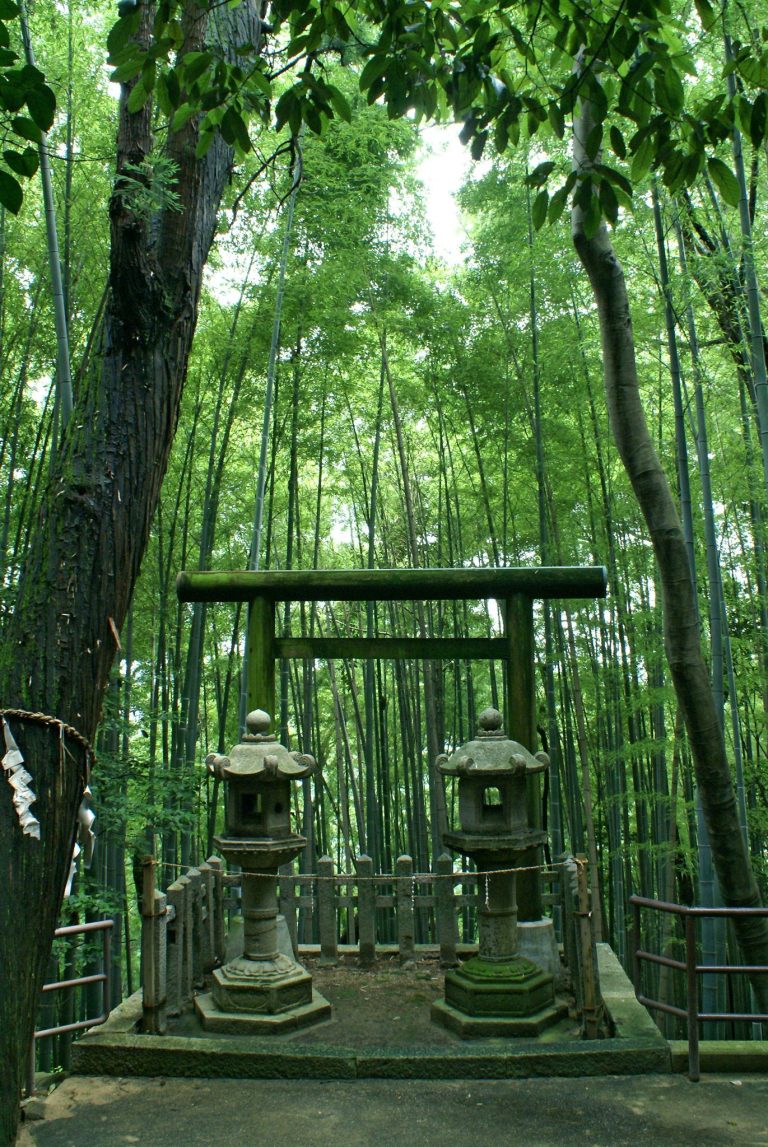
In 860, a beam of light was said to have extended from the shrine toward Mount Otokoyama across the Yodo River. Hachiman was then transferred to a newly established shrine on Otokoyama, while the deity was re-enshrined at the original site because Yamazaki was regarded as the first place where Hachiman had manifested. Takama-sha, a subsidiary shrine, was later established on the mountain associated with that manifestation.
The beginning of Iwashimizu Hachimangū has remained contested. The shrine on Otokoyama places its origin in the construction of a shrine within Iwashimizu Temple in 860. Daianji Hachimangū in Nara instead identifies itself as the earlier original Iwashimizu Hachimangū, tracing its foundation to Gyōkyō’s enshrinement of Hachiman at Daianji in 807. Because the Yamazaki shrine shared the Iwashimizu Hachimangū name with the Otokoyama shrine, it was also called Ōyamazaki Iwashimizu Hachimangū. Its later name, Rikyū Hachimangū, refers to the former presence nearby of Emperor Saga’s detached palace, the Kaya Detached Palace.
Religious and commercial development
During the Heian period, a Buddhist temple was built on the eastern side of the shrine precinct. Its presence reflected shinbutsu shūgō, the historical combination of Buddhist and Shinto institutions and practices.
The shrine also became associated with the production of perilla oil. During the Jōgan era, a priest reportedly received a divine message and devised the nagaki, a lever-operated oil press. Perilla oil production began at the shrine, which came to be recognized as the birthplace of oil production in Japan. The imperial court granted the shrine the title “ancestor of oil.”
In the medieval period, an oil guild developed around the shrine. Rikyū Hachimangū secured exclusive rights to sell perilla oil throughout the country, and merchants from the provinces required its permission to trade. These privileges weakened during the Sengoku period, an era of intense political and military competition in Japan, when rulers including Oda Nobunaga promoted free-market and free-guild policies. Unlicensed merchants were then able to sell oil, reducing the shrine’s income.
Edo-period rebuilding and the name dispute
In 1635, Tokugawa Iemitsu, the third shogun of the Tokugawa shogunate, ordered the rebuilding of the main sanctuary and worship hall. Nagai Naokiyo, lord of Nagaoka Domain in Yamashiro Province, supervised the work. The precinct was extended southward, and the Saigoku Highway was altered so that it ran farther south of the shrine. A pagoda and bell tower were also added.
Rikyū Hachimangū flourished in the early Edo period, when its complex was reportedly grand enough to be called “the Nikkō of the west.” Its fortunes later declined as mass-produced rapeseed oil displaced perilla oil in the market.
During requests for shogunate assistance with repairs, the shrine emphasized the name Iwashimizu Hachimangū and its status as the ancestral shrine of the Minamoto family. A dispute with the Iwashimizu Hachimangū on Mount Otokoyama over the shared name ended in the Yamazaki shrine’s defeat. A judgment dated September 18, 1697, prohibited it from using “Iwashimizu Hachimangū,” after which Rikyū Hachimangū became its official name.
Destruction, separation, and modern changes
During the Kinmon Incident in 1864, a Chōshū domain post was established at the shrine, while Maki Yasuomi and others occupied Mount Tennozan. Forces aligned with the shogunate, including troops from the Aizu domain and the Shinsengumi, attacked the area. The shrine and many merchant houses were almost entirely burned, although the outer gate and east gate survived.
After the Meiji government introduced shinbutsu bunri, its policy of separating Shinto and Buddhism, the Buddhist temple associated with the shrine was dismantled. The western part of the precinct was transferred to Osaka Prefecture, and the shrine was classified as a prefectural shrine. In 1876, land on the northern side was requisitioned for the Tōkaidō Main Line, further reducing the grounds.
The shrine buildings were rebuilt in 1879 through donations from the Ōsaka oil merchants’ Yamazaki association and local worshippers. In 1929, work to quadruple the Tōkaidō Main Line led to the reconstruction and relocation of the main sanctuary, offering hall, and worship hall as a connected complex on the former site of the worship hall. The annual festival is held on September 15 and is associated with the hōjō-e, a Buddhist-derived rite in which living creatures are released as an expression of reverence for life and the accumulation of religious merit. A supporters’ association centered on oil manufacturers was established in 1986.
The Ōyamazaki Rikyū Hachimangū Documents received designation as an Important Cultural Property in 1981. Their inventory comprises 28 volumes, one book, one map, and 11 documents, together with two lacquered document boxes.
Remains
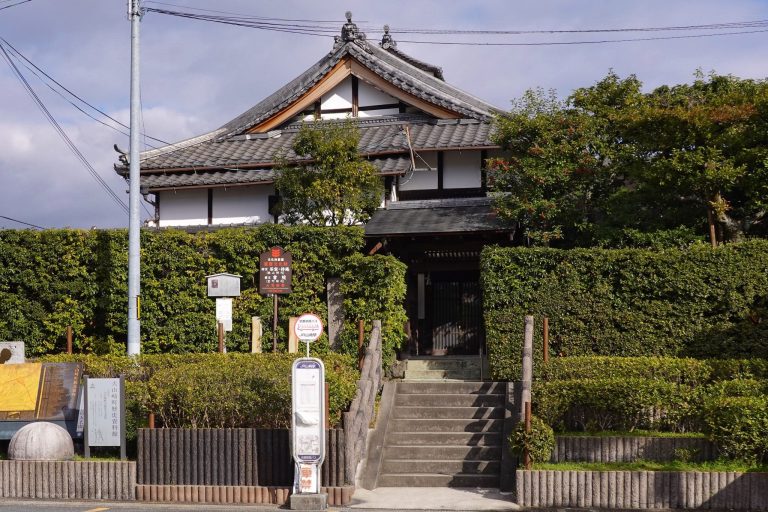
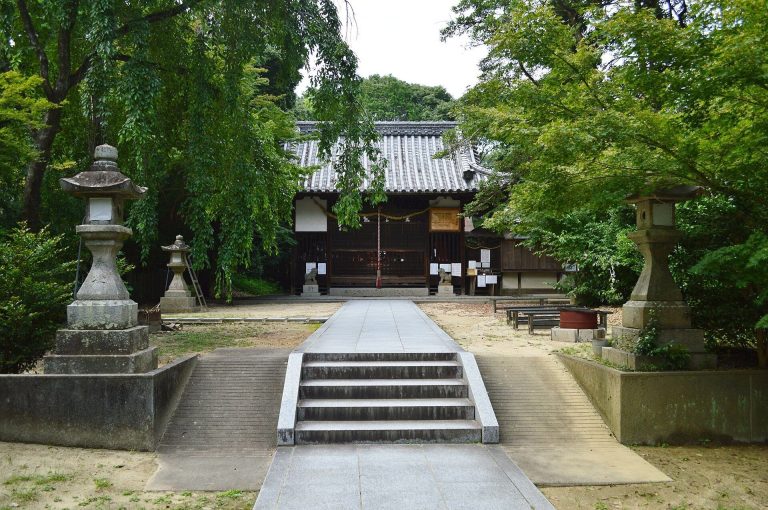
The shrine stands beside the former Saigoku Highway at the place associated with Hachiman’s first manifestation, near the spring said to have emerged between rocks. Its precinct once extended farther to the south and north. Meiji-period land transfer reduced the western area, while railway construction affected the northern side. The surviving arrangement includes the main sanctuary, offering hall, and worship hall in a connected complex, together with gates and the mountain-associated Takama-sha.
Main shrine buildings
Main sanctuary and connected halls
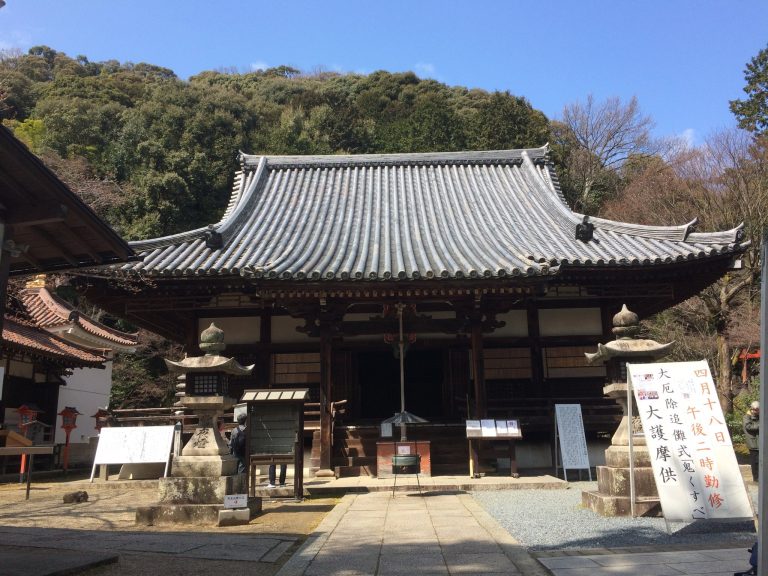
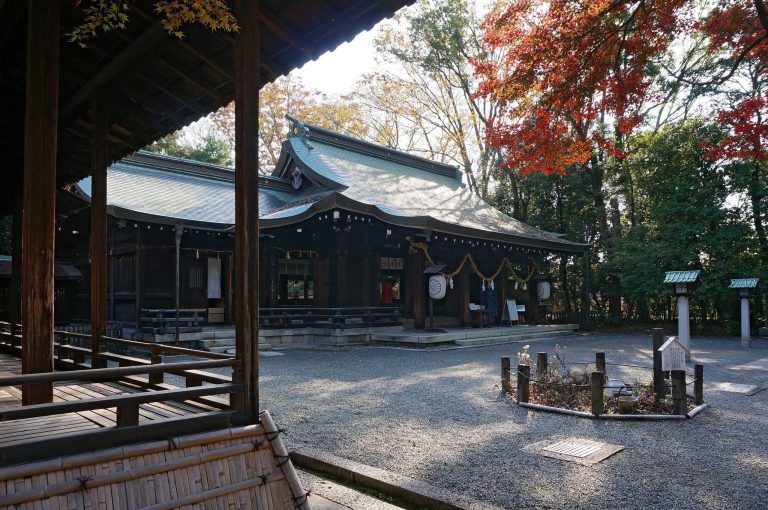
The main sanctuary is identified with nagare-zukuri, a shrine style characterized by a curved, extended roof over the front of the sanctuary, and is also associated with Hachiman-zukuri, an arrangement traditionally linked with Hachiman shrines. The main sanctuary, offering hall, and worship hall form one connected composition created during the 1929 reconstruction. Their arrangement occupies the former site of the worship hall and reflects the major rebuilding carried out when the railway was expanded.
Gates and former precinct structures
The outer gate and east gate survived the 1864 fire that destroyed much of the earlier complex. The 1635 rebuilding phase also included a pagoda and bell tower. The Buddhist temple that formerly stood on the eastern side of the precinct was dismantled after the Meiji separation of Shinto and Buddhism, while Takama-sha occupies the mountain associated with Hachiman’s manifestation.
Oil production and documentary remains
The nagaki oil press
The shrine’s historical connection with oil production centers on the nagaki, a lever-operated press used to produce perilla oil. The press is associated with the Jōgan-era tradition that a shrine priest devised the apparatus after receiving a divine message. This equipment connected the religious precinct with the production that supported the medieval oil guild.
Rikyū Hachimangū Documents
The shrine’s documentary collection consists of 28 volumes, one book, one map, and 11 documents, along with two lacquered document boxes. The materials received Important Cultural Property designation in 1981 and preserve evidence connected with the shrine’s historical institutions and activities.