Menir de Aspradantes: A Prehistoric Standing Stone in Portugal
Site at a Glance
- Popularity
- Very Low
- Country
- Portugal
- Primary era
- Stone Age
- Eras represented
- Stone Age
- Civilizations
- Unclassified
- Site type
- Civic
- Remains
- Megalithic Monument
On this page8 sections
History
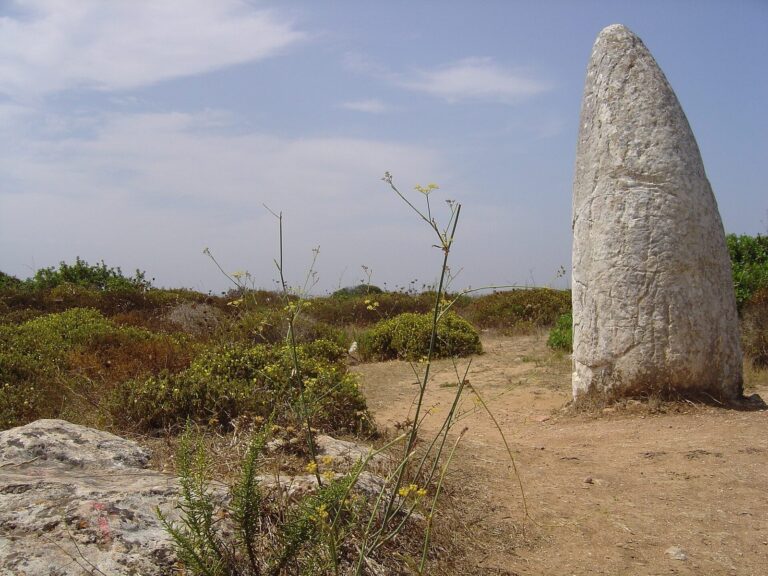
Menir de Aspradantes is a prehistoric standing stone near Hortas do Tabual in the municipality of Vila do Bispo, Portugal. It was probably erected about 5,000 years ago, during the Neolithic-Chalcolithic period, the transition from the Neolithic to the Copper Age. Some researchers have proposed a much earlier date, which, if established, could place it among the earliest monuments of its kind in continental Europe.
Prehistoric origin and damage
The monument later suffered an attempt at destruction, during which part of it fell. Investigators have examined a deep cut in the stone and sought to clarify both its construction date and when it was partly destroyed.
Archaeological study and protection
Archaeological surveys took place in 1987 as part of the Archaeological Survey of the Algarve and in 1989 through the survey of the Southwest Alentejo and Vicentine Coast Protected Landscape, a designated protected area in southwestern Portugal. From June to July 2025, the international project Megalithic Origins: The Emergence of Monumentality in Neolithic Western Europe investigated the monument as part of a wider study of megalithic construction and the societies behind it. Led by Marta Diaz-Guardamino of Durham University, the project’s Portuguese team was coordinated by Mário Varela Gomes of NOVA University Lisbon and included archaeologist Ricardo Soares Ramiro Santos of the Vila do Bispo Municipal Museum. The team collected sediment samples from the platform and fallen half for planned optically stimulated luminescence dating, a method that estimates when mineral grains were last exposed to light. The analysis aims to refine the dates of the monument’s erection and partial destruction.
On 1 June 1992, Portugal classified the menhir as a Property of Public Interest, a national heritage-protection category, under Decree No. 26-A/92.
Remains
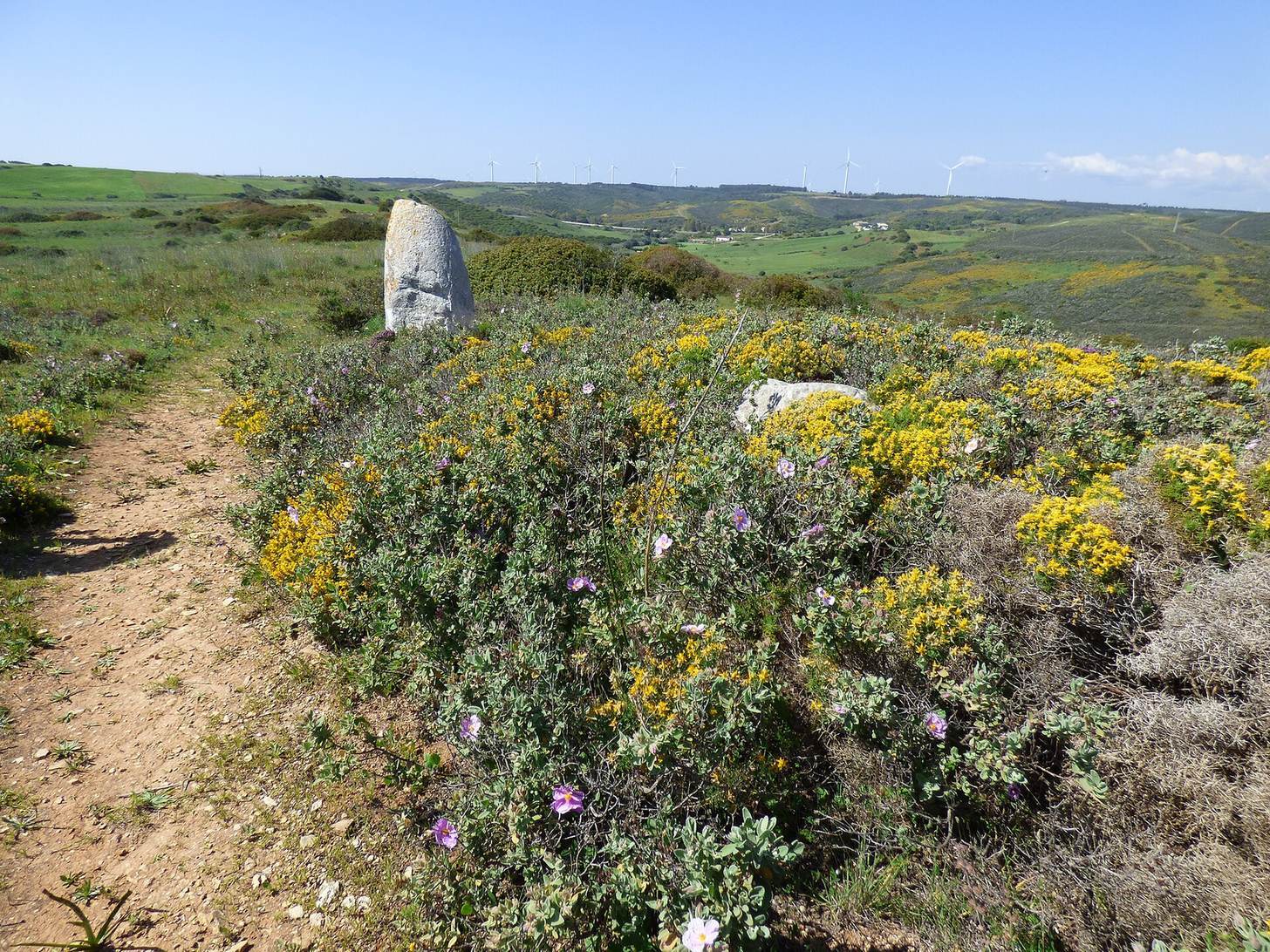
The remains stand on a raised fold of terrain at about 95 m above sea level, beside the Ribeira de Vale Pocilgão and approximately 2 km from the coast. The site is in the former parish of Raposeira, in the Algarve. Its surviving stones include a principal limestone monolith, smaller standing stones, and fragments of another menhir on a nearby ridge.
Alignment and associated stones
Principal menhir
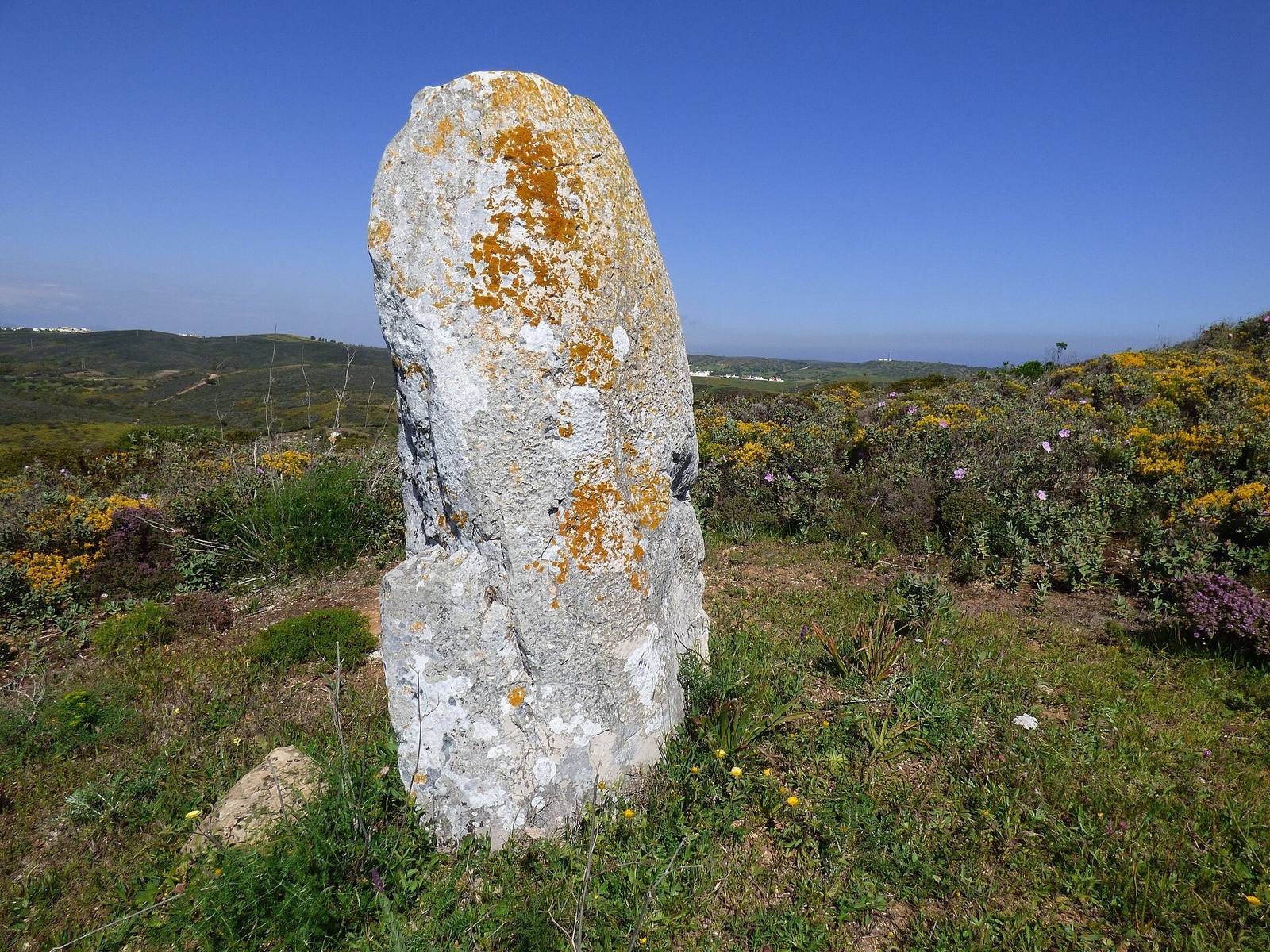
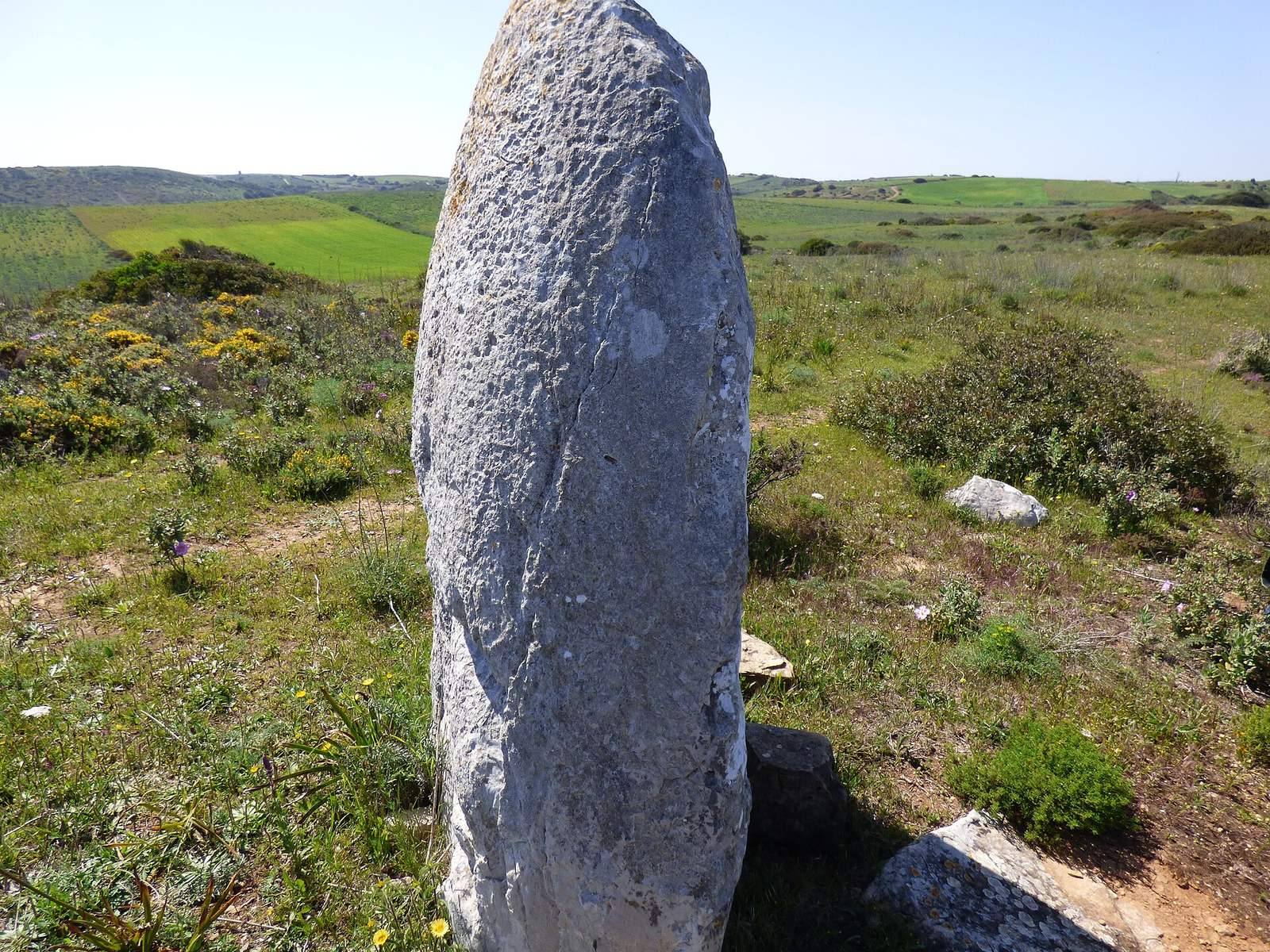
Carved from local white limestone, the main stone is also described as calcite. It rises about 2 m above ground, though it was originally taller: its upper part has been cut away. Its two thickest axes measure about 1.25 m by 0.63 m, and the stone is heavily fractured through its middle and toward its outer end.
Three smaller monoliths
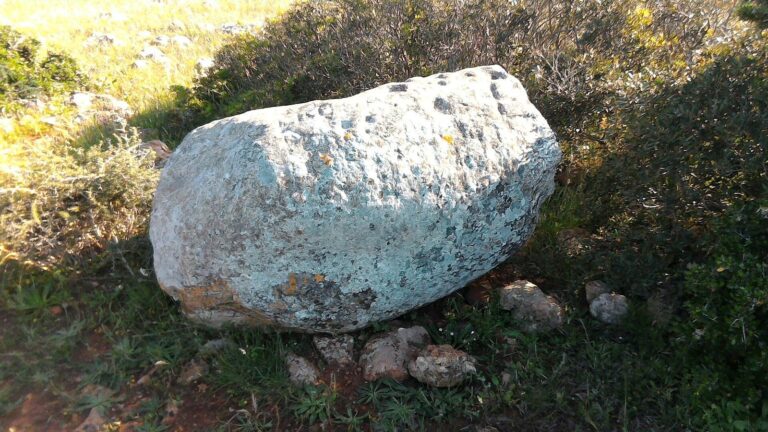
The main stone forms part of a northwest-southeast alignment with three other monoliths, each about 1 m high. The first is 7.25 m from the principal menhir. It has a flattened, rounded shape and small cup-shaped hollows on its upper surface. The second stands about 4.20 m from the first, and the third is a similar distance beyond the second.
Fragments of a second menhir
Two stones on a nearby ridge were identified in 2025 as fragments of another menhir. That monument had been destroyed and moved from its original position; it was probably associated with Menir de Aspradantes.