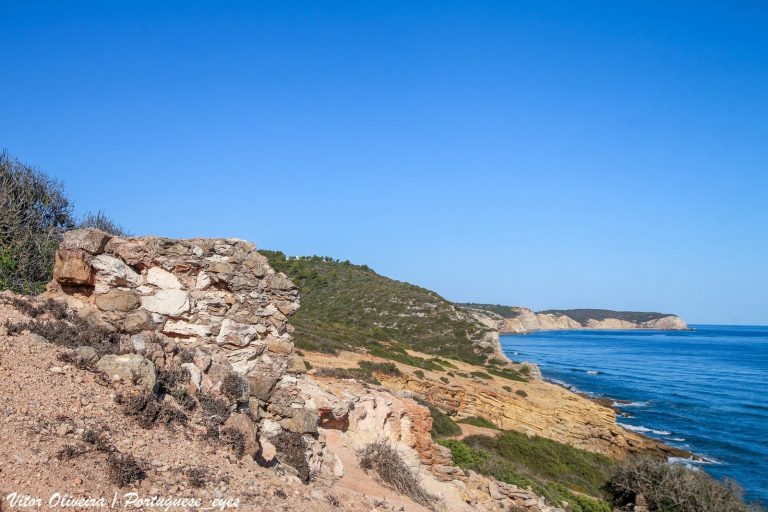
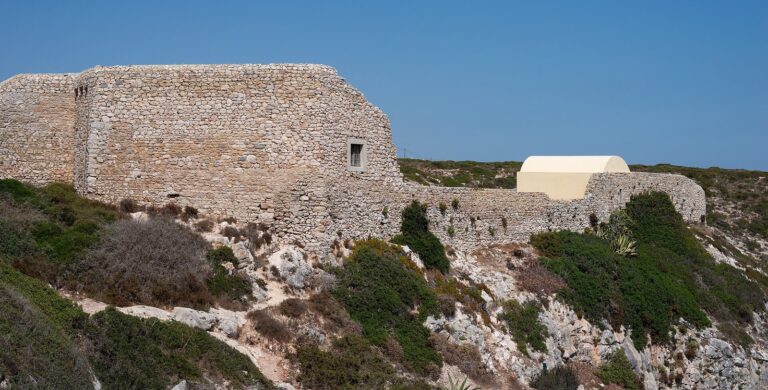
Vila do Bispo Menhir Group: Prehistoric Standing Stones in Portugal
Site at a Glance
- Popularity
- Very Low
- Country
- Portugal
- Primary era
- Stone Age
- Eras represented
- Stone Age
- Civilizations
- Unclassified
- Site type
- Civic
- Remains
- Megalithic Monument
On this page5 sections
History
Neolithic origins
The Vila do Bispo Menhir Group is a collection of prehistoric upright-stone monuments in Portugal, including three stones at Pedra Escorregadia. These menhirs, or upright stone monuments, were probably erected around 4000–3000 BC, during the later Neolithic, the later part of the Stone Age associated with farming and settled communities. The Pedra Escorregadia stones belong to a wider group that also includes Casa do Francês, Amantes I, Amantes II, and Cerro do Camacho.
Heritage protection
In 1979, the Southern Zone Regional Archaeology Service proposed classifying the group. In 1983, the Provisional National Archaeology Commission recommended its designation as a Property of Public Interest, a Portuguese cultural-heritage protection category. An approval order was published on 6 July that year. In 2010, the group was among properties expected to receive definitive classification, but a final opinion and publication were still outstanding.
Remains
Pedra Escorregadia menhirs
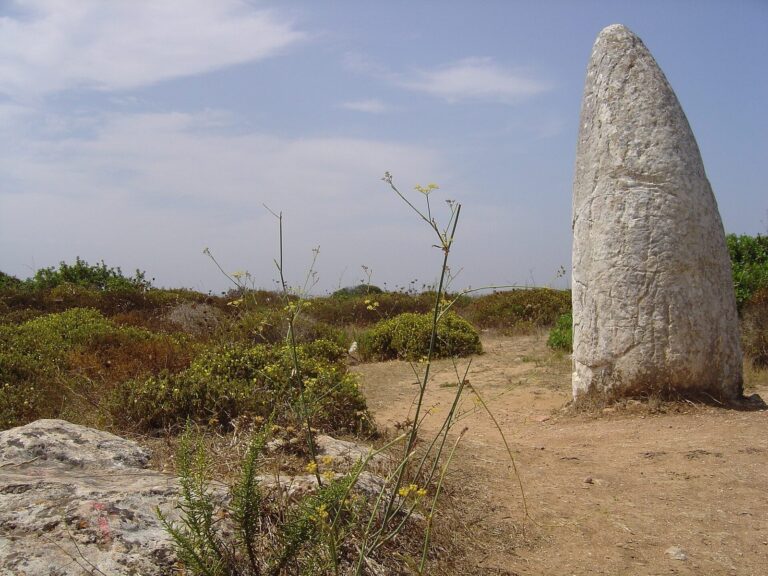
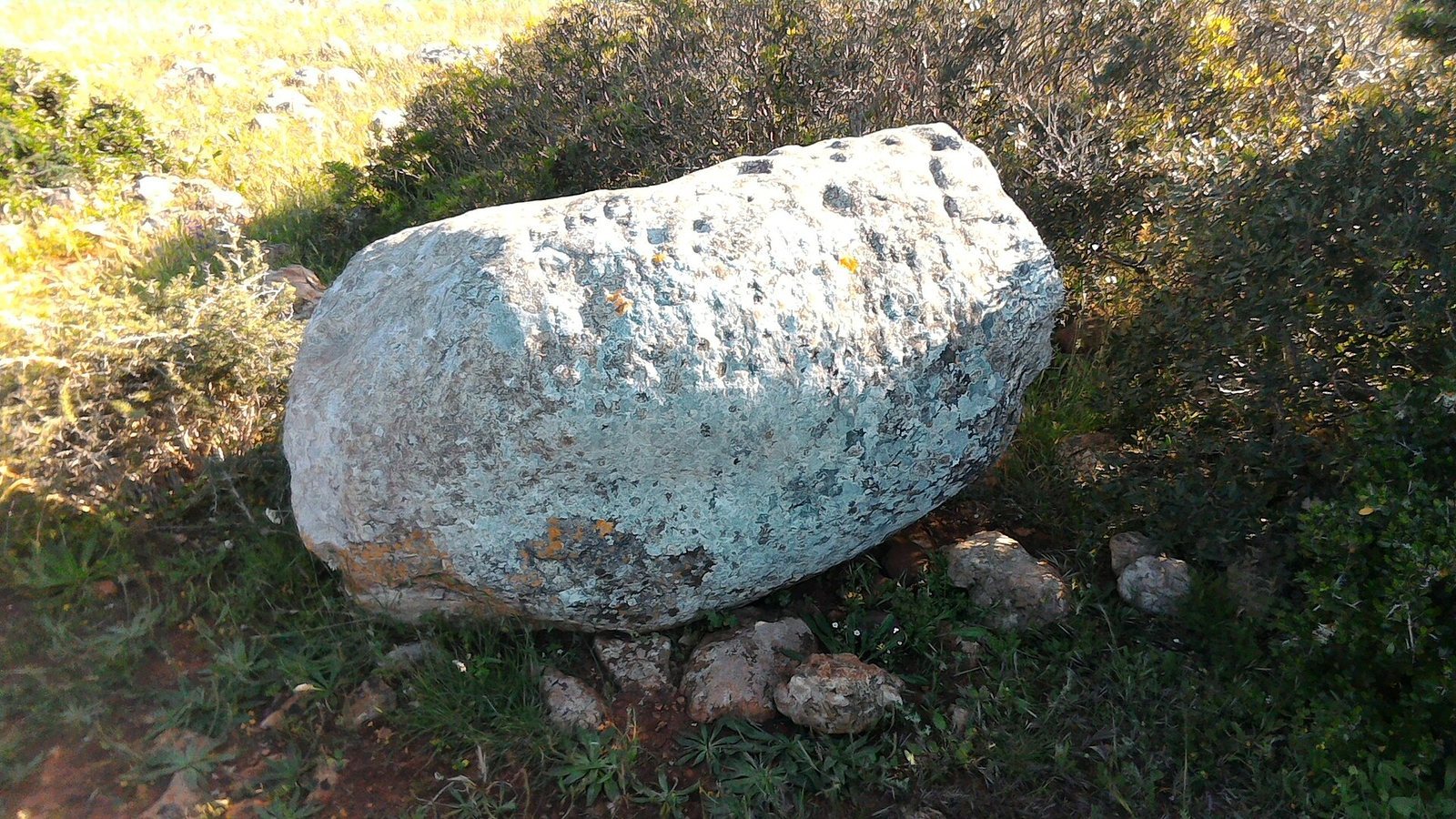
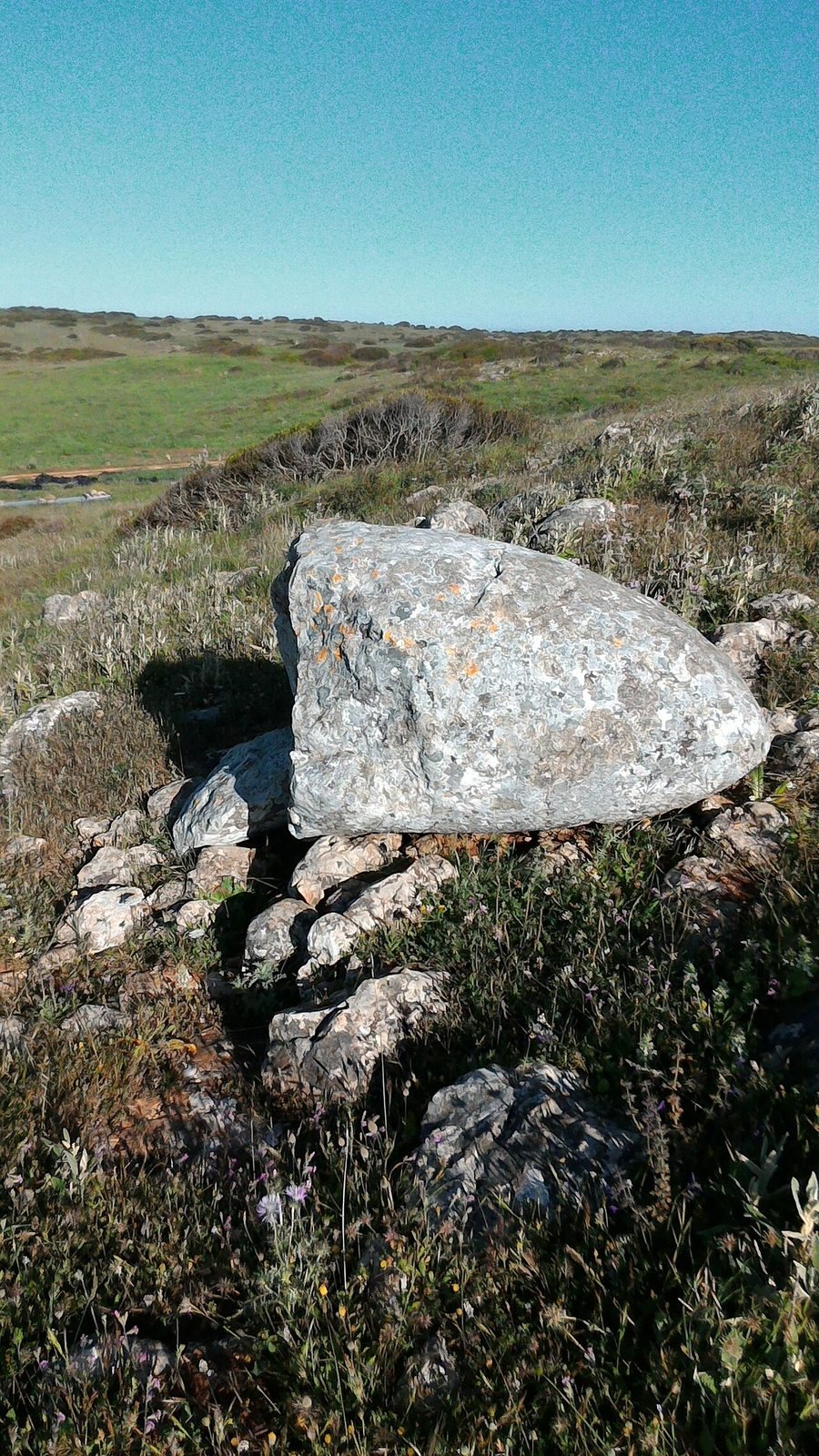
The three stones stand on a hill about one kilometre southwest of Vila do Bispo, near National Road 268. Made of white limestone, they have near-cylindrical or cut-off cone shapes and differ in height; the largest is about two metres tall. It bears a raised vertical band decorated with three ellipses separated by a raised cord. Another menhir has an incised ellipse divided along its long axis.