Parish Church of Raposeira: A Manueline Church in Portugal
Site at a Glance
- Popularity
- Very Low
- Country
- Portugal
- Primary era
- Early Modern
- Eras represented
- Early Modern
- Civilizations
- Portuguese
- Site type
- Religious
- Remains
- Church
On this page4 sections
History
The Parish Church of Raposeira is a Roman Catholic church in Raposeira, Portugal, dedicated to Our Lady of the Incarnation, a Catholic title for Mary associated with the Incarnation of Christ. It belongs to the Diocese of Algarve, the Catholic jurisdiction for the region. Its construction is thought to date to the first half of the sixteenth century. The church is regarded as one of the principal examples of Manueline architecture in southwestern Portugal, and as a witness to regional development around the transition to the sixteenth century. Manueline is a Portuguese style that developed from late Gothic architecture around the turn of that century.
The proposed date reflects the church’s Manueline features and similarities to the Church of Luz, built in the 1520s, and the Chapel of Mercy in Albufeira. Its position away from the region’s main centres helped preserve much of its original fabric, and it did not undergo major campaigns that substantially changed its appearance. Baroque additions were made in the first half of the eighteenth century. The roof collapsed in 1873 and was rebuilt; the church later sustained slight damage in the 1969 earthquake.
Remains
Exterior
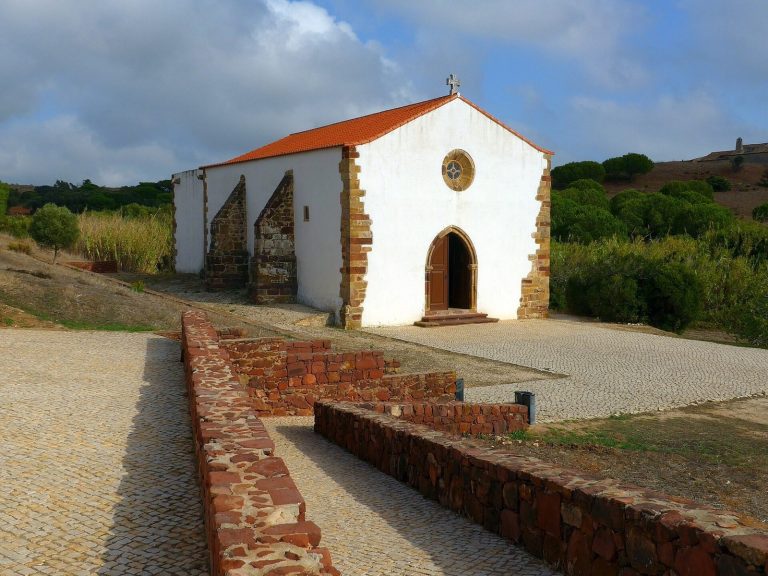
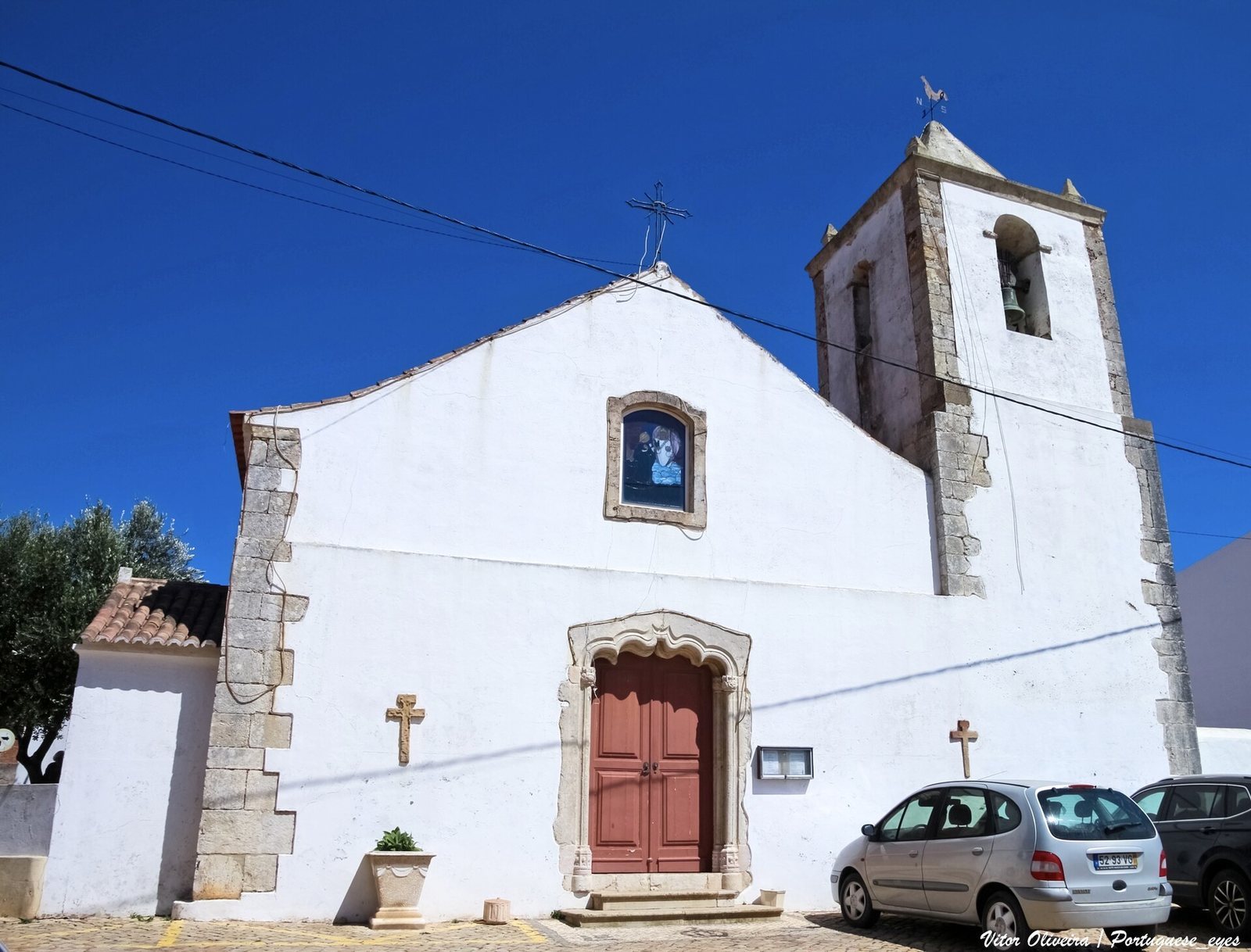
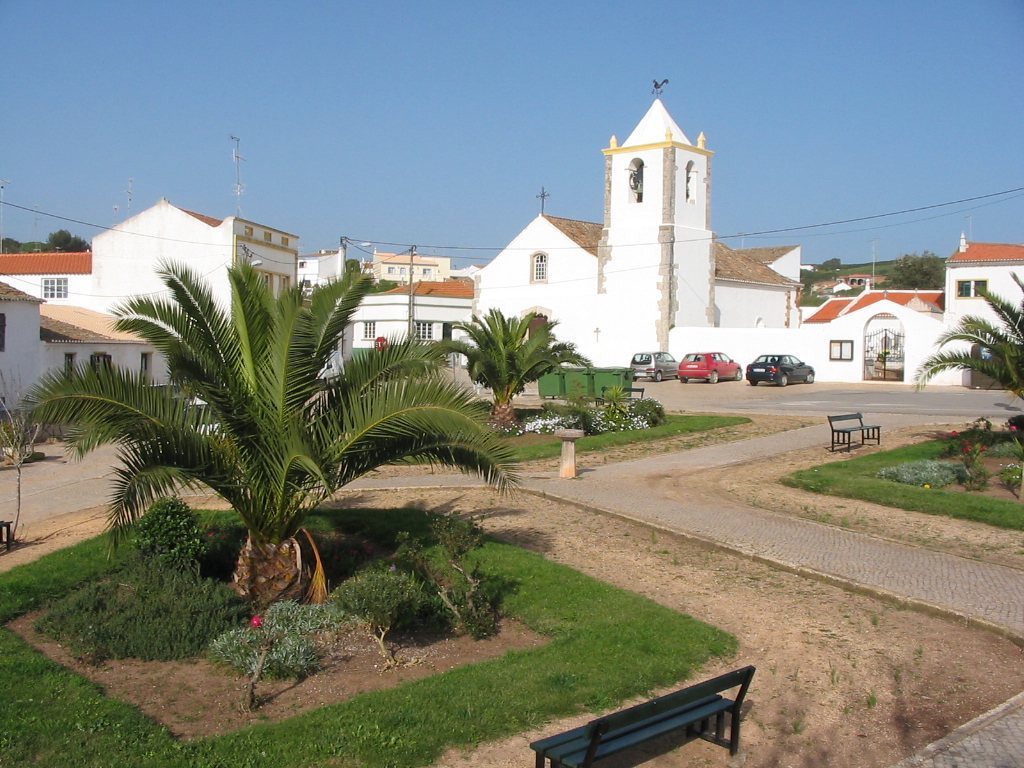
The relatively plain rural church stands in a square at the entrance to Raposeira, beside National Road 125. Its Manueline entrance is made of local limestone, with curved moulded bands around the arch and carved columns whose capitals and bases carry vegetal and geometric patterns. Above it, a probably Baroque section has a large rectangular window and a triangular gable. A bell tower, also probably Baroque, is attached to the south side. Its four round-arched openings sit below a pyramidal top, with pinnacles at the corners. The cemetery entrance has its own Manueline portal, decorated with geometric and vegetal motifs.
Interior
The church has a single nave, the main area for the congregation, divided into two bays and leading to a rectangular chancel around the altar. A wooden roof covers the nave, while the chancel is vaulted. A three-part Manueline arch marks the division between them; small columns rest on carved capitals, and red sandstone provides its decoration. Rectangular altarpieces with eighteenth-century gilded carving stand on either side. Raised galleries opening into the interior hold images of the Crucified Christ and Our Lady of the Incarnation, the latter dating to the sixteenth century, as well as a painting of Saint Michael opposing the Devil. Silver objects used in worship date from the sixteenth to eighteenth centuries, and the holy-water basin is also Manueline.