Meisdorf Castle: An Asseburg Estate in Germany
Site at a Glance
- Popularity
- Medium
- Country
- Germany
- Primary era
- Early Modern
- Eras represented
- Early Modern, Modern
- Civilizations
- German, Holy Roman Empire
- Site type
- Domestic
- Remains
- Castle
On this page12 sections
History
Meisdorf Castle is an estate residence at the southwestern edge of Meisdorf in Germany, begun by the House of Asseburg in 1708 as a building called the Long Building. Meisdorf belonged to the lordship of Falkenstein, a territory held with associated rights of rule, from the Middle Ages; the Asseburg family held the lordship from 1437.
Asseburg residence and estate
Johann Ludwig von der Asseburg had the Long Building erected on the Meisdorf estate. The name Meisdorf Castle appears in a record dated 5 February 1716, when representatives of Anhalt, a historical German principality, the government of the Kingdom of Prussia, and Baron von der Asseburg met there to negotiate boundary disputes.
From 1761, Meisdorf and nearby Falkenstein Castle belonged to Johann Ludwig’s son, Achatz Ferdinand von der Asseburg. Falkenstein then served only as a hunting lodge, while the older residence at Meisdorf was too small for Achatz Ferdinand. In 1769, he commissioned a larger, simply built castle and repurposed the earlier residence as accommodation for officials. He also added an estate administration office beside it and a forest house on Klusberg.
Nineteenth-century ownership
After Achatz Ferdinand’s death, the estate passed to the Neindorf branch of the Asseburg family. When that line ended in 1816 with the death of Ludwig Busso von der Asseburg, the lordship passed to the Eggenstedt-Ampfurt branch. Count Ludwig August von der Asseburg, a Prussian privy councillor and senior official responsible for court hunting, became the castle’s owner. During his tenure, Meisdorf became a social center for the regional nobility.
Between 1822 and 1823, Ludwig August had a large barn and the Eremitage house built, the latter above an earlier ice cellar. He also laid roads toward Ballenstedt and Harzgerode on opposite sides of the castle. His son, Count Ludwig II von der Asseburg, inherited the estate; Ludwig II’s half-brother, Egbert Hoyer von der Asseburg, was born at Meisdorf.
In the late nineteenth century, the Meisdorf estate district had 117 inhabitants. In the early 1920s, the holdings included a noble manor and part of the lordship, together covering 1,428 hectares. Pansfelde, also part of the holdings, covered a further 1,791 hectares.
Alterations, wartime use, and later ownership
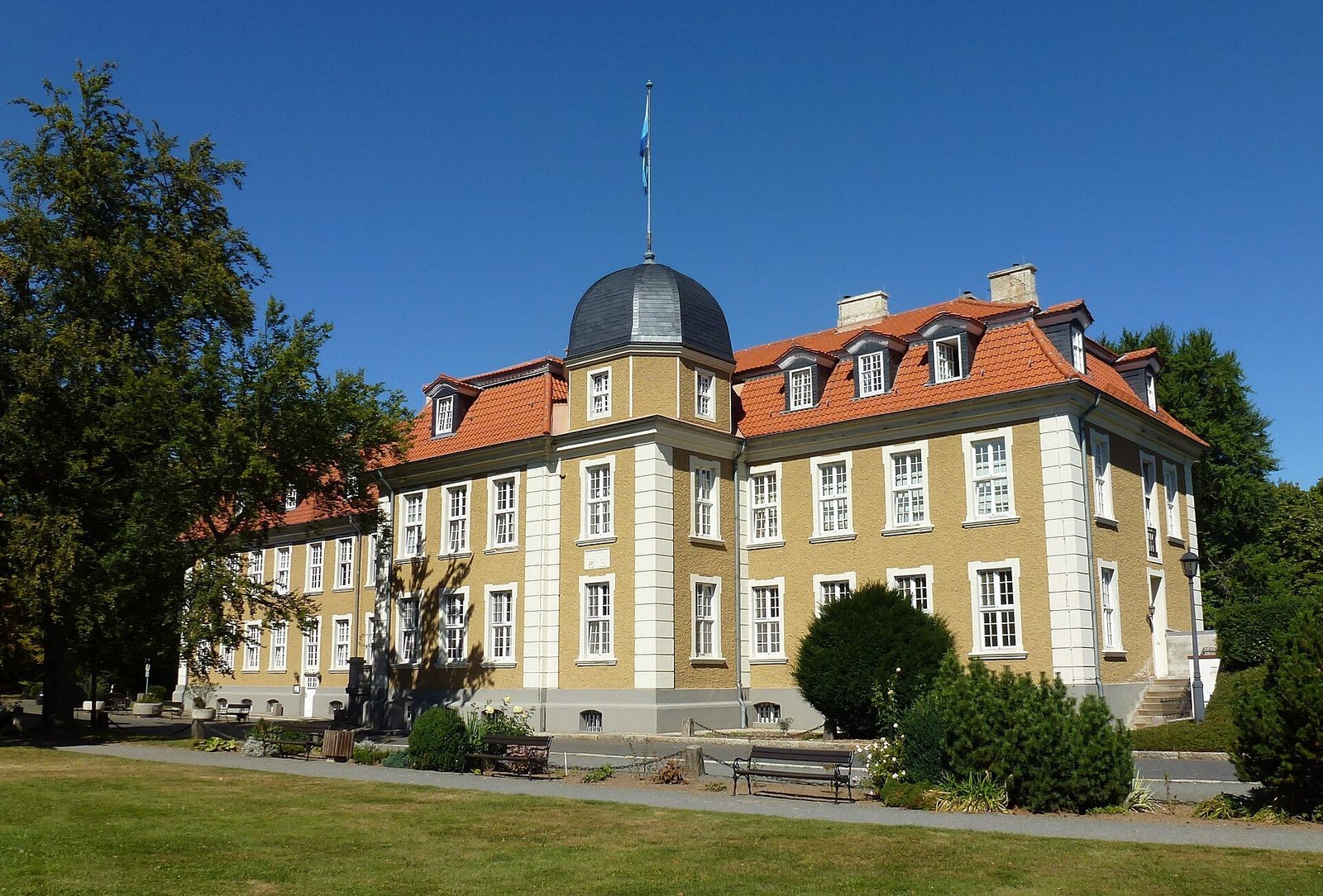
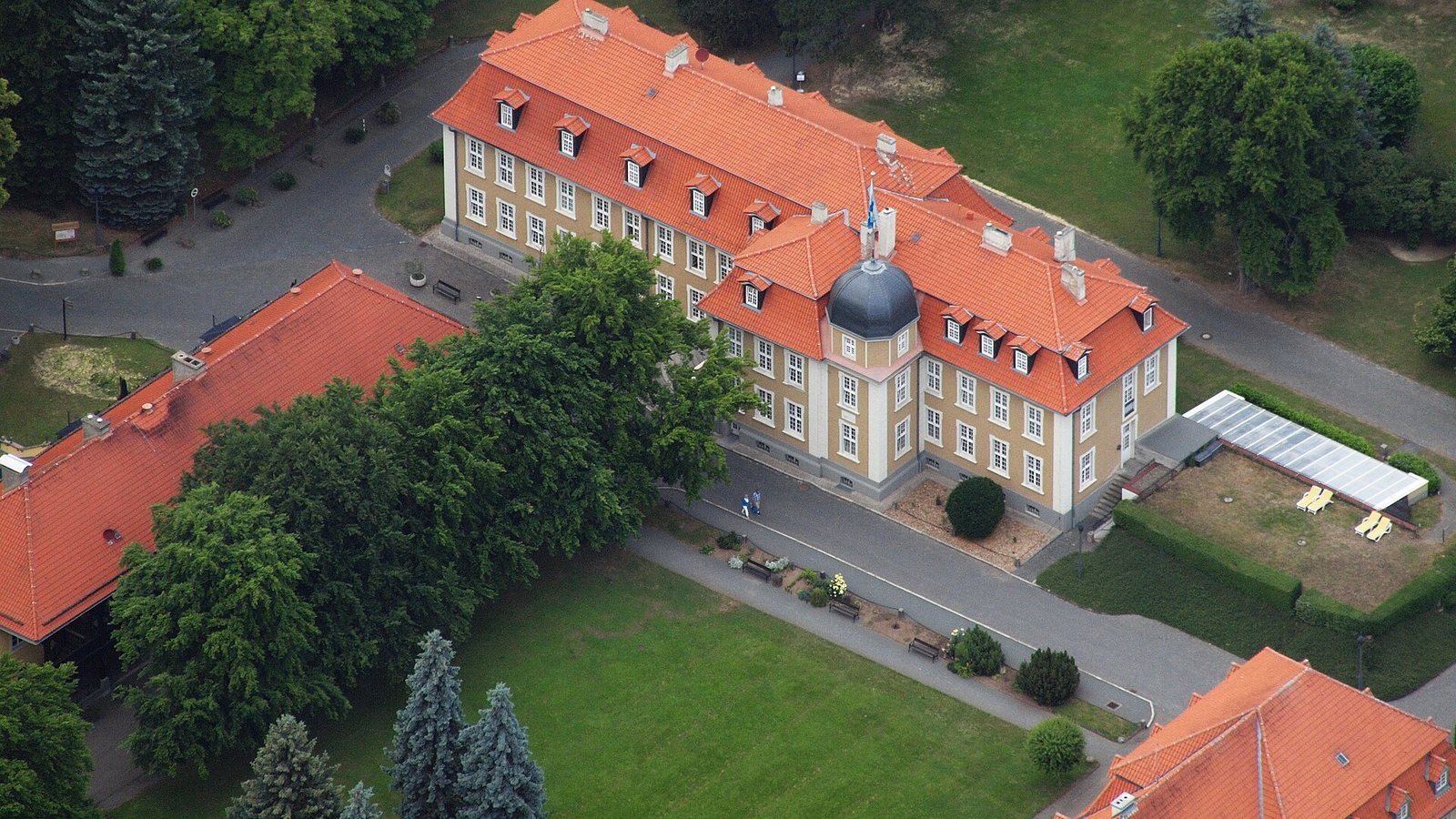
The castle was first altered in 1910, and the barn built in 1822 was converted into dwellings. In 1921–1922, owner Friedrich Georg Deodat Count von der Asseburg-Falkenstein commissioned a remodeling of the New Castle to plans by architect Max Brockert. The work added a tower and a side wing.
From 1944 to 1945, the castle held archival material and files from the German Foreign Office’s Political Archive in Berlin and was designated its principal alternative storage site. Secret documents transferred from Friedland were among the holdings; most were destroyed in April 1945. On 17 April, an unexploded shell struck the New Castle, piercing a roe-deer sculpture in the park, hitting the tower, and coming to rest in an upstairs bed. No one was injured.
US forces seized the castle. From July 1945, it housed a Red Army commandant’s office and refugees. In 1946, the state-owned VEB Walzwerk Hettstedt used the estate as a holiday facility, and in 1977 the forest house became a guesthouse for the Aschersleben district council. After privatization, the castle and park buildings were renovated and converted into a hotel complex in 1992. The Van der Valk Group took it over in 2001; Bernstein Hotels & Resorts acquired it in July 2021, followed by further remodeling and expansion. The buildings in the castle park are protected as historic monuments.
Remains
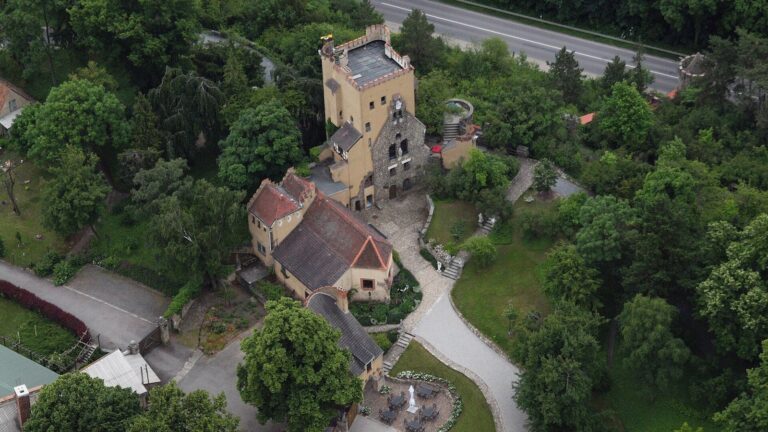
The estate stands at the northern edge of the Lower Harz, within the Harz Nature Park. Its 12-hectare park occupies the southwestern edge of Meisdorf, with the Selke flowing southeast of it from the Selke Valley nature reserve. The grounds include the Old Castle, the New Castle, and associated estate buildings. A tree-lined avenue of lime and chestnut, about 400 paces long, links the New Castle with the village.
Castle and estate buildings
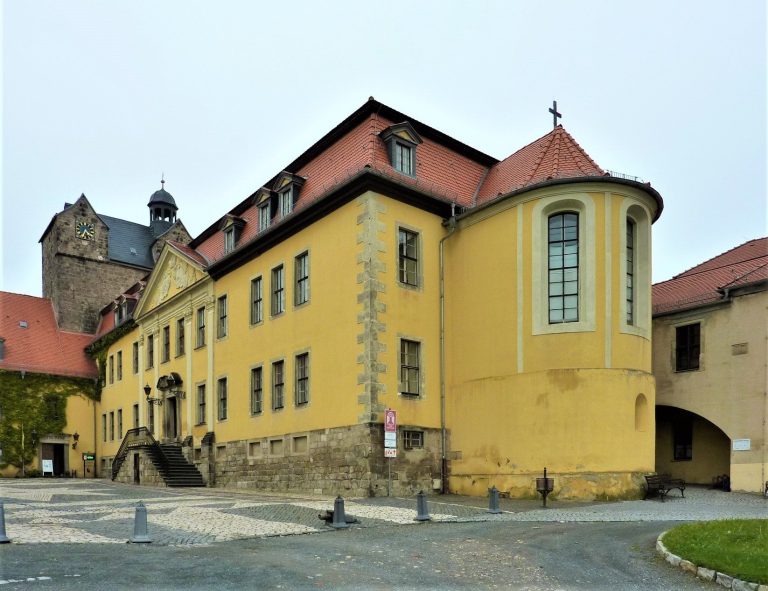
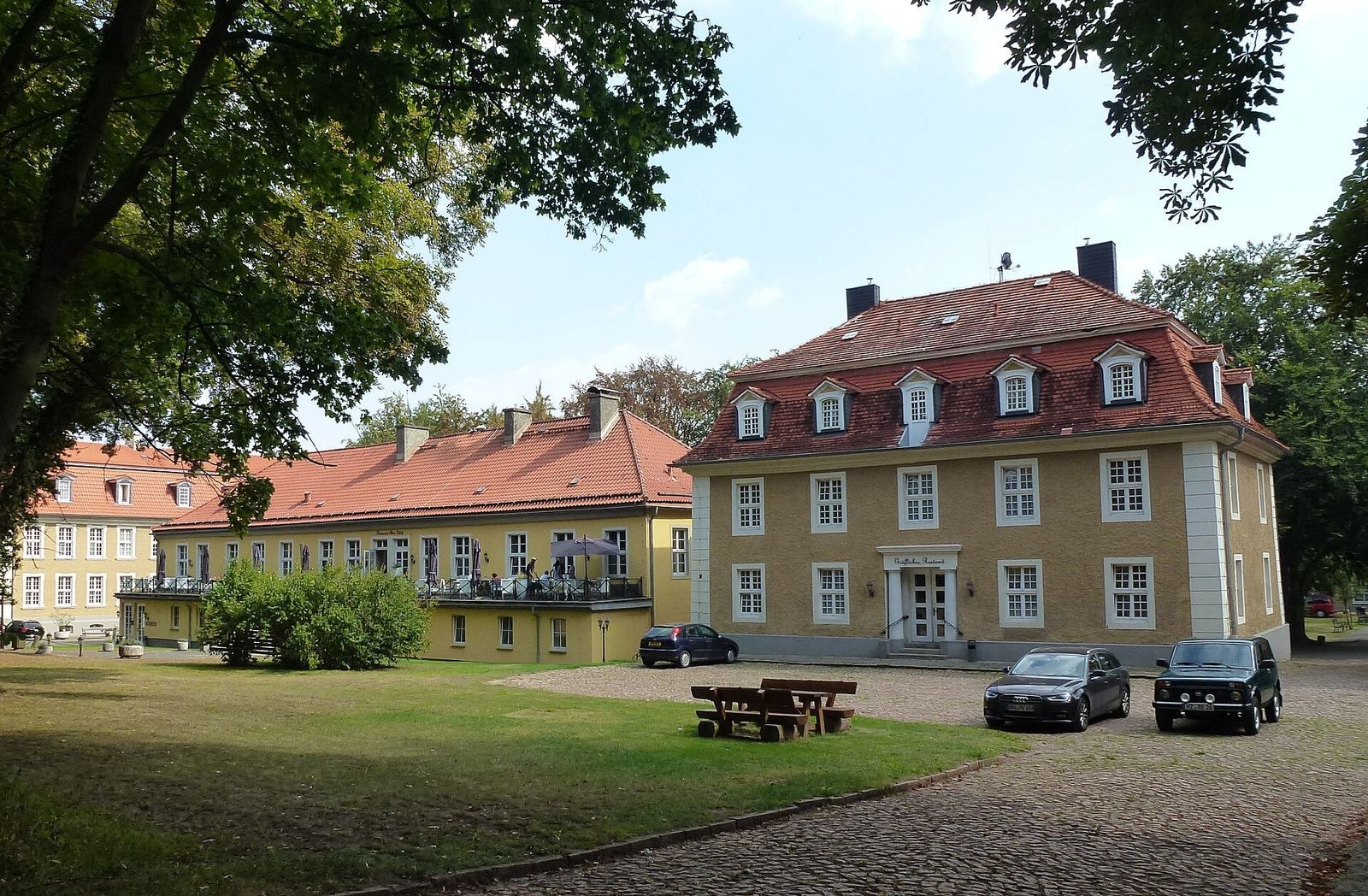
Old Castle
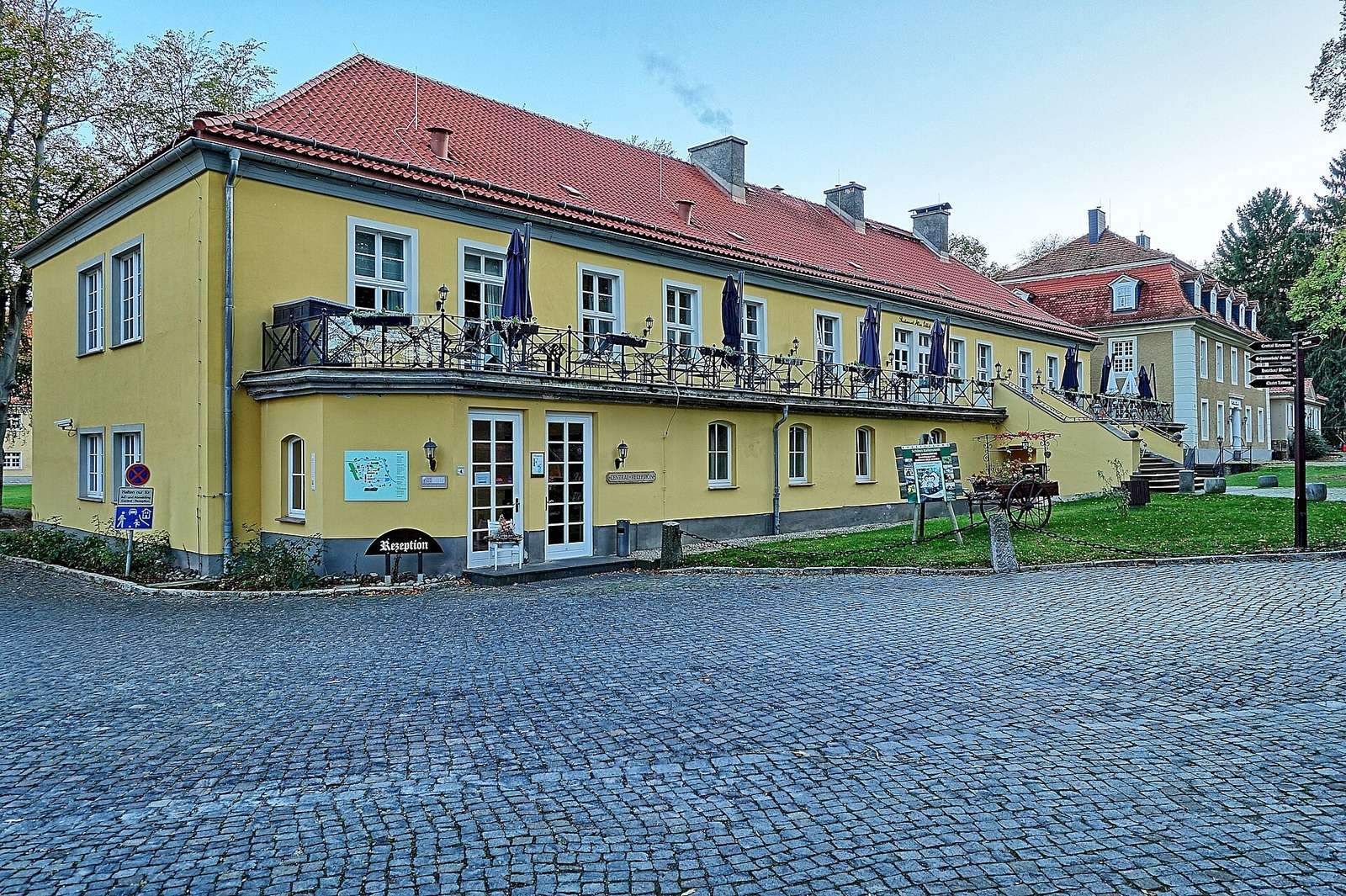
The former residence is known as the Old Castle and is now used as a restaurant. The estate administration office stands beside it and accommodates hotel rooms.
New Castle
The New Castle’s facade faces Meisdorf. Its tower and side wing form part of the remodeled building, which also contains hotel rooms.
Other estate buildings
The former large barn is now called Chalet Ludwig and provides hotel accommodation. The Eremitage house stands over an earlier ice cellar. On a hill above the castle, a Swiss-style cottage served as an upper forestry office until 1945; it is now called the Forsthaus.
Park and surrounding structures
Park grounds
Many old trees grow in the park. At its center stands a roe-deer sculpture on a pedestal, and a mill is also part of the estate grounds.
Neues Gewölbe mausoleum
About 450 metres southwest of the castle, in deciduous woodland beside the Selke, stands the Neues Gewölbe mausoleum. Built of rough sandstone in 1834, it uses the Neo-Gothic style, a later revival of forms associated with medieval Gothic architecture. It served as the Asseburg family burial place until 1928.