Menhirs of Lavajo: A Prehistoric Stone Monument in Portugal
Site at a Glance
- Popularity
- Low
- Country
- Portugal
- Primary era
- Stone Age
- Eras represented
- Stone Age
- Civilizations
- Unclassified
- Site type
- Civic
- Remains
- Megalithic Monument
On this page5 sections
History
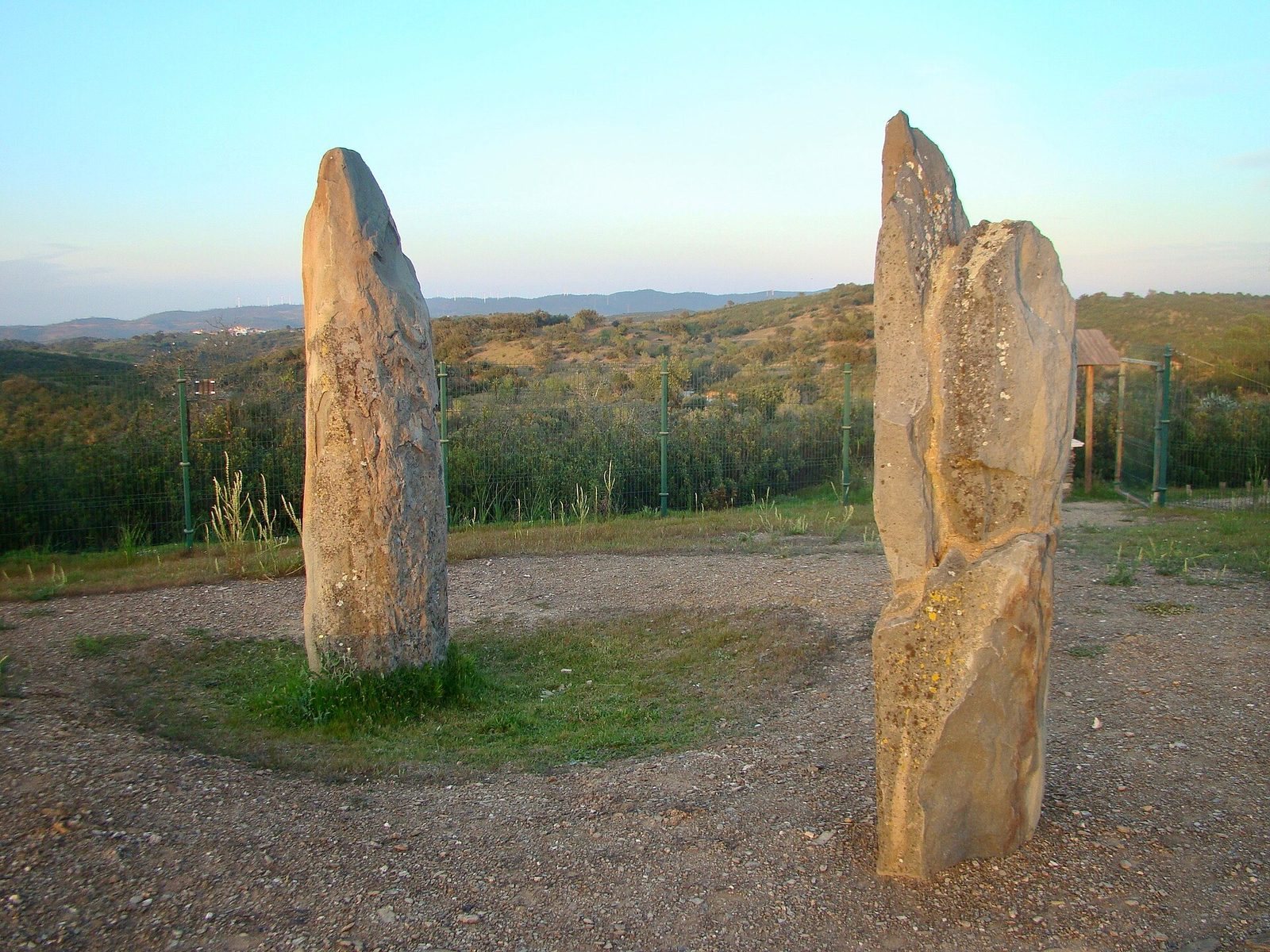
The Menhirs of Lavajo, a group of large upright stones, stand in Alcoutim, Portugal. They probably date to between 3500 and 2800 BC, during the transition from the Late Neolithic to the early Chalcolithic, or Copper Age; a more specific estimate places them around 3150 BC. They are among the few stone monuments in the eastern Algarve not associated with burials. Interpretations suggest that they may have marked territory or sacred space.
Archaeologist Rui Parreira has also proposed that the area had a ritual use. The stones’ precise purpose remains uncertain.
Discovery and restoration
António do Nascimento, João Luís Cardoso, and Mário Varela Gomes identified the first menhir in 1992. Scientific excavations began in 1998 under Cardoso and uncovered four fragments from two other menhirs, along with the original sockets, the pits in which the stones had stood. These discoveries prompted the suggestion that the stones had been deliberately aligned.
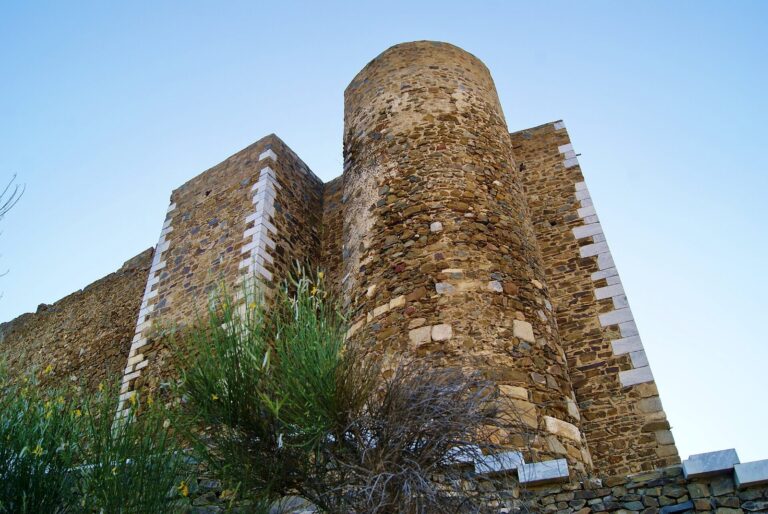
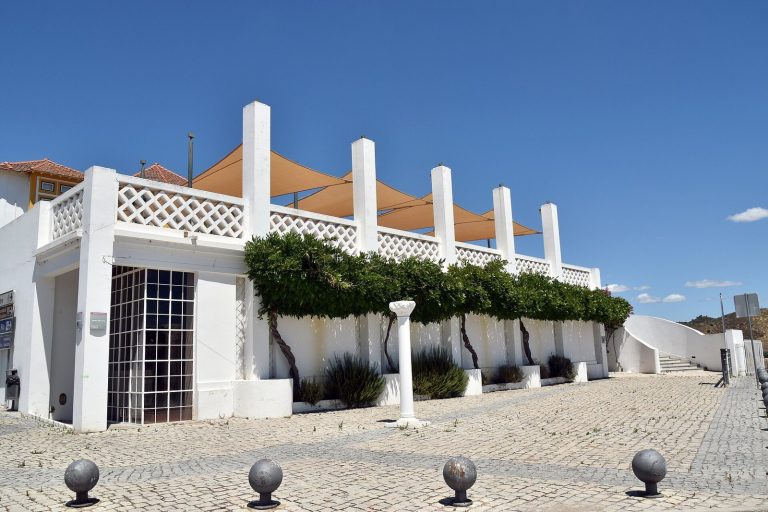
Restoration and repositioning took place in 2003 under João Luís Serrão da Cunha Cardoso. The following year, Alcoutim Municipal Council began a recovery project that included further restoration, returning two menhirs to their original sockets, and moving a fragment to an archaeology museum unit for display. The monument is part of the Municipal Museum of Alcoutim.
Remains
The remains form two groups on opposite sides of the Lavajo ravine. The main group, Lavajo I, occupies a hilltop between the ravine and the Lavajo valley, at 155 m above sea level. Lavajo II lies about 250 m away across the ravine. The stones are made of grauwacke, a type of sandstone.
Lavajo I
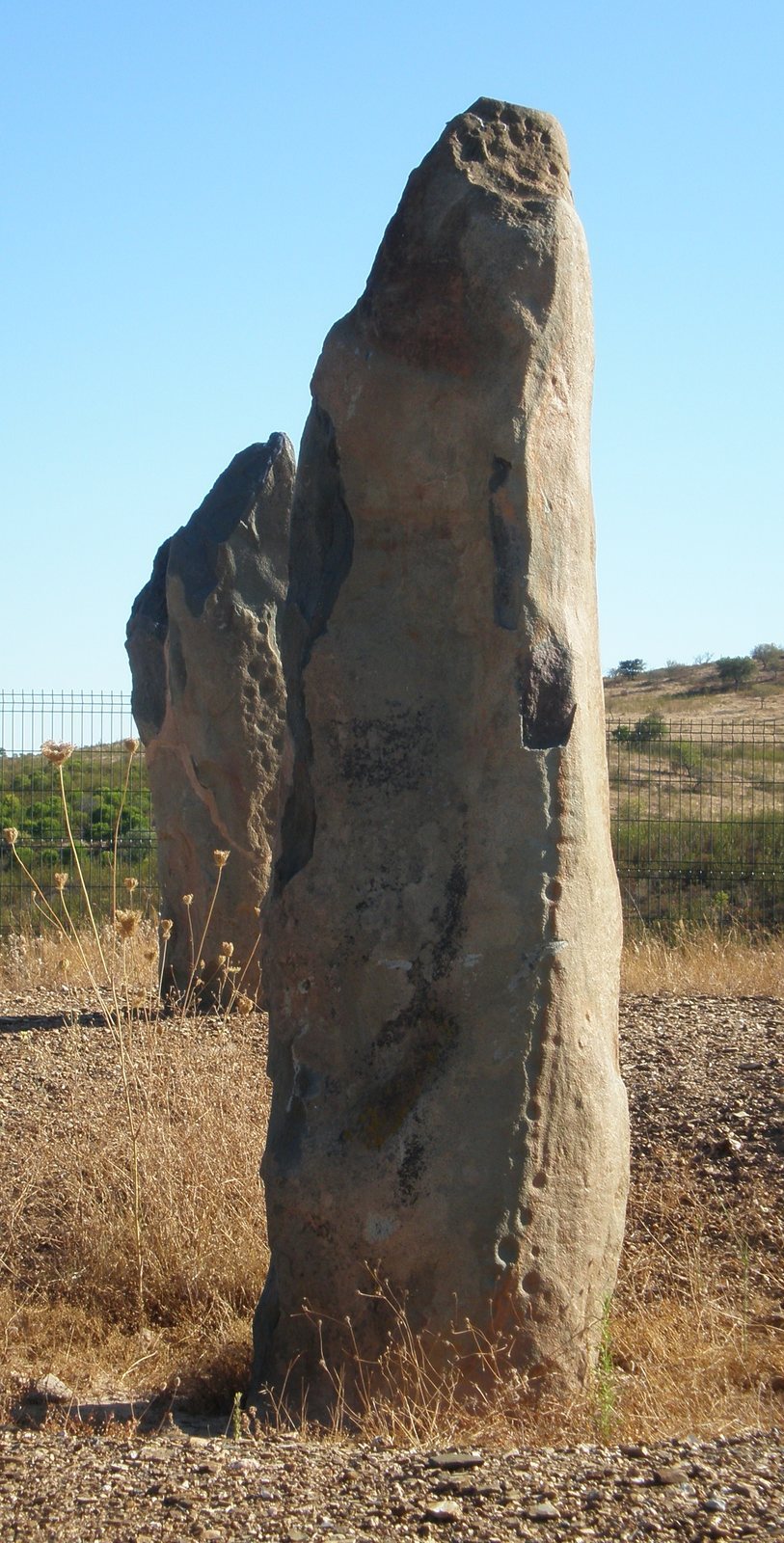
A fence encloses Lavajo I, which comprises three aligned menhirs with elliptical cross-sections. Two remain in their original positions; the third is highly fragmented and preserved at Alcoutim Museum. The largest stands 3.14 m high, has a roughly phallic form, and is the largest known menhir in Portugal; its surface is stained brown. The second has a star-like arrangement of three elements. Carvings on the stones include vertical grooves, cup marks (small cup-shaped hollows), human-like figures, and circular or semicircular forms resembling horseshoes. On the largest, motifs follow a lengthwise groove and include circles; a perforated-circle design appears on one of the smaller stones. Finds from this group include a grauwacke adze, a cutting tool with a blade set across its handle, and at least one fragment of handmade pottery.
Lavajo II and nearby finds
Lavajo II consists of four smaller menhirs without carved decoration. Finds there include small, roughly triangular flint tools called microliths, an arrowhead, a grauwacke chisel, and part of an axe made from fibrolite, a mineral used to make stone tools. On a nearby hill, archaeologists also found a stationary lower grinding stone and a movable upper grinding stone.