Mausoleum of Umar Suhrawardi: An Abbasid Mosque and Shrine in Baghdad
Site at a Glance
- Rating
- 4.5
- Popularity
- Low
- Country
- Iraq
- Primary era
- Medieval
- Eras represented
- Medieval
- Civilizations
- Abbasid, Ilkhanate
- Site type
- Religious
- Remains
- Tomb
On this page7 sections
History
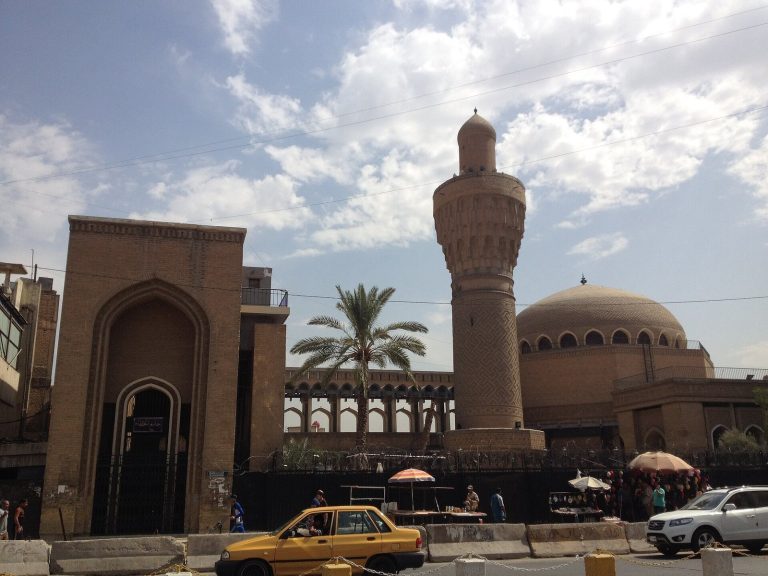
The Mausoleum of Umar Suhrawardi is an Abbasid-period Sunni mosque and mausoleum complex in Baghdad, Iraq, founded by the Abbasid caliph Al-Nasir li-Din Allah, who ruled from 1180 to 1225. Its mosque was constructed in the twelfth century, during the seventh Islamic century, and was named for Abu Hafs Umar al-Suhrawardi, who was buried in the nearby cemetery.
Umar al-Suhrawardi and the cemetery
Umar al-Suhrawardi died in Baghdad in 1234. He was a Sunni scholar, a Sufi authority, and the founder of the Suhrawardiyya, a Sufi order associated with the mystical tradition of Islam. He also wrote Awarif al-Ma’arif. The cemetery was originally known as Al-Wardiyya Cemetery and took the name Sheikh Umar Cemetery after his burial.
Later renewal and continued use
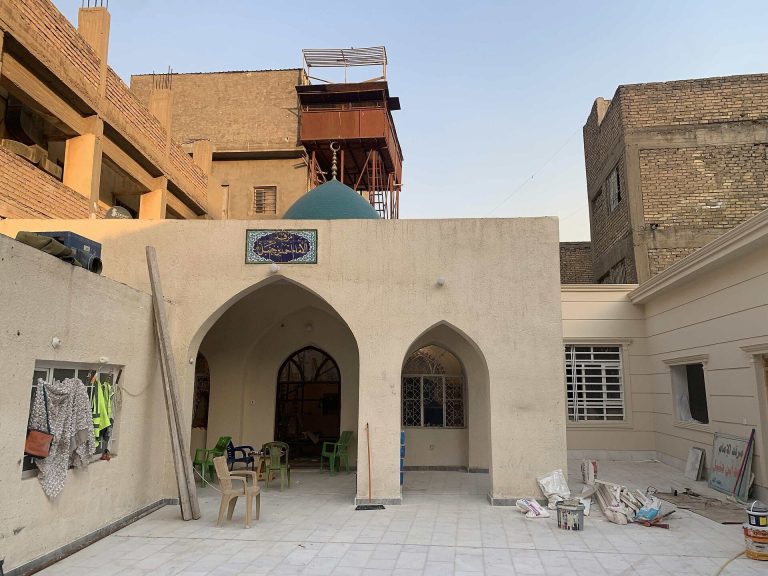
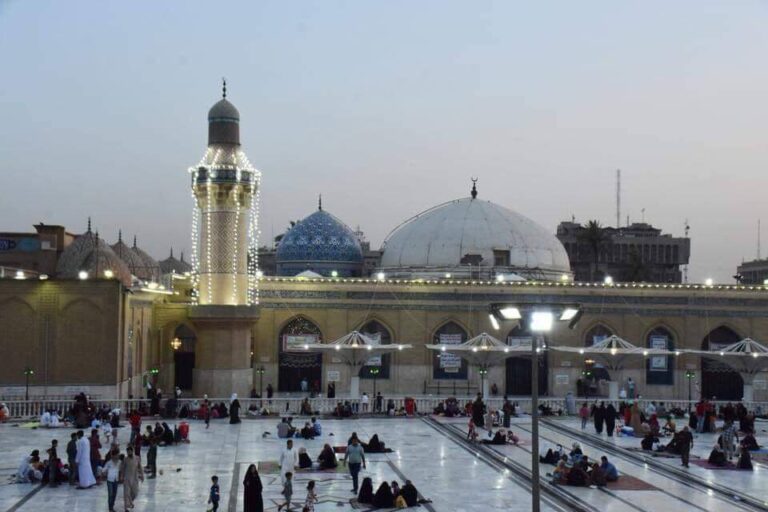
The complex underwent renovations under Ismail Pasha, an Ottoman official whose title denoted a senior administrative or military rank, in 1902 and 1926. The Sunni Endowment Office carried out further work in 1964. Renovation after the 2003 Iraq War addressed structural stability and preservation. In 2010, the conical tower was reported to be at risk of collapse. The complex remains an active mosque, holding the five daily prayers.
The site is associated with two burial places. One is Umar al-Suhrawardi’s tomb. The other is traditionally attributed to Al-Musta’sim, the last Abbasid caliph to rule from Baghdad before the Mongol conquest in 1258, although that identification remains uncertain because another mosque in Al-Adhamiyah is also said to contain his grave.
Remains
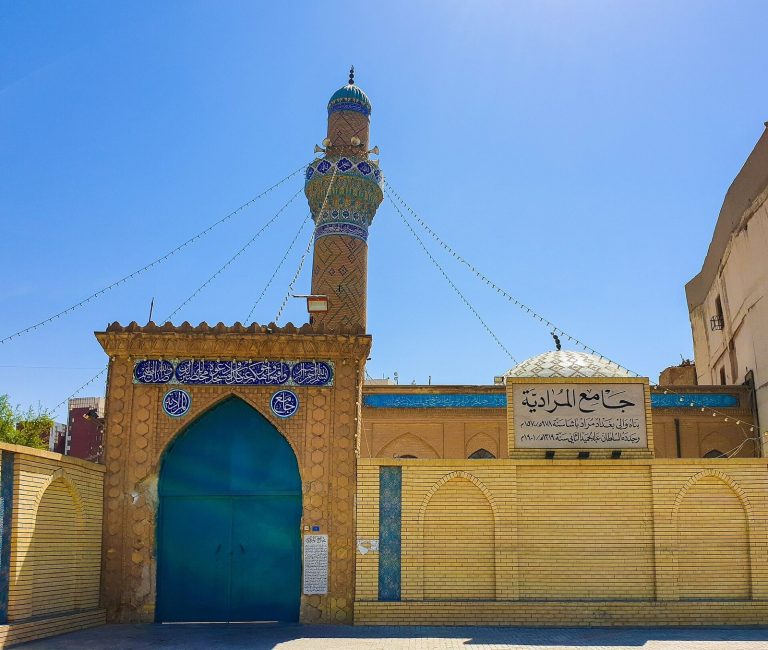
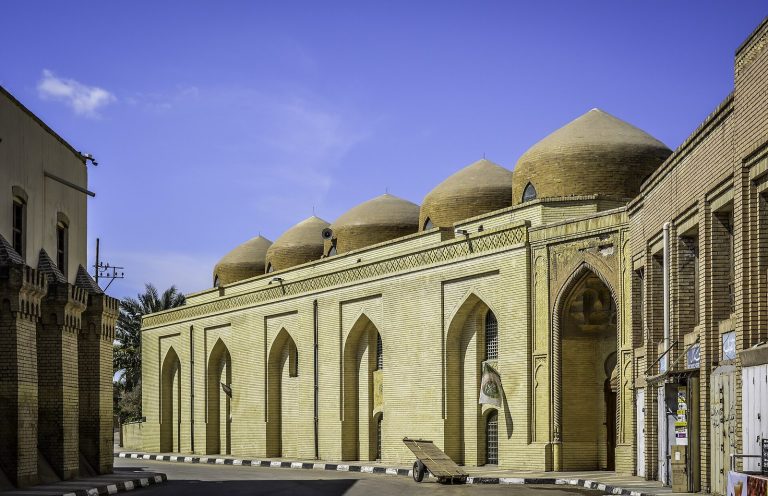
The complex stands in southern Al-Rusafa between Sheikh Umar Street and the old Baghdad wall near the Middle Gate. It lies beside the old cemetery and near Sheikh Umar Cemetery. The mosque and mausoleum combine Abbasid, Seljuk, and Ottoman architectural traditions, with the conical dome specifically associated with Seljuk architecture. Brick forms the principal building material, with marble used in important elements.
Prayer hall and mosque structure
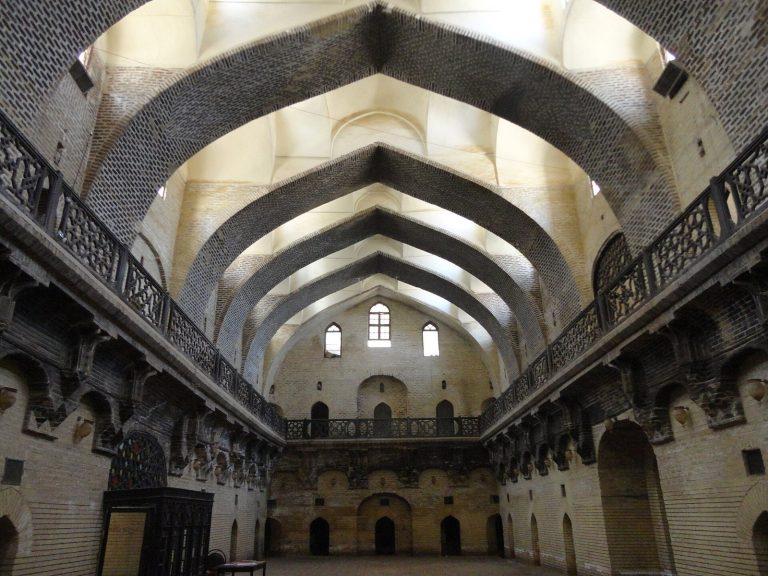
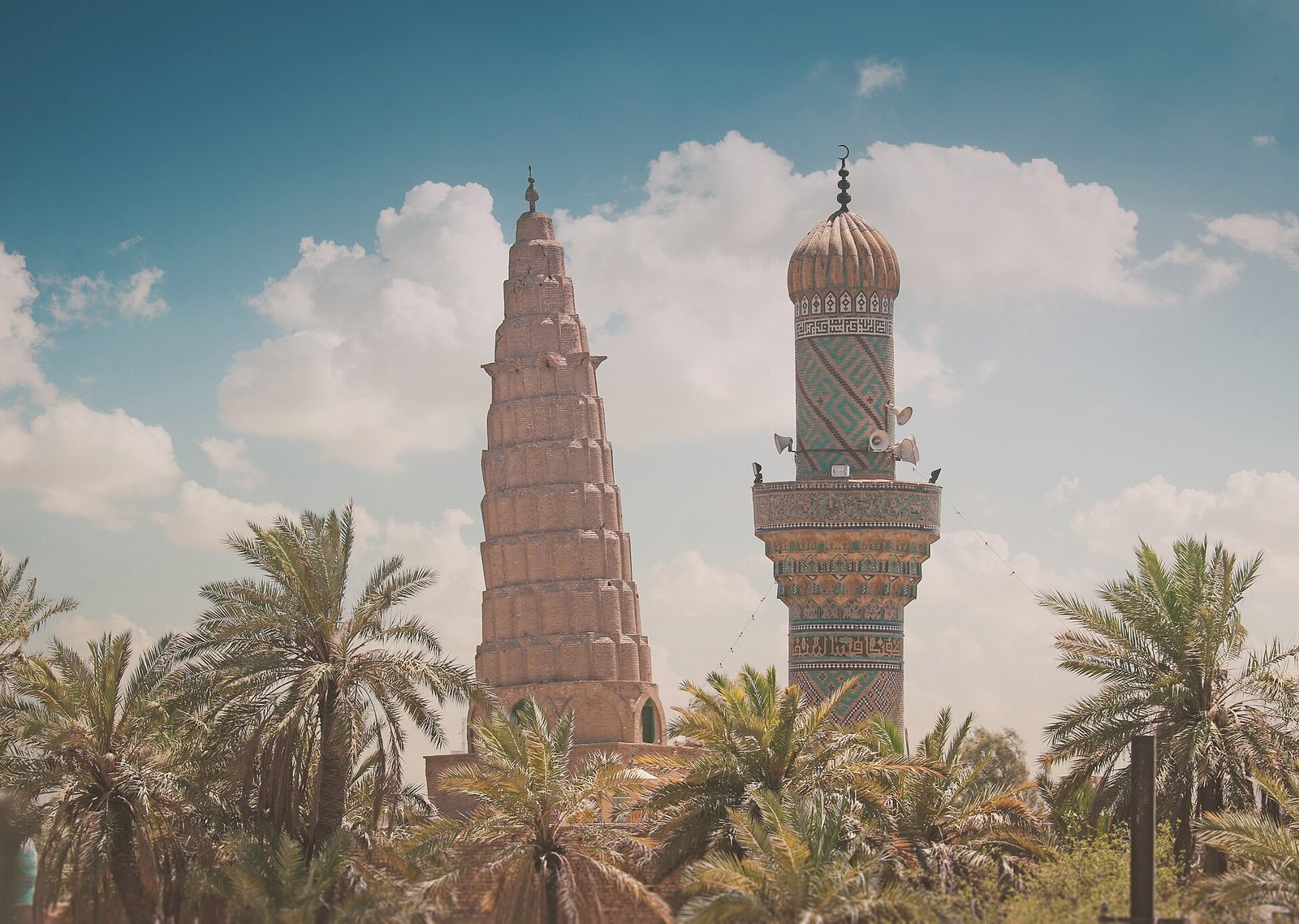
The prayer hall covers about 600 square metres and accommodates more than 400 worshippers. Thick surrounding walls enclose a broad summer prayer hall, while a single minaret takes the form of a conical tower. The main prayer space is arranged around a dome carried by ten pillars or supports. A doorway within the hall leads to Umar al-Suhrawardi’s tomb, and the dome over the mihrab, the prayer niche indicating the direction of Mecca, is clad in marble.
Conical mausoleum dome
The mausoleum dome rises from a square base approximately 7.5 metres wide and reaches about 7.7 metres in height. Above the base is a drum decorated with muqarnas, a three-dimensional ornament made from stepped, niche-like cells that mediate between structural forms. The dome has ten tiers. Its lower six tiers contain sixteen convex niches with rectangular projections, which transition through octagonal motifs into a ribbed conical roof tapering toward a polygonal peak. The design has been compared with the Dome of Ezekiel in Babylon.
Interior decoration and inscriptions
The interior contains twelve alcoves, with three on each wall. The central alcoves have pointed arches supported by plaster columns. Qur’anic inscriptions extend around the walls and lead toward a sixteen-sided star pattern beneath the hemispherical dome. Inscriptions on the dome and entrance are written in Thuluth, a formal Arabic script widely used for monumental religious writing.
The entrance inscription records the shrine’s renewal in 1334/1335. The dome inscription invokes God’s revival of the earth after its death and refers to the dome’s renewal after deterioration. The dome and its inscriptions were reportedly renewed by Jamal al-Din Abd al-Rahman ibn Abd al-Mahmud, while the entrance inscription also records renewal by Muhammad ibn al-Rashid.