Matris Domini Monastery: A Dominican Women’s Monastery in Bergamo


Site at a Glance
- Rating
- 4.6
- Popularity
- Very Low
- Country
- Italy
- Primary era
- Early Modern
- External website
- Open
- Eras represented
- Medieval, Early Modern
- Civilizations
- Duchy of Milan, Venetian
- Site type
- Religious
- Remains
- Monastery
On this page12 sections
History
Matris Domini Monastery is an enclosed Dominican women’s monastery in Bergamo, Italy, developed during the second half of the thirteenth century within the Roman Catholic tradition. Its foundation is traditionally linked to the episcopates of Algisio da Rosciate around 1258 and his successor Erbordo Ungano, although its exact foundation date remains uncertain. The monastery was established at the foot of the medieval city, near the gates and in an area supplied with reliable water.
Foundation and medieval development
The monastery belonged to the Dominican movement, a Catholic order founded in the thirteenth century with a particular commitment to preaching, study, and religious instruction. Its female communities traditionally lived in enclosure. The church was consecrated on 25 March 1273 by Bishop Guiscardo Suardi, and the community expanded from its foundation onward.
The complex was rebuilt in 1359 and enlarged several times during the seventeenth and eighteenth centuries. These works changed both its scale and appearance while preserving its continuing role as a Dominican religious house.
Suppression, wartime use, and revival
During the Napoleonic occupation and the suppression of religious institutions, the monastery was closed and the church was stripped of furnishings and works. Its Triptych of Saint Peter Martyr was stolen during this period. A diptych by Andrea Previtali, comprising an Annunciation panel and an arched upper panel showing the Coronation of the Virgin by the Trinity, was also divided during the spoliations.
During the German occupation of Italy in the Second World War, the complex was converted into a Gestapo prison, a detention facility operated by Nazi Germany’s secret state police for interrogation and imprisonment. It was later returned to its religious function and to the Dominican nuns, who directed its revival and conservation.
The monastery museum
The complex now houses the Matris Domini Museum, whose collection consists chiefly of medieval works from the monastery itself. The church also preserves the relics of Blessed Guala de Roniis, Bishop of Brescia. They were transferred there after Astino Monastery, where they had previously been kept, was suppressed.
Remains
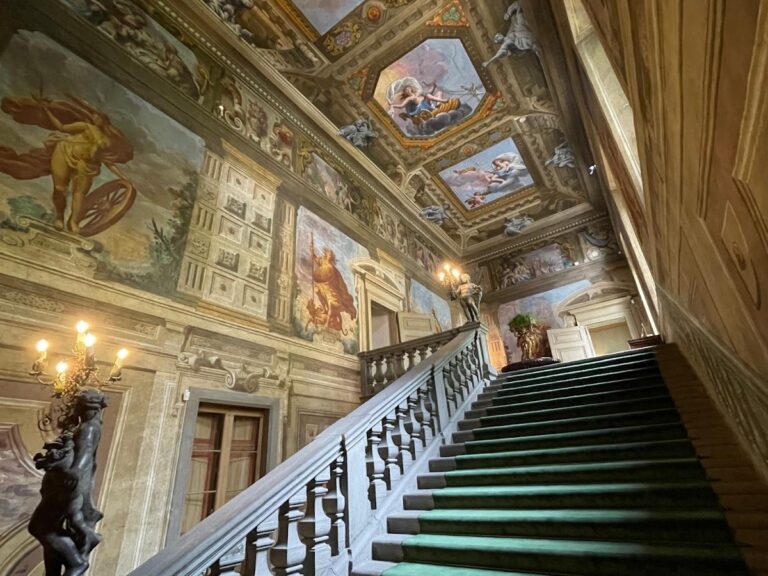
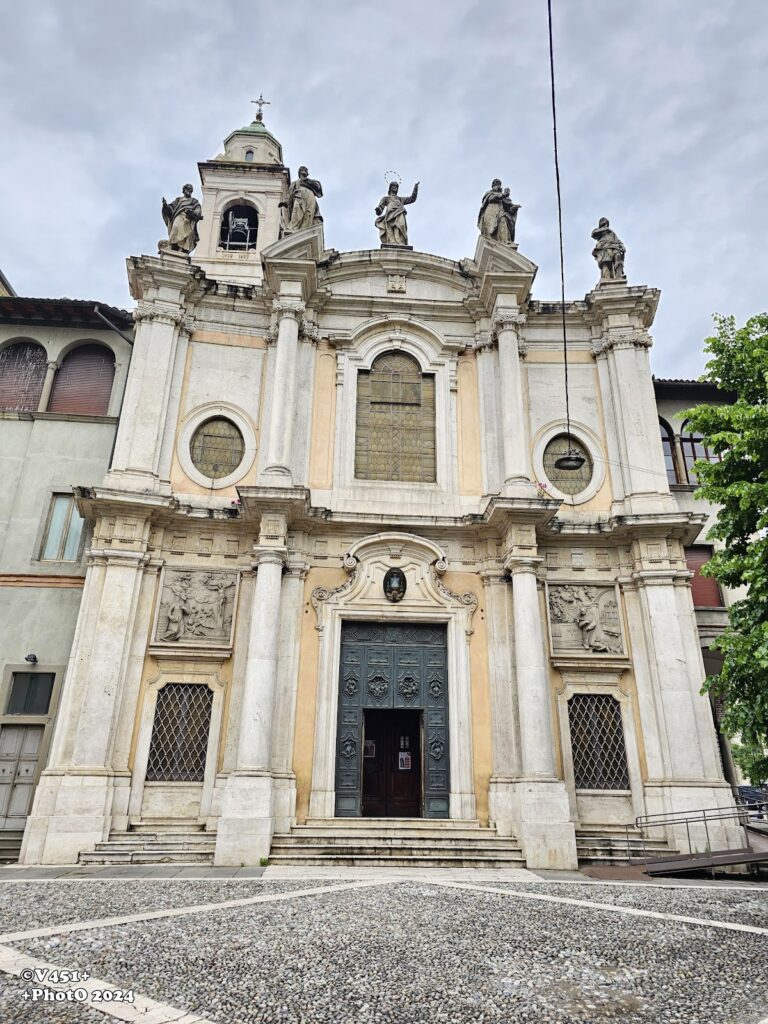
The surviving complex combines the monastery church with the museum. Its traditional arrangement for a women’s monastery includes an internal chapel with one nave and two aisles, together with an external church. The original church was Romanesque, but it was radically transformed in the seventeenth century into a luminous Baroque interior. Stucco decoration attributed to the Porta family and Angelo Sala, together with frescoes and chapel altarpieces, belongs to this later appearance.
Church interior
Baroque decoration and paintings
Pietro Baschenis painted the Glory of Saint Dominic on the presbytery vault. The main altar has a seventeenth-century Annunciation by an unidentified artist. It is flanked by an Adoration of the Shepherds, also by an unidentified artist, and The Massacre of the Innocents by Pietro Ricchi. The chapels contain additional altarpieces dating from the eighteenth and nineteenth centuries.
Medieval frescoes and glass
Transferred frescoes
The museum displays frescoes removed from several parts of the monastery’s earlier structure, including the refectory and the old Romanesque church before its Baroque restructuring. The painted surfaces were detached from the walls and placed on prepared supports through the strappo technique, a conservation method that transfers a fresco’s painted surface to a new support. Dating from the thirteenth and fourteenth centuries, these works include some of the earliest surviving examples of fresco painting in Lombardy, and several remain exceptionally well preserved.
Among the paintings are works attributed to the Master of the Life Tree, an unidentified medieval painter named from a group of stylistically related works. They include the Just, the Blessed, two trumpet-playing angels, Saint Peter Enthroned, and Hell. Other frescoes are attributed to the First Master of Chiaravalle and include the Visitation, Jesus among the Doctors, The Baptism of Jesus, the Virgin and Child Enthroned, The Miracle of the Wheel of Saint Catherine of Alexandria, Saint Martin and the Beggar, Jesus Entering Jerusalem, and The Miracle of the Reanimation of Napoleone Orsini by Saint Dominic.
Fourteenth-century glass medallions
Five polychrome glass medallions from a fourteenth-century stained-glass window are preserved in the museum. The window decorated the apse of the old church, and the medallions are described as the oldest vitreous works in Lombardy. The largest shows the Virgin with the Blessing Child. Two others depict angels, and all three share a distinctive treatment in which the faces and hands are left without coloration. The remaining medallions represent Saint Dominic blessing and Peter of Verona, also known as Saint Peter Martyr.
Exterior feature
Foundlings’ wheel
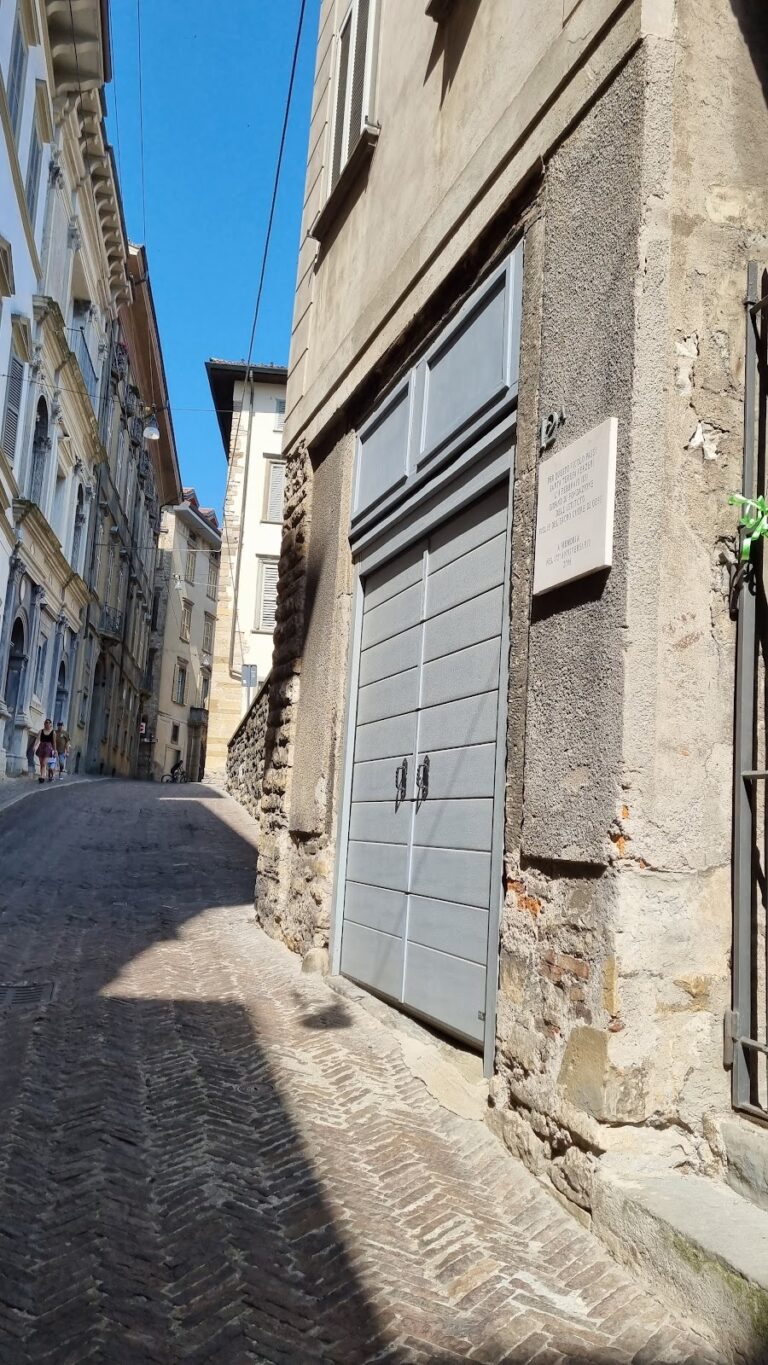
An ancient foundlings’ wheel remains visible on the monastery’s exterior. This rotating opening was traditionally used to leave an infant anonymously at a charitable or religious institution.
Nearby sites