Matosavank: A Thirteenth-Century Armenian Monastic Complex


Site at a Glance
- Rating
- 4.8
- Popularity
- Low
- Country
- Armenia
- Primary era
- Medieval
- Eras represented
- Medieval
- Civilizations
- Armenian
- Site type
- Religious
- Remains
- Monastery
On this page9 sections
History
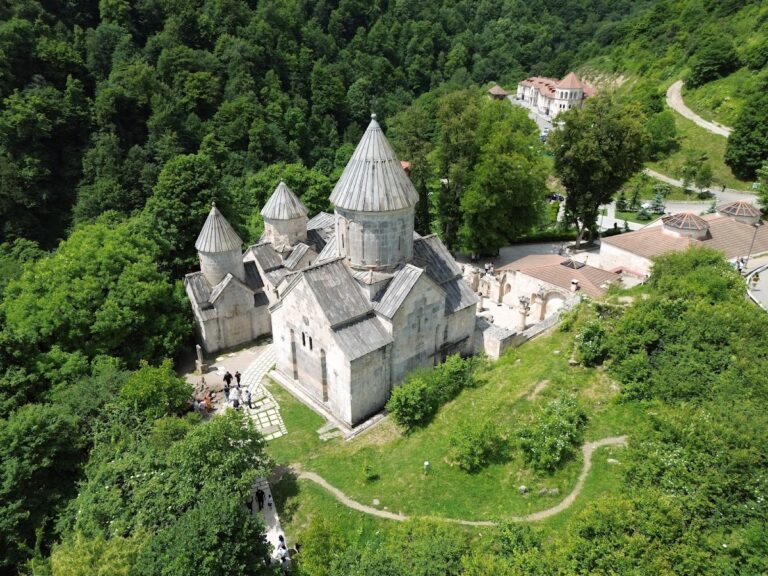
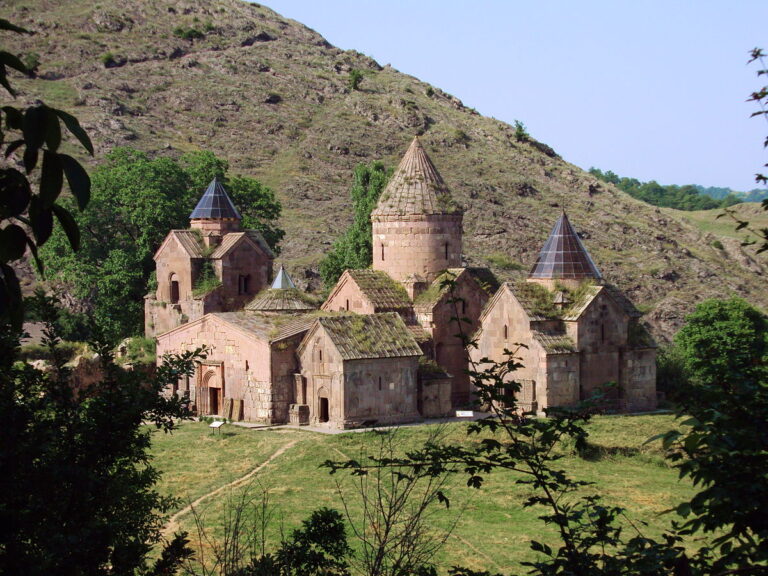
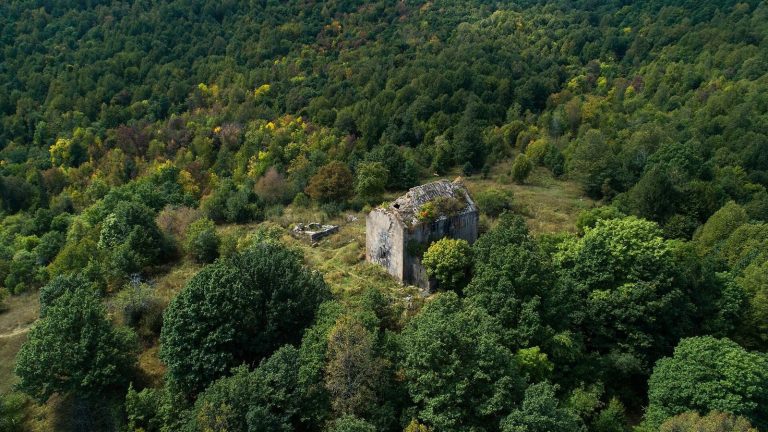
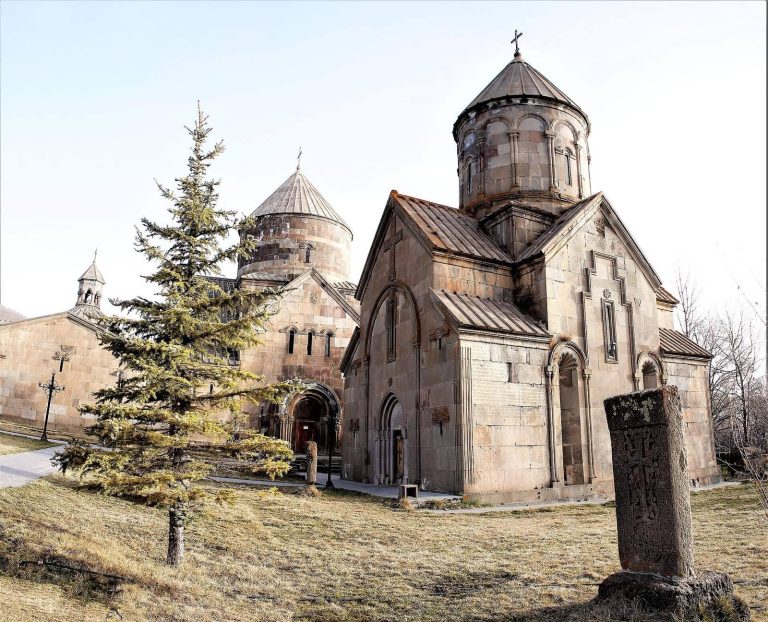
Matosavank is a small thirteenth-century Armenian Apostolic monastic complex in Armenia, near Dilijan in Tavush Province. Within Dilijan National Park and approximately 3.5 kilometres from the town, it belongs to the Gugark Diocese, an ecclesiastical district of the Armenian Apostolic Church. The monastery is recorded as having been founded in 1205, while its principal church, Surb Astvatsatsin, belongs to the medieval Armenian architectural tradition.
Foundation and Church Construction
The Church of Surb Astvatsatsin, also known as Pghndzahanq Surb Astvatsatsin, was built in 1247 and completed in 1251. Its construction took place under the supervision of Avag, a member of the Zakarian dynasty and identified as a son of Ivane. Sargis is also associated with supervision of the work. The church followed an oath of submission to Mongol occupying forces, placing its construction within a period when Armenian political and religious institutions operated under foreign domination.
Inscriptions at the monastery include curses that have been interpreted as possible evidence for an earlier Chalcedonian congregation. Chalcedonian communities accepted the doctrinal definitions associated with the Council of Chalcedon, but the interpretation of Matosavank’s inscriptions remains inferential rather than certain.
Protection and Deterioration
Matosavank is protected as a state monument of republican significance under registry number 10.3/145. The complex nevertheless continues to deteriorate without restoration. Visitors have written on some walls, and candles burned on ancient stone crosses have left soot and wax deposits. The lost dome of the church allows greater interior humidity, which accelerates the damage to the surviving structures.
Remains
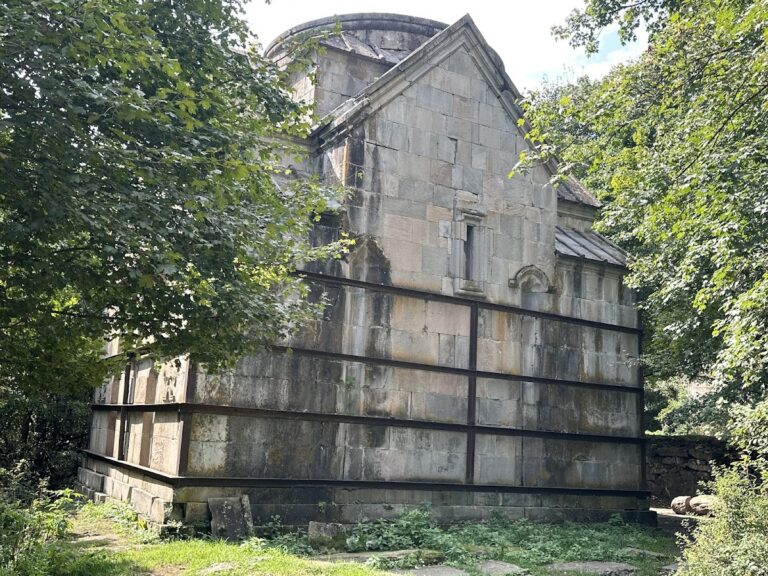
Matosavank consists of three adjoining vaulted buildings: the small Church of Surb Astvatsatsin, a gavit, or attached entrance and assembly hall, and a book depository. Built from roughly or semi-dressed stone, the structures are partly covered by earth and survive in very poor condition. The main hall, the book-storage room, part of the ceiling, and the portico remain largely preserved within a complex that is substantially ruined and difficult to examine.
Adjoining Monastic Buildings
Church of Surb Astvatsatsin
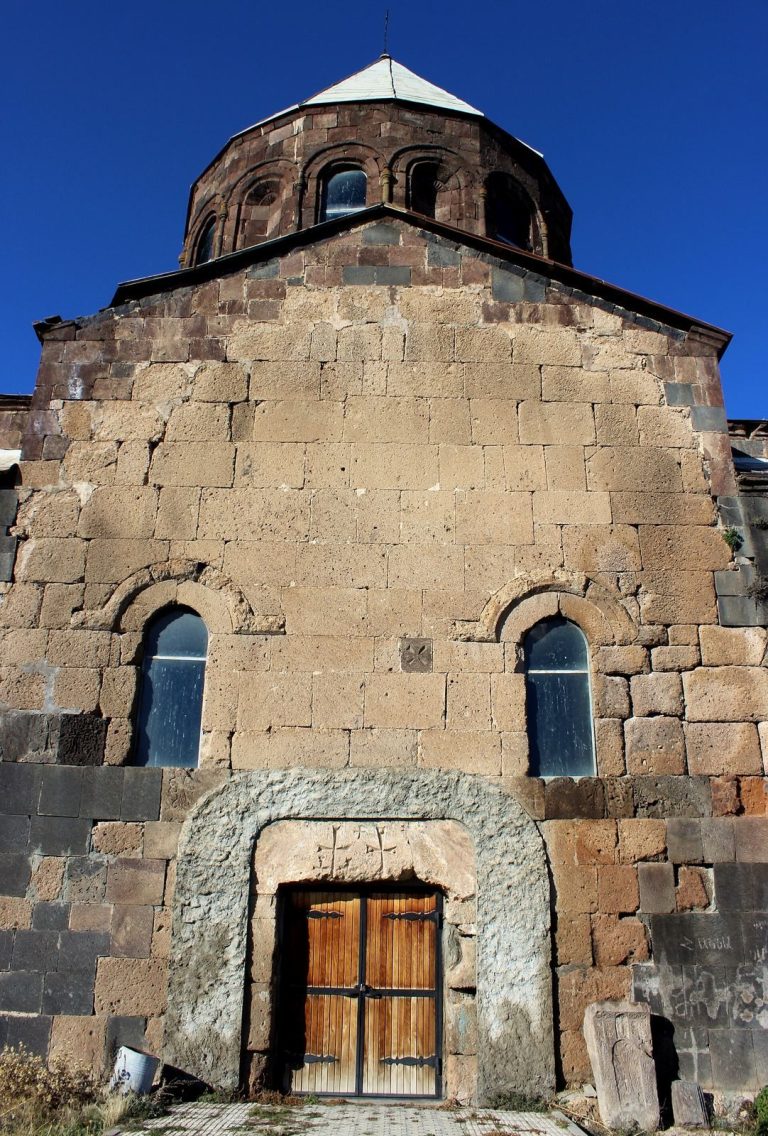
The church is a small vaulted building measuring approximately 6.5 by 3.5 metres. Its roughly dressed stone walls were covered internally with lime-mortar plaster. A single entrance opens on the west side. Outside the doorway, a semicircular facing stone carries a foundation inscription, while sculpted khachkars, carved Armenian stone crosses, and inscribed fragments are set into the western wall on both sides of the entrance.
A large khachkar with an inscription dated 1251 stands beneath the northern wall. The church’s western walls adjoin a portico, and its southern sanctuary wall connects with the book depository. The church has lost its dome, contributing to the high humidity that affects its interior.
Gavit
The gavit stands directly against the church on its western side. It is an almost square vaulted room made from semi-dressed stones of different sizes, with interior walls formerly coated in lime-mortar plaster. A narrow window in the western wall provides its stated source of light. Several tombstones lie across the floor, including rough stones and others without inscriptions.
Book Depository
West of the gavit is the vaulted book depository, which connects to it through a wide opening. The room measures approximately 4 by 3.5 metres and is built from large, smoothed stones. It also has a separate entrance in its eastern wall and two narrow windows in the southern wall. One wall is approximately half destroyed, while the room itself and part of the wider complex remain substantially ruined.
Cemetery
A cemetery extends southeast of the monastic buildings. It contains rough gravestones and pedestals for khachkars, continuing the complex’s association with inscribed and carved stone monuments beyond the surviving rooms.