Martinskirche: Linz’s Roman Catholic Church of St Martin of Tours
Site at a Glance
- Popularity
- Medium
- Country
- Austria
- Primary era
- Medieval
- Eras represented
- Medieval, Early Modern
- Civilizations
- Carolingian, Duchy of Austria, Duchy of Bavaria, Habsburg, Holy Roman Empire
- Site type
- Religious
- Remains
- Church
On this page8 sections
History
Martinskirche is a Roman Catholic church dedicated to St Martin of Tours, a fourth-century Christian bishop venerated as a saint, in Linz, Austria. First mentioned in a charter dated 20 June 799, it is described as the city’s oldest Roman Catholic church. It was long regarded as Austria’s oldest surviving church, but that claim has been challenged; Vienna’s Ruprechtskirche and the branch church of St Ulrich in Thaur near Innsbruck have also been proposed as contenders.
The charter of 799
When preparations were under way for a campaign against the Avars, a people whose power and campaigns affected central and eastern Europe, Gerold the Younger, a senior Bavarian official assigned to lead the expedition, sought help from his brother-in-law, Charlemagne, king of the Franks. Gerold asked Charlemagne to intercede with Waldrich, bishop of Passau, a senior Christian cleric responsible for a diocese. He wanted the right to use the church and benefit from it for the rest of his life.
The charter was drawn up in connection with either a diocesan synod, a formal meeting of church leaders, or a gathering at Treisma. Its oldest surviving copy dates to the ninth century and is held in the Bavarian Main State Archive in Munich.
Medieval alterations
The church underwent repeated changes over the following centuries. An earlier phase included a central building with an unfinished three-lobed plan. In the fifteenth century, the church was remodelled in the Gothic style, a later medieval architectural style. In 1589, its western wall was dismantled to the foundations and rebuilt. A western portal took the place of the southern entrance, which had been in use since 799.
Military use and parish role
During the French and Bavarian occupation of Linz in 1742, the church served as a horse stable. The occupation took place during the War of the Austrian Succession, an eighteenth-century conflict over the Habsburg succession. From 1810 to 1832, the building was used as a military depot. Renovations in 1841 included renewal of the western entrance.
In spring 2015, the Catholic Church acquired a former restaurant and converted it into a parish centre. After the parish church of Linz-St. Matthias, in a former Capuchin monastery, was deconsecrated on 3 July 2016, Martinskirche became the parish’s new home on 10 July.
Remains
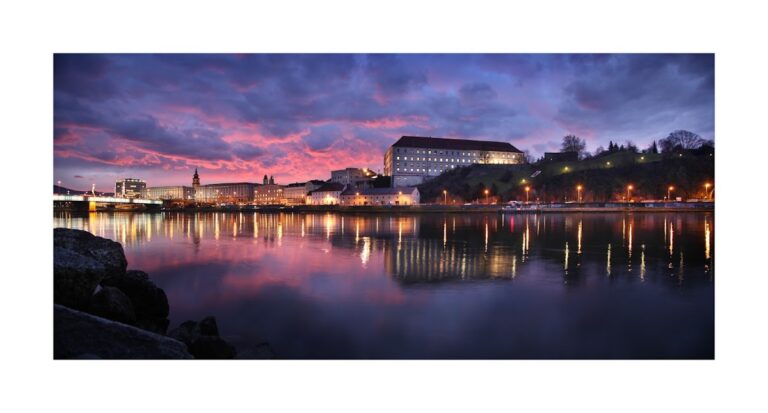
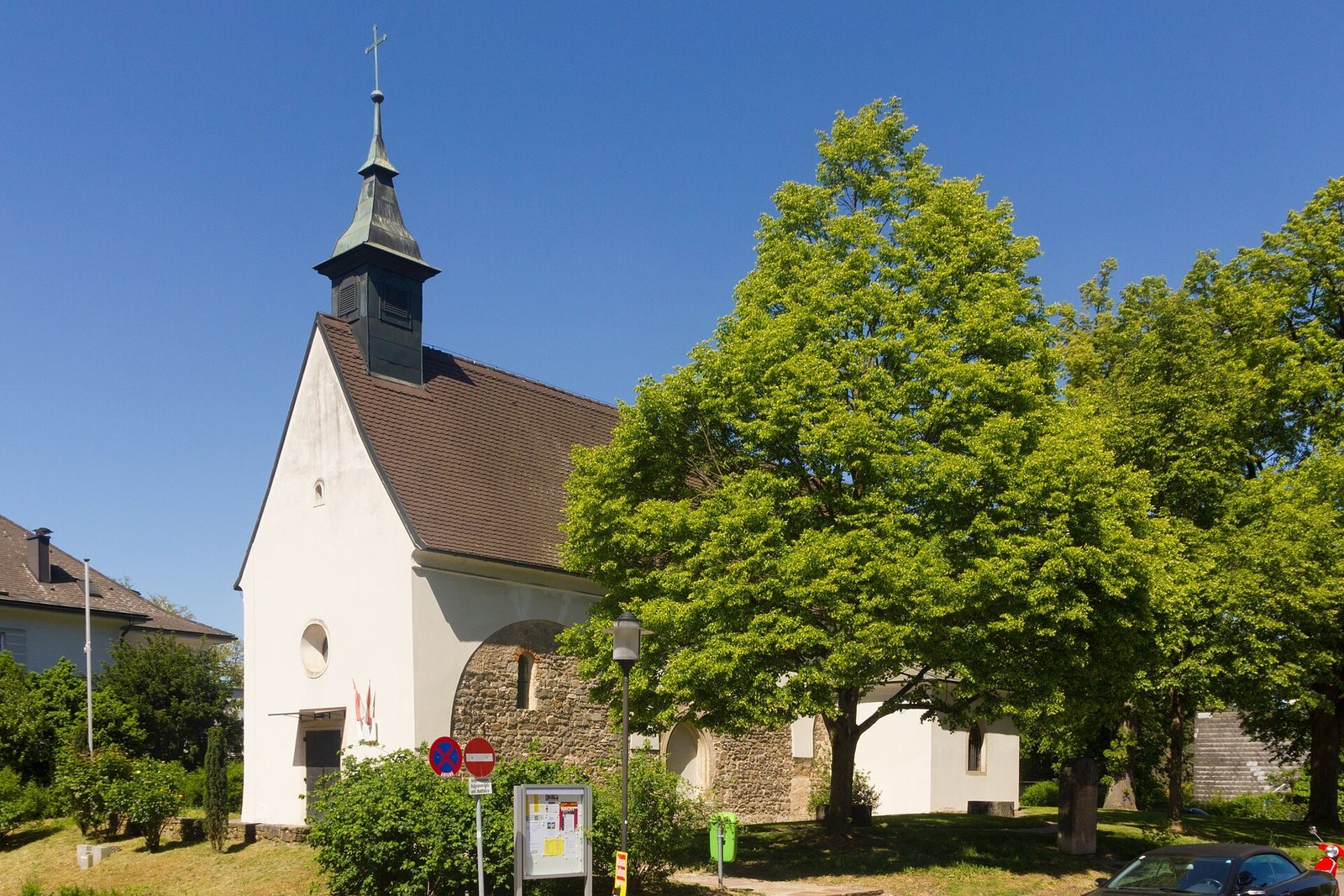
The church stands on Römerberg, above Linz Castle and at the edge of the inner city. Its present ground plan probably reflects remodelling in the tenth or eleventh century. The earliest surviving masonry is Romanesque, an early medieval architectural style, and suggests a rectangular hall with a choir screen, a partition separating the choir from the rest of the church.
Early building plan
An older centrally planned building, excavated in 1978, belonged to the Carolingian period, the era associated with Charlemagne and his successors. An earlier central structure had an unfinished three-lobed outline.
Reused Roman materials
Roman building materials were incorporated into the church, including ten Roman grave markers. Roman markers bearing inscriptions from the third century are also present inside.
Medieval features and decoration
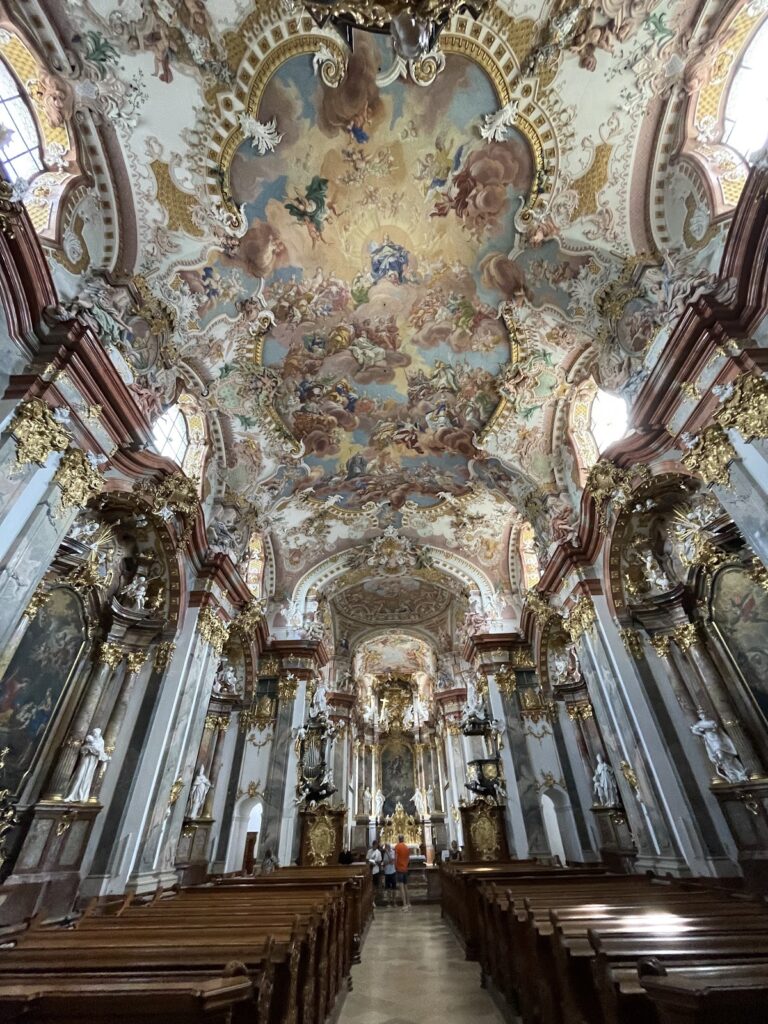
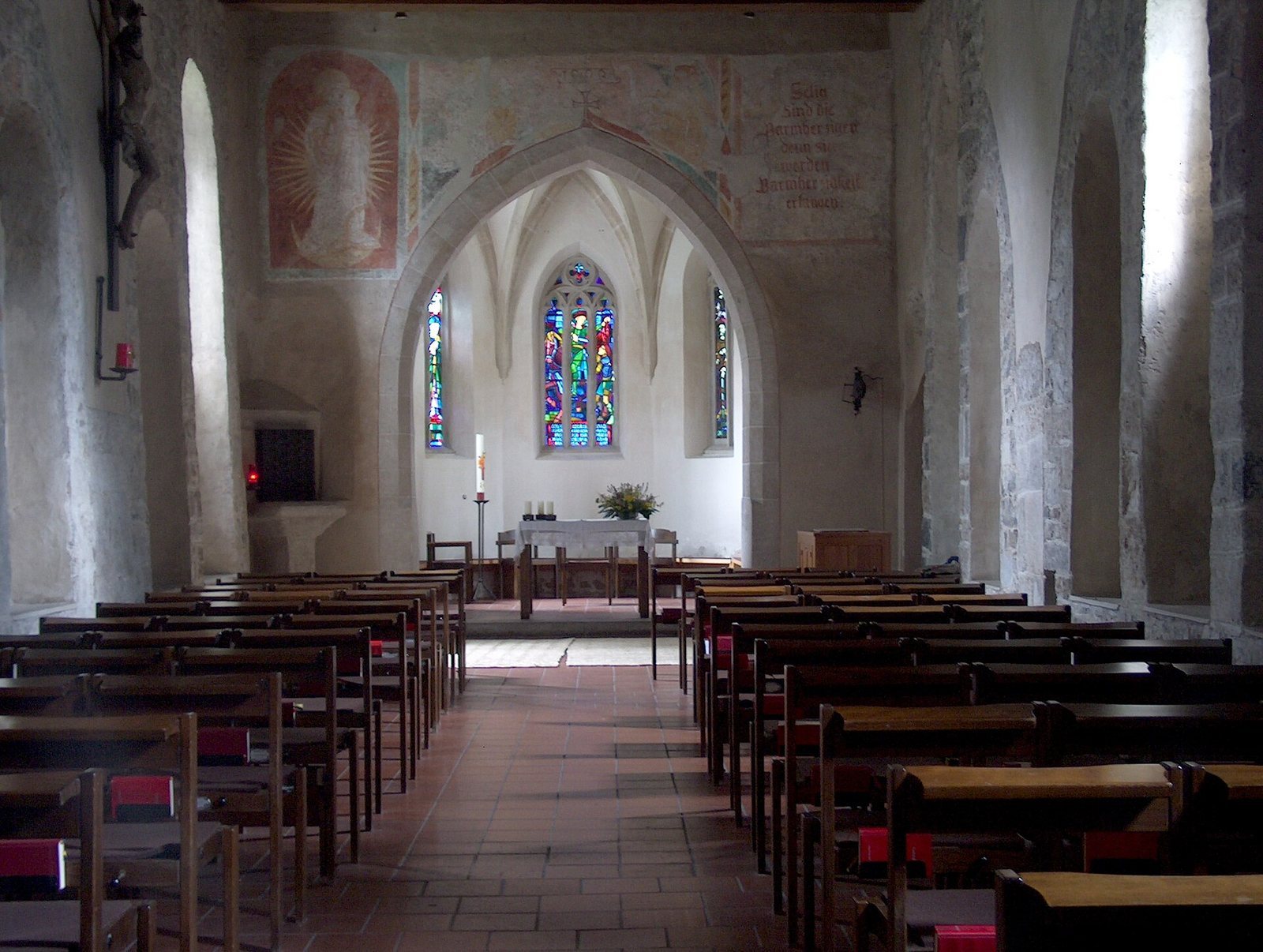
Medieval additions include Gothic-style windows and doorways, along with a chancel, the area around the altar traditionally reserved for clergy. Wall paintings from the fourteenth and fifteenth centuries survive inside. Paintings on the north wall depict the Virgin Mary, and Gothic wooden sculptures are also present.