Maria Column in Franciscan Square: A Baroque Monument in Bratislava
Site at a Glance
- Popularity
- Low
- Country
- Slovakia
- Primary era
- Early Modern
- Eras represented
- Early Modern
- Civilizations
- Habsburg, Hungarian
- Site type
- Civic
- Remains
- Monument
On this page7 sections
History
The Maria Column in Franciscan Square is a Baroque Marian monument in Bratislava, Slovakia. Leopold I, a member of the Habsburg dynasty, erected it in 1675. The Habsburgs were a European ruling house whose territories included Austria and Hungary, and Leopold held the titles of Holy Roman Emperor and king of Hungary. The column commemorated his suppression of a Protestant uprising.
The uprising and the column’s erection
In 1670–1671, Protestant Hungarian rebels sought to put their own ruler on the Hungarian throne. After the uprising was suppressed, leading rebels faced severe reprisals: some were executed, while others were sent to serve as galley slaves, prisoners forced to row oared ships. Mikuláš Drábik, a Moravian Protestant preacher and prominent figure in the resistance, was executed in 1671 at the place where the column would later stand.
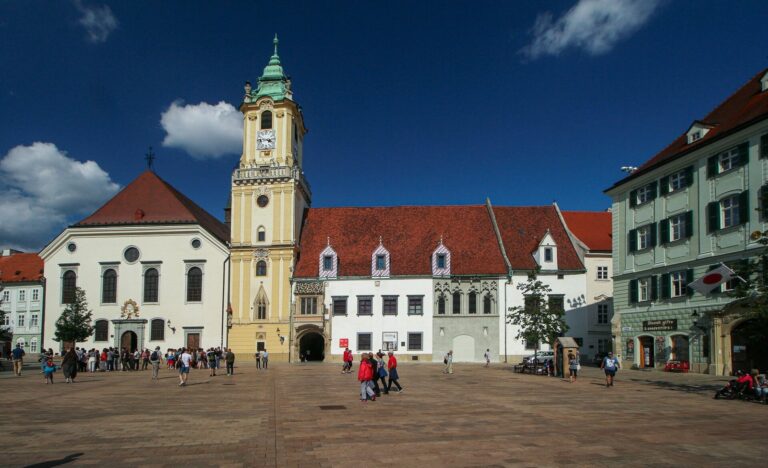
The monument formed part of a wider Habsburg practice of commemorating victories over Protestant opponents. Its Counter-Reformation message, expressing Catholic efforts to strengthen the Church in response to the Protestant Reformation, was reinforced by its position before the Church of the Most Holy Savior. Protestants had built the church, which was later taken over by the Jesuits, members of a Catholic religious order.
Maria Theresa’s visit
On June 25, 1741, the coronation procession of Maria Theresa stopped at the column. Maria Theresa, a Habsburg ruler and queen of Hungary, knelt there and gave thanks to her patroness.
Remains
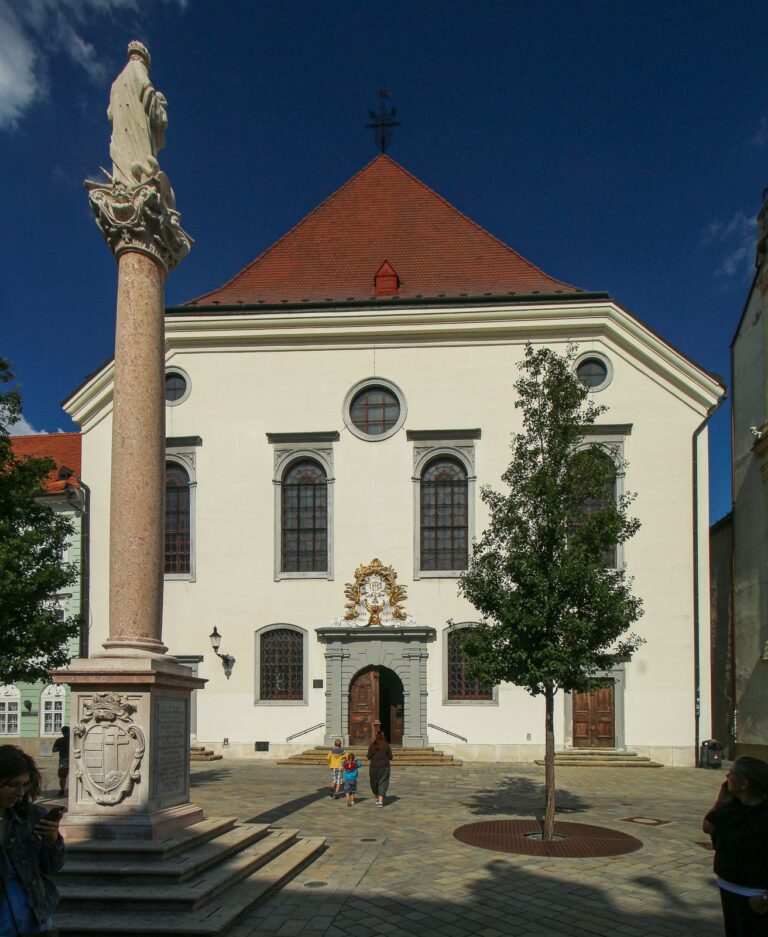
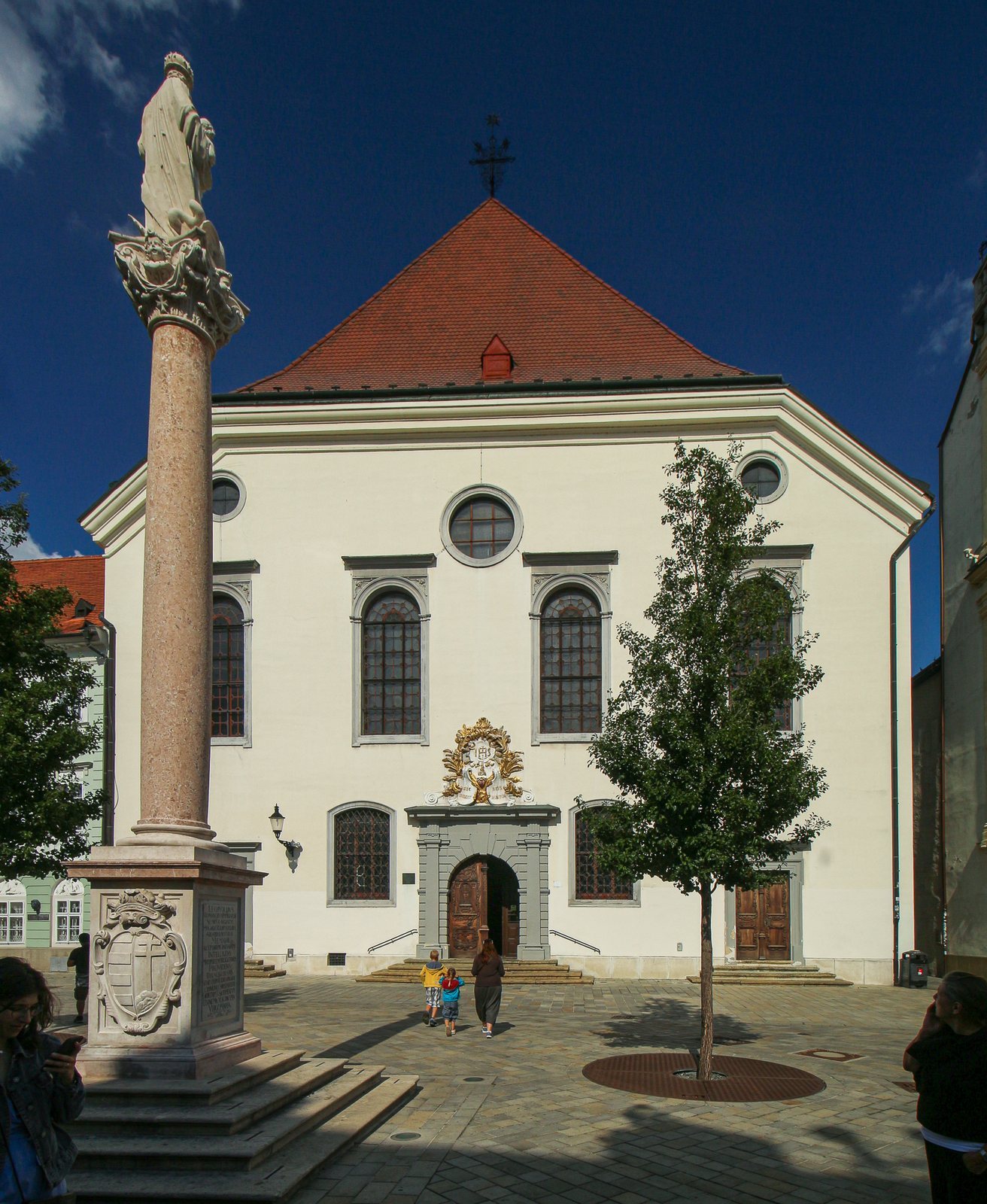
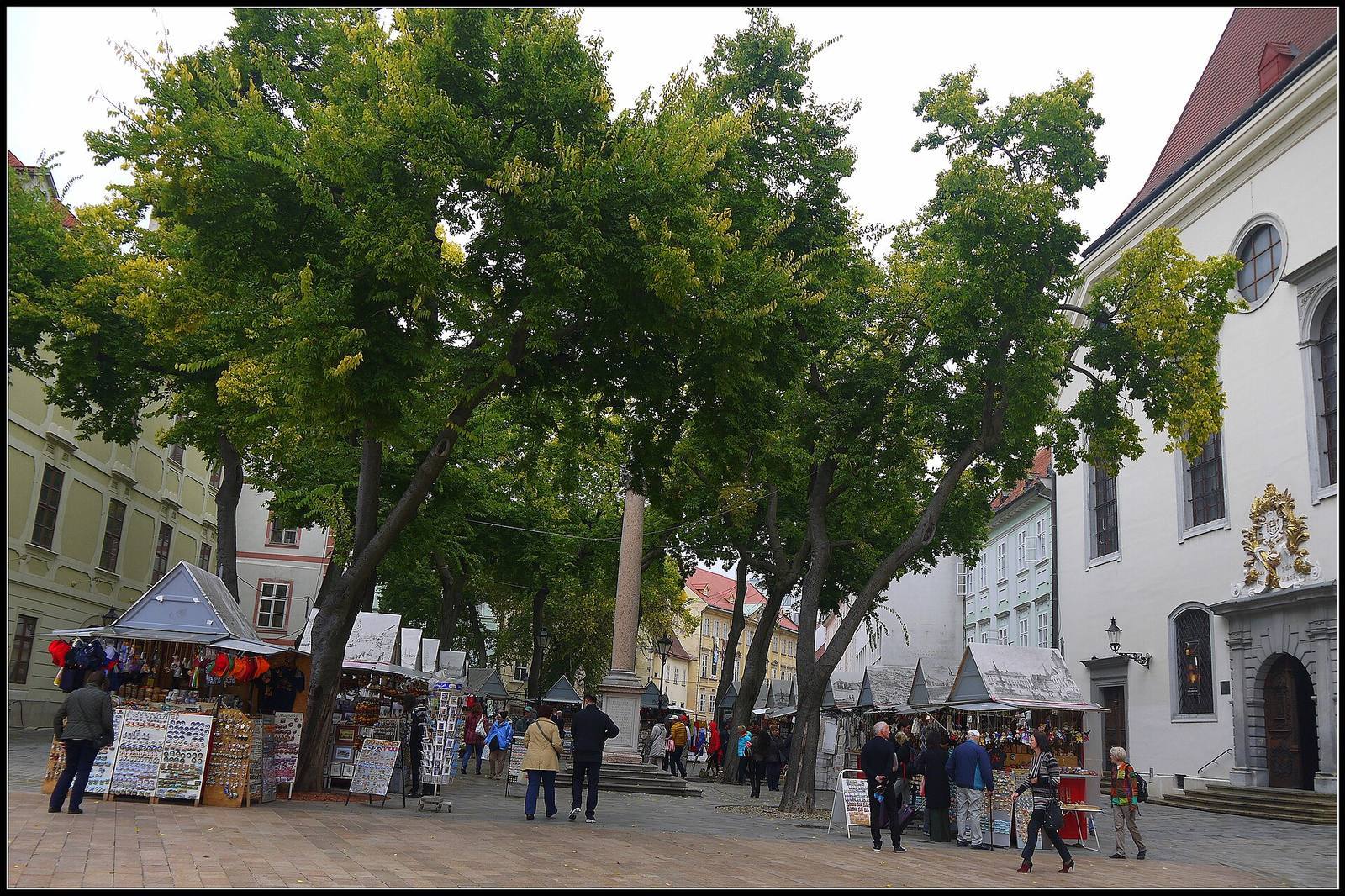
The column stands in the open space before the main entrance to the Church of the Most Holy Savior. Its design appears to follow the Marian column erected in 1638 on Munich’s Marienplatz. A Marian monument is centered on the Virgin Mary.
Column and sculptural figure
Column and statue
A cylindrical column in the Composite order rises from a block-shaped base set on four steps. The Composite order combines features associated with Ionic and Corinthian forms. At the top, a Corinthian capital, an ornate classical column top, supports a detailed sandstone statue. It depicts the Virgin Mary holding the infant Jesus, in keeping with the Catholic belief that Mary was conceived without original sin.
Pedestal reliefs and inscriptions
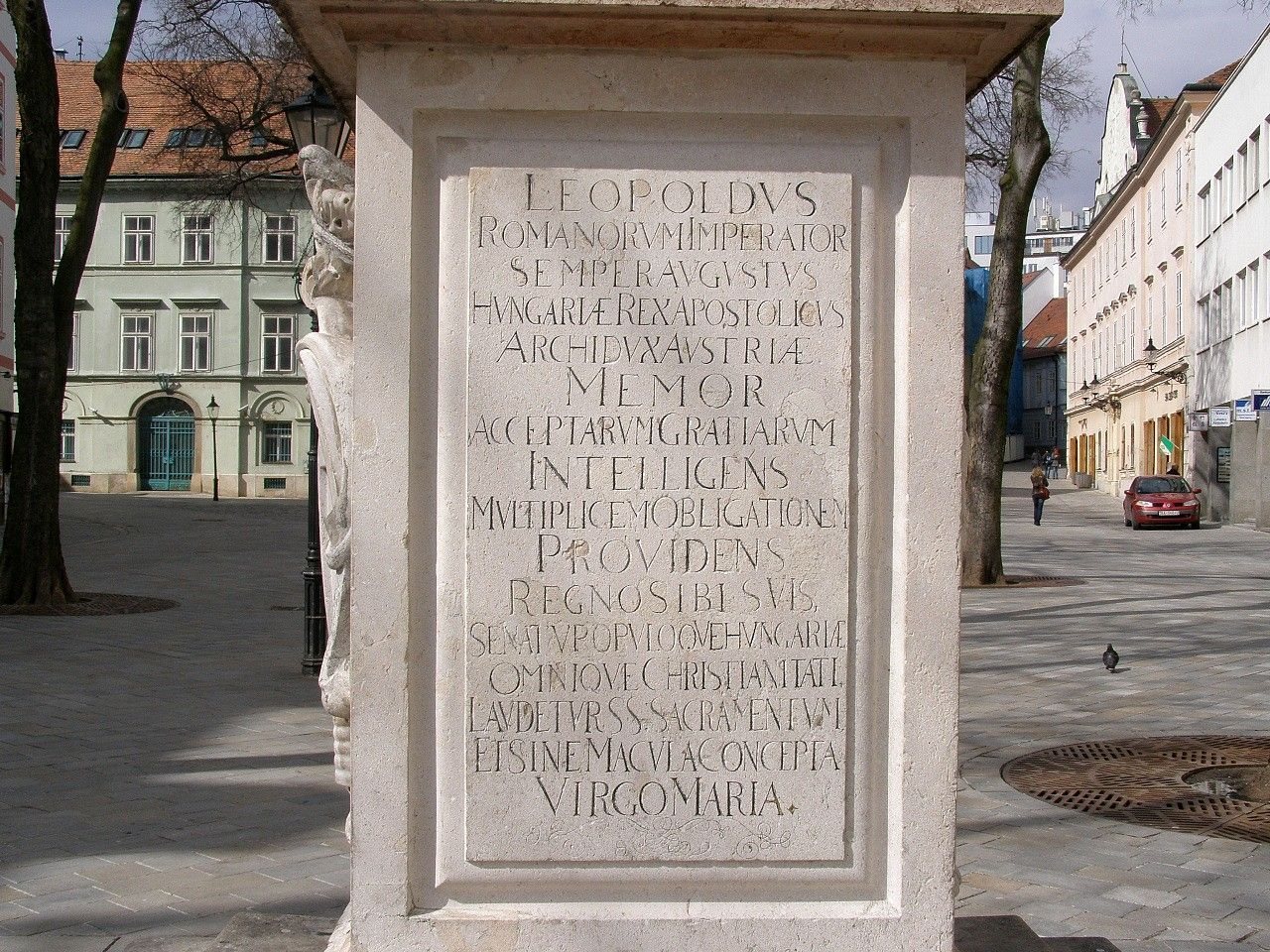
The rear face of the pedestal carries a raised relief of the coat of arms of the Kingdom of Hungary. On the front, angels worship the Eucharist, the consecrated bread and wine central to Catholic worship, displayed in a monstrance, a vessel used to show the consecrated host. Inscriptions on the two sides identify Leopold as the builder and explain the monument’s religious purpose. The side facing Main Square gives his titles and calls for praise of the Blessed Sacrament and the Virgin Mary. The partly difficult-to-read inscription facing the church refers to sacrilegious treatment of the Eucharist and dedicates the column to reparation and to Mary as Hungary’s patroness. It also recalls the expulsion of the Turks, the suppression of rebellions, and the restoration of peace.