Mantinea: An Ancient City of Arcadia
Site at a Glance
- Popularity
- High
- Country
- Greece
- Primary era
- Classical
- Eras represented
- Classical
- Civilizations
- Ancient Greek, Roman
- Site type
- City
On this page20 sections
History
Mantinea was an ancient Greek city in Arcadia, in the Peloponnese of Greece, near the border with Argolis. It took shape around 500 BC through the union of four or five villages, probably encouraged by Argos to check the influence of nearby Tegea. Its territory was called Mantinice, and the city became a recurring focus of political rivalry and warfare in the region.
Origins and early standing
Homer’s Iliad includes Mantinea in its Catalogue of Ships. Later foundation traditions named Mantineus, a son of the mythical Arcadian king Lycaon, or Antinoe, daughter of Cepheus, as the city’s founder. One account placed an earlier settlement called Ptolis at the beginning of Mantinea’s history. It said that Antinoe followed an oracle and moved its people to Mantinea, guided by a serpent or dragon. The nearby river Ophis took its name from that creature.
Mantinea was also consulted on political affairs beyond Arcadia. When disputes arose in Cyrene, a Greek city in North Africa, its king Battus III asked Mantinea to arbitrate. The city sent Demonax, who established a new constitution there.
Sparta, regional rivalry, and war
Before the Persian Wars, conflicts between Greek states and the Persian Empire in the early fifth century BC, Mantinea accepted Spartan leadership and fought as Sparta’s ally. Five hundred Mantineans fought at Thermopylae; its troops reached Plataea only after the battle there had ended.
Mantinea and Tegea competed for influence in Arcadia. Their battle in 423 BC had an uncertain outcome. Tegea then had an oligarchic government and a close alliance with Sparta, while Mantinea was democratic. Mantinea occupied the Arcadian district of Parrhasia and attempted to establish a garrison at Cypsela, actions opposed by Sparta, which backed Tegea.
By 420 BC, Mantinea’s officials were selected through a process involving a committee chosen by the people, rather than by a direct vote of the entire population. An assembly, probably meeting annually, and a council formed part of the system. Political, religious, and military officials held distinct responsibilities. In 421 BC, Mantinea joined Argos, Elis, and Athens in turning against Sparta. It had belonged to the Spartan-led Peloponnesian League, but disputes over Arcadian influence and Sparta’s support for Tegea helped draw it into the Peloponnesian War, the late-fifth-century conflict between Athens and Sparta and their allies.
In June 418 BC, Sparta and its allies fought Athens, Mantinea, Argos, and other opponents near Mantinea, south of the city toward Tegea. The Athenian side was defeated, and its commander Laches was killed. Mantinea withdrew from the Arcadian districts it had occupied and made a 30-year peace with Sparta. It remained Sparta’s ally for 33 years. The democracy was suppressed in 385 BC and returned briefly in the 360s, when Mantinea was part of the Arcadian League, a regional confederation of Peloponnesian cities.
Destruction and reconstitution
After the Peace of Antalcidas, a treaty made under Persian auspices that helped Sparta assert control over Greek cities, Sparta demanded that Mantinea demolish its walls. The city refused. In 385 BC, King Agesipolis I besieged it, invoking the end of the earlier truce. He diverted the Ophis to flood Mantinea. After its surrender, the inhabitants were scattered among other cities and small villages, and the city was broken up. The orator Lysias estimated its population at 13,000 citizens, as well as about 3,000 soldiers.
Sparta’s defeat at Leuctra in 371 BC, a battle in Boeotia in central Greece, allowed Mantinea to be restored as a single city. It joined the Arcadian League, promoted by the Theban general and statesman Epaminondas, and helped establish Megalopolis as the league’s capital. Lycomedes of Mantinea was among the league’s leaders.
Later Greek conflicts
Mantinea later opposed some aims of the Arcadian League and renewed its alliance with Sparta. In 362 BC, Thebes defeated a coalition that included Athens and Sparta at the Second Battle of Mantinea. Epaminondas died in the fighting, and the battle marked the end of Theban hegemony. Mantinea also saw later clashes. In 295 BC, the Macedonian king Demetrius Poliorcetes defeated a Spartan king there. In another battle, Aratus, a leader of the Achaean League, defeated the Spartan king Agis.
Mantinea belonged to the Arcadian League until the formation of the Achaean League, another Peloponnesian confederation, which it joined at first. It later left that league with Orchomenus and Tegea to join the Aetolian League, based in central Greece. In 228 BC, the three cities allied with Sparta, helping bring about war between Sparta and the Achaeans. Aratus seized Mantinea by surprise in 226 BC and imposed an Achaean garrison. The Achaeans were soon expelled, and Mantinea renewed its alliance with Sparta.
In 222 BC, Antigonus III Doson of Macedonia captured and sacked the city, enslaved its inhabitants, and handed Mantinea to the Achaeans. Under Aratus, the Achaeans settled the city and renamed it Antigonia in honor of the Macedonian king.
Roman rule and modern excavation
Mantinea passed under Roman rule along with Macedonia. It was the only city to fight for Octavian before the Battle of Actium. The city retained the name Antigonia during the Roman period until Emperor Hadrian restored the name Mantinea. Hadrian visited in 130 AD. The Greek travel writer Pausanias visited the area some decades later, probably a few years before 166 AD, and described its monuments and ruins, along with traditions about Ptolis and the surrounding area.
The French School of Archaeology excavated the ancient remains in 1887–1889. The Greek Archaeological Service carried out further excavations from 1960.
Remains
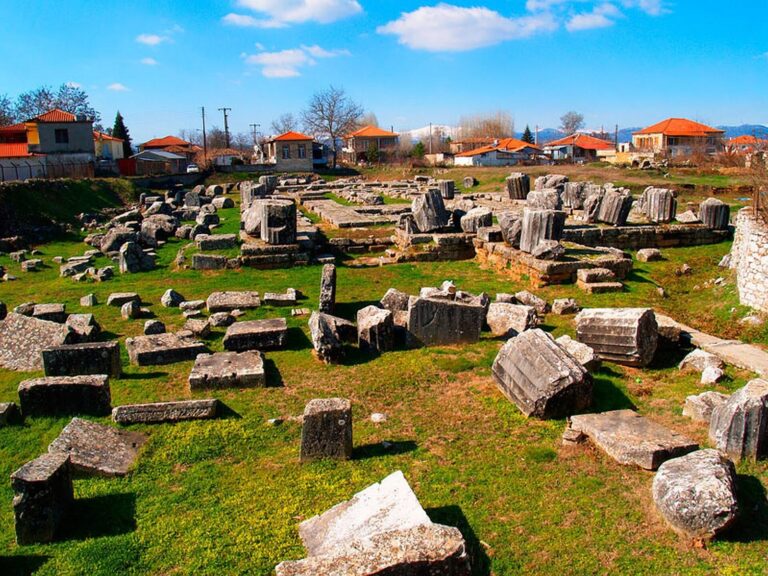
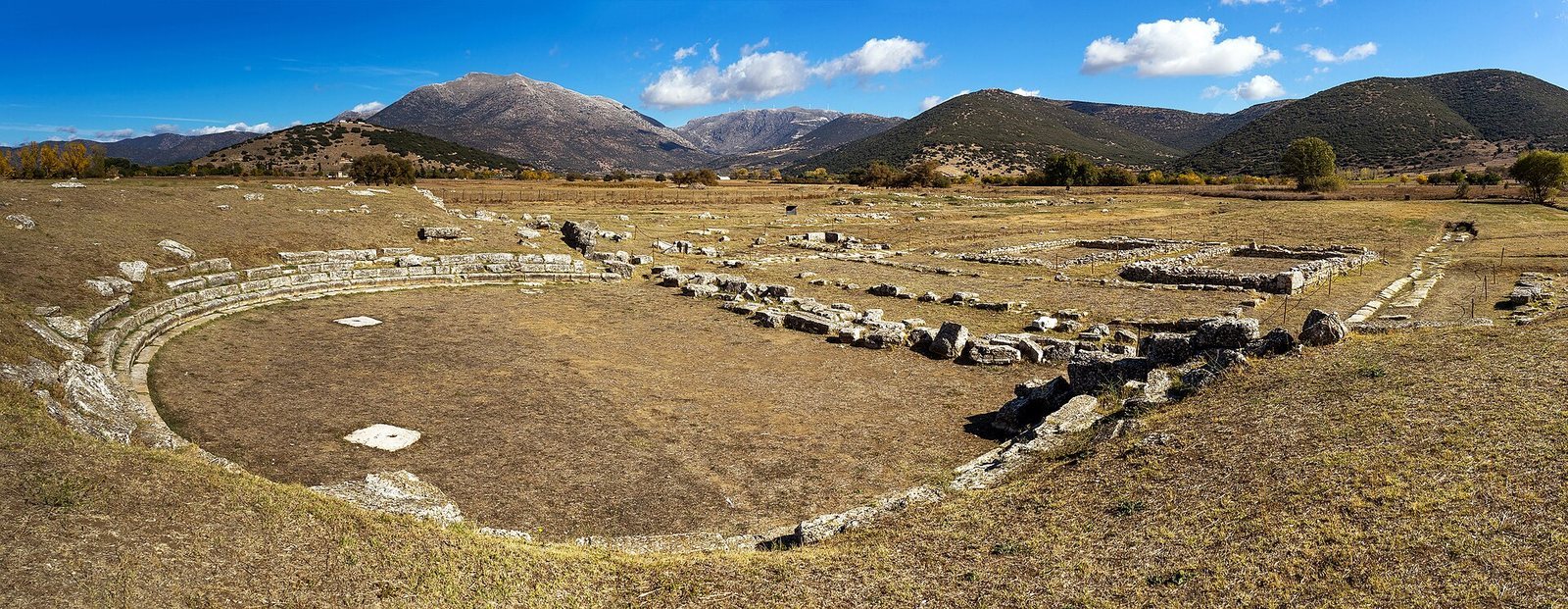
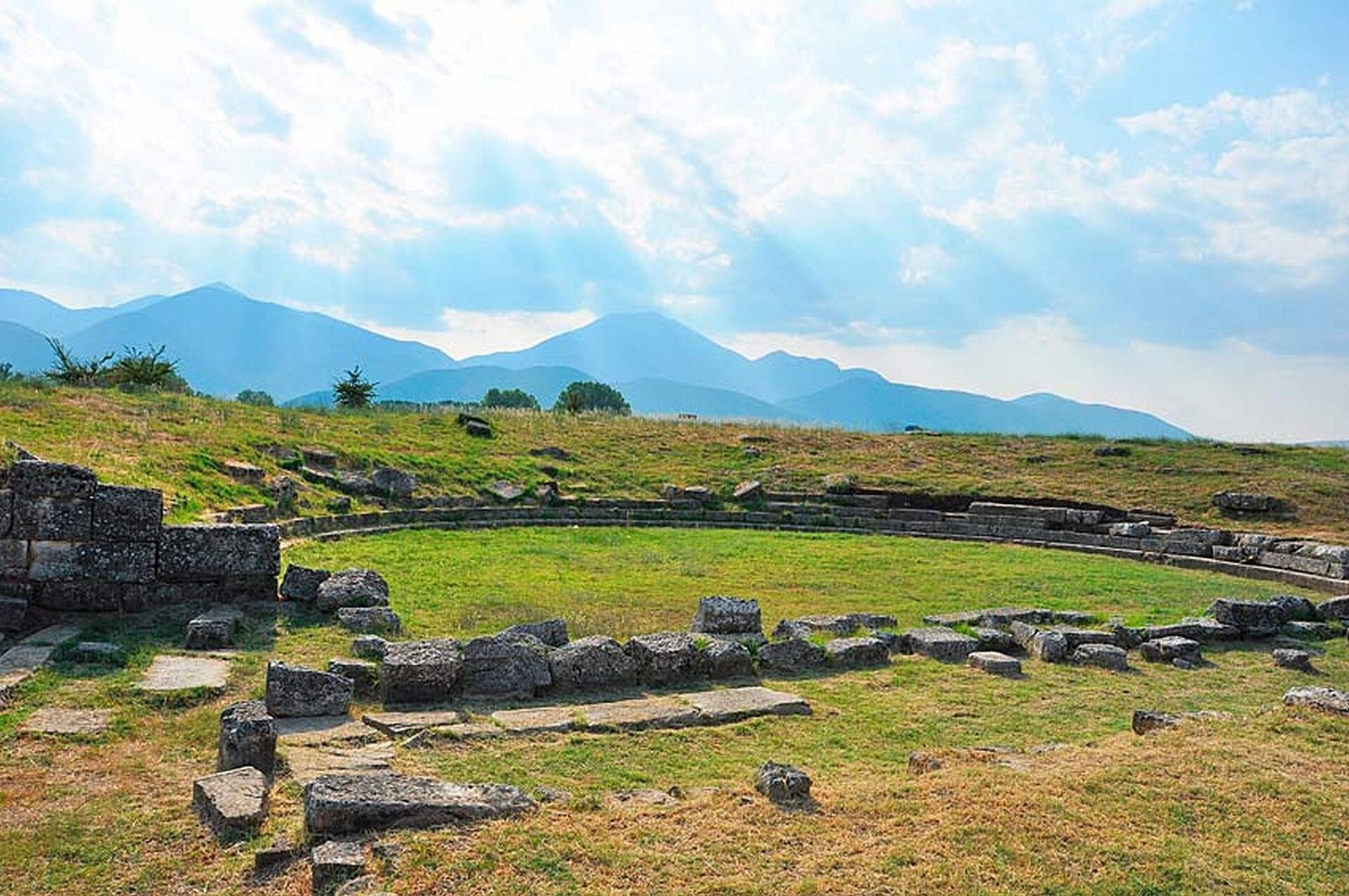
The ancient city stood in the Mantinean plain, between Tegea to the south and the hills toward Orchomenus to the north. Its remains include fortifications, houses, public spaces, sanctuaries, and funerary monuments, while the nearby hill of Gortzuli preserves evidence of the earlier settlement identified as Ptolis.
Walls and urban remains
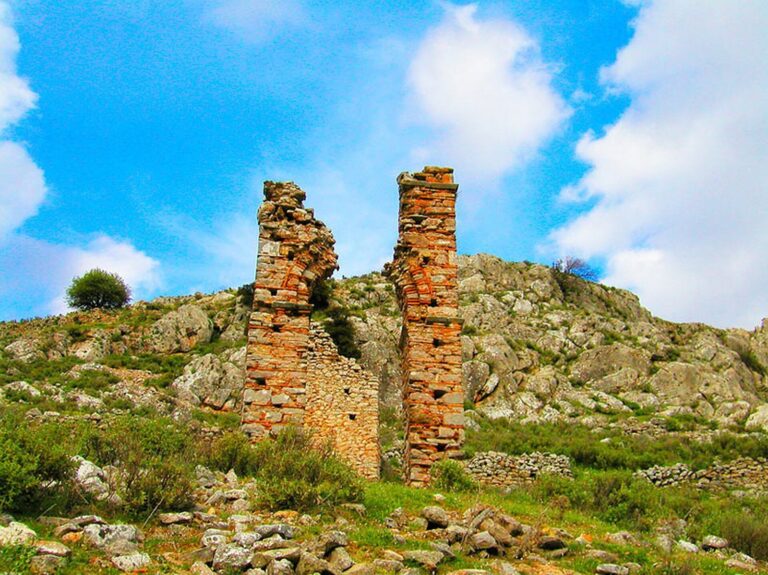
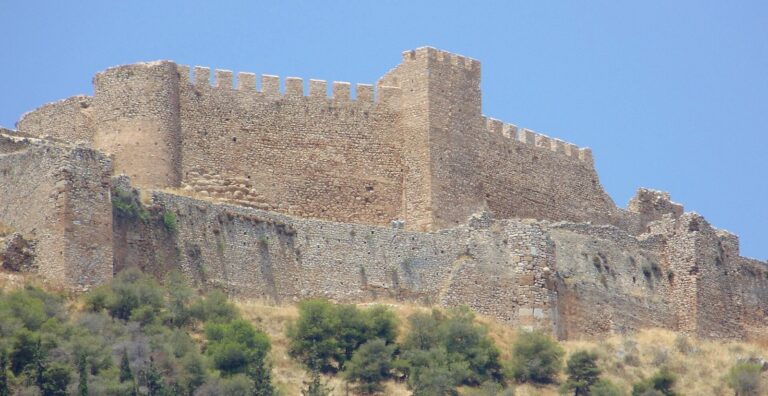
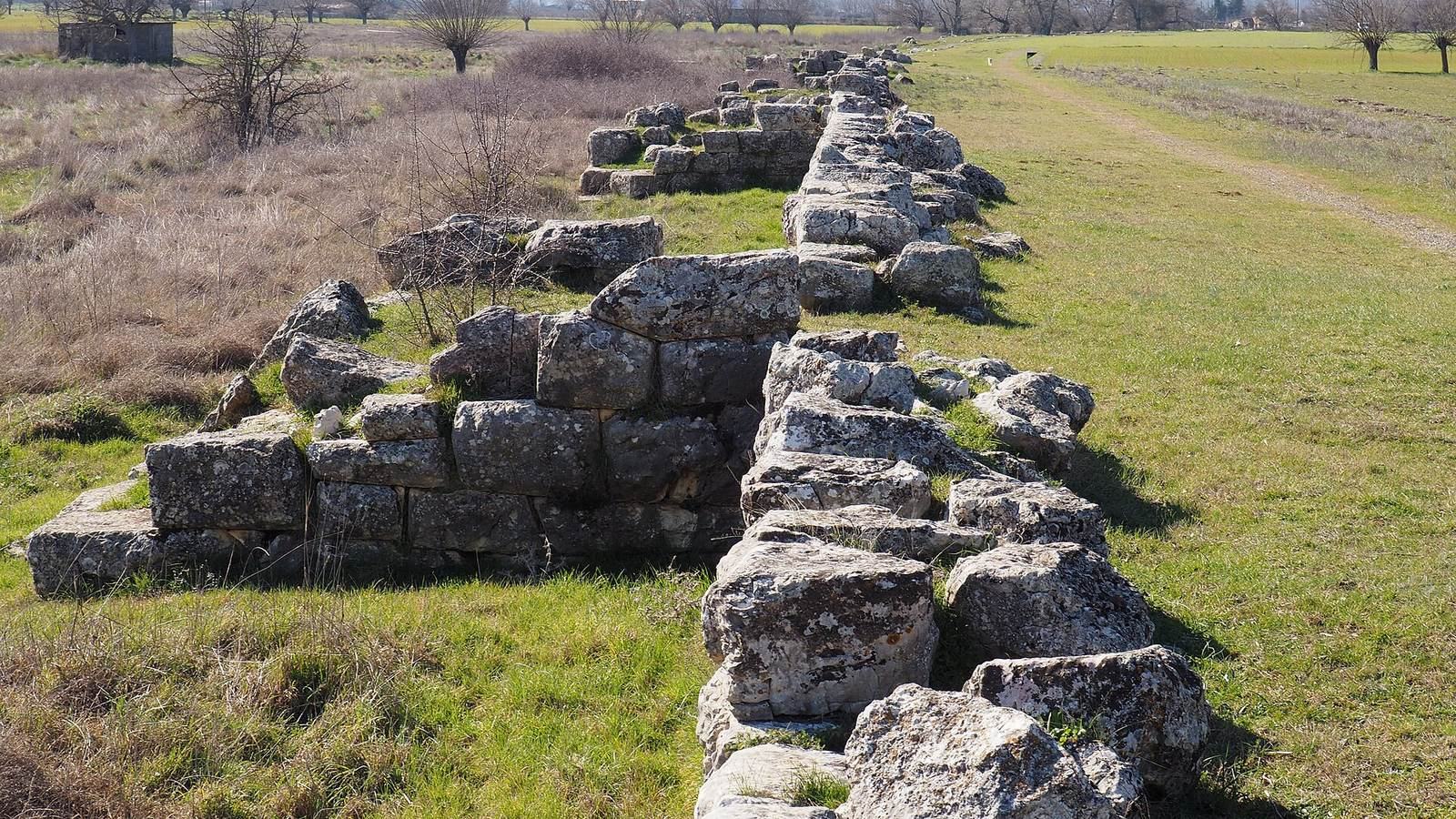
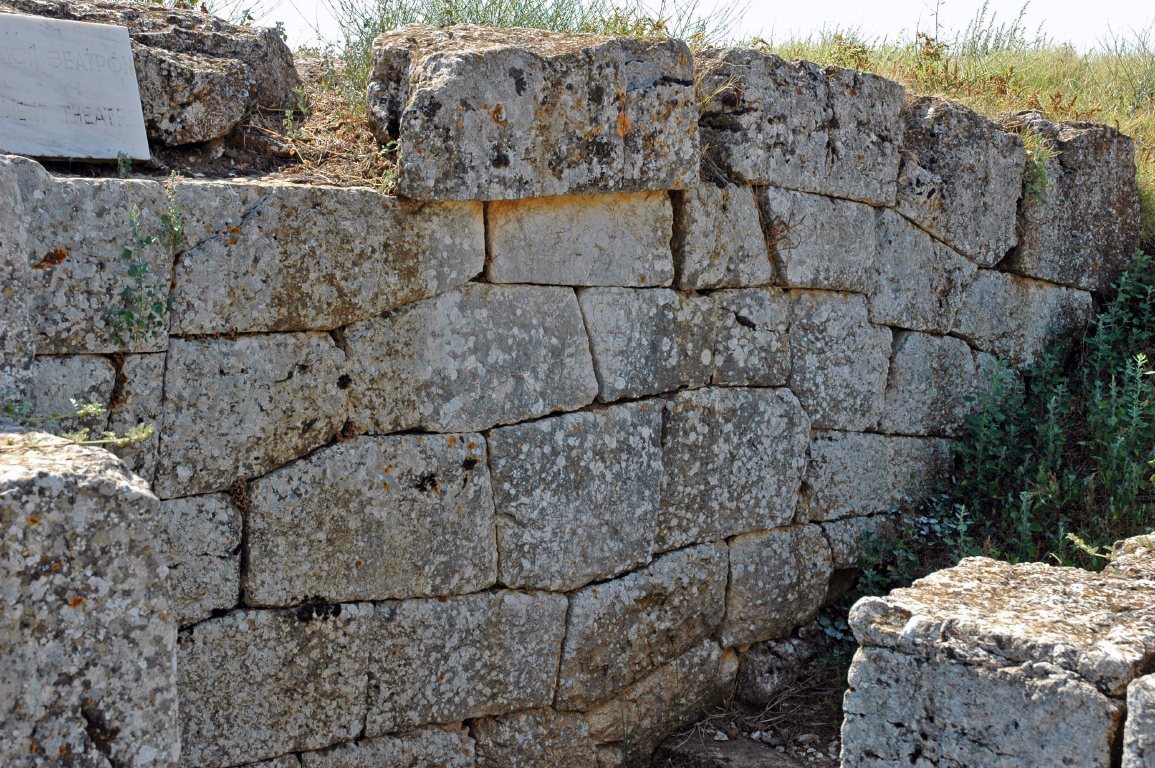
Mantinea’s first defenses were built with polygon-shaped stone blocks. After the city was re-formed following 371 BC, its fortifications followed an almost oval plan and incorporated sections of the earlier walls. Surviving stretches belong to the fourth century BC. The wider urban remains include houses, the public square, the theater, funerary monuments, and architectural fragments that may have belonged to temples or public buildings.
Sanctuaries and funerary monuments
The divided temple
A temple divided into two parts by a wall served different cults. One part was dedicated to Asclepius, the Greek god of healing, and contained an image attributed to the sculptor Alcamenes. The other honored Leto, mother of Apollo and Artemis, together with Apollo, associated with music and prophecy, and Artemis, associated with hunting. Images of these three deities were attributed to the sculptor Praxiteles.
Other sanctuaries in the city
Sanctuaries at Mantinea also honored Zeus, the chief Greek god; the Dioscuri, the twin heroes Castor and Pollux; and Athena under her local title Alea. A sanctuary of Demeter, associated with agriculture, and Kore, another name for Persephone, was said to keep a perpetual fire. The city also had a temple of Antinous, the companion of Hadrian.
Theater-side temples and tombs
Pausanias placed a temple of Hera, a goddess associated with marriage, and one of Aphrodite Simaquia, a local form of the goddess associated with love and beauty, beside the theater. He also described a nearby tomb of Arcas, the legendary ancestor of the Arcadians, and tombs of Antinoe, daughter of Cepheus, and Gryllus, son of Xenophon.
Artemis Hymnia and the Tegea road
A separate temple of Artemis Hymnia stood just north of Mantinea. Along the road to Tegea, beside the city walls, an enclosure was used for horse racing, and a stadium hosted games in honor of Antinous. Farther along were Mount Alesium, a sacred grove of Demeter, and a sanctuary of Poseidon Hippios, a title connecting the god with horses. Opposite that sanctuary stood a trophy commemorating a battle in which Arcadians fought the Spartans.
Civic buildings and other features
The agora and gymnasium
The city’s public square, or agora, contained a bronze statue of Diomenea, daughter of Arcas, and a shrine associated with Podares, an Arcadian combatant. The gymnasium included a building containing images of Antinous.
The dam
A dam near Mantinea was regarded as an advanced example of ancient engineering. The account of its design and construction is not specified here.
The Mantineia Marble
The fourth-century-BC Mantineia Marble, now in the National Archaeological Museum in Athens, is a relief showing the mythical musical contest between Apollo and Marsyas. It also depicts a Muse seated on a rock and playing a pandouris, an ancient stringed instrument. The carving is useful for understanding ancient Greek instruments.
Ptolis and the Mantinean plain
Gortzuli hill
About one kilometre north of Mantinea, Gortzuli hill is identified with Ptolis, the earlier settlement. Finds span the Early and Middle Helladic periods and the Mycenaean period, phases of Bronze Age Greece. The hill also has a short stretch of wall built from very large, roughly fitted stones and a temple from the Archaic period, an early phase of Greek history before the Classical era. Ancient writers also noted ruins at the earlier settlement.
The surrounding landscape
The plain was bounded by Mount Mainalo to the west, the Artemision mountains to the east, hills toward Orchomenus to the north, and the valley toward Tegea to the south. The Artemision range formed a natural boundary with Argolis. The plain corresponds to the modern Tripolitza plain between the ancient cities of Mantinea and Tegea. Other ancient settlements in the area included Mera, Petrosaca, Fezon, Nestane, and Melangea; routes called Prino, Climax, and Xenis led to Mantinea.