Mesnil Vitey Manor: A Fortified Residence in France
Site at a Glance
- Popularity
- Very Low
- Country
- France
- Primary era
- Medieval
- Eras represented
- Medieval
- Civilizations
- French
- Site type
- Military
- Remains
- Castle
On this page8 sections
History
Mesnil Vitey Manor is a fortified residence in France, built around 1480 by Lucas Acher to help protect the Saint-Louis Bridge over the Old Vire.
Medieval ownership
In 1229, the fief of Mesnil-Vitey, land held under feudal obligations, belonged to the Fierville family before passing to the La Luzerne family. In 1435, during the second phase of the Hundred Years’ War, a prolonged conflict between the English and French crowns, the estate was confiscated and granted to John Fastolf, an English knight and steward to John of Lancaster, Duke of Bedford. The grant cannot have been made by Henry V, who died in 1422.
The former owners regained the fief in 1457. A charter names Robert de Fierville as its lord through his wife, Marguerite de La Luzerne.
The Acher lordship
Around 1480, Lucas Acher acquired the estate while serving as administrator of the Barony of Neuilly, a territorial lordship, for the Bishop of Bayeux. He built the fortified manor, then known as Mesnilvité. When Acher died in 1506, the estate passed to his son Guillaume.
A nobility inquiry in 1598 recorded the estate as belonging to Henri Acher, son of Jean. In 1613, Jean Acher, lord of Mesnil-Vitey, obtained permission from Louis XIII to hold a Saturday market and two annual fairs, in April and October. The spring event, known as the Bourgais fair, continues as a flea market.
Jean’s son Henri succeeded him. Henri, who died in 1628, served as a gentleman of the king’s chamber, belonged to the Order of Saint Michael, a French order of chivalry, and was captain general of the maritime coasts of the Cotentin bailiwick, a district administered by a royal officer. His successor, Jean II, died in 1678 as the last Acher lord of Mesnilvité.
Inheritance and later history
Jean II had two daughters. His younger daughter, Claude Acher, married Jean Regnault de Segrais. His elder daughter, Lucrèce Acher, inherited Claude’s property and transferred her own holdings to her husband, Jean-Claude de Croisilles, first president of the presidial court at Caen, a royal court. He died without children, and his sisters inherited.
The manor later passed through the female line to the Le Bedey family and then to the du Boscq de Beaumont family. The latter’s first lord of the estate was Michel, lord of Beaumont, a royal councillor and receiver of the taille, a direct tax in pre-revolutionary France. The family retained the manor for nearly two centuries.
During the French Revolution, two towers were destroyed and the manor’s coats of arms were removed. Above the entrance, Lucas Acher’s arms had shown a blue field with a silver horizontal band and three gold escutcheons, two above and one below. In the twentieth century, the manor belonged to politician Jean Michel Guérin du Boscq de Beaumont. An order dated 22 November 1949 listed its facades, roofs, and surviving enclosure wall as historic monuments.
Remains
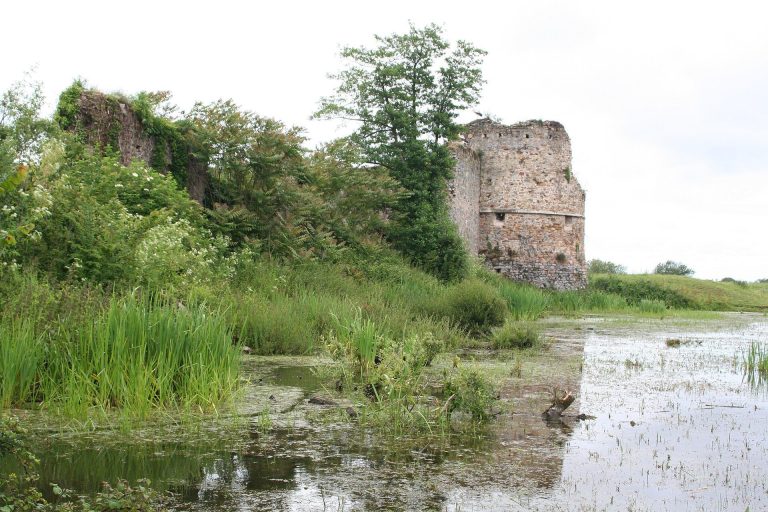
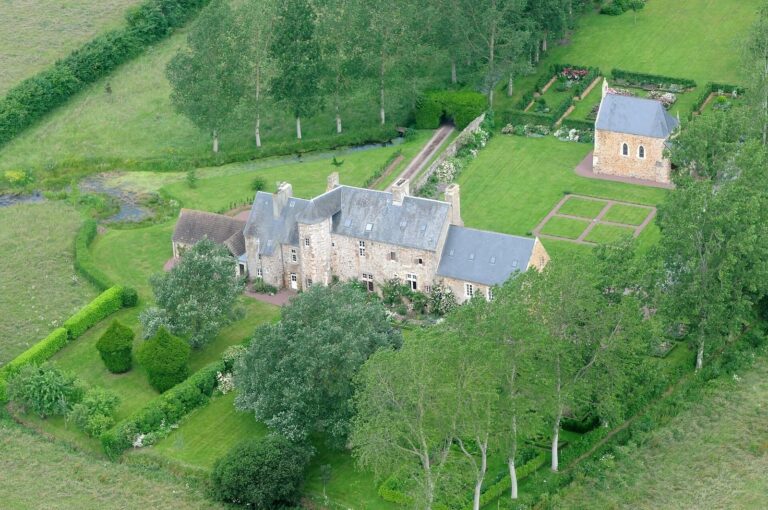
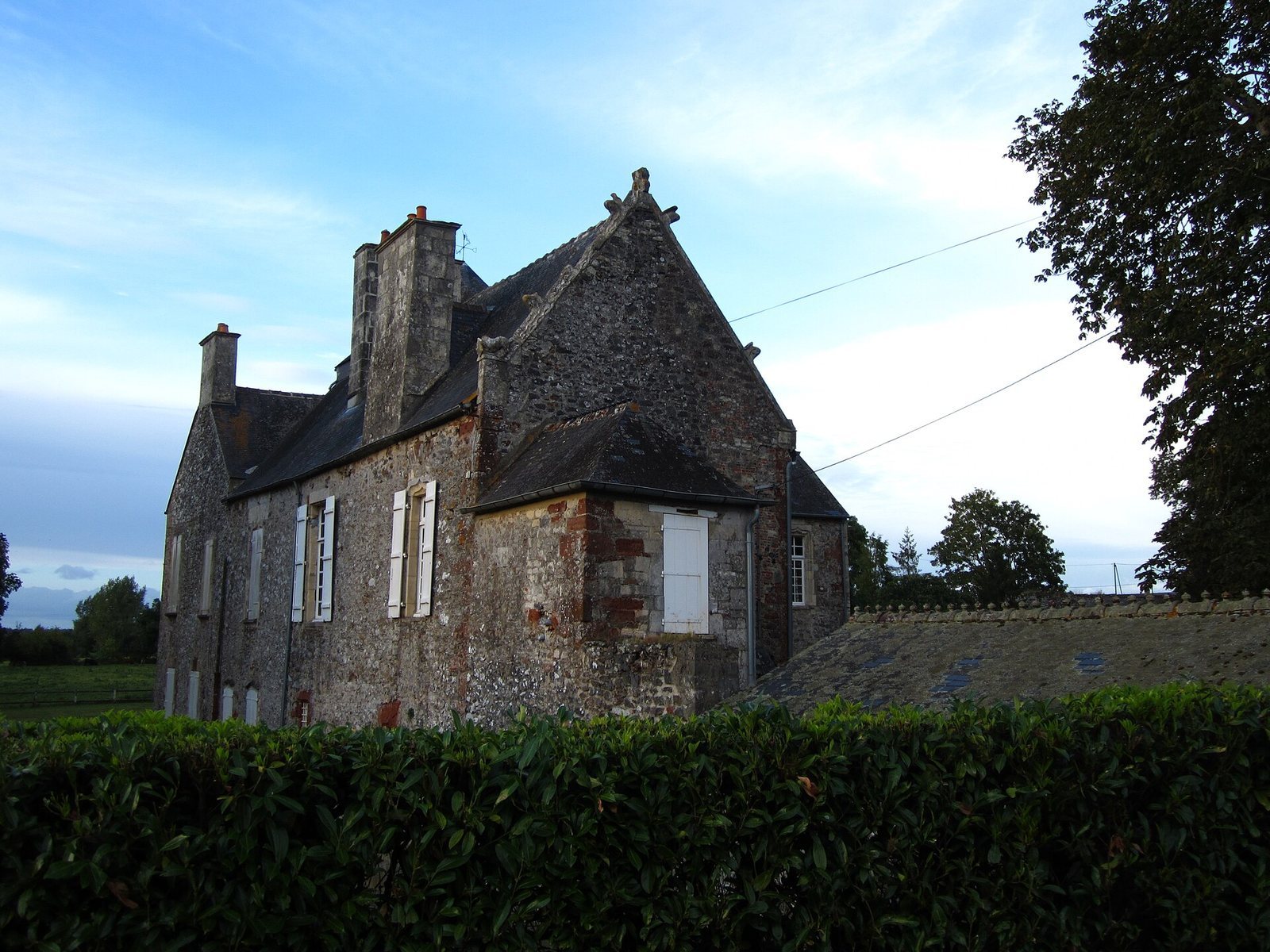
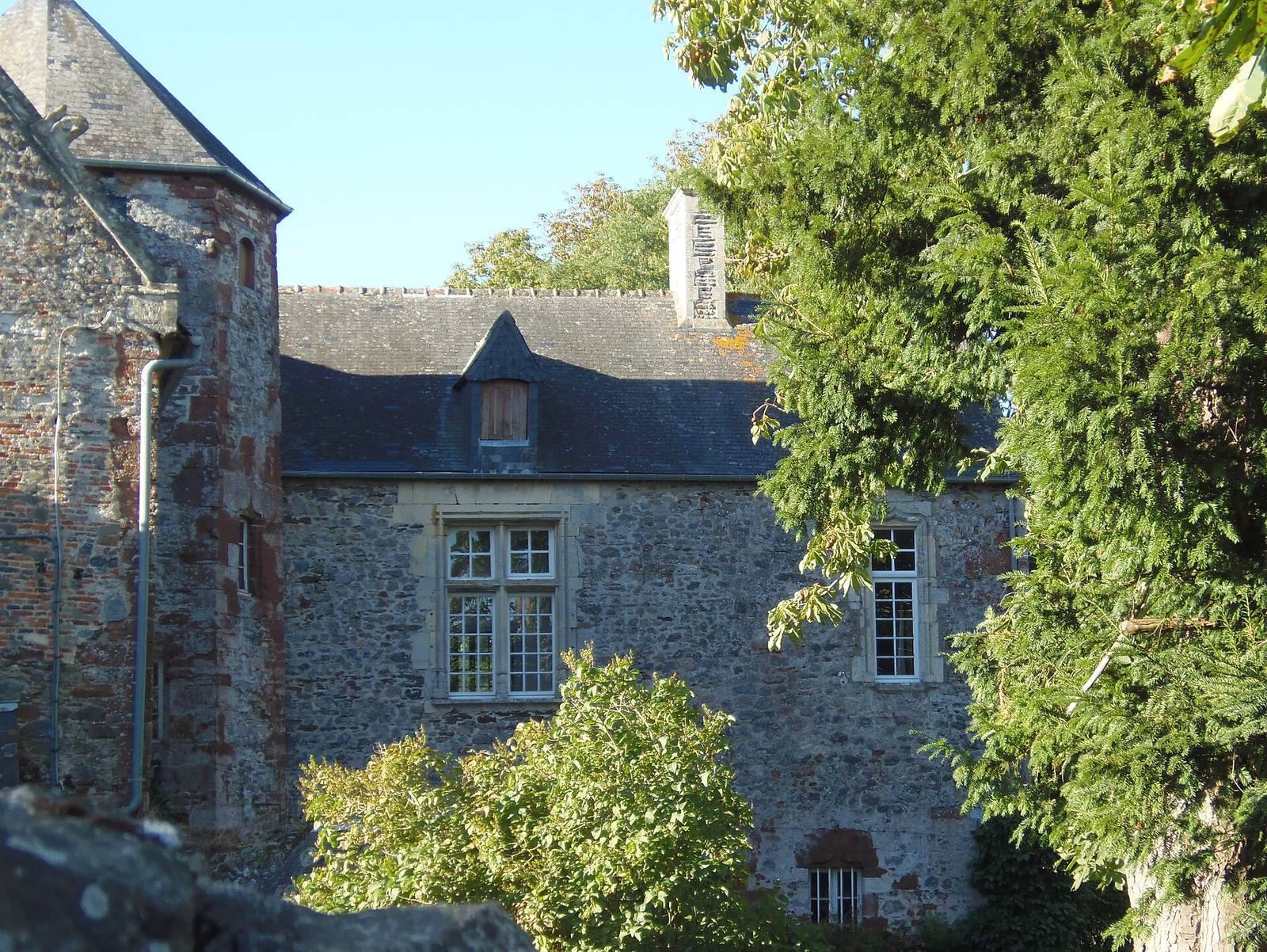
Beside the Old Vire, about 400 metres southwest of Saint George’s Church, the site is organized around a quadrangular enclosure that once had moats. An L-shaped residence stands within it, and remnants of the enclosure’s crenellated wall survive.
Enclosure and residence
Enclosure wall
The enclosure’s surviving wall retains its crenellated form. The manor’s position beside the river and the nearby Saint-Louis Bridge reflects the defensive purpose of the enclosed site.
Residence
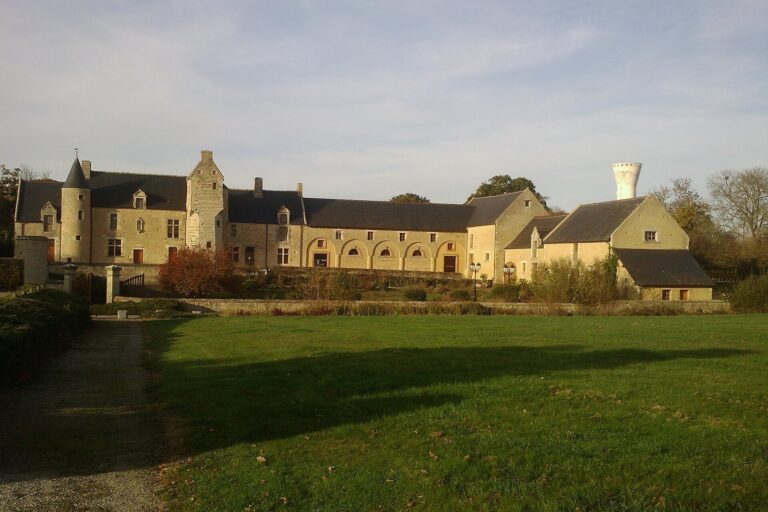
The residence has an L-shaped plan, with a polygonal stair turret at the inner angle. Its placement within the former enclosure connects the principal building to the manor’s fortified layout.